

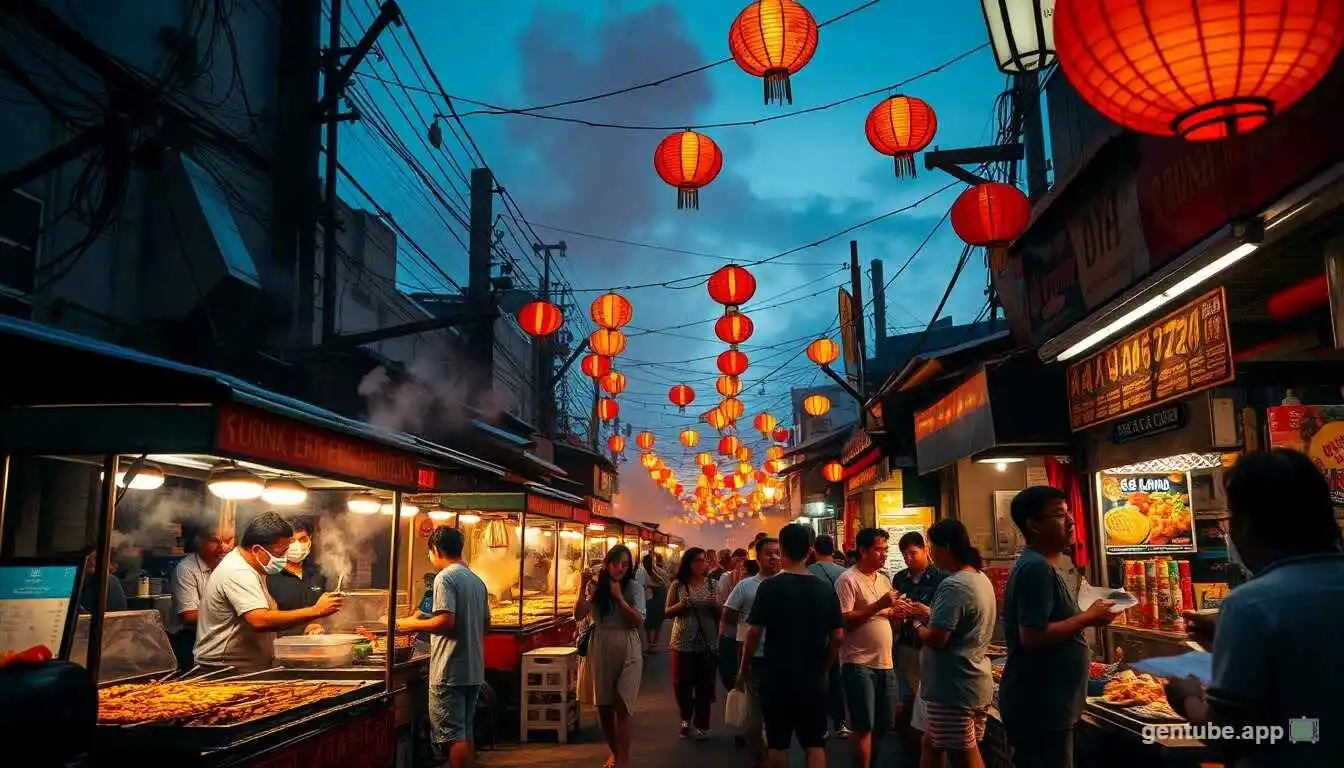
Street Food Around the World: The Flavors You Need to Try Before You Die
Introduction: The World’s Best Meals Don’t Have Tablecloths
There is a particular kind of magic that happens on a street corner somewhere far from home. Smoke curling up from a charcoal grill. The hiss of batter hitting hot oil. A vendor who has made the exact same dish, with the exact same practiced motions, ten thousand times before, and somehow still gets it perfect. No menu, no reservation, no white tablecloth, just a plastic stool, a paper wrapper, and a bite of something that tells you more about a culture than any guidebook ever could.
Street food is not a lesser version of a country’s cuisine. In most places, it is the cuisine, distilled to its most essential and least pretentious form. It is what people actually eat on a Tuesday afternoon between errands, what a taxi driver grabs before his next fare, what a grandmother has been perfecting on the same corner for three decades. It travels light, it is priced for everyone, and it rewards curiosity more generously than almost any other form of travel.
This guide takes you on a tour through the street food traditions of Asia, the Middle East, Europe, the Americas, and Africa, dish by dish, region by region. Along the way, you will find the dishes worth planning a trip around, the etiquette that helps you eat like a local rather than a tourist, and practical guidance for enjoying street food safely wherever your appetite takes you. By the end, your travel wish list is going to get considerably longer, and considerably hungrier.
There is also a rhythm to street food that sit-down dining rarely replicates. A vendor might spend an entire lifetime perfecting a single dish, refining a broth or a marinade through decades of small adjustments that no cookbook could capture. That specialization, one person, one cart, one dish done better than almost anyone else, is part of what makes tracking down a legendary stall feel less like a meal and more like a small pilgrimage.
Why Street Food Matters More Than You Think
It is tempting to treat street food as a budget alternative to “real” dining, something you settle for when a sit-down restaurant is too expensive or too far away. That framing sells the entire tradition short. Street food is often the most honest food a place has to offer, because it is unfiltered by the compromises restaurants make to appeal to broad audiences or accommodate rent in expensive neighborhoods.
A street vendor’s entire business rests on one thing: the dish has to be good enough, consistently enough, that people keep coming back day after day. There is no marketing budget, no elaborate plating, no ambient lighting to distract from a mediocre dish. What survives on the street has survived because it works, because generations of hungry, discerning eaters have voted with their stomachs. That is a kind of quality control no Michelin star can replicate.
Street food is also deeply tied to history and migration. Many of the world’s most beloved street dishes exist because of colonization, trade routes, immigration, or simple scarcity that forced cooks to be resourceful with what they had. Bánh mì in Vietnam tells a story of French colonial influence layered onto Vietnamese technique. Currywurst in Berlin tells a story of postwar scarcity and imported spices. Understanding a country’s street food is, in a very real sense, understanding its history from the ground up.
Street food also plays an important economic role that is easy to overlook. In many parts of the world, vending is a primary source of income and generational livelihood for families who have neither the capital nor the desire to open a formal restaurant. Supporting a street vendor is often a far more direct way of putting money into a local economy than dining at an international hotel chain, since profits stay with the individual and their family rather than flowing to a distant corporate parent.
Asia: Where Street Food Reaches Its Fullest Expression
If any single continent could claim the title of street food capital of the world, it would almost certainly be Asia. The sheer density of vendors, the speed and skill of the cooking, and the astonishing variety packed into a single city block make it a pilgrimage destination for food lovers.
Thailand: Pad Thai, Som Tum, and the Magic of Bangkok’s Night Markets
Bangkok’s street food scene is so celebrated that it once had a Michelin-starred street vendor, a distinction that captures exactly how seriously Thailand takes its street cooking. Pad Thai, stir-fried rice noodles with egg, tamarind, peanuts, and your choice of protein, remains the most internationally famous dish, but locals are just as likely to order Som Tum, a fiery green papaya salad pounded to order in a clay mortar, or Moo Ping, grilled pork skewers marinated in a sweet-savory glaze that char beautifully over open coals. Night markets like Chatuchak and Rot Fai turn eating into an evening-long event, with dozens of stalls competing for attention through smoke, sizzle, and the calls of vendors.
Vietnam: Pho, Bánh Mì, and the Art of Balance
Vietnamese street food is built on balance, sour, sweet, salty, and herbal notes calibrated with a precision that looks effortless but reflects generations of refinement. Pho, the iconic beef or chicken noodle soup, is often eaten for breakfast, its broth simmered for hours before dawn. Bánh mì, the crusty baguette sandwich filled with pâté, pickled vegetables, cilantro, and various proteins, is a direct descendant of French colonial bread culture reimagined with distinctly Vietnamese flavor. Bún chả, grilled pork served with rice noodles and a tangy dipping sauce, remains a Hanoi favorite that gained global attention after being featured in a well-known travel show.
Japan: Takoyaki, Yakitori, and Festival Food Culture
Japanese street food is often tied to festivals, or matsuri, where rows of stalls sell food meant to be eaten while walking. Takoyaki, ball-shaped snacks made from a wheat-based batter filled with diced octopus and topped with savory sauce, bonito flakes, and mayonnaise, are a Osaka specialty that has spread nationwide. Yakitori, skewered and grilled chicken seasoned simply with salt or a sweet soy-based tare sauce, is a staple of narrow alleyway stalls in cities like Tokyo. Taiyaki, fish-shaped cakes filled with sweet red bean paste or custard, round out the dessert side of Japan’s street food identity.
India: Chaat, Vada Pav, and the Explosion of Regional Flavor
India’s street food culture is so vast and regionally distinct that it could fill a book on its own. Chaat, a broad category of savory snacks combining crispy fried dough, chutneys, yogurt, and spices, varies dramatically from city to city, but always delivers a hit of contrasting textures and temperatures in a single bite. Vada Pav, often called the Indian burger, pairs a spiced and fried potato patty with a soft bun and fiery green chutney, and is a Mumbai institution eaten by everyone from students to office workers. Pani Puri, hollow crisp shells filled with spiced water, tamarind, and potato, is as much a performance as a snack, meant to be eaten in one explosive bite.
Indonesia, Taiwan, and the Philippines: The Underrated Giants
Indonesia’s Sate, skewered and grilled meat served with a rich peanut sauce, is found on nearly every street corner from Jakarta to Bali. Taiwan’s night markets, among the most famous in Asia, are home to stinky tofu, a fermented and deep-fried dish whose intense aroma belies a surprisingly delicate, crisp-on-the-outside interior, alongside bubble tea, which originated in Taiwanese teahouses before becoming a global phenomenon. The Philippines contributes Balut, a fertilized duck egg boiled and eaten from the shell, a dish that challenges outsiders but remains a beloved and protein-rich snack for locals, alongside the more approachable Isaw, grilled chicken or pork intestine skewers sold at nearly every roadside stall.
South Korea and China: Tteokbokki, Baozi, and Jianbing
South Korea’s street food scene, concentrated in areas like Myeongdong and Gwangjang Market, revolves around bold, often fiery flavors. Tteokbokki, chewy rice cakes simmered in a spicy-sweet gochujang sauce, is a nationwide comfort food eaten by everyone from schoolchildren to office workers on their way home. Hotteok, sweet filled pancakes with cinnamon and nuts, offer a warming counterpoint on cold evenings. China’s street food varies enormously by region, but Jianbing, a savory crepe folded around egg, crispy wonton, scallions, and sauce, has become a breakfast staple in cities like Beijing, while Baozi, steamed buns filled with pork, vegetables, or red bean paste, remain one of the most portable and universally loved snacks across the country.
The Middle East and Mediterranean: Grilled, Wrapped, and Deeply Spiced
Street food across the Middle East and eastern Mediterranean tends to center on grilled meats, warm bread, and bright, herb-forward accompaniments, a formula refined over centuries of trade along historic caravan routes.
Turkey: Simit, Döner, and the Rhythm of Istanbul Streets
Simit, a circular bread coated in sesame seeds and often compared to a cross between a bagel and a pretzel, is sold from carts across Istanbul from early morning, a breakfast staple for commuters. Döner kebab, thin slices of seasoned meat roasted on a vertical rotisserie and wrapped in flatbread with vegetables and sauce, is Turkey’s most famous export, having spawned countless international variations while the original remains a benchmark few can match.
Lebanon and Israel: Falafel, Shawarma, and Hummus Culture
Falafel, deep-fried balls of spiced ground chickpeas or fava beans, is a staple across the Levant, typically stuffed into pita with pickled vegetables, tahini, and hot sauce. Shawarma, closely related to Turkish döner, layers marinated meat shaved from a rotating spit into warm bread with garlic sauce and pickles. Hummus, while often thought of as a dip, is treated as a full meal on the street in much of the region, served warm with a pool of olive oil, a scattering of chickpeas, and fresh bread for scooping.
Egypt: Koshari and the Comfort of Carbohydrate Layering
Koshari, widely considered Egypt’s national dish, layers rice, lentils, and macaroni, topped with a spiced tomato sauce, crispy fried onions, and a garlicky vinegar sauce. It is inexpensive, filling, and endlessly customizable, making it a genuine everyday meal for millions rather than a novelty for tourists.
Europe: Refined Simplicity on the Go
European street food often leans toward simplicity, a small number of high-quality ingredients prepared with precision, reflecting the continent’s broader culinary values even in its most casual form.
Italy: Arancini, Panzerotti, and Roman Pizza al Taglio
Arancini, fried and breaded rice balls typically filled with ragu, mozzarella, or peas, originated in Sicily and remain a beloved snack across southern Italy. Pizza al taglio, rectangular pizza sold by weight and cut with scissors, is a Roman institution that lets eaters sample multiple toppings without committing to a whole pie. Panzerotti, fried dough pockets filled with tomato and mozzarella, offer a smaller, handheld take on pizza flavors.
France, Germany, Belgium, and Spain: Crepes, Currywurst, Frites, and Bocadillos
French crepes, thin pancakes folded around sweet or savory fillings, are a staple of Parisian street corners, particularly around tourist landmarks and student neighborhoods. Germany’s currywurst, sliced sausage doused in curry-spiced ketchup, emerged from postwar Berlin and remains a beloved late-night snack. Belgium’s frites, twice-fried potatoes served in a paper cone with an enormous range of sauce options, are treated with a seriousness that rivals any fine dining tradition. Spain’s bocadillos, simple baguette sandwiches often filled with jamón or tortilla española, reflect the country’s preference for letting a few excellent ingredients speak for themselves.
The Americas: Bold, Communal, and Endlessly Regional
Mexico: Tacos, Elotes, and the Standard-Bearer of Street Food
Mexican street food is frequently cited as among the best in the world, and for good reason. Tacos al pastor, marinated pork shaved from a spinning vertical spit in a technique adapted from Lebanese immigrants, are typically served on small corn tortillas with pineapple, onion, and cilantro. Elotes, grilled corn on the cob slathered with mayonnaise, cheese, chili powder, and lime, deliver an addictive combination of sweet, spicy, and tangy in every bite. Tlayudas, large crisp tortillas topped with beans, cheese, and meat, function as Oaxaca’s answer to a flatbread pizza.
United States: The Food Truck Renaissance
American street food has evolved dramatically over the past two decades through the rise of food trucks, which transformed a once-limited hot dog and pretzel cart culture into a genuine culinary movement. Regional specialties like Philadelphia’s cheesesteak, Chicago’s deep-dish-adjacent street eats, and New Orleans’ po’boys all have strong street and cart traditions, while modern food truck scenes in cities like Los Angeles and Portland now serve everything from Korean-Mexican fusion tacos to gourmet grilled cheese.
Brazil, Peru, and Colombia: South America’s Street Food Powerhouses
Brazil’s Coxinha, teardrop-shaped fried dough filled with shredded chicken, is a beloved snack sold from beach kiosks and city corners alike. Peru’s Anticuchos, skewered and grilled beef heart marinated in vinegar and spices, showcase the country’s Indigenous and Andean culinary roots. Colombia’s Arepas, grilled or fried corn cakes split and filled with cheese, meat, or eggs, vary by region but remain a daily staple across the country, eaten at nearly any hour.
Africa: Bold Spice and Communal Cooking Traditions
African street food traditions are often built around shared cooking fires and communal eating, with bold spicing that reflects centuries of trade across the continent and beyond.
Nigeria, Morocco, South Africa, and Senegal
Nigeria’s Suya, spiced and skewered grilled meat coated in a peanut-based spice blend, is sold from roadside stands well into the night, often accompanied by sliced onion and tomato. Morocco’s street food centers heavily around Marrakesh’s Jemaa el-Fnaa square, where grilled meats, snail soup, and fresh orange juice stands operate late into the evening amid a festival-like atmosphere. South Africa’s Bunny Chow, a hollowed loaf of bread filled with curry, originated among the Indian community in Durban and has become a beloved dish nationwide. Senegal’s Thieboudienne, while more commonly a home-cooked dish, has street versions built around fish, rice, and vegetables simmered in a tomato-based sauce, reflecting the country’s coastal identity.
Ethiopia and Ghana: Communal Plates and Roadside Grills
Ethiopia’s street food culture centers on Injera, a spongy, slightly sour flatbread made from fermented teff flour, often sold rolled up and filled with spiced lentils, vegetables, or meat for an easy, portable meal. Ghana’s Kelewele, ripe plantains fried with ginger, chili, and warm spices, is a beloved roadside snack sold from evening stalls across Accra and beyond, offering a sweet and spicy combination that has few direct parallels elsewhere in the world.
How to Eat Street Food Safely and Respectfully
Enjoying street food to its fullest means eating with both curiosity and a bit of common sense. A few practical habits go a long way toward making sure your food adventure ends with good memories rather than a ruined trip.
- Follow the crowds. A stall with a long line of locals is almost always a better bet than an empty one, since high turnover means fresher ingredients and food that isn’t sitting around.
- Watch the cooking process. Food cooked to order in front of you, especially anything grilled, fried, or boiled at high heat, carries far less risk than pre-made items sitting at room temperature.
- Bring small cash. Most vendors operate on a cash-only basis, and having exact or small denominations speeds up the transaction and is generally appreciated.
- Start mild and build up. If you have a sensitive stomach or are new to a region’s cuisine, ease in with smaller portions before committing to a full meal from an unfamiliar stall.
- Carry basic hygiene supplies. Hand sanitizer and, if you’re prone to stomach sensitivity, a doctor-recommended probiotic or anti-diarrheal can make the difference between a minor hiccup and a lost travel day.
- Learn a few polite phrases. Even a simple thank-you in the local language goes a long way with vendors who take real pride in their craft.
How Street Food Culture Is Evolving
Street food has never been static, and its current evolution is arguably as interesting as its history. Social media has turned once-hidden neighborhood stalls into destinations, sometimes drawing lines around the block for a vendor who spent decades cooking in relative obscurity. Food halls in major cities are increasingly borrowing the format, spirit, and even specific vendors from street food traditions, bringing that energy indoors while preserving the emphasis on single-specialty mastery.
At the same time, fusion is reshaping what street food even means. Korean-Mexican tacos, Indian-spiced burritos, and Japanese-inspired hot dogs reflect a generation of cooks, often the children of immigrants, blending the flavors of their heritage with the flavors of the place they grew up. This kind of cross-pollination is not a dilution of tradition but a continuation of exactly the process that created many of today’s classic street dishes in the first place.
A Street Food Traveler’s Quick Reference Checklist
https://youtu.be/Uo2zXn2J5VM

