

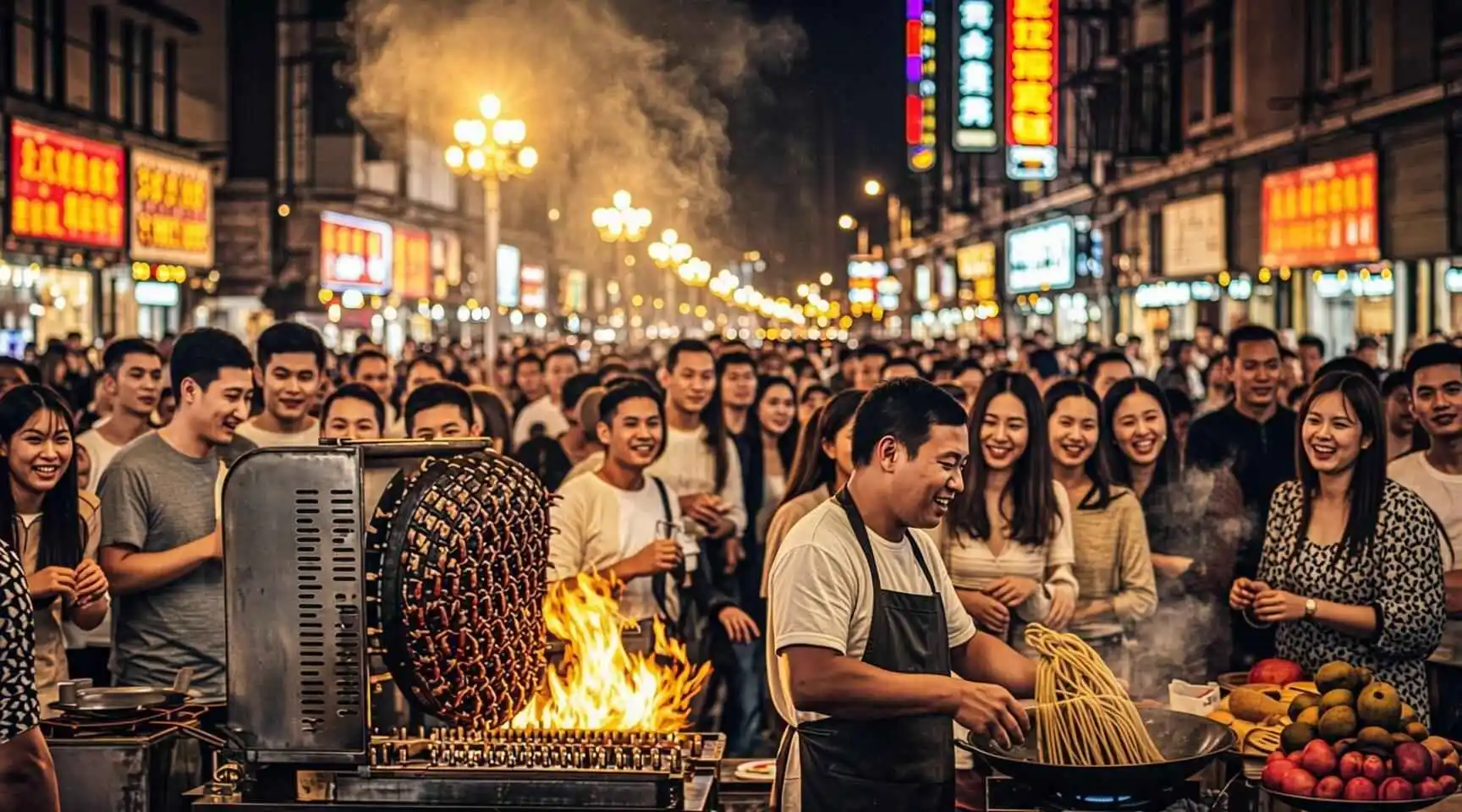
The World on a Plate: A Culinary Odyssey Through Global Cuisines and Street Food
Introduction: The Universal Language of the Sidewalk
There is a specific kind of magic that happens when the sun goes down and the streetlights flicker on in cities across the globe. It is the moment the aromas of the world take over. The scent of charcoal smoke in Bangkok, the sizzle of garlic in Rome, the spicy tang of peppers in Mexico City, and the yeasty warmth of dough in Istanbul.
Food is more than sustenance. It is history, geography, politics, and art, all rolled into a single bite. And nowhere is this more evident than in the realm of street food. While fine dining restaurants offer precision and white-tablecloth elegance, street food offers the raw, unfiltered soul of a culture. It is the great equalizer; it is where the taxi driver eats next to the CEO, where tourists stand shoulder-to-shoulder with locals, united by the universal desire for something delicious, cheap, and now.
This is a journey across continents, a deep dive into the bustling markets, the roadside carts, and the hole-in-the-wall stalls that define Global Cuisines. We will explore the flavors that make us cry, the textures that challenge us, and the communal experiences that bind us together. Pack your appetite, leave your diet at home, and let’s eat our way around the world.
Chapter 1: The Americas – A Symphony of Spice and Smoke
The Americas are a vast continent, and their street food reflects a history of colonization, indigenous traditions, and immigrant fusion. It is a landscape defined by corn, potatoes, chili peppers, and a fearless approach to flavor.
Mexico: The Altar of the Taco
To understand street food, you must start with Mexico. The taco is not just a dish; it is an institution. While the world has adopted the hard-shell taco with ground beef and yellow cheese, the real magic happens on the streets of Mexico City, Oaxaca, and Tijuana.
A true Mexican street taco is built on a small, soft corn tortilla, usually handmade and warmed on a comal (a flat griddle). The variations are endless. Tacos al Pastor are perhaps the crown jewel of street gastronomy. Inspired by the Lebanese shawarma brought by immigrants in the 1930s, pork is marinated in a blend of dried chilies, achiote, and pineapple juice, then stacked on a vertical spit (trompo). As it roasts, the meat is shaved off, sizzled with a slice of pineapple, and served with onions and cilantro.
Then there are Tacos de Carnitas, slow-roasted pork so tender it melts in your mouth, often served in a bucket with a variety of cuts (skin, meat, organ meats) to choose from. Or the Tacos de Birria, the juicy, slow-cooked goat or beef stew served with a side of consommé for dipping. The secret, however, lies in the salsas. Every taco stand has its own array of green and red sauces, ranging from the smoky heat of chipotle to the eye-watering intensity of habanero. Eating on the street here is a tactile experience: standing up, balancing your plate, adding a pinch of salt and a squeeze of lime, and taking that first, transformative bite.
The USA: The Melting Pot on Wheels
The United States is a relative newcomer to the “street food” game compared to Asia or Latin America, largely due to strict health regulations and a car-centric culture. However, the food truck revolution of the 21st century has changed the landscape dramatically.
Today, American street food is a reflection of its diverse population. In Los Angeles, you can find Korean BBQ tacos—bulgogi beef wrapped in a tortilla with kimchi salsa. In New York City, the halal cart chicken over rice with white sauce and hot sauce is a late-night legend. In Portland and Austin, entire fleets of trucks serve everything from gourmet grilled cheese to vegan donuts.
But we must not forget the classics. The hot dog stand is an American icon. Whether it’s the Chicago Dog loaded with neon green relish, sport peppers, tomato wedges, and celery salt, or the New York Papaya King served with a tropical drink, it is a snapshot of American culinary history. And in the South, particularly in Louisiana, the Muffuletta—a massive round sandwich stuffed with olive salad, ham, salami, mozzarella, and provolone—is a handheld masterpiece that originated in the Italian markets of New Orleans.
Brazil: Salty Snacks and Beach Eats
In Brazil, street food is synonymous with salgadinhos (salty snacks). These are deep-fried or baked pastries found in bars, bakeries, and beach stalls. The Coxinha is the star: a tear-drop shaped, deep-fried dough filled with shredded chicken and catupiry (a creamy Brazilian cheese). It is crunchy, salty, and incredibly addictive.
On the beaches of Rio de Janeiro, you will see vendors carrying coolers or pushing carts. They sell Açaí, the purple Amazonian berry blended into a frozen sorbet and topped with granola and banana—a global superfood trend that started on the Brazilian boardwalk. Another favorite is Queijo Coalho, a grilled cheese on a stick, salted and often brushed with oregano or garlic butter. It is the perfect accompaniment to the crashing waves and the Brazilian sun.
Chapter 2: Asia – The Kingdom of Aromas and Umami
If the Americas offer spice and smoke, Asia offers complexity. Asian street food is defined by the balance of flavors: sweet, sour, salty, bitter, and spicy. It is a continent where the wok is king and the noodle is the vessel of history.
Thailand: The Land of Smiles and Sour Spices
Thailand is arguably the street food capital of the world. In Bangkok, the street is the kitchen. Every evening, sidewalks transform into open-air restaurants with plastic stools and folding tables.
The undisputed king of Thai street food is Pad Krapow Moo Saap (Holy Basil Pork). It is a stir-fry of minced pork, garlic, chilies, and fresh holy basil leaves, served over jasmine rice with a crispy fried egg on top. It is spicy, savory, and comforting. Another staple is Pad Thai, the stir-fried rice noodle dish tamarind sauce, fish sauce, peanuts, lime, and egg. While found everywhere, the best are cooked in large woks over high heat, creating a smoky flavor known as “wok hei.”
But the adventure lies in the stranger items. Try the Moo Ping—grilled pork skewers marinated in coconut milk and soy sauce, often served with sticky rice. Or venture into the world of Som Tum, a green papaya salad pounded in a mortar and pestle with lime, fish sauce, dried shrimp, and chilies. It is a sensory explosion: crunchy, sour, salty, and fiery hot. Eating Thai street food is not for the faint of heart, but for those willing to embrace the heat, the rewards are endless.
Japan: Precision on a Stick
Japanese street food, or Yatai, is a study in contrast. It can be the chaotic, noisy stalls of the Fukuoka ramen carts, or the orderly, artistic presentation found at festivals.
In Osaka, known as “the nation’s kitchen,” Takoyaki is the hero. These are savory batter balls filled with diced octopus, tempura scraps, and green onion, cooked in a special molded pan. They are basted with sauce, mayonnaise, bonito flakes (that dance in the heat), and aonori (seaweed powder). Eating them requires skill—you must pop the whole ball in your mouth because the inside is molten hot.
Another icon is Yakitori—skewered chicken grilled over charcoal. While you can find it in restaurants, street stalls offer the most atmospheric experience. From the thigh (momo) to the skin (kawa) and the cartilage (nankotsu), every part of the bird is utilized, washed down with a cold beer.
For dessert, look for Taiyaki, fish-shaped cakes filled with red bean paste, custard, or chocolate. It is a warm, sweet treat that perfectly encapsulates the Japanese aesthetic of beautiful simplicity.
India: The Chaat Culture
India’s street food scene is a kaleidoscope of color, noise, and spices. It is chaotic, vibrant, and utterly delicious. The heart of Indian street food is Chaat—a category of savory snacks that hit every flavor profile at once.
The most famous is Pani Puri. These are crispy, hollow spheres of fried dough. The vendor punches a hole in the top, stuffs it with a mixture of potatoes, chickpeas, and onions, and dunks it into a bowl of spicy, mint-flavored water before handing it to you. You must eat the whole sphere in one bite to avoid an explosion. It is an explosion of tangy tamarind, earthy chickpeas, and spicy water.
In Mumbai, the Vada Pav is the “poor man’s burger.” It consists of a deep-fried potato dumpling (vada) sandwiched inside a bread roll (pav), served with various chutneys (dry garlic, tamarind, and green chili). It is greasy, spicy, and one of the most satisfying foods on earth.
Don’t forget Dosa, a crispy, savory crepe made from fermented rice and lentil batter, served with sambar (vegetable stew) and coconut chutney. Watching a vendor spread the batter on a massive hot griddle with a circular motion is a mesmerizing performance.
Vietnam: The Pho Revolution
Vietnamese street food is lighter and fresher than its neighbors, heavily influenced by French colonialism but rooted in Southeast Asian herbs.
Pho is the national dish, a fragrant beef or chicken noodle soup simmered for hours with star anise, cinnamon, and charred ginger. It is usually eaten for breakfast at street stalls where diners sit on tiny plastic stools, slurping the broth loudly (a compliment to the chef).
But for the ultimate street snack, look for Banh Mi. It is a baguette (a legacy of the French) sliced open and slathered with pâté and mayonnaise, then stuffed with grilled pork, pickled carrots and daikon, cucumber, cilantro, and sliced jalapeños. It is a perfect sandwich: crunchy, soft, savory, and acidic.
For a lighter option, try Goi Cuon (summer rolls). These are translucent rice paper rolls filled with shrimp, pork, herbs, and vermicelli noodles. They are fresh, healthy, and served with a peanut hoisin dipping sauce that is to die for.
Chapter 3: Europe – Old World Traditions and Modern Twists
Europe’s street food scene is a mix of ancient market traditions and modern convenience. It is the home of the “takeaway” culture, from the British chippy to the Italian focaccia baker.
Turkey: The Rotating Spit of Doner
Turkey gave the world the concept of vertical rotisserie meat. The Döner Kebab is a titan of global street food. Layers of seasoned meat (lamb, beef, or chicken) are stacked on a vertical spit and roasted slowly. As the outer layers crisp up, they are shaved off with a large knife.
It is served in a wrap (dürüm) or bread, accompanied by salad, tomatoes, onions, and a variety of sauces (yogurt, garlic, hot). Walking through the streets of Istanbul, the smell of roasting meat is intoxicating.
Another must-try is Simit, often called the “Turkish bagel.” It is a ring of dough encrusted with sesame seeds, baked to a golden brown. Vendors carry them on trays on their heads or push carts. It is chewy, shiny, and perfect when dipped in Turkish tea or stuffed with cheese and tomatoes.
Italy: Pizza al Taglio and Sicilian Cannoli
Italians take their food seriously, and street food is no exception. It is not about “fast food” in the sense of processed; it is about eating quality food quickly.
In Rome, Pizza al Taglio is king. Unlike the round pizzas we know, these are large rectangular trays of pizza baked in massive ovens. You point to the section you want, and the vendor cuts it with scissors, weighing it by price. The toppings are endless: potato and rosemary, tomato and mozzarella, prosciutto and arugula.
In Sicily, Arancini are the pride of the island. They are fried rice balls stuffed with ragu (meat sauce), peas, and mozzarella. The name means “little orange” because of their size and color. They are crispy on the outside, gooey on the inside—a portable masterpiece.
For dessert, the Cannolo is legendary. A crispy, fried pastry tube filled with a sweet, creamy ricotta filling containing chocolate chips, pistachios, or candied fruit. The best ones are found in Sicily, specifically in the town of Piana degli Albanesi.
The United Kingdom & Ireland: Fish and Chips
The British “Chippy” is a cultural institution. Fish and chips—battered and fried cod or haddock served with thick-cut chips (fries), mushy peas, and vinegar—is the ultimate comfort food.
Traditionally, it was wrapped in old newspaper (which is now banned for hygiene reasons, but the look is often recreated with greaseproof paper). Eating it out of the paper while walking along a windy seafront in Brighton or Blackpool is a quintessential British experience.
Ireland offers a similar tradition with Fish and Chips, but also the humble Spice Bag. This is a modern Chinese-Irish fusion street food: deep-fried chips, shredded chicken or beef, onions, peppers, and spicy salt, all thrown into a bag and doused in curry sauce or chili oil. It is greasy, spicy, and incredibly popular with the late-night crowd.
Chapter 4: The Middle East & Africa – Ancient Flavors and Spices
The street food of the Middle East and Africa is ancient, rooted in trade routes, desert oases, and communal dining. It is bold, hearty, and heavily reliant on chickpeas, lamb, and flatbreads.
The Middle East: Falafel and Shawarma
The Middle East perfected the art of vegetarian street food. Falafel are deep-fried balls or patties made from ground chickpeas, fava beans, herbs, and spices. They are crispy on the outside and green and fluffy on the inside. They are usually stuffed into pita bread with hummus, tahini sauce, pickles, and salad.
Shawarma is the cousin to the Döner Kebab. It involves stacking marinated meat (often lamb or chicken) on a vertical spit. The meat is shaved off and wrapped in flatbread with garlic sauce, pickles, and fries. It is a staple in Lebanon, Syria, Jordan, and across the Gulf states.
Another essential item is Knafeh, a dessert made of thin noodle-like pastry soaked in sweet sugar-based syrup and layered with cheese or clotted cream. It is baked until golden and crispy, often served hot. Walking through the markets of Amman or Jerusalem, the scent of burning sugar and melting cheese is impossible to resist.
South Africa: The Bunny Chow
South Africa offers one of the most unique street foods in the world: The Bunny Chow. Despite the name, it contains no rabbit. It originated in the Durban Indian community and consists of a hollowed-out loaf of white bread filled with curry.
The bread acts as the edible bowl for the curry, soaking up the spicy liquid. It comes in different sizes (a quarter, half, or full loaf). It is messy, delicious, and a symbol of the multicultural fusion of South Africa.
Another favorite is Boerewors, a coiled sausage made from beef (mostly) and pork, spiced with coriander and black pepper. It is grilled on open flames (Braai) and served in a bread roll with a generous helping of onion and tomato relish ( gravy).
Morocco: Tagine and Snails
In the ancient medinas of Marrakech and Fez, the street food is a sensory overload. Vendors sell fresh orange juice, dried fruits, and spices.
For lunch, Tagine is the go-to. While usually a slow-cooked stew, street vendors serve smaller portions in earthenware pots. It features meat (usually lamb or chicken) braised with vegetables, olives, preserved lemons, and dried fruits like apricots or prunes.
For the brave, the snail soup (Babbouche) is a local specialty. Large snails are simmered in a broth laden with 15 different spices. It is believed to be an aphrodisiac and a cure for stomach aches. You eat them by picking the snail out with a toothpick and sipping the spicy broth.
Chapter 5: The Etiquette of the Street Food Adventurer
https://youtu.be/TVg7Vo5dtaE

