

Fenugreek Uncovered: The Ancient Seed Your Modern Body Has Been Missing
Introduction: The Spice Cabinet’s Best-Kept Secret
Somewhere between your curry powder and your cumin sits a small, mustard-colored seed that most people walk right past. Fenugreek doesn’t have the star power of turmeric or the trendy glow of matcha, yet it has been used medicinally for longer than almost any other plant on Earth. Egyptian embalmers used it. Ancient Greek physicians prescribed it. Traditional Chinese medicine, Ayurveda, and folk healers across the Middle East and North Africa have all leaned on this humble seed for thousands of years, long before anyone had a word for ‘supplement.’
What’s remarkable is that modern science is now circling back to confirm what those traditions figured out through centuries of trial and observation. Fenugreek has been studied for its effects on blood sugar regulation, cholesterol, digestion, breastfeeding milk supply, testosterone levels, inflammation, and even hair and skin health. It’s rare for a single, inexpensive plant to show up in this many corners of health research at once.
This article walks through what fenugreek actually is, why it does what it does, the specific health benefits backed by tradition and emerging research, how people commonly use it, and the precautions worth knowing before you add it to your routine. By the end, you’ll understand exactly why this unassuming little seed has survived 6,000 years of human use without ever going out of style.
What makes fenugreek especially interesting to researchers today isn’t just that it ‘does a lot’ — it’s that the mechanisms behind those effects are increasingly well understood at a chemical level. Unlike many traditional remedies that remain mysterious even after centuries of use, fenugreek’s soluble fiber, its unusual amino acid content, and its plant compounds give scientists clear, testable explanations for why grandmothers across dozens of cultures independently reached for the same seed to solve very different problems.
What Is Fenugreek, Exactly?
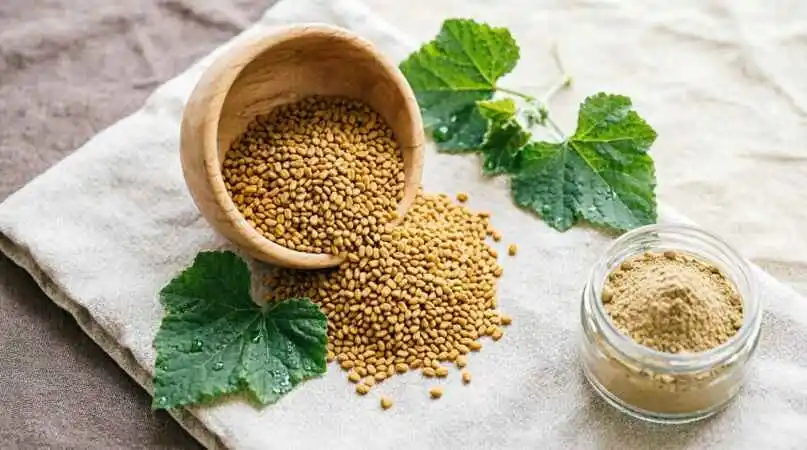
Fenugreek (Trigonella foenum-graecum) is an annual plant in the legume family, related to peas, lentils, and soybeans. Both its seeds and its leaves are used — the seeds are small, hard, and golden-brown with a distinctive maple-like aroma when toasted, while the leaves, often called methi, are used fresh or dried as a leafy green herb in South Asian and Middle Eastern cooking.
The plant is native to the eastern Mediterranean and parts of Asia, but it has been cultivated so widely and for so long that it’s now grown commercially across India, the Middle East, North Africa, and parts of Europe. India remains by far the largest producer, and fenugreek is a defining flavor in many Indian curries, spice blends, and pickles.
Its slightly bitter, slightly sweet, maple-syrup-adjacent flavor comes from a compound called sotolon, which is also responsible for a curious and well-documented side effect: eating or supplementing with fenugreek can cause sweat and urine to smell like maple syrup. It’s harmless, but it surprises a lot of first-time users who aren’t expecting it.
A 6,000-Year Journey: Fenugreek Through History
Fenugreek’s medicinal résumé is almost unmatched in length. Archaeologists have found fenugreek seeds in the tomb of Tutankhamun and other ancient Egyptian burial sites, where they were used both as food and as part of embalming practices, suggesting the Egyptians valued the seed’s preservative and possibly antimicrobial properties. Egyptian medical papyri dating back over 3,500 years also reference fenugreek as a remedy for digestive and respiratory complaints.
The ancient Greeks and Romans adopted fenugreek as well, using it both as livestock fodder — which is actually the origin of its scientific name, foenum-graecum, literally ‘Greek hay’ — and as a medicinal herb for digestive complaints and to support nursing mothers. Greek physician Hippocrates, often called the father of Western medicine, is believed to have recommended fenugreek preparations for various ailments.
In parallel, fenugreek carved out an equally important place in Ayurvedic medicine in India, where it’s known as methi and has been used for thousands of years to balance digestion, support new mothers, and address what practitioners described as imbalances in the body’s energy systems. Traditional Chinese medicine developed its own independent applications for fenugreek, primarily focused on kidney and digestive health. The fact that geographically and culturally isolated civilizations arrived at strikingly similar uses for the same plant, entirely independently of one another, is one of the more compelling arguments for its genuine biological activity.
By the medieval period, fenugreek had spread along trade routes into North Africa and the Middle East, where it remains deeply embedded in cuisine and traditional remedies today, and eventually made its way into European herbal medicine texts, cementing its place as one of the most geographically widespread medicinal plants in human history.
The Nutritional Profile Behind the Benefits
Fenugreek’s health effects aren’t magic — they come from a genuinely interesting nutritional and phytochemical profile. The seeds are unusually high in soluble fiber, particularly a type called galactomannan, which forms a gel-like substance in the digestive tract. This single property explains a huge portion of fenugreek’s effects on blood sugar and cholesterol, since soluble fiber slows the absorption of sugar and fat in the gut.
Beyond fiber, fenugreek seeds contain a distinctive amino acid called 4-hydroxyisoleucine, which research suggests may help stimulate insulin secretion in a glucose-dependent way. The seeds are also a source of protein, iron, magnesium, manganese, and plant compounds called saponins and flavonoids, which contribute antioxidant and anti-inflammatory activity.
This combination — soluble fiber, a unique amino acid, minerals, and antioxidant plant compounds — is why fenugreek shows up in research on so many seemingly unrelated health topics at once. It isn’t a single-purpose herb; it’s a nutritionally dense seed with several different mechanisms working simultaneously.
1. Blood Sugar Regulation: Fenugreek’s Best-Studied Benefit
If there’s one area where fenugreek has the strongest research backing, it’s blood sugar management. Multiple clinical studies, including randomized trials in people with type 2 diabetes, have found that fenugreek seed supplementation can help lower fasting blood glucose and improve glucose tolerance when taken consistently alongside a normal diet.
The mechanism appears to be twofold. First, the galactomannan fiber slows carbohydrate digestion and absorption in the intestines, blunting the post-meal blood sugar spike that typically follows a carb-heavy meal. Second, the amino acid 4-hydroxyisoleucine appears to support the pancreas’s insulin response specifically when blood glucose is elevated, rather than causing a constant, non-specific insulin release.
This makes fenugreek an area of genuine interest for people managing prediabetes or type 2 diabetes as a complementary approach alongside — never a replacement for — medical treatment and monitoring. Anyone on blood sugar medication should talk to a healthcare provider before adding fenugreek, since combining the two could lower blood sugar more than expected.
One detail researchers have found particularly encouraging is the consistency of the effect across different study populations and preparations, whether participants used whole soaked seeds, powdered seeds mixed into food, or standardized extract capsules. That consistency suggests the benefit isn’t a fluke of one particular study design but a genuine, repeatable physiological response tied to fenugreek’s core fiber and amino acid content. Some researchers have also examined fenugreek’s potential to support insulin sensitivity over the longer term, not just in the hours immediately following a meal, which would represent a meaningful contribution to broader metabolic health if confirmed by larger trials.
2. Supporting Heart Health and Cholesterol
The same soluble fiber that slows sugar absorption also interferes with cholesterol absorption in the digestive tract. Several studies have linked fenugreek supplementation to modest reductions in total cholesterol and LDL (‘bad’) cholesterol, along with improvements in triglyceride levels, particularly in people who started with elevated levels.
Fenugreek’s saponin content is thought to play a role here too, potentially binding to bile acids and cholesterol in the gut and reducing how much gets reabsorbed into the bloodstream. While fenugreek shouldn’t be viewed as a stand-in for prescribed cholesterol medication, it’s a reasonable example of how a fiber-rich, plant-based addition to the diet can support cardiovascular health as part of a broader lifestyle approach.
It’s also worth noting that fenugreek’s cardiovascular research often overlaps with its diabetes research, since the two conditions frequently coexist and share related risk factors. Several studies conducted in participants with type 2 diabetes measured cholesterol and triglyceride changes as a secondary outcome alongside blood sugar, and found improvements across both, hinting that fenugreek may offer a kind of dual metabolic benefit for people managing both blood sugar and cholesterol concerns simultaneously — a combination increasingly common in modern health profiles.
3. A Traditional Ally for Breastfeeding Mothers
Perhaps no use of fenugreek is more culturally widespread than its reputation as a galactagogue — a substance believed to increase breast milk supply in lactating mothers. This use spans centuries and continents, from South Asian households to Western lactation consultants who still recommend fenugreek tea or capsules today.
Some clinical studies support this traditional use, showing increased milk volume in breastfeeding mothers who took fenugreek supplements compared to those who didn’t, though the research base is smaller and more mixed than the blood sugar research. Researchers believe fenugreek may stimulate milk-producing glands partly through its phytoestrogen content, plant compounds that loosely mimic the activity of estrogen in the body.
New or breastfeeding mothers considering fenugreek should still check with a doctor, midwife, or lactation consultant first, since fenugreek can occasionally cause digestive upset in the mother or infant and interacts with certain conditions, including thyroid disorders.
Lactation consultants who recommend fenugreek often pair it with other supportive practices — frequent nursing or pumping, adequate hydration, and rest — rather than treating it as a standalone fix, since milk supply is influenced by many overlapping factors. Some mothers report noticing an increase in supply within a few days of consistent use, while others see a more gradual change over one to two weeks, and a portion of mothers don’t notice a significant difference at all, underscoring how individual the response can be.
4. Digestive Health and Gut Comfort
Fenugreek’s soluble fiber content doesn’t just affect sugar and cholesterol — it directly supports digestion. Soluble fiber adds bulk and gel-like consistency to stool, which can help regulate bowel movements and ease occasional constipation. Traditional medicine has also used fenugreek to soothe an upset stomach and reduce bloating.
There’s emerging interest in fenugreek’s role in supporting appetite regulation as well. Some small studies suggest fenugreek fiber can increase feelings of fullness after a meal, likely because the gel-forming fiber slows stomach emptying, which keeps you feeling satisfied for longer. This appetite-related effect connects fenugreek to ongoing research on weight management, discussed further below.
Fenugreek’s fiber may also play a supportive role in feeding beneficial gut bacteria, functioning as a prebiotic that helps nourish the microbiome. A healthier balance of gut bacteria has been linked in broader research to better digestion, reduced bloating, and even downstream effects on inflammation and metabolic health, adding another layer to why fenugreek’s digestive reputation has persisted across so many traditional medicine systems.
5. Testosterone, Libido, and Men’s Health
Fenugreek has become a popular ingredient in men’s health and testosterone-support supplements, and there’s a reasonable body of research behind that trend. Several clinical trials have found that fenugreek extract supplementation was associated with modest increases in testosterone levels, along with self-reported improvements in libido, energy, and strength in some study participants.
The proposed mechanism involves fenugreek’s saponin compounds, which may inhibit enzymes that convert testosterone into estrogen, potentially helping maintain higher circulating testosterone levels. It’s worth noting the research is still developing and results vary between studies, so fenugreek should be viewed as a supportive, not guaranteed or dramatic, contributor to hormonal health.
Beyond hormone levels themselves, some studies have measured secondary outcomes like grip strength, body composition, and self-reported energy in men taking fenugreek extract during resistance training programs, with a number of them reporting favorable trends compared to placebo groups. It’s an area still very much under active investigation, and results can vary considerably depending on the specific extract, dosage, and study population, so anyone considering fenugreek for this purpose should treat it as one piece of a broader fitness and health strategy rather than a shortcut.
6. Hormonal Support for Women
Fenugreek’s phytoestrogen content has also drawn research interest for women’s hormonal health beyond lactation. Some studies suggest fenugreek may help ease symptoms associated with the menstrual cycle, including cramping and discomfort, when taken in the days surrounding menstruation. Other early research has explored fenugreek’s potential role in supporting symptoms during perimenopause and menopause, given its mild estrogen-like activity.
As with testosterone research in men, the studies here are promising but still relatively limited in size and scope, so fenugreek is best understood as one supportive tool among many rather than a proven standalone treatment for hormonal symptoms.
7. Inflammation and Antioxidant Protection
Chronic, low-grade inflammation is increasingly linked by researchers to a wide range of long-term health issues, and fenugreek’s flavonoid and polyphenol content gives it measurable antioxidant activity in laboratory studies. Antioxidants help neutralize unstable molecules called free radicals, which can otherwise damage cells over time and contribute to inflammation.
While human trials specifically isolating fenugreek’s anti-inflammatory effects are still limited, its consistent presence in traditional anti-inflammatory remedies across multiple cultures, combined with its laboratory-confirmed antioxidant activity, makes it a reasonable addition to an overall anti-inflammatory dietary pattern rich in plants, fiber, and whole foods.
Some laboratory research has also explored fenugreek extract’s effects on markers associated with joint discomfort, building on its traditional use in certain cultures as a warm poultice or paste applied externally to sore muscles and joints. While this particular application remains largely traditional rather than clinically confirmed in humans, it fits the broader pattern of fenugreek showing consistent anti-inflammatory signals across multiple contexts, from internal metabolic markers to old-fashioned topical folk remedies passed down through generations.
8. Skin and Hair Health
Fenugreek has a long-standing reputation in traditional beauty practices, particularly across South Asia and the Middle East, where fenugreek seed paste and fenugreek-infused oils are used on both skin and scalp. Fenugreek seeds are rich in mucilage — a natural gel-like substance — along with proteins and nicotinic acid, which are commonly cited as reasons for its inclusion in homemade hair masks aimed at reducing dandruff and supporting hair strength.
For skin, fenugreek’s antioxidant and anti-inflammatory compounds are the basis for its traditional use in soothing minor skin irritation and supporting an even-looking complexion. Much of this evidence remains rooted in traditional use and smaller studies rather than large clinical trials, so it’s best approached as a well-established home remedy rather than a clinically proven treatment.
Many households prepare a simple fenugreek face mask by grinding soaked seeds into a smooth paste, sometimes blended with yogurt or honey, and applying it briefly before rinsing — a practice passed down informally through generations well before dermatology as a field existed to study why it seemed to work. Modern formulators have taken note too, and fenugreek extract now appears as an ingredient in a growing number of commercial skincare and haircare products, a sign that the traditional reputation is increasingly being taken seriously by the broader beauty industry.
9. Weight Management Support
Fenugreek’s fiber-driven fullness effect, discussed earlier in the context of digestion, has made it a subject of interest in weight management research. A small number of clinical studies have found that participants who consumed fenugreek fiber before meals reported eating less afterward and experienced modest reductions in overall daily fat and calorie intake.
It’s important to frame this accurately: fenugreek is not a fat-burning miracle ingredient, and no supplement replaces the fundamentals of a balanced diet and regular movement. What the research does support is a modest, appetite-related assist — the kind of small edge that can meaningfully support a broader, sustainable weight management approach when combined with healthy habits.
Some people incorporate fenugreek into their routine specifically around meal timing, taking it shortly before eating in the hope of maximizing its fullness-promoting effect, though study protocols have varied enough that there’s no single universally agreed-upon ‘best’ timing. As with most fiber-based interventions, drinking adequate water alongside fenugreek is generally recommended, both for comfort and to help the fiber do its job effectively as it moves through the digestive tract.
10. Immune Support and General Wellness
Beyond its more specific, well-studied applications, fenugreek has a long-standing reputation across traditional medicine systems as a general wellness tonic, particularly during cold and flu season. Fenugreek tea, often combined with honey and lemon, remains a common home remedy in many households for soothing a sore throat and easing congestion.
Some of this traditional use likely connects back to fenugreek’s mineral content, including zinc and iron, both of which play supporting roles in normal immune function, along with its antioxidant compounds that help the body manage everyday oxidative stress. While fenugreek shouldn’t be mistaken for a treatment for active infections, its long history as a comfort remedy during seasonal illness reflects a genuinely nutrient-dense profile working in the background.
11. Blood Pressure and Circulatory Support
Emerging research has also begun exploring fenugreek’s potential role in supporting healthy blood pressure, an area closely tied to its established cardiovascular benefits. Some studies suggest fenugreek’s fiber and potassium content may contribute modestly to healthy circulation and vascular function, working alongside its cholesterol-lowering effects to support overall heart health from multiple angles.
This area of research is newer and less robust than fenugreek’s blood sugar and cholesterol evidence, so it’s best understood as a promising, developing area rather than a settled conclusion. Still, it fits a consistent pattern: nearly every research thread on fenugreek seems to trace back to the same handful of active compounds working through slightly different pathways in the body.
How Fenugreek Is Commonly Used
Fenugreek shows up in several different forms, and how someone uses it often depends on which benefit they’re seeking. Whole seeds are frequently toasted and ground into spice blends, or soaked overnight and consumed directly, a traditional practice believed to soften their bitterness and boost digestive benefits. Fenugreek tea, made by steeping the seeds in hot water, is a popular gentler option, especially among breastfeeding mothers.
Fenugreek powder, made from ground seeds, can be stirred into smoothies, yogurt, or baked goods, and is also a common ingredient in homemade hair and skin masks. Standardized fenugreek extract capsules are widely available as supplements and are typically the form used in clinical research, since they allow for more precise, consistent dosing than home preparations.
Fresh fenugreek leaves, meanwhile, are used as a leafy vegetable in cooking across South Asian and Middle Eastern cuisines, most famously in dishes like methi paratha and various curries, offering a milder, more herbal way to work fenugreek into a regular diet.
For anyone new to fenugreek, starting small is generally the most sensible approach — a teaspoon of seeds or a modest amount of powder mixed into food, gradually increasing over time as tolerance is assessed, rather than jumping straight to a concentrated extract at a high dose. This slow, food-first approach mirrors how fenugreek has traditionally been introduced into diets for thousands of years, long before precisely dosed capsules existed at all.
Fenugreek in Cuisines Around the World
While fenugreek is often discussed in supplement form, its most consistent, time-tested delivery method has always been food. In Indian cooking, whole fenugreek seeds are a staple in spice blends like panch phoron and sambar powder, while fresh methi leaves are cooked into flatbreads, curries, and lentil dishes, prized for their slightly bitter, aromatic flavor. Dried fenugreek leaves, known as kasuri methi, are crumbled over finished dishes as a fragrant garnish across much of North Indian cuisine.
In the Middle East, fenugreek is a key ingredient in Yemeni hilbeh, a pungent, frothy condiment made from soaked and blended fenugreek seeds, and it appears in Ethiopian cooking as well, where it’s used both as a spice and, historically, as a postpartum remedy for new mothers. Turkish cuisine uses ground fenugreek as the defining flavor in çemen, a spice paste coating traditionally applied to pastırma, a type of cured beef.
This deep culinary integration matters for a simple reason: it means fenugreek has effectively undergone thousands of years of real-world, large-scale human safety testing simply by being a dietary staple across multiple cultures. Food-level consumption of fenugreek has an exceptionally long track record, which is part of why it’s viewed as a comparatively low-risk herb when used sensibly.
How Fenugreek Compares to Other Popular Herbal Remedies
Fenugreek often gets grouped with other trending herbal supplements like ashwagandha, turmeric, or milk thistle, but its research profile is actually somewhat distinct. Where ashwagandha is primarily studied for stress and cortisol regulation, and turmeric is best known for its anti-inflammatory curcumin compound, fenugreek’s standout research area is specifically metabolic — blood sugar, cholesterol, and appetite regulation driven largely by its unusually high soluble fiber content.
This distinction matters when building a supplement routine. Someone primarily interested in metabolic and blood sugar support may get more targeted benefit from fenugreek specifically, whereas someone focused purely on stress management or joint inflammation might find other herbs better suited to those particular goals. Fenugreek’s dual identity as both a everyday culinary spice and a clinically studied supplement also sets it apart — very few herbs are equally at home in a curry pot and a clinical trial protocol, which speaks to just how deeply and safely it’s woven into ordinary dietary patterns.
Precautions, Side Effects, and Who Should Be Careful
https://youtu.be/nHjDoIA1QUM

