

Why Do You Breathe 20,000 Times a Day Without Ever Thinking About It? The Amazing Story of the Respiratory System
The Balloon Question That Made My Class Go Quiet
Some years ago, I walked into my Class 10 biology room carrying a plastic bottle, two balloons, a straw and a rubber sheet. The students looked at the strange collection on my table and started guessing. “Ma’am, are we making a science project?” “Ma’am, is this a fountain?” I smiled and asked one simple question: “Who can tell me how many times you breathed while walking into this class?”
Silence. A boy named Aarav finally said, “I do not know, Ma’am. I never notice my breathing.” I told him that was the most honest answer of the day. Then I asked everyone to hold their breath for as long as they could. Within thirty seconds, faces turned red, chests started heaving, and the whole class burst into nervous laughter. “Now,” I said, “you know how much you depend on something you never think about.”
A girl named Kavya, who always scored well but never asked questions, whispered something I have never forgotten: “Ma’am, I have memorised the respiratory system three times, but I never understood why it hurts when I hold my breath.” That sentence told me everything. She knew the names of the parts, but not the story behind them.
So we built a model lung together. The bottle became the chest, the straw became the windpipe, the balloon became the lung and the rubber sheet became the diaphragm. When Kavya pulled the rubber sheet down and the balloon inflated, she looked at me with wide eyes and said, “So we do not suck the air in. The air is pushed in!” The class clapped. That was the day the respiratory system stopped being a boring diagram and became a living, working machine.
In this post, I want to give you that same “aha” feeling. We will walk through the respiratory system slowly, in simple English, with real examples and small experiments. You will learn how it works, why it matters, which mistakes to avoid and how to study it so that it stays in your memory. Take a deep breath, and let us begin.
What Is the Respiratory System?
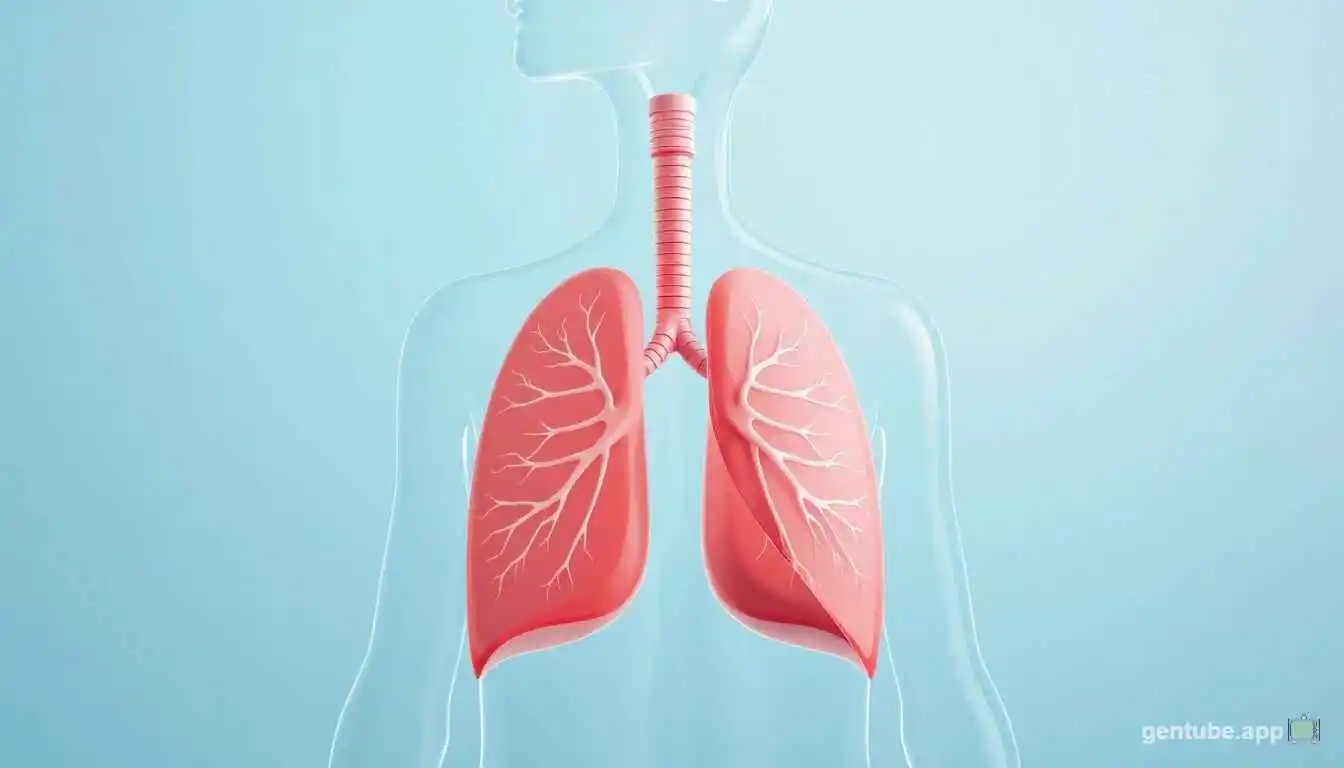
The respiratory system is the group of organs that brings oxygen into your body and sends carbon dioxide out. It includes your nose, throat, windpipe, lungs and the muscles that help you breathe. Working together, these parts make sure every cell in your body gets the oxygen it needs to release energy from food.
Here is a simple way to picture it. Imagine your body as a busy city. The digestive system is the food supply, the blood is the delivery service, and the respiratory system is the main gate through which fresh oxygen enters and waste gas leaves. If the gate is blocked, the whole city slows down.
Breathing vs Respiration: They Are Not the Same
This is the first place where students get confused, so let us clear it up now. Breathing is the physical act of moving air in and out of the lungs. You can see it and feel it. Respiration is the chemical process inside cells where glucose is broken down with the help of oxygen to release energy. You cannot see it, but it is happening in trillions of cells right now.
Think of breathing as the delivery of fuel, and respiration as the burning of that fuel to get energy. One is a movement of air, and the other is a chemical reaction. Your exam paper will often ask you to tell the difference, so remember this line: breathing is physical, respiration is chemical.
What Is in the Air We Breathe?
The air around us contains about 78 percent nitrogen, about 21 percent oxygen and a very small amount of carbon dioxide, around 0.04 percent. The air you breathe out is different. It has about 16 percent oxygen and about 4 percent carbon dioxide. So your body does not use up all the oxygen. It takes only a part of it, and that small part is enough to keep you alive.
Why the Respiratory System Matters So Much
You can live for weeks without food and for days without water, but only for a few minutes without oxygen. That single fact tells you how important this system is. Here are the main reasons it deserves your full attention.
- It powers every cell. Cells use oxygen to release energy from glucose. Without this energy, your muscles cannot move, your heart cannot beat and your brain cannot think.
- It removes waste gas. Carbon dioxide is a waste product of cell respiration. If it builds up in the blood, it harms the body, so the lungs keep clearing it out with every breath out.
- It protects you. The nose has tiny hairs, and the windpipe has mucus and cilia that trap dust and germs before they reach the lungs. It is your body’s first line of defence against the air around you.
- It helps you speak and smell. Air passing over your vocal cords lets you talk, sing and shout. The nose lets you smell the tea, the rain and the food you love.
- It helps keep your blood balanced. By controlling how much carbon dioxide leaves the body, the lungs help keep the blood at the right level of acidity.
- It matters in your exams and career. This chapter appears in school exams, NEET foundation and Olympiads. Doctors, nurses, athletes, coaches and yoga teachers all rely on understanding it.
When you understand the respiratory system, you also understand why a runner gasps after a sprint, why we yawn, why altitude makes mountain climbers breathe faster and why smoke is so harmful. Biology stops being a set of names and starts explaining your own life.
A Small Experiment You Can Try Right Now
Place your hands on the sides of your lower ribs and breathe in slowly. Can you feel the ribs move outward? Now breathe out, and feel them settle back. Next, put one hand on your belly. During a deep breath in, the belly often rises a little, because the diaphragm pushes the organs below it downward. This two-minute activity shows your breathing muscles at work, and it costs nothing. Try it once while sitting and once after climbing a flight of stairs, and compare how different each feels. Notice how your chest feels before and after a few slow breaths, and you will start noticing your own breathing more often.
Core Concepts: How the Respiratory System Really Works
Meet the Parts: From Nose to Alveoli
The best way to learn the respiratory system is to follow a single breath of air from the outside to the deepest part of your lungs. Let us take that trip together.
- Nose and nasal cavity. Air enters through the nostrils. Hairs trap large dust particles, while the moist lining warms and wets the air. The mucus catches smaller particles.
- Pharynx (throat). This is a shared passage for air and food. Air goes down toward the lungs, and food goes toward the stomach.
- Larynx (voice box). It sits at the top of the windpipe and holds the vocal cords. A small flap called the epiglottis closes the entrance when you swallow, so food does not enter the windpipe.
- Trachea (windpipe). It is a tube about 10 to 12 cm long, held open by C-shaped rings of cartilage. Its inner lining has cilia and mucus that trap dirt and sweep it upward.
- The trachea divides into two branches, one for each lung. These are called the left and right bronchi.
- Each bronchus splits again and again into thinner and thinner tubes, like the branches of an upside-down tree.
- At the end of the smallest bronchioles are tiny balloon-like air sacs called alveoli. A human has hundreds of millions of them, and this is where the real action happens.
The lungs themselves are spongy, elastic organs protected by the rib cage. The right lung has three lobes, while the left lung has only two, leaving space for the heart. Each lung is wrapped in a double membrane called the pleura, with a little fluid in between that lets the lungs move smoothly during breathing.
The Diaphragm and Ribs: Your Breathing Engine
Here is a surprise for many students: the lungs have no muscles of their own. They cannot expand or shrink by themselves. The work is done by the diaphragm, a large dome-shaped muscle below the lungs, and by the intercostal muscles between the ribs.
These muscles change the size of your chest cavity, and that change in size makes air flow in or out. This is exactly what Kavya discovered with her bottle model. The rubber sheet at the bottom pulled down, and the balloon inflated without anyone blowing into it.
How Breathing Happens: Inhalation and Exhalation
Breathing follows a simple rule from physics: when the volume of a closed space increases, the pressure inside it decreases, and air flows from higher pressure to lower pressure.
During inhalation (breathing in), the diaphragm contracts and moves downward, becoming flatter. The intercostal muscles contract and lift the ribs up and out. The chest cavity becomes larger, the pressure inside the lungs falls below the outside air pressure, and air rushes in.
During exhalation (breathing out), the diaphragm relaxes and moves back up into its dome shape. The ribs move down and in. The chest cavity becomes smaller, the pressure inside the lungs rises above the outside air pressure, and air flows out. In quiet breathing, exhalation is passive. It needs no effort because the elastic lungs simply spring back. During exercise, though, the muscles help push air out faster.
Gas Exchange in the Alveoli: The Magic Moment
Now we reach the most important part of the story. Every alveolus is wrapped in a net of very thin blood vessels called capillaries. The walls of both the alveolus and the capillary are only one cell thick, so gases can pass through them very easily.
Blood arriving from the body is low in oxygen and rich in carbon dioxide. The air in the alveolus has more oxygen and less carbon dioxide. Gases always move from a place of higher concentration to a place of lower concentration, and this movement is called diffusion. So oxygen moves from the alveolus into the blood, and carbon dioxide moves from the blood into the alveolus. When you breathe out, that carbon dioxide leaves your body.
The total surface area of all the alveoli is huge, roughly 70 square metres in an adult. That is close to the area of a badminton court, folded neatly inside your chest. A large surface, thin walls and a rich blood supply make the alveoli perfect for gas exchange.
How Oxygen and Carbon Dioxide Travel in the Blood
Once oxygen enters the blood, most of it attaches to hemoglobin, a red protein inside red blood cells. Hemoglobin acts like a small delivery truck, carrying oxygen to every part of the body. When the blood reaches tissues that need oxygen, the hemoglobin releases it.
Carbon dioxide travels back in three ways. Most of it is carried as bicarbonate dissolved in the blood plasma. Some is carried attached to hemoglobin, and a small part simply dissolves in the plasma. Finally, the blood returns to the lungs, and the cycle starts again.
Who Controls Your Breathing?
You do not have to remember to breathe, because your brain does it for you. A part of the brain called the medulla oblongata controls the rhythm of breathing. It watches the level of carbon dioxide in your blood. When carbon dioxide rises, the brain sends a signal to the diaphragm and rib muscles to breathe faster and deeper.
This is why holding your breath feels uncomfortable. It is not a lack of oxygen that hurts first, but the rising carbon dioxide telling your brain to breathe. That answers Kavya’s question from the classroom. You can also take control for a short time, for example when you sing, swim or blow out a candle, but the brain takes charge again when you are not paying attention.
Lung Volumes: How Much Air Can You Move?
Doctors measure how much air the lungs move using a device called a spirometer. You should know these simple terms, along with typical values for a healthy adult.
- Tidal volume: the amount of air you breathe in or out during quiet breathing, about 500 mL.
- Inspiratory reserve volume: the extra air you can breathe in after a normal breath in, about 2,500 to 3,000 mL.
- Expiratory reserve volume: the extra air you can push out after a normal breath out, about 1,000 to 1,100 mL.
- Residual volume: the air that always stays in your lungs, even after you breathe out as hard as you can, about 1,100 to 1,200 mL. This keeps the alveoli from collapsing.
- Vital capacity: the largest amount of air you can breathe out after breathing in as deeply as possible. It is the sum of tidal, inspiratory reserve and expiratory reserve volumes.
Types of Respiration and Breathing Systems
The word “types” can mean two things in this chapter, and both show up in exams. First, there are types of cellular respiration. In aerobic respiration, cells use oxygen to break down glucose completely, releasing a large amount of energy, about 36 to 38 ATP molecules per glucose. In anaerobic respiration, glucose is broken down without oxygen and gives far less energy, only 2 ATP. In our muscles, this makes lactic acid, and in yeast it makes alcohol and carbon dioxide.
Second, different animals breathe through different organs.
- Amoeba and hydra: gases diffuse directly through the body surface.
- Earthworm: breathes through its moist skin.
- Insects: use a network of tiny tubes called tracheae that carry air straight to the tissues.
- Fish: use gills to take dissolved oxygen from water.
- Frogs: use lungs, moist skin and the lining of the mouth.
- Birds, reptiles and mammals: use lungs.
How the Respiratory and Circulatory Systems Work as a Team
The respiratory system never works alone. The lungs bring oxygen into the blood, but it is the heart and blood vessels that carry that oxygen to every corner of the body. Blood rich in oxygen leaves the lungs, travels to the heart and is pumped out to the tissues. Blood carrying carbon dioxide returns to the heart and is sent back to the lungs. When you run, your heart beats faster and your breathing speeds up together, because both systems are answering the same demand for energy.
Common Breathing Problems in Simple Words
Your syllabus may mention a few common conditions, so here is a short and simple picture. Asthma makes the airways narrow and swollen, so breathing becomes difficult and sometimes noisy. Bronchitis is an infection or irritation of the bronchi, and it often brings a long cough. Pneumonia is an infection in the alveoli, where fluid fills the air sacs and gas exchange becomes harder. In all three, the same idea applies: when the airways or alveoli are affected, less oxygen reaches the blood. Doctors treat these problems, so never try to treat them on your own.
Coughs, Sneezes and Hiccups: Your Built-In Cleaners
Ever wondered why you sneeze when dust enters your nose? A sneeze is a quick, forceful blast of air that pushes irritating particles out through the nose. A cough does the same job for the windpipe and throat. Both are protective reflexes, which means they happen automatically, without you deciding. Hiccups, on the other hand, are sudden jerks of the diaphragm, and they usually pass on their own.
Worked Examples From the Exam Hall
Example 1: A student breathes 15 times in one minute, and each breath moves 500 mL of air. How much air moves in and out in one minute? Multiply 500 by 15, and you get 7,500 mL, which is 7.5 litres. Doctors call this the minute ventilation.
Example 2: Why do the alveoli need a rich blood supply? Because gas exchange depends on diffusion. A constant flow of blood keeps carrying oxygen away and bringing carbon dioxide in, which keeps the concentration difference high and the exchange fast.
Example 3: Why is the residual volume important? It is the air that always stays in the lungs, and it keeps the alveoli open so they do not collapse. It also makes sure gas exchange continues between breaths.
Fun Facts to Make You Smile
- Your lungs float. Because they are full of air, a piece of healthy lung tissue can float on water.
- You breathe faster as a child. A young child breathes more times per minute than an adult, because a smaller body has a higher rate of energy use.
- You yawn for a reason, or maybe several. Scientists are still studying why we yawn, and there is no single agreed answer yet.
- You never empty your lungs. Even after a very strong breath out, some air always remains inside.
Quick Recap Before You Move On
Air travels from the nose to the throat, windpipe, bronchi, bronchioles and finally the alveoli. Muscles, not the lungs, change the size of the chest. The pressure difference moves the air. Oxygen diffuses into the blood and carbon dioxide diffuses out. Hemoglobin carries oxygen, and the brain controls the rhythm. If you can say these lines in your own words, you have already understood most of the chapter.
Real-Life Case Study: How Sana Went From 9 Marks to 18 Out of 20
Sana was a Class 10 student who told me, “Ma’am, I study the respiratory system every night, but the diagrams and processes just slip out of my head.” When I looked at her notebook, I found pages of copied definitions and a diagram that had all the right labels but no understanding behind them. In her unit test, she scored only 9 out of 20. She had mixed up the diaphragm movement, forgotten where gas exchange happens and used “breathing” and “respiration” as if they were the same word.
I gave her a challenge instead of extra homework. “Build the model lung we made in class, at home, and explain it to your younger brother.” She cut a plastic bottle in half, fixed a balloon inside with a straw, and stretched a rubber sheet across the open end. For three evenings, she pulled the sheet down and up while her brother watched the balloon fill and shrink. Every time he asked a question, she had to find the answer.
Then she did something clever on her own. She drew a large flow chart on chart paper, starting from “nose” and ending at “carbon dioxide leaves the body”, and she stuck it above her study table. Every night, she followed one imaginary breath of air along the chart, saying each step out loud in simple words.
A month later, in the next unit test, Sana scored 18 out of 20. She did not become a different student. She simply changed her method: she moved from copying to building, from reading to explaining. “Ma’am, now when I close my eyes, I can see the air moving,” she told me. That sentence is the goal of every teacher.
Benefits of Understanding the Respiratory System Well
- Better exam scores. Diagrams, differences and reasons are the favourite questions of examiners. When you understand the flow, you can answer any of them in your own words.
- Stronger link to other chapters. Respiration connects with circulation, digestion, energy and even photosynthesis. Once you master this chapter, those become easier.
- Healthy habits. When you know how delicate the alveoli are, you naturally understand why clean air, exercise and staying away from smoke matter.
- Better sports and stress control. Slow, deep breathing is used by athletes, singers and yoga teachers to stay calm and steady. Knowing the science helps you practise it wisely.
- Career doors. Medicine, nursing, physiotherapy, sports science, respiratory therapy and research all begin with this simple chapter.
Common Mistakes and Challenges Students Face
After years of checking answer sheets, I see the same errors again and again. Here they are, along with easy fixes. Please read this section carefully, because it can save you many marks.
- Mixing up breathing and respiration. Breathing is the movement of air. Respiration is the chemical release of energy in cells. Write one line for each, side by side, in your notes.
- Saying “we breathe in oxygen and breathe out only carbon dioxide.” We breathe out nitrogen, some oxygen and carbon dioxide. The right way is to say that exhaled air has less oxygen and more carbon dioxide than inhaled air.
- Believing the lungs have muscles. They do not. The diaphragm and intercostal muscles do the work.
- Getting the diaphragm direction wrong. During inhalation, the diaphragm moves down and flattens. During exhalation, it moves up and becomes dome-shaped.
- Confusing bronchi and bronchioles. Bronchi are the two big branches from the trachea. Bronchioles are the many tiny tubes that come after them.
- Placing gas exchange in the wrong place. It happens in the alveoli, not in the trachea or bronchi. Those are only passages.
- Forgetting that diffusion needs a difference in concentration. Gases move from high to low concentration. Always write the direction in your answer.
- Careless diagrams. Students often draw the trachea without cartilage rings or skip labels. Practise a neat, labelled diagram at least five times.
- Learning without visualising. Memorising lists without picturing the journey of air makes the topic feel heavy. Picture it, draw it, say it.
A gentle reminder: this post is for learning and exam preparation. If you or someone you know has a breathing problem, please talk to a doctor. Do not depend on a blog for health advice.
How to Look After Your Respiratory System
Knowing how the respiratory system works is only half the story. The other half is looking after it. These are simple, everyday habits any student can follow.
- Stay away from smoke. Cigarette smoke damages the cilia and the delicate alveoli. Avoid it, and avoid burning waste and heavy dust as much as you can.
- Move every day. Walking, cycling, skipping and playing sports make the lungs and breathing muscles stronger and more efficient.
- Sit and stand tall. Good posture gives the chest room to expand. Slouching over a desk for hours squeezes it.
- Breathe through the nose. The nose filters, warms and moistens air better than the mouth does.
- Keep your room fresh. Open windows when the outside air is clean, and keep study spaces free of dust and strong fumes.
- Try slow breathing. Sit comfortably, place a hand on your belly, breathe in slowly through the nose so the belly rises, and breathe out gently. Doing this for a few minutes before an exam helps many students feel calmer.
If you often feel breathless, cough for a long time or notice wheezing, please see a doctor. Early advice is always better than waiting.
Quick Comparison Tables for Fast Revision
Tables are a powerful way to revise, because examiners love “differentiate between” questions. Here are two you should know by heart.
Inhalation vs Exhalation
| Feature | Inhalation (Breathing In) | Exhalation (Breathing Out) |
| Diaphragm | Contracts and moves down, becoming flat | Relaxes and moves up, becoming dome-shaped |
| Ribs | Move up and outward | Move down and inward |
| Chest cavity volume | Increases | Decreases |
| Pressure in lungs | Falls below outside pressure | Rises above outside pressure |
| Air movement | Air flows into the lungs | Air flows out of the lungs |
| Effort in quiet breathing | Active, needs muscle work | Mostly passive, lungs spring back |
Breathing vs Cellular Respiration
| Feature | Breathing | Cellular Respiration |
| Nature | Physical process | Chemical process |
| Where it happens | Lungs and chest | Inside cells (mainly mitochondria) |
| What moves or changes | Air moves in and out | Glucose is broken down to release energy |
| Energy released | No | Yes, stored as ATP |
| Needs enzymes | No | Yes |
| Control | Muscles and brain | Enzymes inside cells |
5 Proven Study Tips to Master the Respiratory System
1. Build a Model Lung
Take a plastic bottle, a balloon, a straw and a piece of rubber sheet, just like Sana. Building it takes twenty minutes, but the understanding lasts for months. Once you have seen the balloon inflate as the sheet moves down, you will never mix up the diaphragm direction again. Ask a family member to watch and explain the model to them.
2. Follow One Breath on Paper
Draw a flow chart that starts at the nose and ends where carbon dioxide leaves the body. Write one short line at each step. Cover the labels and try to rebuild the chart from memory. Repeat this three times a week, and the sequence will become natural. A flow chart is far easier to remember than a paragraph.
3. Use Colour and Simple Diagrams
Draw the lungs, the trachea and a single alveolus with a capillary. Use red for oxygen-rich blood, blue for oxygen-poor blood and small arrows for gas movement. Keep the diagram neat and label every part. Our brains remember pictures and colours much better than plain words, so let your notebook look like a piece of art.
4. Make Memory Tricks
Create a short phrase for the order of parts. For example, “Nice People Like To Be Better At Anything” can stand for Nose, Pharynx, Larynx, Trachea, Bronchi, Bronchioles, Alveoli. Make your own funny version, because a phrase you invent is easier to recall than one you copy. Do the same for lung volumes and for the differences in the tables above.
5. Self-Test Every Week With Real Questions
Close your book and write answers to five questions from past papers or your textbook every week. Include one diagram, one “differentiate between” and one reason-based question. Mark your answers, and write every mistake in a small “error diary”. Review that diary the night before the exam. It is the fastest way to stop repeating the same errors.
Conclusion: Breathe, Understand, Succeed
The respiratory system is one of the quiet heroes of your body. Every second, without asking for your attention, it brings in oxygen, sends out carbon dioxide and keeps trillions of cells alive. Now you know how air travels from the nose to the alveoli, how the diaphragm and ribs change the pressure in the chest, how gas exchange happens through diffusion and how the brain keeps the rhythm steady.
Remember Kavya, Aarav and Sana. None of them was a “topper by birth”. They became confident because they stopped memorising and started building, drawing and explaining. You can do exactly the same. Pick up a bottle and a balloon this weekend, draw one careful diagram and explain it to someone at home.
You breathe about 20,000 times a day. Use just a few of those breaths tonight to take a moment, believe in yourself and begin. Small, steady steps will take you further than any last-minute rush. You have got this. Look after your lungs; they will look after you.
FAQS
Q1. What is the respiratory system?
It is the group of organs that brings oxygen into the body and removes carbon dioxide. It includes the nose, throat, windpipe, lungs and breathing muscles.
Q2. What is the main function of the respiratory system?
Its main job is gas exchange: taking oxygen in and sending carbon dioxide out. This supplies cells with the oxygen they need for energy.
Q3. What is the difference between breathing and respiration?
Breathing is the physical movement of air in and out of the lungs. Respiration is the chemical process in cells that releases energy from food.
Q4. Which organs make up the respiratory system?
The main organs are the nose, pharynx, larynx, trachea, bronchi and lungs. The diaphragm and rib muscles help by moving air.
Q5. What is the path of air in the human body?
Air goes through the nose, pharynx, larynx, trachea, bronchi, bronchioles and alveoli. Gas exchange happens in the alveoli.
Q6. What are alveoli?
Alveoli are tiny, thin-walled air sacs at the ends of the bronchioles. They are the place where oxygen enters the blood and carbon dioxide leaves it.
Q7. Why are alveoli so thin?
Thin walls let gases diffuse quickly across a very short distance. They are also surrounded by capillaries, which speeds up the exchange.
Q8. What does the diaphragm do?
The diaphragm is a dome-shaped muscle below the lungs. It moves down during inhalation to increase the chest space and moves up during exhalation.
Q9. Do the lungs have muscles?
No, the lungs have no muscles of their own. The diaphragm and the muscles between the ribs make the lungs expand and shrink.
Q10. What is the role of the trachea?
The trachea is the windpipe that carries air from the throat to the bronchi. Its cartilage rings keep it open so air can flow freely.
Q11. Why does the trachea have C-shaped rings?
The rings keep the tube from collapsing when air pressure changes. The open part of the C lets food pass down the food pipe behind it.
Q12. What is the epiglottis?
The epiglottis is a small flap at the top of the windpipe. It closes when we swallow so that food does not enter the lungs.
Q13. What are cilia and mucus in the airway?
Mucus traps dust and germs, and cilia are tiny hair-like structures that sweep the mucus upward. Together they keep the lungs clean.
Q14. Why does the right lung have three lobes and the left only two?
The left lung is a little smaller to make space for the heart. So it has two lobes, while the right lung has three.
Q15. What is the pleura?
The pleura is a double membrane that covers each lung. The fluid between its layers reduces friction as the lungs move.
Q16. How does inhalation happen?
The diaphragm contracts and moves down, and the ribs move up and out. The chest space grows, pressure inside falls and air rushes in.
Q17. How does exhalation happen?
The diaphragm relaxes and moves up, and the ribs move down and in. The chest space shrinks, pressure rises and air flows out.
Q18. What is gas exchange?
Gas exchange is the swap of oxygen and carbon dioxide between the alveoli and the blood. It happens by diffusion across very thin walls.
Q19. What is diffusion?
Diffusion is the movement of particles from a region of higher concentration to a region of lower concentration. Oxygen and carbon dioxide cross the alveoli this way.
Q20. How is oxygen carried in the blood?
Most oxygen attaches to hemoglobin inside red blood cells. The blood then delivers it to tissues that need it.
Q21. How is carbon dioxide carried in the blood?
Most of it travels as bicarbonate in the plasma. Some is attached to hemoglobin, and a small part is dissolved in the blood.
Q22. What is hemoglobin?
Hemoglobin is a red, iron-containing protein in red blood cells. It binds oxygen in the lungs and releases it in the tissues.
Q23. Which part of the brain controls breathing?
The medulla oblongata controls the rhythm of breathing. It responds mainly to the level of carbon dioxide in the blood.
Q24. Why do we breathe faster during exercise?
Working muscles use more oxygen and make more carbon dioxide. The brain senses this and speeds up your breathing to keep up.
Q25. Why do we feel discomfort when holding our breath?
Carbon dioxide builds up in the blood, and the brain urges us to breathe. The signal comes before oxygen gets dangerously low.
Q26. What is tidal volume?
Tidal volume is the amount of air moved in or out during quiet breathing. In a healthy adult, it is about 500 mL.
Q27. What is vital capacity?
It is the maximum air you can breathe out after breathing in as deeply as you can. It equals tidal volume plus the two reserve volumes.
Q28. What is the difference between aerobic and anaerobic respiration?
Aerobic respiration uses oxygen and releases much more energy. Anaerobic respiration works without oxygen and releases far less energy.
Q29. How do fish breathe?
Fish use gills, which take dissolved oxygen from the water. Water flows over the gills, and gas exchange happens in their thin, blood-rich filaments.
Q30. How can I remember the parts of the respiratory system?
Make a short phrase using the first letters of each part in order, such as Nose, Pharynx, Larynx, Trachea, Bronchi, Bronchioles, Alveoli. Draw the path once daily to make it stick.
Medical Disclaimer: The information provided on this website is for general educational and informational purposes only and is not intended as a substitute for professional medical advice, diagnosis, or treatment. Always seek the advice of your physician or other qualified health provider with any questions you may have regarding a medical condition. Never disregard professional medical advice or delay in seeking it because of something you have read on this website.

