

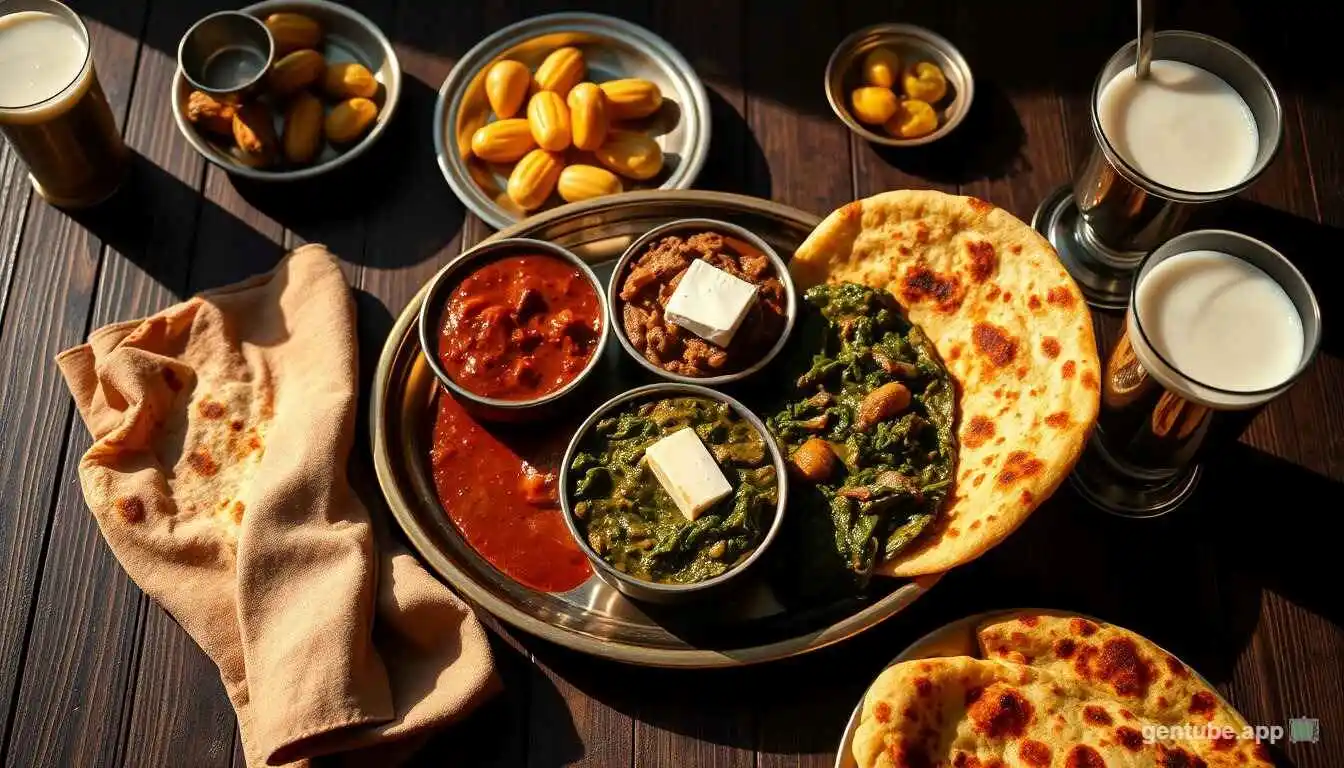
Why Punjabi Cuisine Rules the Culinary World
Close your eyes and imagine this: The night air is crisp, carrying the faint scent of woodsmoke. In the distance, you hear the rhythmic thud of a heavy wooden pestle against a stone mortar. A clay tandoor glows amber, and the heady, intoxicating aroma of melting ghee, toasted cumin, and charred dough wraps around you like a warm blanket. You aren’t just smelling food; you are inhaling the very soul of Punjab.
Punjabi cuisine is not for the faint of heart. It is a cuisine of grand gestures, unapologetic flavors, and astronomical caloric warmth. It is the culinary equivalent of a bear hug from a giant, smiling uncle. While other culinary traditions might pride themselves on minimalism and delicate plating, Punjabi food proudly boasts of abundance. It demands that you unbutton your pants, wipe the sweat from your brow, and surrender to the sheer bliss of a meal cooked with fire, fat, and an overwhelming amount of love.
But to reduce Punjabi cuisine to just “curry and naan” is a culinary crime. It is a complex, deeply historical, and regionally diverse gastronomic universe that has shaped the way the world eats Indian food today. From the fertile fields watered by five rivers to the bustling dhabas (roadside eateries) lining the highways of North India, Punjabi cuisine is a story of agricultural triumph, communal spirit, and the magical transformation of humble ingredients into legendary feasts.
Grab a plate, and let’s dive fork-first into the rich, buttery, and blisteringly spicy world of authentic Punjabi cuisine.
The Five Rivers of Flavor: How Geography Shaped the Punjabi Plate
To understand the food, you must first understand the land. The very word Punjab translates to “Land of Five Rivers” (Punj means five, Aab means water). This fertile region, now split between India and Pakistan, is the breadbasket of the subcontinent. The alluvial soil deposited by the Beas, Sutlej, Ravi, Chenab, and Jhelum rivers yields some of the finest wheat, mustard, and basmati rice on the planet.
The Agrarian Heartbeat
Punjab is, at its core, an agrarian society. The rhythms of the farm dictate the rhythms of the kitchen. Farmers working from dawn to dusk in the fields required food that provided sustained energy. This is why the Punjabi diet is heavily reliant on whole grains like wheat and maize, and protein-rich lentils. A simple lunch of makki di roti (cornbread) and sarson da saag (mustard greens) isn’t just a cultural icon; it’s perfectly calibrated fuel for a long day of harvesting.
The Great Divide
It is crucial to note that before 1947, Punjab was undivided. The partition of India split the region, taking with it many culinary traditions. Western Punjab (now in Pakistan) leaned heavily toward meat-centric diets, while Eastern Punjab (in India) developed a more balanced approach, with a massive emphasis on dairy and vegetarian fare, largely due to the influence of Sikhism and the sheer abundance of milk-producing cattle. Today, when the world speaks of Punjabi cuisine, it is largely referencing the vibrant, dairy-heavy, tandoor-loving culture of Indian Punjab.
Playing with Fire: The Tandoor Revolution That Changed Global Dining
You cannot speak of Punjabi cuisine without bowing at the altar of the tandoor. This cylindrical clay oven, heated by charcoal or wood fire, is the beating heart of the Punjabi kitchen. It is believed that the tandoor has existed in the Indus Valley civilization for over 5,000 years, but it was the Punjabis who elevated it to an art form.
The Magic of the Clay
What makes the tandoor so special? It’s the heat. A well-fired tandoor can reach temperatures upwards of 480°C (900°F). When meat marinated in yogurt and spices—like the iconic Tandoori Chicken—is slapped against the inner clay walls, the extreme heat instantly sears the outside, locking in the juices while the fat renders and drips onto the coals below. This creates smoke that flavors the meat from the outside in.
From Local Oven to Global Phenomenon
For centuries, the tandoor was largely a community oven, a place where families would bring their dough to bake daily bread. But in the mid-20th century, a man named Kundan Lal Gujral changed the world. After fleeing Peshawar during the partition, he set up a restaurant in Delhi called Moti Mahal. He took the tandoor out of the communal setting and put it center stage in a commercial kitchen. By doing so, he introduced the world to Tandoori Chicken, and subsequently, the legendary Butter Chicken. Today, you can find a tandoor in almost every major city on Earth, a testament to the smoky, charred perfection of Punjabi cooking.
The Winter Crown Jewels: Unraveling the Magic of Sarson da Saag and Makki di Roti
If Punjabi cuisine has a royal couple, it is undoubtedly Sarson da Saag and Makki di Roti. This dish is not just food; it is a seasonal obsession, a cultural touchstone, and the ultimate comfort food for millions when the winter chill sets in.
The Green Goddess
Sarson (mustard greens) has a distinct, slightly bitter, and pungent flavor that is an acquired taste for some, but an absolute addiction for Punjabis. The preparation of the saag is a labor of love. The greens are meticulously cleaned, chopped, and boiled for hours until they collapse into a dark, sludgy, nutrient-dense paste. Traditionally, this paste is then vigorously beaten with a madani (a wooden churner) to give it a silky, velvety texture. Bathua (goosefoot) and spinach are often added to balance the bitterness of the mustard.
The Golden Cornbread
Makki di roti is made from cornmeal, which lacks the gluten of wheat flour. This makes it notoriously difficult to roll out. The dough must be patted by hand into flat discs, often using a damp cloth as a base. When slapped onto a hot tawa (flat griddle) and cooked until charred spots appear, it develops a beautiful, nutty aroma and a crispy exterior that gives way to a crumbly, sweet interior.
The Holy Trinity of Accoutrements
A plate of saag and roti is naked without its three essential companions: a generous dollop of fresh, unsalted white butter (makhan), a side of gur (jaggery), and a tall glass of lassi. The butter melts into the hot greens, the jaggery provides a sweet counterpoint to the earthy spice, and the lassi washes it all down. It is a masterclass in flavor balancing, rooted in the harsh realities and beautiful produce of the Punjabi winter.
The Dark Art of Dal Makhani: Slow-Cooked Black Gold
If there is a dish that proves patience is a culinary virtue, it is Dal Makhani. Translating to “buttery lentils,” this dish is the ultimate expression of Punjabi indulgence. It is rich, dark, creamy, and impossibly complex.
The Humble Ingredients
The base of Dal Makhani is incredibly simple: whole black lentils (urad dal) and red kidney beans (rajma). Yet, the final product tastes like something fit for emperors. The magic lies entirely in the technique.
The Overnight Simmer
Traditional Dal Makhani is not a weeknight meal; it is a 24-hour commitment. The lentils are soaked overnight, then simmered slowly over a low flame—often overnight again—with tomatoes, ginger, garlic, and a potent spice blend. The slow cooking allows the lentils to break down naturally, releasing their starches to create a thick, creamy gravy without any artificial thickeners.
The Butter and the Dhungar
The name “makhani” implies the generous use of makhan (butter). But the true secret of the restaurant-style Dal Makhani is a technique called dhungar. This involves placing a small piece of burning charcoal in a steel katori (small bowl), placing it in the pot of dal, pouring a spoonful of ghee over the coal, and immediately covering the pot. The smoke infuses the lentils with an intense, woody, smoky aroma that mimics the flavor of a tandoor. It is this smokiness, combined with a final swirl of heavy cream and butter, that elevates a humble lentil stew into black gold.
The Butter Chicken Saga: How a Happy Accident Conquered the World
No discussion of Punjabi cuisine is complete without paying homage to its most famous export: Butter Chicken (Murgh Makhani). It is the dish that introduced millions to the magic of Indian spices, becoming the gateway curry for an entire generation of food lovers worldwide.
The Birth of a Legend
The story of Butter Chicken is a tale of necessity and genius. In the 1950s, at the Moti Mahal in Delhi, the restaurant was left with a surplus of tandoori chicken at the end of the night. In those days without refrigeration, the chicken would dry out by morning. Kundan Lal Gujral, the owner, decided to simmer the leftover dried tandoori chicken in a gravy made of tomatoes, butter, and cream to rehydrate it and give it a second life.
Deconstructing the Gravy
What makes the Butter Chicken gravy so unique? It is the absence of onions. Unlike many North Indian curries that rely on an onion-garlic-ginger base, authentic Butter Chicken relies almost entirely on tomatoes. The tomatoes are pureed and cooked down for hours until the acidity is completely neutralized and the natural sugars caramelize. Then, an absurd amount of butter and cream is added, along with a subtle blend of aromatic spices like garam masala, dried fenugreek leaves (kasuri methi), and a touch of honey or sugar. The result is a sweet, savory, smoky, and slightly tangy gravy that clings to the tender pieces of chicken.
It is a happy accident that spawned a global empire, and it remains the gold standard by which all Indian restaurants are judged.
The Breadbasket of India: A Love Letter to Punjabi Rotis and Parathas
In Punjab, a meal without bread is simply a snack. While rice is reserved for special occasions or the summer months, wheat and corn are the daily staples. The Punjabi mastery over dough is unparalleled.
The Phulka vs. Chapati Debate
While often used interchangeably globally, in Punjab, there is a difference. A chapati is a flatbread cooked on a tawa, then finished on an open flame where it puffs up like a balloon. A phulka is essentially the same, but much thinner, eaten immediately, and often tears as the steam escapes. Both are slathered with ghee and used as scoops to mop up gravies and dal.
The Stuffed Paratha: A Meal in Itself
If you want to experience true Punjabi decadence, look no further than the stuffed paratha. A dough pocket encasing a spiced filling, rolled out and pan-fried in ghee or oil until crispy and flaky.
- Aloo Paratha: Stuffed with spiced mashed potatoes, the undisputed king of breakfast.
- Gobi Paratha: Filled with lightly spiced grated cauliflower.
- Paneer Paratha: Stuffed with crumbled, seasoned cottage cheese.
- Mooli Paratha: Packed with spiced, grated radish, a winter specialty.
The ritual of eating a paratha is sacred. It must be served piping hot off the tawa, smeared with a thick layer of white butter, accompanied by a bowl of fresh curd (dahi), and a sharp, sour mango pickle (achaar).
The Mighty Kulcha
A close cousin to the naan, the Kulcha is a leavened bread made from maida (refined flour). While a naan is typically plain or brushed with butter, a Kulcha is often stuffed. The most famous is the Amritsari Kulcha, a gigantic, crispy, golden bread stuffed with spiced potato and paneer, baked in a tandoor, and served with a fiery chickpea curry (chole) and a tangy onion chutney. It is a textural masterpiece—crunchy on the outside, soft and pillowy on the inside.
Chaos, Spice, and Everything Nice: The Adrenaline Rush of Punjabi Street Food
To truly understand the pulse of Punjab, you must stand at a crowded, noisy street corner and eat with your hands. Punjabi street food is not just about sustenance; it is a high-octane performance art.
Chole Bhature: The Breakfast of Champions
If you haven’t eaten Chole Bhature for breakfast, you haven’t truly woken up. This is a dish of contrasts. The chole are chickpeas cooked in a dark, intensely spiced gravy heavily reliant on a special chole masala (a blend of pomegranate seeds, black cardamom, and black salt) and a tea bag to give them a deep, dark hue. The bhature are giant, fluffy, deep-fried bread made from fermented maida dough. Served with raw sliced onions, green chilies, and a wedge of lime, it is heavy, greasy, and absolutely magnificent.
Amritsari Fish Fry
Punjab might be landlocked, but that hasn’t stopped it from creating one of India’s greatest fried foods. Boneless chunks of Singhara (catfish) or Sole are marinated in a potent paste of ginger, garlic, carom seeds (ajwain), and chaat masala, coated in a crisp batter of gram flour, and deep-fried until golden. The ajwain gives it a distinct, earthy flavor that cuts through the richness of the fish, making it the perfect accompaniment to a cold beer or a tall glass of iced tea.
Papdi Chaat and the Art of Sweet-Sour-Spicy
Punjabi chaat is a sensory explosion. Crispy fried dough wafers (papdi), boiled potatoes, chickpeas, and yogurt are layered in a bowl, then drenched in sweet tamarind chutney and spicy green mint chutney. The final touch is a shower of crunchy sev (thin chickpea flour noodles) and a dusting of chaat masala. It is a chaotic symphony of textures (crispy, soft, liquid) and flavors (sweet, sour, spicy, salty) that dances on the palate.
The Tangy Sidekick: Why No Punjabi Meal is Complete Without Achaar
In Punjab, a meal is not finished until the pickle jar is opened. Achaar is the fiery, tangy, pungent condiment that sits on every table, from the humblest village home to the most luxurious restaurant.
The Science of Sun and Oil
Punjabi pickles are not your Western vinegary cucumbers. They are made by curing raw fruits or vegetables in salt, sun, and copious amounts of mustard oil. The salt draws out the moisture, the sun ferments and matures the produce, and the mustard oil acts as a preservative and a pungent flavor carrier.
The Big Three
- Aam ka Achaar (Mango Pickle): Made with raw, sour mangoes, fennel, fenugreek, nigella seeds, and mustard oil. It is tart, spicy, and an absolute necessity with parathas.
- Gobhi-Gajar-Shalgam (Cauliflower, Carrot, and Turnip Pickle): A winter specialty, these vegetables are left to steep in a sweet, sour, and spicy mustard base.
- Mirch ka Achaar (Chili Pickle): Large, mild green chilies stuffed with a tangy spice mix and soaked in oil. It is a punch to the palate in the best way possible.
A tiny dollop of achaar on a piece of roti is enough to elevate a plain meal into a feast. It is the taste of home, preservation, and tradition.
A Sweet Tooth’s Paradise: Decoding the Sugar-Laden Soul of Punjabi Mithai
Punjabis have a saying: “Khaate peete ghar ki baat hai” (It’s the talk of a home that eats and drinks well). And no Punjabi meal, celebration, or even a casual visit to a neighbor’s house is complete without mithai (sweets). Punjabi sweets are not dainty; they are dense, heavily sweetened, and drenched in ghee.
The Mighty Ladoo
The Besan ka Ladoo (gram flour sweet) is a masterpiece of caramelization. Gram flour is roasted in ghee for an agonizingly long time until it releases a nutty aroma and turns a deep golden brown. It is then mixed with powdered sugar and cardamom, and rolled into dense, crumbly spheres. It is heavy, rich, and utterly addictive. The Pinni, a winter variant made with whole wheat flour, ghee, jaggery, and edible gum (gond), is traditionally given to new mothers to help them regain their strength.
Jalebi: The Breakfast Dessert
In Punjab, jalebi isn’t just a dessert; it’s a legitimate breakfast item. A fermented batter of flour is piped into hot oil in concentric circles, deep-fried until crispy, and then immediately soaked in a warm saffron-cardamom sugar syrup. Eaten hot, often paired with a glass of thick, creamy milk, the contrast between the crisp exterior and the juicy, syrup-soaked interior is a textural marvel.
Kheer and Phirni
For a cooler, more refined sweet, there is Kheer (rice pudding). Slow-cooked rice in milk, simmered for hours until the milk reduces and caramelizes, flavored with cardamom, saffron, and slivered almonds. Phirni is its elegant cousin, made with ground rice instead of whole grains, set in earthen pots, and served chilled. The earthen pot imparts a distinct, earthy aroma to the sweet, making it the perfect end to a spicy meal.
Churn, Chill, and Cheers: The Epic Tale of Lassi and Punjabi Chai
To combat the fiery spices and the blistering heat of the Indian summer, Punjabis have mastered the art of dairy-based beverages.
The Lassi: A Meal in a Glass
Walk into any dhaba in Punjab, and you will be handed a tall, steel glass of Lassi that is nearly half a liter. This is not a delicate smoothie; it is churned yogurt, water, and an avalanche of sugar or salt.
- Meethi (Sweet) Lassi: Whipped to a frothy, bubbly consistency, often topped with a generous spoonful of clotted cream (malai) and a dash of rosewater or cardamom. It is thick enough to stand a spoon in.
- Khatti (Sour) Lassi: Salted, often flavored with roasted cumin powder and black salt, it is an incredibly refreshing probiotic drink that cools the stomach and aids digestion after a heavy meal.
The Desi Cow: Milk as a Way of Life
Punjab’s relationship with dairy is sacred. The water buffalo and the cow are not just livestock; they are the providers of the two most important liquids in the Punjabi kitchen: milk and ghee. Every morning, the doodhwala (milkman) delivers fresh, unpasteurized milk. It is boiled, the thick layer of cream (malai) is skimmed off to be churned into butter, and the remaining buttermilk (chaas) is consumed throughout the day.
Punjabi Chai: Spiced Liquid Comfort
While South India might have its filter coffee, North India runs on kadak (strong) Punjabi chai. Black tea leaves are boiled directly in a mixture of water and milk, rather than steeped. It is simmered with crushed green cardamom, ginger, and sometimes fennel seeds. The result is a thick, spiced, caramelized milk tea that is robust, sweet, and the ultimate accompaniment to a crispy samosa or a buttered toast.
The World’s Largest Kitchen: Feeding the Masses at the Golden Temple
The pinnacle of Punjabi culinary philosophy is not found in a Michelin-starred restaurant, but in the communal kitchen of the Harmandir Sahib (The Golden Temple) in Amritsar. The Langar is a free, communal meal served to all visitors, regardless of faith, caste, or creed, 24 hours a day, 365 days a year.
The Scale of Seva
The kitchen operates on a scale that is almost incomprehensible. Every single day, an estimated 100,000 people are fed. On religious holidays, that number swells to over 500,000. The kitchen uses hundreds of tons of flour, thousands of gallons of milk, and tons of lentils daily.
The Mechanics of the Mega-Kitchen
The making of the rotis is a marvel of human coordination. Volunteers sit in massive assembly lines, rolling out dough and slapping it onto hot cast-iron tawas. As one side cooks, the roti is flipped by another volunteer, and then another, before being moved to a conveyor belt that carries it into an industrial oven to puff up.
Giant vats, large enough to bathe in, are used to cook the dal and the kheer. Stirring these vats requires people wielding wooden paddles the size of oars, walking in circles around the rim of the pot.
The True Flavor of Punjab
The food served at the Langar is simple: dal, roti, kheer, and a vegetable. But it is considered the most blessed food in the world. The concept of Seva (selfless service) dictates that the food is prepared with devotion, served with humility, and eaten sitting on the floor as equals. It is a profound reminder that in Punjab, food is not just fuel for the body; it is a spiritual act, a great equalizer, and the ultimate expression of love and community.
The Global Punjabi: How Dhaba Culture Conquered the Culinary World
The story of Punjabi cuisine does not end at the borders of India. Following the partition and later during the economic migrations of the 20th century, Punjabis took their recipes across the globe. From the curry houses of London to the food trucks of Toronto, Punjabi food has become the de facto face of Indian cuisine internationally.
The Dhaba Diaspora
The original dhabas were simple, mud-plastered shacks on the side of the Grand Trunk Road, built to feed weary truck drivers. They were characterized by charpais (woven beds) to sit on, brass thalis (plates), and unapologetically rich, spicy food served with copious amounts of ghee.
As Punjabis migrated, they opened these roadside eateries everywhere. They adapted their tandoors to urban environments, tweaked their gravies for Western palates (often adding more cream and tomato), and introduced the world to the concept of the “Curry House.” While the food served in these global outposts may be a slightly anglicized version of the original, the spirit of warmth, hospitality, and robust flavor remains fiercely Punjabi.
The Final Bite: More Than Just a Meal
https://youtu.be/UvQXMzXTiNc

