

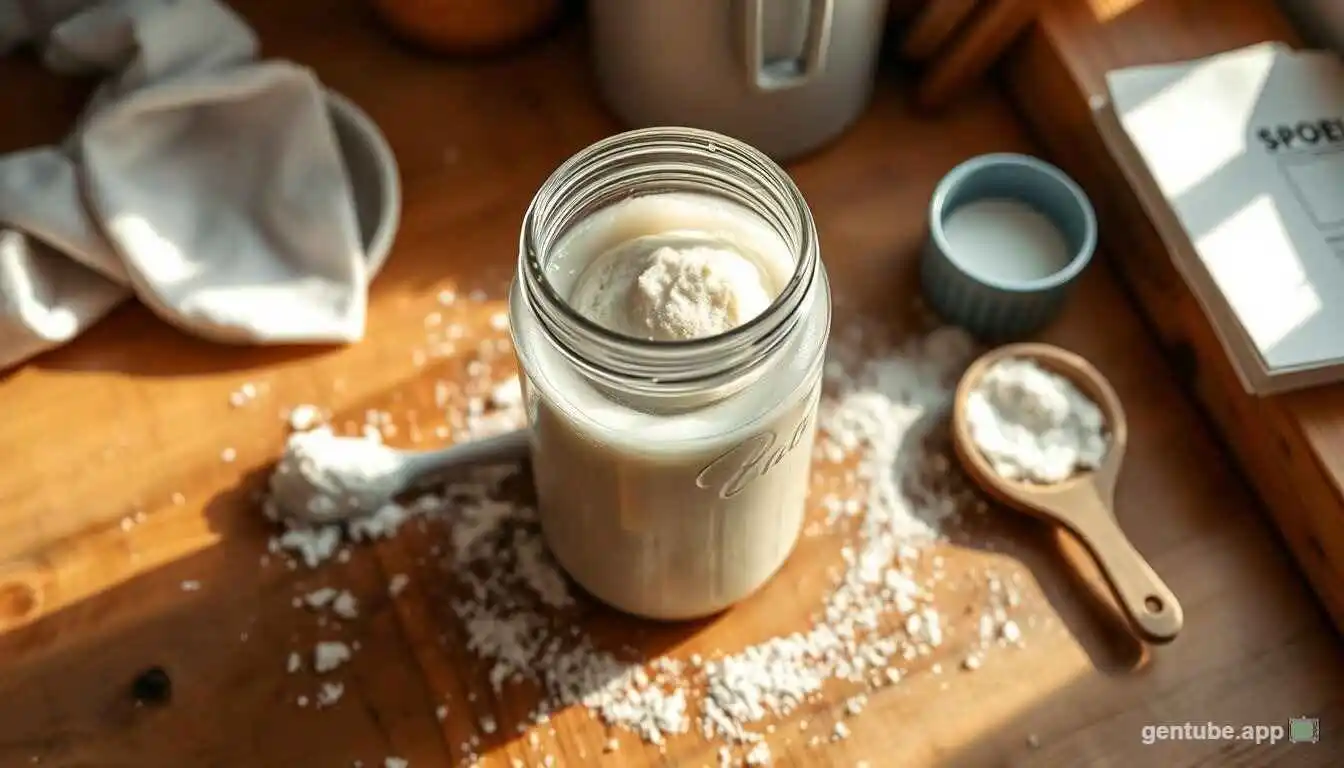
Once you’ve successfully baked a loaf or two, the temptation is to relax the routine — feed a little less consistently, eyeball measurements instead of weighing them, let the starter sit a bit longer between uses. Most experienced bakers will tell you this is exactly the point where a little extra discipline pays off the most. A starter maintained on a steady, predictable schedule becomes more forgiving over time, not less, because a stable microbial balance is more resilient to the occasional missed feeding or off day than a culture that’s still finding its footing.
It’s also worth remembering that your starter will keep evolving long after your first successful bake. Flavor can shift subtly with the seasons as kitchen temperatures change, and many bakers notice their starter becomes noticeably more sour or more mild depending on how often it’s fed and how long it sits between uses. Rather than treating this as something to fight against, experienced bakers often lean into it, adjusting feeding frequency and flour type to nudge the flavor profile toward whatever they’re craving for that week’s bake — a small, ongoing collaboration between baker and culture that never really has a finish line.
Conclusion: Trust the Process, Trust the Jar
A sourdough starter rewards patience more than perfection. There will be days it looks flat and unimpressive, days it smells stronger than you expected, and days you’re convinced you’ve killed it — and more often than not, it’s simply hungry, not dead. Feed it consistently, watch how it responds to your kitchen’s unique rhythm, and give it the time real fermentation actually requires. What you’ll end up with isn’t just a leavening agent, but a living piece of your kitchen that, with basic care, can outlast the bread you bake with it by years, even generations. The first loaf is exciting — but the starter behind it is the real secret worth keeping.
FAQS
1.What exactly is a sourdough starter?
A sourdough starter is a live mixture of flour and water that has captured wild yeast and lactic acid bacteria from the environment and the flour itself. Once active, it’s a self-sustaining fermentation culture that can leaven bread without any commercial yeast.
2.How long does it take to make a starter from scratch?
Most starters take between seven and fourteen days to become reliably active, though some come alive in as little as five days. Kitchen temperature, flour type, and how consistently you feed it all influence the timeline, so patience matters more than any exact schedule.
3.What’s the ideal flour-to-water ratio for a new starter?
A 1:1:1 ratio by weight — equal parts starter, flour, and water — is the easiest starting point for beginners because it’s simple to measure and keeps the mixture at a medium, easy-to-read consistency. You can adjust hydration later once you understand how your starter behaves.
4.Should I use bottled water or tap water?
If your tap water is heavily chlorinated, it can suppress the wild yeast and bacteria you’re trying to cultivate, so filtered or bottled water is the safer choice, especially in the first two weeks. Once the culture is established, most tap water becomes less of a concern.
5.What type of flour works best for starting a culture?
Whole wheat or rye flour tends to jumpstart fermentation faster than all-purpose flour because it carries more of the natural yeast, bacteria, and nutrients found in the bran and germ. Many bakers begin with whole wheat or rye and then transition to all-purpose or bread flour once the starter is active.
6.Why isn’t my starter rising at all in the first few days?
It’s completely normal for a new starter to show little to no activity for the first two to four days while wild yeast populations are still establishing themselves. Visible bubbling and rising typically doesn’t begin until closer to day five or later.
7.What does a ‘healthy’ starter actually look like?
A healthy, active starter is full of bubbles throughout, has roughly doubled in size a few hours after feeding, and has a pleasant tangy, slightly yeasty smell. It should also pass the float test, where a small spoonful dropped in water floats rather than sinks.
8.What is the float test, and how do I do it?
Drop a small spoonful of starter into a glass of room-temperature water. If it floats, the culture has trapped enough gas to be considered active and ready for baking; if it sinks, it likely needs more time or another feeding before use.
9.How often should I feed my starter?
During the initial building phase, feed it once every 24 hours. Once established and kept at room temperature, most bakers feed daily or every 12 hours if they bake frequently, while a refrigerated starter can go about a week between feedings.
10.Can I skip a feeding if I’m busy?
An occasional missed feeding at room temperature won’t necessarily kill an established starter, though it may become more acidic and sluggish. If you know you’ll be away, it’s safer to refrigerate the starter first, which slows fermentation considerably.
11.What’s the difference between discard and active starter?
Active starter is the portion that has been recently fed and is bubbly and ready to leaven bread, while discard is the excess starter removed before or during a feeding to keep the culture size manageable. Discard has less leavening power but is still full of flavor, making it useful in recipes like pancakes or crackers.
12.Why do I need to discard part of my starter before feeding?
Discarding keeps the ratio of fresh flour to existing culture balanced, which is essential for maintaining a stable, predictable fermentation. Without discarding, the container would grow indefinitely and the culture would become overly acidic and unbalanced.
13.Is it wasteful to throw away starter discard?
It doesn’t have to be. Many bakers repurpose discard into pancakes, waffles, crackers, muffins, and pizza dough rather than throwing it away, turning a routine maintenance step into extra kitchen use.
14.What does a layer of liquid on top of my starter mean?
That grayish or brownish liquid, often called ‘hooch,’ is alcohol produced when the culture has gone longer than usual without food. It’s a normal sign of hunger, not spoilage — simply pour it off or stir it in, then feed the starter as usual.
15.Is hooch a sign my starter is dying?
No, hooch is a normal byproduct of fermentation and simply indicates the starter is hungry, not that it has failed. A starter can produce hooch repeatedly over its lifetime, especially if feeding intervals are stretched out.
16.How do I know if my starter has actually died?
A truly dead starter typically shows persistent mold growth, an intensely unpleasant or rotten smell (rather than tangy or yeasty), or a complete lack of any bubbling activity even after several consistent feedings. True die-off is less common than people fear — most sluggish starters can be revived.
17.What causes mold on a starter, and what should I do?
Mold usually appears as fuzzy spots in colors like pink, orange, black, or green, and results from contamination, often due to inconsistent feeding or an unclean container. Unlike hooch, mold means the batch should be discarded entirely rather than salvaged, since mold can penetrate deeper than what’s visible.
18.Can I leave my starter at room temperature all the time?
Yes, if you bake often. Room-temperature starters ferment faster and need more frequent feeding, generally once or twice a day, making this approach best suited for bakers who use their starter regularly.
19.Should I refrigerate my starter, and how does that change feeding?
Refrigeration is ideal for less frequent bakers, since cold temperatures slow the yeast and bacteria activity significantly, letting you feed only once every seven to ten days. Just remember to bring it back to room temperature and feed it a few times before baking with it.
20.What size jar should I use for my starter?
A wide-mouth glass jar with at least double the capacity of your starter’s fed volume is ideal, since it needs room to rise and you’ll want easy access for stirring and scraping. Wide openings also make cleaning between feedings much simpler.
21.Should I cover my starter tightly or loosely?
A loose-fitting lid, a cloth secured with a rubber band, or a lid with a small vent is preferable, since the culture needs some airflow and produces gas that can build pressure in a fully sealed container.
22.Why does my starter smell like acetone or nail polish remover?
A sharp, acetone-like smell usually means the starter is very hungry and has produced excess alcohol and acetic acid due to an extended gap between feedings. A fresh feeding, sometimes with a partial discard first, typically resolves the smell within a day or two.
23.Can I use my starter straight from the fridge?
It’s best to take it out, discard a portion, feed it, and let it become active and bubbly at room temperature before baking, rather than using it cold and unfed. Cold, unfed starter has much weaker leavening power.
24.How many times should I feed my starter before baking with it?
Most bakers feed their starter at least once, and often twice, in the 24 hours before baking to ensure it’s at peak activity, doubling reliably and passing the float test, before mixing it into dough.
25.What’s the ideal room temperature for a thriving starter?
Somewhere between 70 and 80°F (21–27°C) tends to produce the most reliable, consistent fermentation. Cooler rooms slow activity considerably, while much warmer environments can cause the culture to ferment too quickly and become overly sour.
26.Can I speed up a sluggish starter?
Feeding more frequently, using whole grain flour for a feeding or two, and moving the starter to a slightly warmer spot, such as inside an oven with just the oven light on, can all help revive sluggish activity.
27.Why did my starter rise well one day and barely at all the next?
Small fluctuations in kitchen temperature, flour freshness, or feeding timing can all cause day-to-day variation in activity, and this is completely normal even for well-established starters. Consistency in feeding schedule tends to smooth out these swings over time.
28.Do I need a kitchen scale to maintain a starter?
While not strictly required, a digital kitchen scale makes feedings far more accurate and consistent than measuring by volume, since flour and water don’t pack the same way every time. Most experienced bakers consider a scale essential for predictable results.
29.Can I make bread with a starter that isn’t fully mature yet?
You can, but a young or underdeveloped starter often lacks the leavening strength for a good rise, which can result in dense, flat bread. Waiting until it reliably doubles and passes the float test will give far more consistent baking results.
30.What’s the biggest mistake first-time sourdough bakers make?
Giving up too early is by far the most common mistake, since many beginners expect a fully active starter within a few days when two weeks or more of patient, consistent feeding is often what’s actually required. A quiet, seemingly inactive starter in the first week is rarely a sign of failure.
Medical Disclaimer: The information provided on this website is for general educational and informational purposes only and is not intended as a substitute for professional medical advice, diagnosis, or treatment. Always seek the advice of your physician or other qualified health provider with any questions you may have regarding a medical condition. Never disregard professional medical advice or delay in seeking it because of something you have read on this website.

