

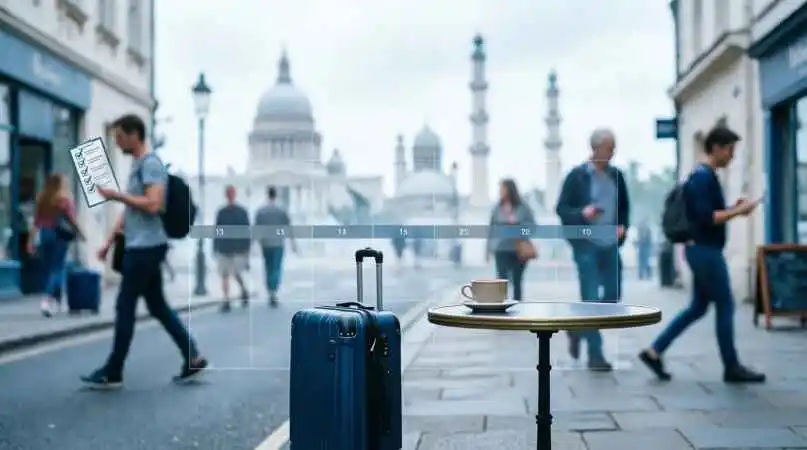
The Vacation Nobody Rushes: Why Doing Less Is Becoming Travel’s Biggest Flex
A growing number of travelers are deliberately visiting fewer places, staying longer in each one, and skipping the bucket-list sprint entirely. Here is what slow travel actually is, and why the psychology behind it makes a genuinely compelling case.
A Rebellion Against the Ten-Cities-in-Two-Weeks Itinerary
For decades, an efficient vacation meant covering as much ground as possible: a European tour hitting five countries in ten days, a checklist of landmarks photographed and crossed off, a trip measured by how many stamps a passport collected rather than how deeply any single place was actually experienced. Slow travel represents a deliberate rejection of that model, built instead around staying in fewer destinations for meaningfully longer periods, weeks or even months in a single place, prioritizing depth of experience over breadth of coverage.
This is not simply a scheduling preference; it reflects a genuine philosophical shift in what travelers are seeking from a trip in the first place, moving away from the accumulation of sights seen toward something closer to temporarily inhabiting a place, learning its rhythms, and building a genuine, if brief, familiarity with it, an approach that has grown from a niche preference among a small subset of long-term travelers into a mainstream trend actively shaping how travel companies, accommodation platforms, and destination marketers now think about the traveler experience. Understanding exactly why this slower approach resonates so strongly, both psychologically and practically, explains why it has proven far more durable than a passing travel fad.
What Slow Travel Actually Means in Practice
Slow travel typically involves basing oneself in a single location, a city, town, or region, for an extended stay, generally a week at minimum and often considerably longer, rather than moving between multiple destinations every few days. During that stay, the emphasis shifts toward everyday activities most tourists skip entirely: shopping at local markets rather than eating exclusively at tourist-oriented restaurants, learning to navigate public transportation independently, developing a rough sense of the local rhythm and routine, and allowing unstructured time for a place to reveal itself gradually rather than packing every day with scheduled sightseeing.
This does not mean slow travel excludes sightseeing entirely; rather, it treats major sights as one component of a broader, more textured experience rather than the entire point of the trip, often visited more thoughtfully and with less time pressure than a rushed, single-day visit squeezed between two other cities would allow.
The Psychological Research Behind Why This Feels Better
Slow travel’s growing popularity is not purely an aesthetic or values-driven preference; it aligns with genuine findings from psychological research on travel satisfaction and memory formation. Research on hedonic adaptation, the well-documented tendency for the emotional intensity of any experience to diminish with repeated exposure, helps explain why a rapid succession of new sights and experiences during a whirlwind multi-city trip can paradoxically produce a kind of experiential fatigue, where each successive landmark or city registers with diminishing emotional impact compared to what a more spaced-out, unhurried encounter with fewer places might produce.
Memory research offers a complementary insight: studies on autobiographical memory formation suggest that experiences accompanied by deeper emotional engagement and more elaborate contextual detail, precisely the kind of engagement more likely during an extended, unhurried stay than a rushed one-day visit, tend to be encoded more vividly and recalled more richly later, offering a research-supported explanation for why travelers often report remembering a single, immersive week somewhere more clearly and fondly than a rapid seven-city tour covering the same total trip length.
A rushed seven-city tour and a single unhurried week in one place can take the same number of days, yet only one of them tends to be remembered clearly a year later.
The Genuine Sustainability Case for Slow Travel
Beyond the psychological and experiential arguments, slow travel carries a meaningful environmental case as well. Concentrating travel time in fewer locations directly reduces the number of long-distance flights or transfers required for a given trip length, since a traveler spending three weeks in a single region generates considerably lower per-day transportation emissions than a traveler covering the same three weeks across five separate flights between distant cities, a straightforward mathematical reality that gives slow travel a genuine, quantifiable sustainability advantage over rapid multi-destination itineraries covering similar total trip duration.
Slow travel also tends to distribute tourism spending more evenly and meaningfully within a single local economy, since an extended stay typically involves more everyday local spending, groceries, neighborhood services, longer-term accommodation, than a brief visit concentrated entirely around major tourist attractions and hotel chains, a pattern several sustainable tourism researchers and destination management organizations have specifically highlighted as a genuinely positive economic distribution effect worth encouraging deliberately.
How Remote Work Quietly Enabled This Trend
The rapid, widespread adoption of remote and hybrid work arrangements has been one of the most significant practical enablers of slow travel’s growth, since a genuinely flexible work arrangement removes the traditional constraint that once confined most travel to a standard one- or two-week vacation allotment. Digital nomads and remote workers with location flexibility have driven considerable growth in extended-stay travel, with several countries specifically introducing dedicated digital nomad visas in recent years, formal legal pathways designed to accommodate exactly this kind of extended, work-integrated travel that did not previously fit neatly into standard tourist visa frameworks.
This shift has also reshaped accommodation markets meaningfully, with platforms and property managers increasingly offering discounted weekly and monthly rates specifically designed to attract slow travelers, a pricing structure that has, in turn, made extended stays considerably more financially accessible and appealing than they would be at standard nightly hotel rates, creating a genuinely reinforcing cycle between remote work flexibility and slow travel’s growing practical accessibility.
The Real Cost Comparison Worth Understanding
A common and reasonable assumption is that longer trips cost proportionally more than shorter ones, but slow travel often defies this assumption in genuinely interesting ways. Extended-stay accommodation, whether a monthly apartment rental or a long-term hotel rate, typically carries a meaningfully lower per-night cost than short-term nightly bookings, since accommodation providers generally offer substantial discounts in exchange for the booking stability and reduced turnover overhead that a longer reservation provides.
Beyond accommodation, slow travelers typically spend considerably less per day on food and activities once settled into a location, since cooking at least some meals, shopping at local markets rather than tourist-oriented restaurants, and engaging in free or low-cost everyday activities rather than paid tourist attractions every single day all become more natural and appealing once someone is not racing against a compressed itinerary, meaning a genuinely honest cost comparison often favors slow travel more than the simple “more days must mean more money” assumption initially suggests.
Choosing a Base: What Actually Makes a Good Slow Travel Location
Selecting where to base a slow travel stay differs meaningfully from choosing a destination for a rapid, sightseeing-focused trip. Practical everyday livability factors, reliable public transportation, walkable neighborhoods, accessible grocery shopping, and a reasonable cost of living, matter considerably more for an extended stay than they would for a brief, hotel-based visit centered entirely around named tourist attractions.
Many experienced slow travelers specifically recommend choosing a base location within a broader region of interest, a mid-sized city or town rather than the single most famous, and often most expensive and crowded, city in that region, since a well-chosen secondary location often allows for day trips to nearby major attractions while offering a more genuinely livable, less tourist-saturated everyday experience during the majority of the stay itself.
The Skills Slow Travel Genuinely Builds
Beyond the experiential and psychological benefits already discussed, slow travel tends to build practical skills and comfort that rapid, heavily scheduled travel rarely allows time to develop, including genuine comfort navigating an unfamiliar public transportation system independently, basic conversational ability in a local language developed through repeated everyday interaction rather than a single tourist phrasebook exchange, and a more nuanced, ground-level understanding of a place’s actual daily life and culture, distinct from the curated, tourist-facing version most visitors encounter during a brief visit.
Many slow travelers specifically describe this skill-building and deeper cultural exposure as among the most personally meaningful aspects of the experience, distinct from and, for many, considerably more valuable than the specific sights seen or activities completed during the stay, a genuinely different kind of travel value than the achievement-oriented, checklist-based satisfaction that faster, more traditional sightseeing-focused travel tends to emphasize.
Who Slow Travel Genuinely Does Not Work Well For
It is worth being honest that slow travel is not a universally superior approach appropriate for every traveler or every trip. Travelers with limited total vacation time, a genuine constraint for many workers, particularly in countries with limited statutory paid leave, may reasonably prefer to maximize the number of distinct places seen during a rare, infrequent travel opportunity rather than spending an entire limited vacation allotment in a single location, a completely reasonable prioritization given real time constraints many travelers face.
Slow travel in a genuinely expensive destination can also erode some of its potential cost advantages if the specific location’s cost of living remains high regardless of stay length, and travelers specifically motivated by seeing a maximum number of iconic landmarks, a legitimate and common travel goal in its own right, may simply find less personal satisfaction in slow travel’s deliberately unhurried, less landmark-dense approach, reinforcing that slow travel represents one genuinely valuable approach among several reasonable ways to travel, not a universally correct replacement for faster, more traditional sightseeing-focused trips.
How the Travel Industry Has Responded
The travel industry has moved to accommodate and actively market toward slow travel’s growth, with several major accommodation platforms introducing dedicated long-stay booking categories and pricing structures, tour operators developing itineraries explicitly built around fewer destinations and longer stays, and destination marketing organizations increasingly promoting “live like a local” messaging specifically targeting slow travel-minded visitors rather than exclusively marketing toward rapid, landmark-focused sightseeing itineraries.
This industry response reflects genuine, measurable demand growth rather than simply anticipatory marketing repositioning, with several major travel booking platforms reporting meaningful year-over-year growth specifically in extended-stay bookings, a trend line that has proven durable enough across multiple recent years to be treated by industry analysts as a genuine, lasting shift in traveler behavior rather than a temporary, pandemic-driven anomaly likely to reverse once travel patterns fully normalized.
A Realistic Way to Try Slow Travel for the First Time
For travelers curious about slow travel but hesitant to commit an entire limited vacation allotment to a single untested approach, a reasonable starting point involves choosing one destination from what might otherwise have been a multi-city itinerary and extending the planned stay there meaningfully, even by just a few extra days, while deliberately leaving more unstructured time in the daily schedule rather than filling every day with planned activities and sightseeing.
Paying deliberate attention to how that extended, less scheduled time actually feels compared to previous, more rushed travel experiences offers a genuinely useful, low-commitment way to evaluate whether the broader slow travel philosophy resonates personally, before committing to a longer, more fully realized slow travel trip built entirely around the approach.
What Locals Actually Think About Slow Travelers
An underappreciated dimension of the slow travel conversation involves how residents of popular destinations actually experience extended-stay visitors compared to rapid, high-turnover tourism. Several destination communities dealing with overtourism pressures have specifically noted that slow travelers, who shop at neighborhood businesses, use everyday local services, and spend more time integrated into ordinary community life, tend to place meaningfully less strain on tourist-specific infrastructure and produce a noticeably different, often more positive, dynamic with local residents compared to the concentrated crowds and short attention spans characteristic of rapid sightseeing tourism.
This is not a universal pattern, since a sudden influx of longer-term visitors can, in some documented cases, contribute to its own set of local pressures, including rising long-term rental prices in popular slow-travel destinations as short and medium-term visitor demand competes with local housing needs, a genuine concern some cities have begun actively monitoring and, in certain cases, regulating, illustrating that slow travel is not automatically free of the community impact considerations that affect tourism more broadly, even as it generally represents a meaningfully different, often more locally embedded pattern than rapid mass tourism does.
The Broader Cultural Shift This Trend Reflects
Slow travel’s rise sits within a broader cultural pattern extending well beyond travel specifically, echoing similar “slow” movements in food, fashion, and lifestyle more generally, all sharing a common underlying reaction against a broader cultural emphasis on speed, quantity, and constant consumption in favor of depth, intentionality, and genuine presence. This broader cultural context helps explain why slow travel has resonated as durably and widely as it has, tapping into a set of values and concerns considerably larger than travel planning alone.
Whether this broader cultural shift continues to deepen or eventually gives way to a renewed emphasis on speed and quantity in travel and elsewhere, slow travel’s current momentum reflects a genuine, substantive reconsideration of what makes travel meaningful in the first place, one grounded in real psychological research, genuine sustainability benefits, and a growing number of travelers who have tried both approaches and consistently report finding one considerably more personally satisfying than the other.
FAQs
| Question | Answer |
| What is slow travel? | It is a travel approach focused on staying longer in fewer destinations rather than rapidly visiting many places. |
| How long does a slow travel stay typically last? | It generally starts at around a week and often extends to several weeks or months. |
| Is slow travel cheaper than traditional travel? | It often is, due to discounted long-stay accommodation rates and lower daily spending patterns. |
| Why does slow travel feel more memorable? | Research on memory formation suggests deeper, unhurried experiences are recalled more vividly. |
| What is hedonic adaptation in travel? | It is the tendency for excitement from new experiences to diminish with rapid repeated exposure. |
| Is slow travel more environmentally friendly? | Yes, fewer transfers and flights per trip generally reduce overall travel emissions. |
| How has remote work influenced slow travel? | It has removed traditional time constraints, enabling longer, more flexible stays. |
| What is a digital nomad visa? | It is a specific visa type allowing remote workers to legally stay and work in a country long-term. |
| What should I look for when choosing a slow travel base? | Walkability, public transportation, grocery access, and cost of living are key factors. |
| Is slow travel suitable for short vacations? | It works best with extended time, so it may not suit very limited vacation schedules. |
| Does slow travel mean skipping major attractions? | No, it simply treats attractions as part of a broader experience rather than the entire focus. |
| Can slow travel help with language learning? | Yes, extended stays allow more natural opportunities to practice a local language. |
| Is slow travel growing in popularity? | Yes, booking platforms report consistent growth in extended-stay travel demand. |
| What industries have responded to the slow travel trend? | Accommodation platforms, tour operators, and destination marketing boards have all adapted offerings. |
| Does slow travel benefit local economies? | Yes, it tends to distribute spending more broadly into everyday local businesses. |
| Is slow travel only for solo travelers? | No, it can be enjoyed by couples, families, and groups as well. |
| What is a good way to try slow travel for the first time? | Extend one stop on a planned trip and leave more unstructured time in the schedule. |
| Why do some travelers prefer fast, multi-city trips instead? | Limited vacation time or a goal of seeing many landmarks may make faster travel more appealing. |
| Does slow travel reduce travel fatigue? | Yes, a slower pace generally reduces the exhaustion associated with constant relocation. |
| What is the connection between slow travel and the slow food movement? | Both emphasize depth, intentionality, and quality over speed and quantity. |
| Can slow travel still include day trips? | Yes, many slow travelers use a base location to take occasional day trips nearby. |
| Is slow travel more common among younger travelers? | Yes, it is especially popular among remote workers and younger, flexible travelers. |
| Does slow travel require long-term accommodation booking? | It often does, though flexibility varies depending on the specific stay length chosen. |
| Can slow travel be combined with work? | Yes, many remote workers integrate work directly into extended slow travel stays. |
| Is slow travel a completely new concept? | No, extended, immersive travel has existed for a long time, though it has recently become more mainstream. |
| Does slow travel improve cultural understanding? | Yes, extended time in one place typically deepens genuine cultural exposure. |
| What is a common mistake first-time slow travelers make? | Overscheduling the stay instead of allowing sufficient unstructured time. |
| Can slow travel help avoid overtourism issues? | It can, especially when travelers choose secondary or less crowded destinations. |
| Is slow travel likely to remain popular long-term? | Industry trends suggest it reflects a lasting shift rather than a temporary trend. |
| What is the biggest overall benefit of slow travel? | A deeper, more meaningful, and often more memorable travel experience compared to rushed itineraries. |
Disclaimer: The content on this blog is for informational purposes only. The author’s opinions are personal and not endorsed. Efforts are made to provide accurate information, but completeness, accuracy, or reliability are not guaranteed. The author is not liable for any loss or damage resulting from the use of this blog. It is recommended to use the information on this blog at your own discretion.

