

My Aviyal Vegetables Turned Mushy
This usually happens when all the vegetables are added to the pot at the same time regardless of how long each one takes to cook. Always add harder vegetables like yam and raw banana first, and reserve quicker-cooking vegetables like ash gourd and beans for the final few minutes of simmering.
My Kalan Tastes Too Sour
An overly sour kalan is usually the result of using extremely old, over-fermented yogurt. Balance it by adding a small pinch of sugar or jaggery, which is a common trick in many Kerala households to round out an overly tangy batch without masking the yogurt flavor entirely.
My Coconut Paste Won’t Grind Smoothly
If your coconut paste feels dry or gritty rather than smooth, try adding water a tablespoon at a time while grinding rather than all at once, and make sure you’re using fresh or properly thawed coconut rather than coconut that has dried out in storage.
Conclusion: Two Curries, One Kerala Kitchen Tradition
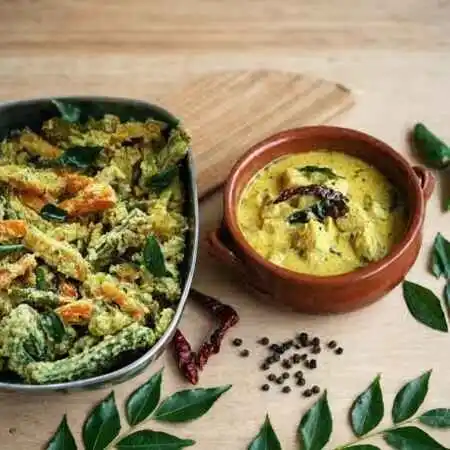
Aviyal and kalan may share a coconut base and a place on the same banana leaf, but they represent two very different philosophies of cooking. Aviyal celebrates abundance and variety, throwing together whatever the garden offers into one colorful, chunky dish finished with the unmistakable aroma of raw coconut oil. Kalan, by contrast, is about depth and patience, letting sour yogurt and black pepper slowly build a warmth that only gets better with time.
Mastering both recipes doesn’t just add two excellent dishes to your cooking repertoire, it opens a genuine window into Kerala’s culinary philosophy, where simple, seasonal ingredients are transformed through technique, patience, and a deep respect for balance. Whether you’re preparing a full Onam sadya or just want a comforting, coconut-rich curry on a weeknight, aviyal and kalan are two recipes worth having in permanent rotation.
FAQS
1.What is the main difference between aviyal and kalan?
Aviyal is a chunky mixed-vegetable curry soured with raw mango or yogurt and finished with raw coconut oil, while kalan is a thicker yogurt-based curry made mainly with plantain and yam, flavored primarily with black pepper.
2.Can I make aviyal without coconut oil?
You can substitute another oil, but the flavor will be noticeably different, since coconut oil’s raw, finishing aroma is one of the defining characteristics of authentic aviyal.
3.Why does my aviyal turn out watery?
This usually happens when too much water is used to cook the vegetables, or when the curry isn’t simmered long enough afterward to let the coconut paste thicken and bind everything together.
4.Can I use frozen grated coconut for these recipes?
Yes, frozen grated coconut works as a convenient substitute for fresh coconut in both recipes, though fresh coconut generally gives a slightly better texture and aroma.
5.What vegetables are traditionally used in aviyal?
Classic choices include raw banana, yam, drumstick, carrot, beans, ash gourd, and cucumber, though the exact mix varies by household and by what vegetables are in season.
6.Is aviyal always vegetarian?
Yes, aviyal is a traditional vegetarian dish and is always prepared without meat, fish, or eggs, making it a staple of Kerala’s vegetarian Sadya feast.
7.Why does my kalan curdle when I add the yogurt?
Curdling happens when yogurt is added over high heat or allowed to boil. Always lower the heat before adding yogurt and stir continuously without letting the mixture reach a rolling boil.
8.Can I make kalan without yam?
Yes, some households make kalan with only raw plantain, or substitute ash gourd, though yam adds a characteristic starchy thickness that many consider essential to a traditional kalan.
9.What type of yogurt works best for kalan?
A thick, well-soured yogurt that is a day or two old works best, since fresh, mild yogurt won’t provide the tang that gives kalan its signature flavor.
10.Is kalan very spicy?
Kalan has a warm, building heat from black pepper rather than the sharp heat of red chili powder, so it is generally considered warming rather than intensely spicy.
11.Can I substitute yogurt with buttermilk in kalan?
Yes, thick, well-soured buttermilk can be used instead of yogurt, though you may need to adjust the quantity slightly since buttermilk is thinner than yogurt.
12.How long does aviyal last in the refrigerator?
Properly stored in an airtight container, aviyal generally stays fresh for two to three days in the refrigerator.
13.Does kalan taste better the next day?
Yes, many Kerala cooks consider a day-old kalan even better than freshly made, since resting allows the yogurt, coconut, and pepper flavors to fully meld together.
14.Can I freeze aviyal or kalan?
Freezing is not generally recommended for either dish, since the coconut and yogurt-based gravies can separate or change texture significantly once thawed.
15.What is the correct texture for the coconut paste in aviyal?
The coconut paste for aviyal should be coarsely ground, not smooth, giving the dish a slightly grainy texture that distinguishes it from other coconut-based curries.
16.Why is my kalan too thin?
A thin kalan usually means the coconut-pepper paste wasn’t simmered long enough before adding the yogurt, or that too much water was used while cooking the vegetables.
17.Can I add red chili powder to kalan instead of black pepper?
You can, but the flavor profile changes significantly, since black pepper’s slow, mellow heat is a defining characteristic that separates kalan from other yogurt-based curries.
18.What is the significance of aviyal and kalan in Onam Sadya?
Both dishes are considered essential components of the traditional Onam feast, representing Kerala’s culinary heritage and typically served together with rice and several other vegetarian curries on a banana leaf.
19.Can I make a smaller batch of these recipes?
Yes, both recipes scale down easily; simply reduce all ingredient quantities proportionally while keeping the same cooking method and sequence.
20.Is raw mango necessary for aviyal?
No, raw mango is a common souring agent but not mandatory. Thick yogurt is a widely used and equally traditional alternative, especially outside of mango season.
21.What is the ideal consistency for aviyal?
Aviyal should be thick and only lightly coated with coconut, with the vegetables clearly visible and holding their shape rather than swimming in a thin gravy.
22.Do I need to peel the yam before cooking?
Yes, yam should be peeled and cut into evenly sized cubes before cooking, and it’s a good idea to wash your hands with a little oil afterward, since raw yam can sometimes cause mild skin irritation.
23.Can I use canned coconut milk instead of grated coconut?
It’s not traditional, but in a pinch, thick coconut milk can approximate some of the flavor, though the texture will differ noticeably from freshly ground coconut paste.
24.Why is curry leaf important in both recipes?
Curry leaves add a distinctive aromatic quality that is considered essential to authentic South Indian cooking, and both dishes rely on them for their finishing fragrance.
25.Is it necessary to temper kalan at the end?
Tempering with mustard seeds, curry leaves, and dried red chilies is traditional and adds an important layer of aroma and texture, though some very simple home versions skip it.
26.Can aviyal be made vegan?
Yes, aviyal is naturally vegan when made with raw mango as the souring agent instead of yogurt, since the rest of the ingredients are entirely plant-based.
27.What’s the best rice to pair with these curries?
Traditional Kerala matta rice (red parboiled rice) is the classic pairing for both aviyal and kalan, though any steamed white rice works well too.
28.Why does my aviyal lack flavor even after following the recipe?
This is often due to under-salting, using coconut oil that isn’t added generously enough at the end, or skipping fresh curry leaves, all of which contribute significantly to the final flavor.
29.Can I make kalan with a pressure cooker?
Yes, you can pressure-cook the plantain and yam to save time, but the coconut-pepper paste and yogurt should still be added afterward on the stovetop over low heat to avoid curdling.
30.What is the shelf life of leftover kalan?
Kalan generally stays good in the refrigerator for two to three days when stored in an airtight container, and should always be reheated gently on low heat.
Medical Disclaimer: The information provided on this website is for general educational and informational purposes only and is not intended as a substitute for professional medical advice, diagnosis, or treatment. Always seek the advice of your physician or other qualified health provider with any questions you may have regarding a medical condition. Never disregard professional medical advice or delay in seeking it because of something you have read on this website.

