

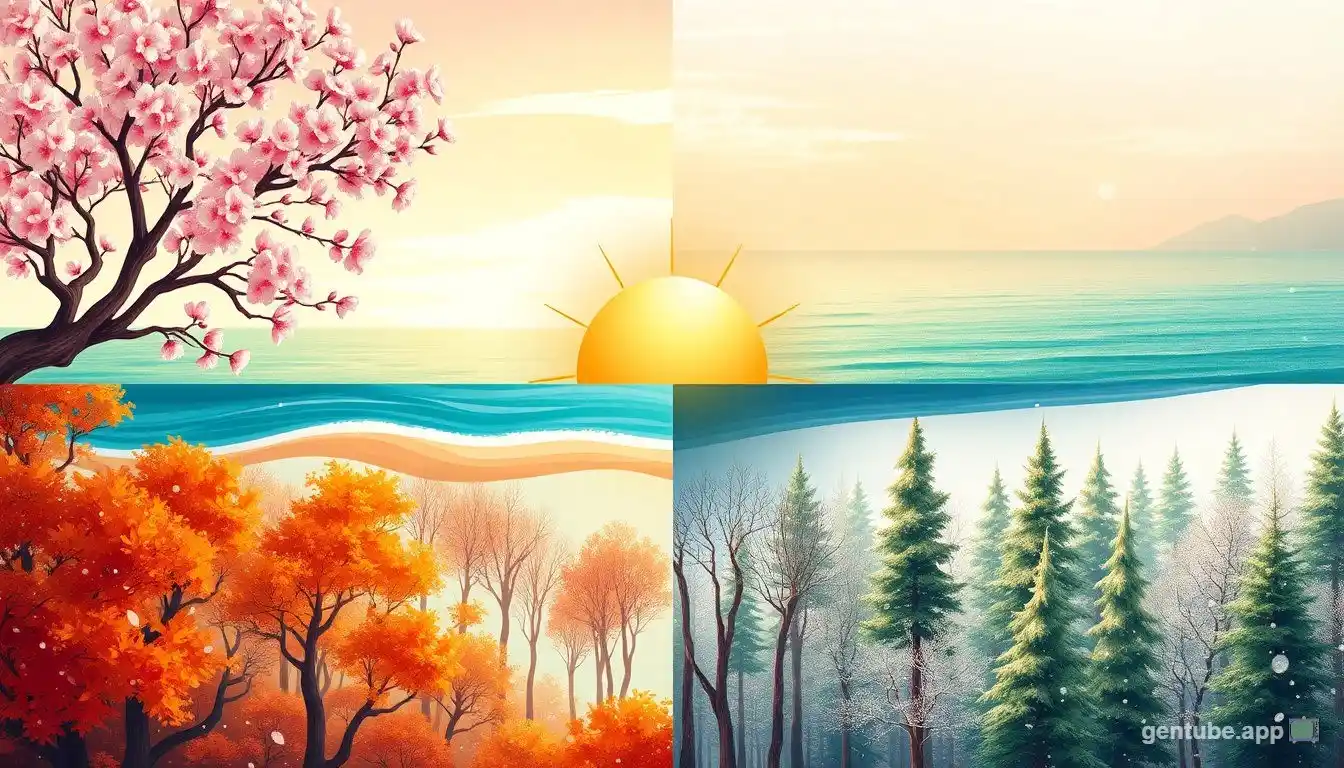
The Ultimate Guide to Every Type of Season on Earth (You Won’t Believe #7)
Why Seasons Are the Original Storytellers of Our Planet
Long before calendars, clocks, or weather apps existed, humans told time through seasons. A farmer in ancient Mesopotamia knew when to plant not because a phone buzzed with a reminder, but because the air smelled different, the days grew longer, and the stars shifted their positions in the sky. Seasons are nature’s oldest storytelling device, and every civilization on Earth has built its myths, festivals, harvests, and even its emotions around them.
But here is something most people never stop to consider: the four seasons you learned about in school — spring, summer, autumn, and winter — are only one small chapter in a much bigger book. Depending on where you stand on the globe, seasons can mean wet and dry, hot and hotter, six distinct phases instead of four, or even months of unbroken daylight followed by months of total darkness.
In this guide, we are going to journey through every major type of season recognized by science, culture, business, and nature itself. Whether you are a curious traveler, a student, a content creator, or simply someone who loves a good rabbit hole, by the end of this article you will never look at a calendar the same way again.
What makes this topic so endlessly fascinating is that ‘season’ is not one fixed, universal idea waiting to be discovered — it is a concept that different disciplines and cultures have shaped to fit their own needs. An astronomer’s season is not a farmer’s season. A fashion designer’s season is not a hurricane forecaster’s season. And a child counting down to summer vacation is experiencing a season defined by an academic calendar rather than the solstices. Understanding this diversity is what transforms a simple weather topic into a genuinely rich exploration of how humans organize time itself.
The Four Classic Seasons — Nature’s Timeless Rotation
Let’s start with the seasons almost everyone recognizes: spring, summer, autumn (or fall), and winter. These four seasons are the product of Earth’s 23.5-degree axial tilt combined with its year-long orbit around the sun. As our planet travels through space, different hemispheres receive more or less direct sunlight at different times, creating the temperature and daylight shifts we call seasons.
Spring is the season of renewal. Trees that stood bare for months erupt into blossom, animals emerge from hibernation, and daylight hours steadily increase. It is no coincidence that so many cultures associate spring with new beginnings, fresh starts, and rebirth — from Easter celebrations to Nowruz, the Persian New Year.
Summer brings the longest days and, in most regions, the highest temperatures. It is the season of abundance: crops ripen, oceans warm for swimming, and school children everywhere count down the days until vacation. Summer solstice, usually around June 21 in the Northern Hemisphere, marks the peak of daylight before the slow tilt back toward darkness begins.
Autumn, often nostalgically called fall because of the way leaves drop from the trees, is the season of transition and harvest. Farmers gather what spring and summer made possible, temperatures begin to cool, and many cultures hold thanksgiving-style festivals to celebrate abundance before the lean winter months arrive.
Winter is the season of rest, dormancy, and introspection. Days shorten dramatically, temperatures drop, and in many regions snow blankets the landscape. Yet winter is also a season of light-filled festivals — from Christmas to Hanukkah to the Lunar New Year — as if humanity collectively decided to fight the darkness with warmth and celebration.
It’s worth noting that the Southern Hemisphere experiences these four seasons in reverse order compared to the Northern Hemisphere. While families in Canada are bundling up for a snowy December, families in Argentina are firing up the barbecue for a warm summer holiday season. This mirrored relationship is a simple but powerful reminder that our seasonal experience is entirely a matter of geography, not a universal constant shared by everyone on the planet at the same time.
Astronomical vs Meteorological Seasons — Two Calendars Fighting for Your Attention
Here is a fact that surprises most people: there are actually two official ways to define when a season begins, and they don’t always agree with each other. Astronomers and meteorologists have been quietly running two separate season calendars for decades.
Astronomical seasons are based on the position of Earth relative to the sun, marked by equinoxes and solstices. The spring equinox, summer solstice, autumn equinox, and winter solstice determine when each astronomical season starts. Because Earth’s orbit isn’t perfectly uniform, these dates can shift by a day or two each year, which is why the first day of spring sometimes falls on March 19, 20, or 21.
Meteorological seasons, on the other hand, are based on the annual temperature cycle and the Gregorian calendar for consistency in record-keeping. Meteorologists group the year into four three-month blocks: spring (March, April, May), summer (June, July, August), autumn (September, October, November), and winter (December, January, February). This system makes it far easier for scientists to compare seasonal weather statistics from year to year.
So when your weather app says summer starts on June 1 but your calendar app insists it begins on June 21, both are technically correct — they are simply using different definitions built for different purposes.
Tropical Seasons — When the World Skips Four Seasons Entirely
If you live near the equator, the four-season model may barely apply to you at all. Countries like Indonesia, Nigeria, Brazil, and much of Southeast Asia experience what is known as a tropical or equatorial climate, where temperatures remain warm year-round and the defining seasonal shift is not temperature but rainfall.
In these regions, life revolves around just two seasons: the wet season and the dry season. During the wet season, heavy rains can fall almost daily, rivers swell, and agriculture flourishes. During the dry season, rainfall becomes scarce, vegetation can turn brown, and water conservation becomes a serious concern for entire communities.
This two-season system profoundly shapes economies and cultures. Rice planting in parts of Southeast Asia, for example, is timed precisely around the arrival of the wet season. Festivals celebrating rain, fertility, and harvest are just as significant in these regions as autumn harvest festivals are in temperate zones.
The Six Ancient Seasons of India — A Season System Older Than Most Calendars
While much of the world simplified time into four seasons, ancient Indian tradition developed something far more nuanced: the Ritu Chakra, or the wheel of six seasons, each lasting roughly two months. This system, rooted in Vedic astronomy and Ayurvedic medicine, remains culturally significant across the Indian subcontinent today.
The six seasons are Vasant Ritu (spring), Grishma Ritu (summer), Varsha Ritu (monsoon), Sharad Ritu (autumn), Hemant Ritu (pre-winter), and Shishir Ritu (winter). Each season is believed to influence not just the weather, but the human body, diet, and even emotional state — a concept central to Ayurvedic practice, where certain foods and routines are recommended depending on the current Ritu.
What makes this system fascinating is its precision. Rather than lumping cooling weather into one broad ‘winter,’ it distinguishes between the crisp, harvest-rich Hemant and the colder, more austere Shishir. It is a beautiful reminder that seasons are not a universal constant — they are a cultural lens through which different societies interpret the same spinning planet.
Polar Seasons — Where Day and Night Last for Months
Now let’s travel to the extremes: the Arctic and Antarctic regions, where the concept of a ‘season’ takes on an almost surreal quality. Because of Earth’s tilt, polar regions experience the Midnight Sun, a period where the sun never fully sets, and the Polar Night, a period of extended darkness that can last for weeks or even months depending on latitude.
In parts of northern Norway, Alaska, and Siberia, summer can mean 24-hour daylight for weeks at a stretch, while winter can plunge the same regions into near-total darkness. Residents of these areas often describe a unique psychological rhythm shaped by light rather than temperature alone — communities adapt with blackout curtains in summer and light therapy lamps in winter.
Antarctica takes this to its most extreme form. The continent essentially experiences only two seasons: a brutal, nearly sunless winter where temperatures can plunge below negative 60 degrees Celsius, and a milder summer with continuous daylight that allows research stations to operate more freely. For polar scientists, understanding these seasons isn’t academic — it’s a matter of survival.
Monsoon Seasons — The Rhythm That Feeds Billions of People
Few seasonal patterns have shaped human civilization as profoundly as the monsoon. Derived from the Arabic word mawsim, meaning ‘season,’ the monsoon refers to a seasonal reversal of wind patterns that brings dramatic rainfall to South Asia, parts of Africa, and Australia.
The Indian monsoon, arguably the most famous, typically arrives in June and retreats by September, delivering roughly 70 to 80 percent of India’s annual rainfall in just a few months. This single seasonal event determines crop yields, drinking water reserves, hydroelectric power generation, and even the health of the national economy. A weak monsoon can mean drought and financial strain for millions of farmers, while a healthy monsoon can mean prosperity.
Beyond agriculture, monsoon season carries deep cultural weight. Festivals, poetry, films, and music across South Asia celebrate the first rains as a moment of collective relief and joy after months of punishing heat. Few seasonal transitions anywhere in the world are met with such widespread emotional anticipation.
Monsoons are not limited to South Asia, either. West Africa experiences its own monsoon system that drives the region’s agricultural cycle, while northern Australia sees a distinct ‘wet season’ monsoon pattern that dramatically transforms the landscape from dry, dusty terrain into lush, flooded wetlands within a matter of weeks. Meteorologists continue to study these systems closely, since even small shifts in monsoon timing or intensity can ripple through global food markets given how many people depend on monsoon-fed agriculture.
Hurricane and Cyclone Seasons — Nature’s Annual Warning System
Some seasons are defined not by beauty or renewal, but by risk and preparation. Hurricane season in the Atlantic officially runs from June 1 to November 30, while the Eastern Pacific hurricane season typically runs from May 15 to November 30. In the Indian Ocean and South Pacific, similar storms are called cyclones, and in the Northwest Pacific, they’re called typhoons — but the underlying seasonal science is the same.
These storm seasons exist because tropical cyclones require very specific conditions to form: warm ocean water of at least 26.5 degrees Celsius, high humidity, and relatively calm upper-level winds. These conditions peak during the warmer months, which is why storm activity clusters so predictably within a defined seasonal window.
Coastal communities structure entire portions of their year around this season — stockpiling emergency supplies, reinforcing infrastructure, and closely monitoring weather forecasts. Insurance companies, shipping industries, and even airlines adjust their operations and pricing based on hurricane season, making it one of the most economically influential seasons in the modern world.
Meteorological agencies typically identify a peak within the broader hurricane season rather than treating the entire window as equally risky. In the Atlantic, for example, activity tends to intensify sharply from mid-August through October, a stretch sometimes informally referred to as the ‘heart’ of hurricane season. Understanding this peak-within-a-season pattern helps emergency planners allocate resources more precisely rather than treating every week of the six-month window as an equal threat.
Fashion Seasons — When the Runway Rewrites the Calendar
Step outside the world of meteorology and into the world of style, and you’ll find an entirely different seasonal system: fashion seasons. The global fashion industry typically operates on two major collections per year — Spring/Summer (SS) and Fall/Winter (FW) — though luxury houses often add pre-collections and resort or cruise collections to keep the pipeline constantly moving.
What makes fashion seasons unusual is that they are almost always ahead of the actual weather. Spring/Summer collections are typically shown on runways in September, months before spring actually arrives, while Fall/Winter collections debut in February. This lead time allows manufacturers, buyers, and retailers enough runway (pun intended) to produce and distribute garments before consumers need them.
In recent years, the rise of ‘fast fashion’ and direct-to-consumer brands has begun to blur these traditional seasonal boundaries, with some companies releasing new collections every few weeks rather than twice a year. Still, the SS/FW framework remains the backbone of how the global fashion calendar is structured.
Interestingly, the fashion industry’s obsession with forecasting has created an entire profession dedicated to predicting seasonal trends years in advance. Trend forecasting agencies study color palettes, fabric innovations, and cultural shifts to advise brands on what Spring/Summer or Fall/Winter collections should look like long before consumers ever see a single sketch, effectively turning ‘season’ into a strategic business tool as much as a description of weather.
Sports Seasons — How Athletic Calendars Follow (and Defy) the Sun
Sports seasons offer a fascinating hybrid: partly dictated by climate, partly by tradition, and partly by television scheduling. American football is famously a fall and winter sport, culminating in the Super Bowl in early February. Baseball, by contrast, is a spring and summer sport, its unofficial motto being that the season isn’t truly over until October’s World Series.
Cricket seasons vary dramatically by country. In England, the cricket season runs through the spring and summer months to take advantage of long daylight hours, while in countries like Australia and India, cricket seasons are timed around their own local summers and monsoon patterns, creating a genuinely global sport with regionally staggered calendars.
Winter sports, from skiing to ice hockey, are entirely dependent on cold-weather seasons and often require artificial snow-making or indoor arenas to extend their competitive windows. As climate patterns shift, some winter sports federations have already begun adjusting tournament schedules and locations to compensate for shorter natural snow seasons.
Even sports that seem climate-independent often carry seasonal branding purely for tradition’s sake. Basketball and hockey, both played indoors, are still marketed with ‘seasons’ that stretch from autumn into spring, a scheduling choice shaped more by television ratings and competition for fan attention against outdoor summer sports than by any actual weather requirement. It’s a reminder that not every sports season is dictated by nature — some are dictated purely by business strategy.
Festival and Cultural Seasons — Humanity’s Way of Celebrating Time Itself
Every culture on Earth has developed its own seasonal calendar of celebration, often tied closely to agricultural or astronomical seasons but layered with deep spiritual and social meaning. Wedding season, for instance, tends to cluster in spring and early autumn across many Western countries, when weather is mild and venues are most appealing.
In many parts of the world, there is also a distinct ‘festival season’ — a stretch of months packed with religious and cultural celebrations. In India, the months of September through November often bring a concentrated wave of festivals including Navratri, Durga Puja, Dussehra, and Diwali. In the West, a similar concentration occurs from late November through early January, spanning Thanksgiving, Christmas, Hanukkah, and New Year’s celebrations.
These cultural seasons matter economically as much as spiritually. Retailers plan entire annual strategies around festival season sales, and tourism boards market destinations specifically for their festival calendars, proving that seasons are as much about human behavior as they are about the natural world.
Music and entertainment industries have their own version of this pattern too, often called ‘awards season,’ which typically runs from late autumn through early spring, culminating in major ceremonies that dominate entertainment news cycles. Like fashion and sports seasons, awards season is a purely human construction, yet it commands calendars, budgets, and public attention with the same intensity as any naturally occurring season.
Economic and Business Seasons — The Seasons That Run the World’s Wallets
Not all seasons involve weather at all. Modern economies run on their own internal seasonal clocks. Tax season, for example, is a universally dreaded period in countries like the United States, typically running from January through mid-April, when individuals and businesses scramble to file returns before the deadline.
Retail has its own seasonal peaks, most notably the holiday shopping season, which for many businesses can account for a disproportionate share of annual revenue. Similarly, ‘harvest season’ remains critically important not just symbolically but economically, determining commodity prices for grains, fruits, and vegetables that ripple through global markets.
Even industries like real estate have identifiable seasons — spring and early summer are traditionally considered the strongest home-buying seasons in many markets, as families prefer to move between school years rather than during winter holidays or the depths of a cold season.
Financial markets, too, have long-observed seasonal patterns, from the so-called ‘holiday rally’ that some analysts associate with year-end stock performance to agricultural commodity cycles that spike or dip depending on planting and harvest seasons. While economists debate how reliable many of these patterns truly are, the language of ‘seasons’ has become deeply embedded in how businesses plan budgets, marketing campaigns, and staffing levels throughout the year.
How Climate Change Is Quietly Rewriting Every Season We Know
Perhaps the most urgent seasonal story of our time is how climate change is reshaping the very patterns described throughout this article. Scientists have documented that spring is arriving earlier in many temperate regions, with flowers blooming and migratory birds returning weeks ahead of historical averages. Meanwhile, growing seasons for agriculture are lengthening in some areas while becoming more erratic and unpredictable in others.
Monsoon patterns in South Asia have become less reliable, with periods of intense flooding followed by unexpected dry spells, disrupting centuries-old agricultural planning. Hurricane and cyclone seasons are showing signs of increased intensity, even as the exact timing of the season itself remains broadly similar. Winter sports seasons are shortening in many mountain regions due to reduced and less predictable snowfall.
This shifting seasonal landscape matters far beyond scientific curiosity. Entire economies, food systems, and cultural traditions have been built around the assumption of seasonal predictability. As that predictability erodes, communities worldwide are being forced to adapt their agricultural calendars, festival timing, and even architectural planning to a climate that no longer follows the rules it once did.
Researchers now track a concept called ‘phenology,’ the study of seasonal timing in nature, precisely because it offers one of the clearest windows into how climate change is unfolding in real time. When the same cherry blossom festival that has occurred in mid-April for centuries begins consistently occurring in late March, it becomes a measurable, undeniable signal that our seasonal calendar itself is shifting beneath our feet.
Growing Seasons — The Silent Calendar Behind Your Dinner Plate
Every time you bite into a strawberry, a tomato, or an ear of corn, you are tasting the end result of a growing season — the specific stretch of the year when temperature, sunlight, and rainfall combine to allow a particular crop to sprout, mature, and ripen. Growing seasons vary enormously depending on latitude, elevation, and local climate, which is why a farmer in Florida and a farmer in Norway are working with completely different calendars even though both are simply ‘growing food.’
In temperate climates, the growing season is typically bounded by the last frost of spring and the first frost of autumn, giving farmers a defined window to plant, cultivate, and harvest. In tropical regions, where frost is rarely a concern, the growing season is instead shaped by the wet and dry cycle, with planting often timed to coincide with the arrival of seasonal rains.
Modern agricultural technology, from greenhouses to hydroponics to genetically adapted crop varieties, has extended growing seasons far beyond their traditional natural limits. Even so, the underlying seasonal rhythm still dictates global food supply chains, commodity pricing, and the availability of fresh produce in grocery stores around the world.
Seasonal Affective Patterns — How Seasons Quietly Shape Mood and Energy
Seasons don’t just change the world outside our windows; they influence how millions of people feel each day. It is a well-documented phenomenon that shorter daylight hours during autumn and winter can correlate with lower energy levels and mood shifts for many individuals, a pattern that has been studied extensively by researchers and health professionals worldwide.
This seasonal influence on wellbeing has led to widespread cultural and commercial responses. Light therapy lamps, designed to mimic natural sunlight, have become popular tools in regions with long, dark winters, particularly across Scandinavia and other high-latitude countries. Meanwhile, wellness industries frequently market ‘seasonal resets,’ encouraging people to adjust routines, diets, and exercise habits as the seasons shift.
Even architecture and urban planning increasingly account for seasonal light patterns, with cities in far-northern latitudes designing public spaces, lighting installations, and community events specifically to counteract the psychological weight of extended winter darkness. It is a powerful reminder that seasons shape not just what we grow and wear, but how we feel.
Academic Seasons — How School Calendars Carve Up the Year
Beyond weather, economics, and culture, there is another seasonal system that shapes the daily lives of hundreds of millions of families worldwide: the academic season. In most Northern Hemisphere countries, the school year begins in late August or September and runs through May or June, deliberately structured around a long summer break that historically allowed children to help with agricultural work during the busiest growing months.
Southern Hemisphere countries, such as Australia and much of South America, flip this calendar entirely, with the academic year typically beginning in late January or February and concluding in December, aligned with their own opposite summer break. This means that while children in London are just starting their long summer holiday in June, children in Sydney are only a few months into their school year.
Universities add yet another layer of seasonal complexity, often dividing the year into fall, spring, and optional summer semesters or quarters. Application deadlines, financial aid cycles, and even campus social life all revolve around this distinctly academic version of the seasonal calendar, proving once again that ‘season’ can mean something entirely different depending on which corner of society you are standing in.
Tourism Seasons — Peak, Off-Peak, and the Secret Charm of Shoulder Season
https://youtu.be/Q-DWle1jG5A
https://youtu.be/Q-DWle1jG5A
Ask any seasoned traveler about seasons, and they won’t necessarily talk about spring or summer first — they’ll talk about peak season, off-peak season, and the increasingly popular shoulder season. These are the seasons that determine flight prices, hotel availability, and how crowded a destination will feel.
Peak season refers to the period when a destination experiences the highest visitor demand, typically aligning with favorable weather, school holidays, or a major local event. Prices soar, crowds swell, and popular attractions can require booking months in advance. Off-peak season sits at the opposite end, offering lower prices and thinner crowds, often because weather conditions are less ideal or because it falls outside major holiday windows.
Shoulder season, the sweet spot between the two, has become a favorite among savvy travelers. It typically offers a compelling mix of decent weather, moderate prices, and manageable crowds, making it an increasingly popular choice for travelers who prioritize experience and value over strictly ideal weather conditions. Tourism boards have become increasingly sophisticated at marketing shoulder seasons specifically to spread visitor demand more evenly throughout the year.
Conclusion — Every Season Tells a Different Story
From the four classic seasons most of us grew up learning about, to the six-part Ritu Chakra of ancient India, to the wet-and-dry rhythm of the tropics, to the extreme light-and-dark cycles of the polar regions, seasons are far more diverse and culturally rich than most people ever realize. Add in the human-made seasons — fashion, sports, festivals, and finance — and it becomes clear that ‘season’ is not just a scientific term. It is a lens through which every culture on Earth interprets time, change, and renewal.
The next time someone casually mentions ‘the seasons,’ you’ll know there is an entire world of nuance behind that simple word. Whether you are watching cherry blossoms bloom in spring, tracking a monsoon’s arrival, bracing for hurricane season, or simply filing your taxes, you are participating in one of humanity’s oldest and most universal traditions: marking time by the rhythms of the world around us.
So the next time spring rolls around, or a monsoon cloud gathers on the horizon, or a fashion magazine announces its Fall/Winter cover story, pause for a moment. You are witnessing just one thread in a vast, interconnected tapestry of seasonal systems that humanity has spent thousands of years observing, naming, celebrating, and now, in the era of climate change, racing to understand all over again.
FAQS
Q1. What are the four main seasons?
The four main seasons are spring, summer, autumn (fall), and winter. They occur because Earth’s axis is tilted about 23.5 degrees, causing different hemispheres to receive varying amounts of direct sunlight throughout the year.
Q2. What causes the seasons to change?
Seasons change primarily because of Earth’s axial tilt combined with its yearly orbit around the sun, not because of changing distance from the sun as many people mistakenly believe.
Q3. What is the difference between astronomical and meteorological seasons?
Astronomical seasons are based on equinoxes and solstices tied to Earth’s orbital position, while meteorological seasons divide the year into four fixed three-month blocks for easier climate record-keeping.
Q4. Why do meteorologists use different season start dates than calendars?
Meteorologists prefer consistent, fixed three-month periods because it makes comparing temperature and weather statistics across different years much simpler than using variable equinox and solstice dates.
Q5. Do all countries experience four seasons?
No, many countries near the equator experience only two seasons, typically a wet season and a dry season, since temperature stays fairly constant year-round in tropical regions.
Q6. What is a tropical wet and dry season?
A tropical wet and dry season pattern involves one part of the year with heavy, frequent rainfall and another part with little to no rain, replacing the temperature-based seasons found in temperate zones.
Q7. What are the six seasons in the Indian Ritu Chakra?
The six seasons are Vasant (spring), Grishma (summer), Varsha (monsoon), Sharad (autumn), Hemant (pre-winter), and Shishir (winter), each lasting roughly two months.
Q8. Why does India use six seasons instead of four?
Ancient Vedic astronomy and Ayurvedic tradition recognized more subtle shifts in climate, health, and agriculture than the four-season system captures, resulting in a more detailed six-part seasonal calendar.
Q9. What is the Midnight Sun?
The Midnight Sun is a phenomenon in polar regions where the sun remains visible for 24 hours a day during parts of summer, caused by the extreme tilt of Earth’s axis at high latitudes.
Q10. What is the Polar Night?
The Polar Night is the opposite of the Midnight Sun, a period in polar winter when the sun does not rise above the horizon for weeks or months, plunging the region into extended darkness.
Q11. How many seasons does Antarctica have?
Antarctica is generally described as having two main seasons, a long, dark, extremely cold winter and a shorter, milder summer with near-continuous daylight.
Q12. What is monsoon season?
Monsoon season refers to a seasonal reversal of wind patterns that brings heavy rainfall to regions like South Asia, typically arriving in early summer and retreating by early autumn.
Q13. Which countries are most affected by monsoon season?
India, Bangladesh, Myanmar, and parts of Southeast Asia rely heavily on monsoon rains, with the monsoon providing a majority of their annual rainfall and directly influencing agriculture and the broader economy.
Q14. What is hurricane season and when does it occur?
Hurricane season in the Atlantic runs from June 1 to November 30, a period when warm ocean temperatures and favorable atmospheric conditions make tropical storm formation most likely.
Q15. What is the difference between a hurricane, cyclone, and typhoon?
These terms describe the same type of storm but are named differently by region: hurricanes form in the Atlantic and Northeast Pacific, typhoons in the Northwest Pacific, and cyclones in the South Pacific and Indian Ocean.
Q16. What are fashion seasons?
Fashion seasons refer to the industry’s Spring/Summer and Fall/Winter collections, which are typically previewed on runways months ahead of the actual corresponding weather season.
Q17. Why are fashion collections shown before the actual season starts?
Fashion collections are shown early to give manufacturers, retailers, and buyers enough lead time to produce, ship, and stock garments before consumers actually need them.
Q18. What is a sports season?
A sports season is the designated period during which a particular sport’s official games, matches, or tournaments take place, often shaped by climate, tradition, and broadcasting schedules.
Q19. Why do baseball and football have different seasons?
Baseball is traditionally played in spring and summer to take advantage of warm weather, while football is played in fall and winter, partly due to historical scheduling and partly due to the physical demands of each sport.
Q20. What is festival season?
Festival season refers to a concentrated period of the year, often in autumn or winter, when a culture or region hosts a cluster of major religious, cultural, or social celebrations.
Q21. What is tax season?
Tax season is the annual period, typically from January to mid-April in the United States, during which individuals and businesses prepare and file their income tax returns.
Q22. What is harvest season?
Harvest season is the time of year, usually in late summer or autumn, when crops reach maturity and are gathered, historically one of the most economically and culturally significant seasons worldwide.
Q23. How is climate change affecting the seasons?
Climate change is causing earlier spring onsets, longer and more erratic growing seasons, less predictable monsoons, and shorter, less reliable winter sports seasons in many parts of the world.
Q24. Is spring arriving earlier because of climate change?
Yes, scientific observations show that in many temperate regions, signs of spring such as flowering plants and returning migratory birds are occurring earlier than historical averages.
Q25. What is a growing season?
A growing season is the period during the year when temperature and daylight conditions allow crops to be planted, grown, and harvested successfully, varying widely by climate and latitude.
Q26. Do seasons affect human mood and behavior?
Yes, seasonal changes in daylight and temperature are linked to shifts in mood and energy for many people, which is why concepts like seasonal affective patterns and light therapy have become widely recognized.
Q27. What is the wedding season?
Wedding season refers to the months, typically spring and early autumn in many Western countries, when weather conditions and venue availability make them the most popular times to get married.
Q28. Why do some regions have a dry season instead of winter?
Regions near the equator maintain warm temperatures year-round, so instead of a cold winter, they experience a dry season defined by reduced rainfall rather than falling temperatures.
Q29. What is a shoulder season in travel?
A shoulder season is the travel period between a destination’s peak and off-peak seasons, often offering milder weather, fewer crowds, and lower prices than the high season.
Q30. Why is understanding different types of seasons important?
Understanding different seasonal systems helps explain global agriculture, economics, culture, and climate patterns, revealing how deeply the concept of a season is woven into nearly every aspect of human life.
Disclaimer: The content on this blog is for informational purposes only. The author’s opinions are personal and not endorsed. Efforts are made to provide accurate information, but completeness, accuracy, or reliability are not guaranteed. The author is not liable for any loss or damage resulting from the use of this blog. It is recommended to use the information on this blog at your own discretion.

