

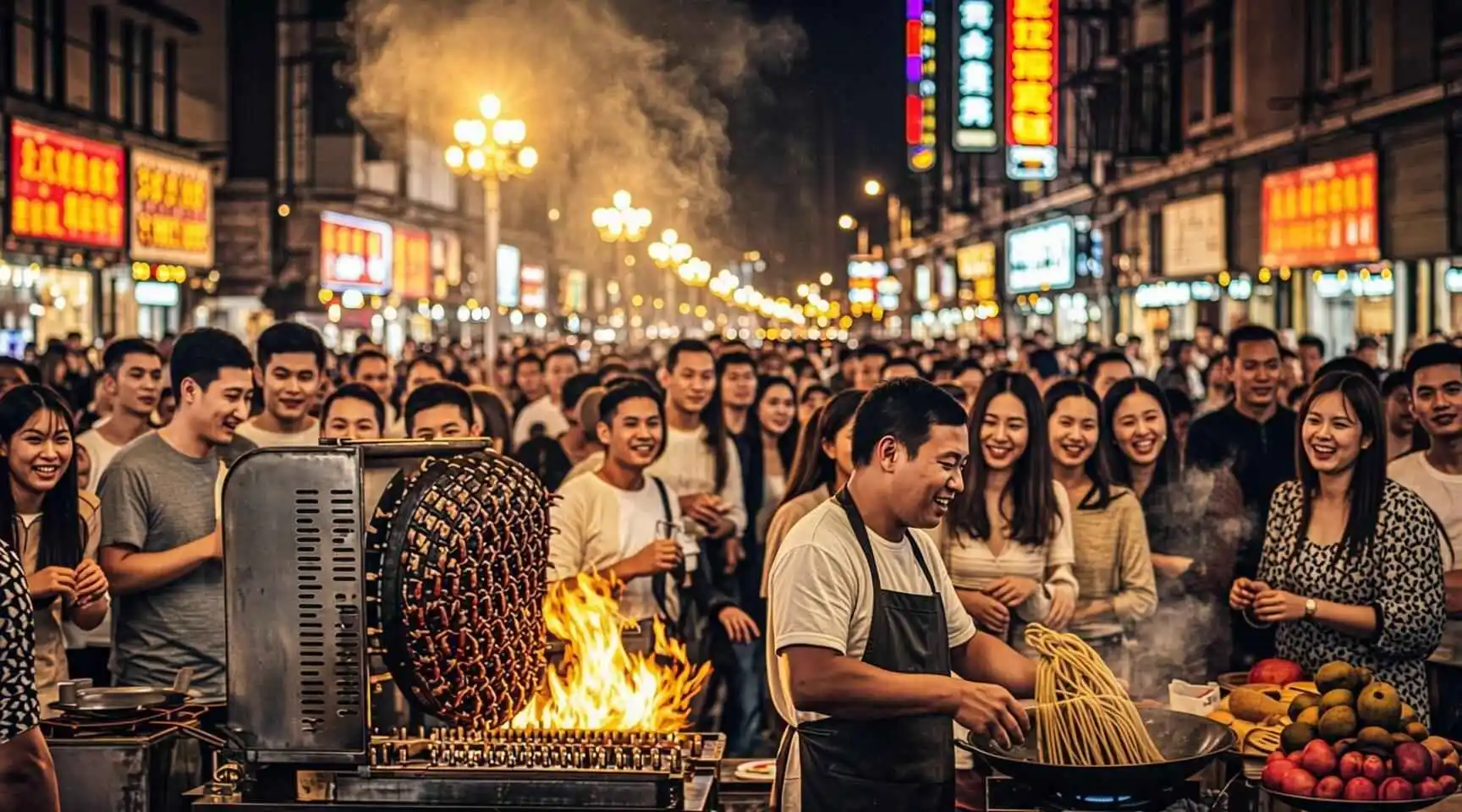
Eating street food is an adventure, but it requires a bit of savvy. Here is how to navigate the global culinary scene like a pro.
The Rule of the Crowd
The oldest rule in the book: follow the locals. If a stall is empty, skip it. If there is a line, get in it. High turnover means the food is fresh. Locals know who has the best hygiene and the best recipes. If you see grandmothers buying their lunch there, you know it’s good.
The “Clean Crowd” Rule
Look at the people working in the stall. Are their hands clean? Are they using gloves or tongs? Is the stall itself relatively clean? Does the vendor handle money and then touch food? Ideally, money handling and food handling should be separate tasks. If the vendor looks professional and takes pride in their setup, it is usually a safe bet.
Raw vs. Cooked
As a general rule for travelers with sensitive stomachs: stick to food that is cooked in front of you and served hot. The heat kills bacteria. Avoid raw vegetables or salads that may have been washed in tap water. Avoid peeled fruit that has been sitting out. Opt for fruits you peel yourself (bananas, oranges, mangoes).
Cash is King
Most street vendors operate on thin margins and do not accept credit cards. Carry small bills. It makes the transaction faster and helps you blend in. Plus, haggling is often expected in markets, and you need cash to settle the deal.
Embrace the Chaos
Street food is not fine dining. You might be standing. You might be sitting on a plastic stool that is too small for you. You might get sauce on your shirt. Embrace it. That is part of the experience. The messier the food, the better it usually tastes.
Conclusion: The Taste of Connection
Global cuisines and street food offer us a passport to the world without ever leaving our own neighborhoods (if we are lucky) or by propelling us into the heart of a foreign city when we travel.
They remind us that despite our differences in language, religion, and politics, we all need to eat. We all crave the comfort of warm bread, the kick of a chili pepper, and the sweetness of a ripe mango.
To eat street food is to engage in an act of trust—trusting the vendor, trusting the ingredients, and trusting your own adventurous spirit. It is to connect with the human element of food. Every taco, every dumpling, and every skewer has a story. It is the story of a farmer, a cook, a family recipe passed down through generations.
So, the next time you travel—or the next time you visit a new neighborhood in your own city—skip the chain restaurant. Find the cart with the smoke billowing out of it. Find the line of locals. Buy what they are buying. Take a bite.
You won’t just be tasting food. You will be tasting the world.
FAQS
General & Culture
1.Why is street food considered a “window into culture”?
Street food uses local ingredients and traditional recipes passed down through generations. It reflects the history, geography, and daily life of a people more authentically than restaurant food often does, which may be adapted for tourists.
2.What is the difference between “fast food” and “street food”?
Fast food is typically mass-produced, standardized, and industrial (like burgers from a chain). Street food is freshly prepared on-site, often unique to a specific vendor or region, and emphasizes flavor and craftsmanship over speed and uniformity.
3.Is street food safe to eat?
Generally, yes, especially if you follow the “Rule of the Crowd” (eating where locals line up). The high turnover of food ensures freshness, and cooking at high heat kills most bacteria.
4.How has social media impacted street food?
Social media has turned many street food vendors into global sensations, encouraging “food tourism” where people travel specifically to visit specific stalls. It has also made the visual presentation of street food more important.
5.What is the universal etiquette for eating street food?
Be polite, carry small cash bills, and be prepared to stand or sit on simple stools. It is also customary to eat quickly to free up space for other customers.
The Americas
6.What makes a taco “al pastor” different from other tacos?
Tacos al pastor are marinated in a blend of chilies and pineapple, then cooked on a vertical spit called a trompo. The cooking method was inspired by the Lebanese shawarma brought to Mexico by immigrants.
7.What is the main filling of a Brazilian Coxinha?
A Coxinha is filled with shredded chicken and Catupiry, which is a creamy, mild Brazilian cheese similar to cream cheese.
- Why is the Açaí bowl so popular?
Native to the Amazon, Açaí is packed with antioxidants. It became popular globally as a superfood and a refreshing, healthy energy boost, often eaten on Brazilian beaches.
- What is a Korean BBQ taco?
This is a fusion dish popular in cities like Los Angeles. It places Korean-style marinated beef (bulgogi) or pork inside a Mexican corn tortilla and tops it with Korean salsa roja and a kimchi slaw.
- What defines a Chicago-style hot dog? I
t is an all-beef frankfurter on a poppy seed bun, topped with yellow mustard, chopped white onions, bright green relish, tomato wedges, a pickle spear, sport peppers, and celery salt. Crucially, ketchup is never used.
Asia
- What is “wok hei” in Thai cooking?
Wok hei translates to “breath of the wok.” It is a smoky, charred flavor achieved when stir-frying ingredients in a very hot wok over a high flame.
- How do you eat Pani Puri without making a mess?
You must eat the whole sphere in one bite. Puris are crispy shells filled with spicy water; biting them in half will cause the liquid to spill everywhere.
- What is inside a Japanese Takoyaki?
The filling consists of diced octopus (tako), tempura scraps (tenkasu), pickled ginger, and green onion, all encased in a savory batter.
- Is Pho eaten for breakfast or dinner?
In Vietnam, Pho is traditionally a breakfast dish. It is eaten early in the morning to start the day, though it is also consumed throughout the day.
- What is the French influence in Banh Mi?
The baguette is the most obvious influence, along with the use of mayonnaise and pâté. The pickled vegetables and cilantro, however, are distinctly Vietnamese.
- What is the texture of Som Tum (Green Papaya Salad)?
It is crunchy and crisp due to the unripe papaya, but also wet and juicy, with a complex flavor profile that is spicy, sour, salty, and slightly sweet.
- What parts of the chicken are used in Yakitori?
While thigh meat is common, Yakitori is famous for using every part of the bird, including the skin (kawa), liver (kimo), cartilage (nankotsu), and tail (bonjiri).
Europe
- Why is it called a “Bunny Chow”?
Despite the name, it contains no rabbit. The name is likely derived from the Bantu word “bunya” (loaf/bread) combined with the Indian caste classification “Banias” who first sold the dish. It was a way for Indian laborers in South Africa to carry their curry lunch to work.
- How is Pizza al Taglio sold in Rome?
Unlike round pizzas, Pizza al Taglio is baked in large rectangular trays. You point to the size and shape you want, and the vendor cuts it with scissors and charges by weight.
- What is the main flavor profile of Arancini?
Arancini are fried rice balls. The outside is crispy, the rice is starchy and soft, and the filling is usually savory (ragù and peas) with a melty center of mozzarella. It is a contrast of textures.
- What is a Spice Bag in Ireland?
It is a modern street food phenomenon consisting of deep-fried chips (fries), chicken or beef strips, peppers, and onions, all coated in spicy salt, curry powder, or chili oil.
- What is the Turkish equivalent of a bagel?
The Simit. It is a ring-shaped dough encrusted with sesame seeds, lighter and chewier than a bagel, and often sold on street carts.
The Middle East & Africa
- Is Falafel always vegan?
Yes, traditional falafel is made from chickpeas (or fava beans), herbs, and spices, making it naturally vegan. However, the sauces served with it (like tahini or yogurt) may vary in strictness.
- What is the difference between Shawarma and Doner Kebab?
They are very similar. Doner is Turkish, while Shawarma is Arab. The spice blends differ; Shawarma often uses aromatic spices like cardamom, cinnamon, and turmeric, whereas Doner is simpler.
- What is Knafeh?
It is a dessert made of thin, noodle-like pastry soaked in sweet sugar-based syrup and layered with cheese or cream. It is baked until golden and crispy.
- What is Boerewors?
It is a South African sausage, usually coiled, made from beef (minced) with a high fat content and spices like coriander and black pepper.
- Why is Moroccan snail soup considered unique?
It is an acquired taste and a local specialty. The snails are boiled in a broth of 15+ aromatic spices and are believed to have health benefits, acting as an aphrodisiac or a cold remedy.
Safety & Etiquette
- How do I choose a safe street food stall?
Look for stalls with a long line of locals (high turnover). Check if the vendor uses gloves or tongs to handle food separately from money. Ensure the food is cooked fresh and served hot.
- Should I drink beverages with ice when eating street food abroad? Generally, it is safer to drink bottled water without ice, as the ice may be made from tap water that could upset your stomach.
- Is it rude to haggle over street food prices?
In many markets, haggling is expected, but for prepared food (like meals or snacks), the price is usually fixed. It is best to ask a local or check a menu first.
Medical Disclaimer: The information provided on this website is for general educational and informational purposes only and is not intended as a substitute for professional medical advice, diagnosis, or treatment. Always seek the advice of your physician or other qualified health provider with any questions you may have regarding a medical condition. Never disregard professional medical advice or delay in seeking it because of something you have read on this website.

