

Why Sri Lanka Broke My Heart (And Why I Keep Going Back): The Ultimate 2024 Guide
Ten years. That’s how long I’ve been dragging my backpack across this globe, chasing sunsets and cheap flights. I’ve slept in hammocks in the Amazon, haggled in souks in Morocco, and gotten lost in the chaos of Mumbai. But if you ask me which place yanked at my heartstrings the hardest, the answer is always the same: Sri Lanka.
I remember my first trip vividly. It was 2014. I was broke, tired, and looking for a place to just “be.” I landed in Colombo with no plan other than to head east. Within 24 hours, I found myself squeezed into a colorful bus that smelled of diesel and jasmine, hanging onto the railing for dear life as we sped past paddy fields. An elderly lady next to me, seeing my panic, simply smiled and handed me a ripe mango. That’s Sri Lanka in a nutshell. It’s chaotic, loud, and overwhelmingly beautiful, but the people? They are the glue that holds it all together.
This isn’t just an island; it’s a concentrated punch of everything that makes travel incredible. You can surf in the morning and sip tea on a misty mountain peak by the afternoon. You can see leopards prowling in the jungle and elephants wandering near ancient temples.
If you’ve been debating whether to book that ticket, stop thinking and start packing. Let me walk you through the “Pearl of the Indian Ocean,” exactly as I’ve experienced it over a decade of wandering.
An Overview of Sri Lanka
Sri Lanka is small, deceptively small. You could drive from the top to the bottom in about six or seven hours if the traffic behaves, but the diversity packed into this teardrop-shaped island is mind-boggling.
It sits just off the southern tip of India, separated by the Palk Strait, but culturally, it’s a world of its own. It’s a melting pot of Sinhalese, Tamil, Muslim, and Burgher communities. You’ll hear a symphony of languages, see churches standing next to mosques next to Buddhist temples, and eat a fusion of cuisines that will ruin your appetite for any other food back home.
The landscape changes drastically as you move from the coast to the center. The beaches are legendary—palm-fringed and golden. But move inland, and the terrain rises into the lush, green hills of the Hill Country, famous for Ceylon tea. Then, in the north, you find the Cultural Triangle, a dry zone dotted with ancient cities and rock fortresses that rival Machu Picchu.
It’s a destination that has really come into its own recently. After a tough few years economically, the country is open, eager, and incredibly affordable for travelers. It feels raw and real. You aren’t just watching a show; you’re part of the daily life.
Best Time to Visit
Here is the tricky part about Sri Lanka: it has two monsoons. But don’t let that scare you off. Because of the double monsoon system, there is usually good weather somewhere on the island year-round.
The West and South Coasts (including Colombo and Galle): This is the most popular route for first-timers. The best time to visit here is from December to March. The skies are blue, the sea is calm, and the parties are in full swing. Avoid this area from May to September if you hate rain, as the Yala monsoon hits hard.
The East Coast (Trincomalee, Arugam Bay): While the west is getting soaked in summer, the east shines. Visit from May to September. Arugam Bay is a surfer’s paradise during these months. Trincomalee offers some of the best snorkeling I’ve ever seen.
The Hill Country (Kandy, Ella, Nuwara Eliya): The weather here is weirdly unpredictable. It’s generally cooler year-round, so pack a sweater. December to April is usually driest, but be prepared for sudden mist at any time.
How to Reach
By Air: Almost everyone flies into Bandaranaike International Airport (CMB), which is in Katunayake, about an hour north of Colombo. There are direct flights from major hubs in Europe, the Middle East, and Asia.
Visa: Most travelers need a visa. Don’t worry; it’s easy. You can get an Electronic Travel Authorization (ETA) online before you go. It saves you a massive headache at immigration.
Getting Around (Once You Land):
- Tuk-Tuks: The iconic three-wheeler. They are everywhere. Negotiate the price before you get in, or insist the driver uses the meter (though many meters are “broken”).
- Trains: The train network is charming and incredibly cheap. The ride from Kandy to Ella is widely considered one of the most beautiful train journeys in the world. Pro tip: book 2nd or 3rd class. You can open the doors and hang your legs out for the view (do this at your own risk, obviously, but it’s the local way).
- Private Driver: If you have a budget, hire a driver for your whole trip. It costs around $50-$70 a day and gives you total freedom.
Top Attractions in Sri Lanka
After a decade of visits, these are the spots that never get old.
-
Sigiriya Rock Fortress
This is the postcard child of Sri Lanka. It’s a massive rock pillar rising 200 meters out of the jungle, topped with an ancient palace. The climb is steep—about 1,200 steps—but the view from the top is worth every drop of sweat. Go early, like 7:00 AM early, to beat the heat and the crowds.
-
The Nine Arch Bridge, Ella
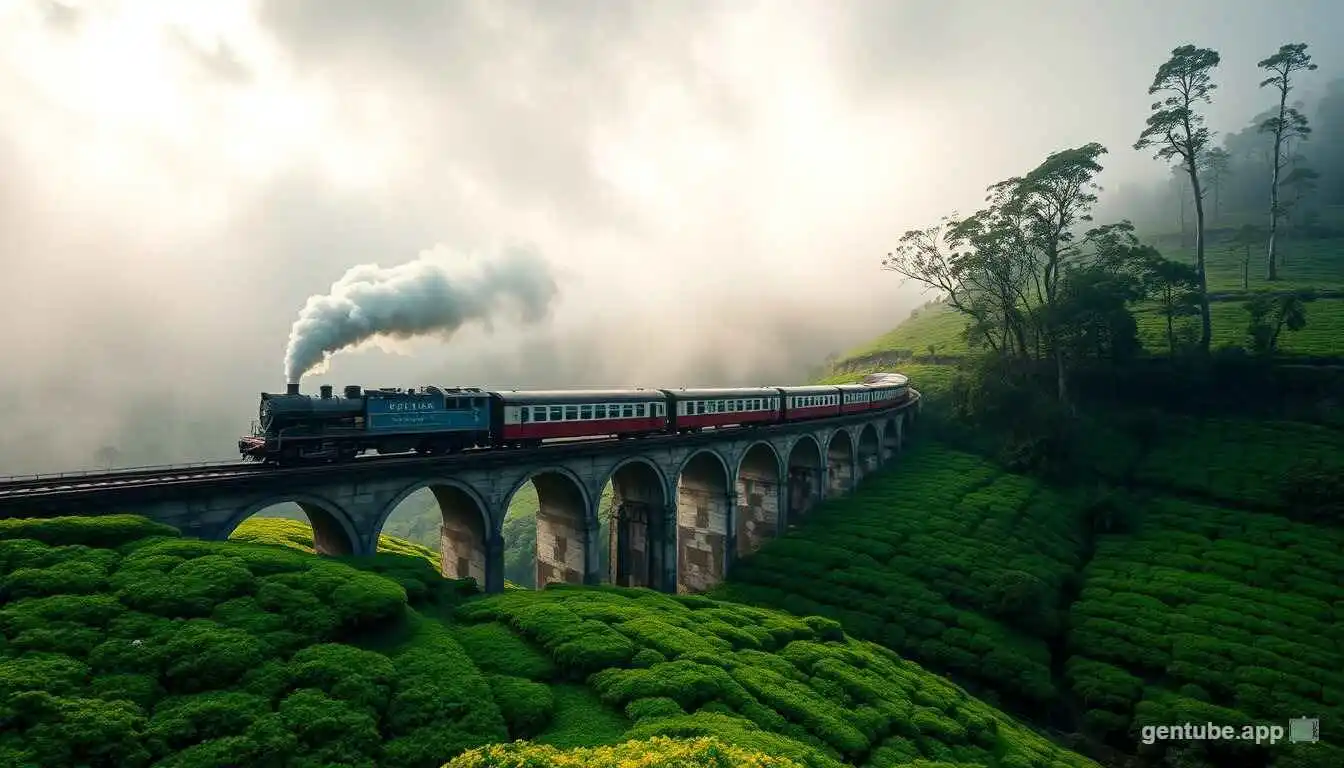
Located in the heart of the tea country, this colonial-era viaduct is pure magic. It’s built entirely out of brick, rock, and cement, with no steel. The best thing to do is walk along the tracks and wait for the blue train to chug across. It’s pure Instagram gold, but even better in real life.
-
Temple of the Sacred Tooth Relic, Kandy
Kandy is the cultural capital, and this temple is its soul. It allegedly houses a tooth of the Buddha. The atmosphere during the evening puja (ceremony) is electric. Drums beat, incense swirls, and devotees offer lotus flowers. It feels sacred and ancient.
-
Yala National Park
If you want to see a leopard, Yala is your best bet. It has one of the highest densities of leopards in the world. But it’s not just about cats. You’ll see elephants, sloth bears, and crocodiles. The safari jeeps are open-air, which makes for a bumpy but thrilling ride.
-
Galle Fort
Walk along the ramparts of this Dutch colonial fort at sunset. The old town is a maze of narrow streets lined with cafes, boutique shops, and colonial mansions. It’s a place where history meets modern hipster vibes. I could spend days just reading in a cafe here.
Local Experience: The Village Life
On one of my trips, I got tired of the tourist trail and signed up for a “village experience” in Habarana. I’m usually skeptical of organized tours, but this one changed my mind.
We hopped onto a bullock cart. Yes, a cart pulled by an ox. We trundled through paddy fields, the mud squelching under the wooden wheels. We stopped at a farmer’s house where we had to “catch” our lunch. I tried to catch a fish with my bare hands in a muddy pond. I failed miserably, but the farmer’s wife just laughed and fried the fish her husband caught for us.
We sat on a woven mat on the floor, eating rice and curry with our fingers (the right hand only, please). It wasn’t just a meal; it was a glimpse into a life that moves at the pace of the seasons. It reminded me that the best travel moments aren’t always the famous sights; they’re the connections you make when you step off the path.
Real Itinerary Case Study: 10 Days in Paradise
To show you how doable this island is, here is a realistic itinerary I often recommend to friends. Let’s call this the “Classic Highlights” route.
Day 1-3: Cultural Triangle
- Land in Colombo and drive straight to Sigiriya (about 4 hours).
- Day 2: Climb Sigiriya Rock in the morning. In the afternoon, visit the Dambulla Cave Temple. It’s five caves carved into a massive rock face, filled with golden Buddha statues.
- Day 3: Take a safari at Minneriya or Kaudulla National Park to see the “Gathering”—hundreds of elephants coming together to drink.
Day 4-6: The Hill Country
- Drive or take the train to Kandy.
- Day 5: Visit the Temple of the Tooth and the Peradeniya Botanical Gardens.
- Day 6: Catch the scenic train from Kandy to Ella. It’s a 6-7 hour ride, but you won’t want it to end.
Day 7-9: The South Coast
- Day 7: Wake up in Ella. hike Little Adam’s Peak for sunrise. Then head down to the coast. Unawatuna or Mirissa are great options.
- Day 8: Go whale watching in Mirissa. Seeing a blue whale breach the water is humbling. Spend the afternoon on the beach.
- Day 9: Day trip to Galle Fort. Wander the streets, eat gelato, and watch the sunset from the ramparts.
Day 10: Colombo & Departure
- Head back to Colombo. Do a quick tour of the Gangaramaya Temple and maybe some shopping at Pettah Market. Fly out in the evening.
Food: A Spicy Love Affair
If you don’t like spicy food, Sri Lanka will be a challenge. But even if you can’t handle the heat, the flavors are so complex and aromatic that you’ll learn to love the burn.
Rice and Curry: This is the staple. It’s not just one curry. You get a massive mound of rice surrounded by 5 to 12 small bowls of different curries—pumpkin, dhal, potato, chicken, beans, okra. It’s a flavor bomb.
Kottu Roti: This is the sound of the night. You hear the rhythmic clanging of metal blades chopping up roti on a hot griddle from miles away. It’s chopped roti mixed with vegetables, egg, and a spicy sauce. It’s greasy, chaotic, and delicious—the ultimate drunk food or late-night snack.
Hoppers: These are bowl-shaped pancakes made from fermented rice flour. An Egg Hopper has a crispy edge with a soft, runny egg in the middle. String hoppers are steamed rice noodles. Eat them with dhal and coconut sambal for breakfast.
Seafood: Being an island, the seafood is fresh. Try the Jaffna Crab Curry. It’s a dark, roasted crab curry that will make your lips tingle for an hour.
Where to Stay
Sri Lanka has accommodation for every budget.
Budget ($10 – $25 USD): You can find clean, family-run guesthouses everywhere. They usually offer breakfast included. Look for “homestays” on booking apps for a more personal touch. I stayed in a place in Ella for $12 a night that had a view worth a million bucks.
Mid-Range ($50 – $100 USD): This is where Sri Lanka shines. You can get beautiful boutique hotels, villas, and heritage bungalows. Many of them are restored colonial houses. You get luxury without the Western price tag.
Luxury ($150+ USD): If you want to splash out, do it. There are world-class resorts along the south coast and ultra-luxury tented camps near Yala.
Budget Breakdown (Per Person, Per Day)
Sri Lanka is one of the most affordable countries in Asia, though prices have risen slightly recently.
- Backpacker: $30 – $40. Staying in hostels, eating local food (rice and curry), taking buses.
- Mid-Range: $70 – $100. Private rooms with A/C, a mix of tuk-tuks and private cars, dining in nice restaurants.
- Luxury: $200+. Private chauffeurs, 5-star resorts, fine dining.
Travel Tips from a Seasoned Pro
After ten years, I’ve learned a few tricks.
- Respect the Dress Code: When visiting temples, cover your shoulders and knees. It’s respectful and often required. White clothing is preferred.
- The “Head Wobble”: Sri Lankans have a distinctive side-to-side head wobble. It can be confusing. Sometimes it means yes, sometimes no, and sometimes “I acknowledge you.” Watch the context; eventually, you’ll start doing it yourself.
- Cash is King: While cards are accepted in cities, carry cash (LKR) for small shops, entrance tickets, and paying tuk-tuk drivers.
- Internet: Buy a local SIM card at the airport. Dialog or Mobitel are the best providers. The data is cheap and fast.
- Be Careful with Tap Water: Never drink it. Stick to bottled water to avoid “Delhi Belly.”
- Bargaining: In markets and with tuk-tuks, bargaining is expected. But keep it friendly. A smile gets you a better price than anger.
Comparison: Sri Lanka vs. Thailand
People often ask me to choose between Sri Lanka and Thailand. Here is a quick breakdown to help you decide.
| Feature | Sri Lanka | Thailand |
| Vibe | Raw, authentic, less crowded | More developed, tourist-heavy |
| Beaches | Stunning, wilder surf | Postcard perfect, calmer waters |
| Food | Complex, spicy, rice-based | Tangy, sweet & sour, noodle-based |
| Culture | Deeply spiritual, Buddhist & Hindu mix | Busy, Buddhist monarchy history |
| Cost | Generally cheaper now | Cheap, but touristy areas cost more |
| Travel | Distances are short, but roads can be slow | Excellent transport infrastructure |
| Wildlife | Best for leopards & elephants | Best for diving & marine life |
Conclusion
Sri Lanka isn’t just a destination you visit; it’s a place you feel. It gets under your skin. From the moment you arrive, greeted by the humidity and the smell of spices, to the moment you leave, laden with tea and souvenirs, it captivates you.
I’ve been there ten times, and I’m still not done. I still need to surf in Arugam Bay properly. I still want to hike the Knuckles Mountain Range. I still want to eat more crab curry.
So, if you are looking for a destination that offers adventure, relaxation, culture, and some of the best food on the planet, Sri Lanka is waiting. Don’t wait for the “perfect” time. The perfect time is when you decide to go. Pack light, bring an open mind, and get ready to have your heart stolen by the Pearl of the Indian Ocean.
FAQS
1.Is Sri Lanka safe for tourists?
Yes, Sri Lanka is generally very safe; crime against tourists is rare, but you should take standard precautions.
2.Do I need a visa for Sri Lanka?
Most travelers need an ETA which can be easily obtained online before departure for a short stay.
3.What is the currency in Sri Lanka?
The currency is the Sri Lankan Rupee (LKR), and it’s best to carry cash for daily expenses.
4.Can I drink tap water in Sri Lanka?
No, stick to bottled water or filtered water to avoid getting sick during your trip.
5.What language is spoken in Sri Lanka?
Sinhala and Tamil are the official languages, but English is widely spoken in tourist areas.
6.Is Sri Lanka expensive to travel?
It can be very budget-friendly, though prices have risen recently; you can manage well with mid-range spending.
7.Do I need travel insurance for Sri Lanka?
It is highly recommended, especially for medical emergencies and trip cancellations.
8.What is the best time to visit Sri Lanka?
December to March for the west/south coasts, and May to September for the east coast and cultural triangle.
9.How long should I stay in Sri Lanka?
Two weeks is ideal to see the highlights, but you can do a lot in 10 days.
10.What should I wear in Sri Lanka?
Light, breathable clothing; but cover shoulders and knees when visiting religious sites.
11.Is the food in Sri Lanka very spicy?
Yes, local food is quite spicy, but you can ask for “mild” versions at restaurants.
12.Can I use my phone in Sri Lanka?
Yes, buying a local SIM card like Dialog or Mobitel at the airport is cheap and gives great data.
13.How do I get around Sri Lanka?
Trains, buses, and private drivers are the main ways to get around; tuk-tuks are great for short distances.
14.Is Sri Lanka good for solo travelers?
Absolutely, it is safe, friendly, and easy to navigate even if you are traveling alone.
15.What is the Kandy to Ella train ride like?
It is a scenic, slow journey through tea plantations and mountains; try to get a seat by the door or window.
16.Are there mosquitoes in Sri Lanka?
Yes, especially in coastal and jungle areas, so bring repellent and consider anti-malarial precautions.
17.Can I haggle in Sri Lanka?
Yes, haggling is expected in markets and with tuk-tuk drivers, but do it respectfully.
18.What is a “Tuk-Tuk”?
It’s a three-wheeled motorized taxi, the most common and fun way to get around short distances.
19.Is Sri Lanka a country or an island?
It is an island nation located in South Asia, in the Indian Ocean.
20.What is the climate like?
It’s tropical and warm year-round, with two distinct monsoon seasons affecting different parts of the island.
21.Are credit cards accepted everywhere?
Major cards are accepted in hotels and big restaurants, but cash is needed for smaller vendors.
22.Can I see elephants in Sri Lanka?
Yes, you can see wild elephants in national parks like Yala, Udawalawe, and Minneriya.
23.What is “Hopper”?
A hopper is a bowl-shaped Sri Lankan pancake made from fermented rice flour, often eaten for breakfast.
24.Do I need vaccines for Sri Lanka?
Consult your doctor, but Hepatitis A and Typhoid are usually recommended.
25.Is the driving safe in Sri Lanka?
Roads can be chaotic; hire an experienced driver if you are not comfortable with local traffic.
26.Can I bring alcohol to Sri Lanka?
You are allowed a small duty-free allowance, but alcohol is not sold on full moon days (Poya days).
27.What are the full moon days (Poya days)?
They are Buddhist public holidays where alcohol cannot be sold and some places close.
28.Is Sri Lanka child-friendly?
Yes, Sri Lankans love children, and it is a great family destination with beaches and wildlife.
29.What is the time zone in Sri Lanka?
Sri Lanka Standard Time is SLST (GMT+5:30).
30..How do I greet people in Sri Lanka?
A simple “Ayubowan” (pronounced A-yu-bo-wan) which means “May you live long,” is the traditional greeting.
Disclaimer: The author’s opinions are personal and not endorsed. Efforts are made to provide accurate information, but completeness, accuracy, or reliability are not guaranteed. The author is not liable for any loss or damage resulting from the use of this blog. It is recommended to use the information on this blog at your own discretion.

