

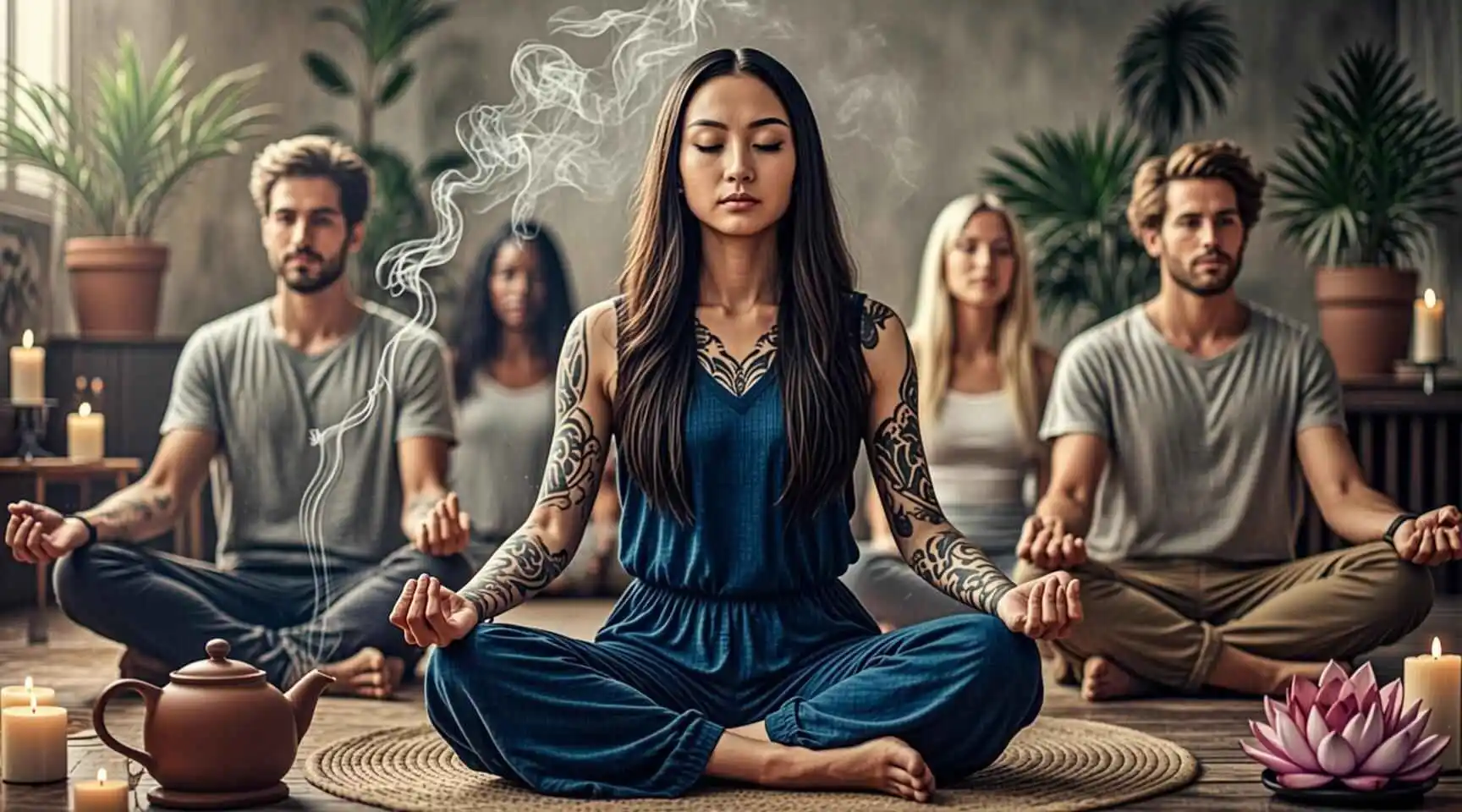
To truly understand Pranayama, we must look beyond the physical. In Yogic philosophy, the human being is not just flesh and bone; we are an energy field. The Prana Maya Kosha (The Energy Body) is the sheath that interpenetrates the physical body. It is powered by Prana.
When our Prana is high, we feel enthusiastic, healthy, and mentally clear. When our Prana is low, we feel depressed, sick, and lethargic. Every act of will, every movement, and every thought consumes Prana.
- Stress depletes Prana.
- Anger leaks Prana.
- Fear blocks Prana.
- Pranayama Recharges Prana.
Think of the body as a battery. Modern life drains it. Pranayama is the charger. By consciously channeling the breath, you are literally recharging your bio-batteries. This is why practitioners often report needing less sleep and feeling more energy—because their efficiency in utilizing energy has skyrocketed.
Furthermore, Pranayama helps dissolve the Samskaras (mental and emotional impressions or scars) stored in the subtle body. We all carry trauma from our past. These imprints are often held in the breath. By breathing into the tight spaces, physically and metaphorically, we release these old traumas. This is why sometimes during deep breathing, one might experience sudden bursts of emotion or tears—it is the release of stored stress.
Conclusion: The Call to Breathe
The ancient Yogi’s quest for enlightenment began with the breath. They understood that to conquer the mind, one must first master the breath. Today, we don’t need to seek caves in the Himalayas to experience transformation. We can find it right here, right now, within our own chest.
Pranayama is a gift. It is a tool that is available to you 24/7, requires no equipment, costs nothing, and has zero negative side effects. It transforms you on every level: physically detoxifying, mentally clarifying, emotionally stabilizing, and spiritually elevating.
If you are feeling stuck, stressed, or simply longing for a deeper connection to life, stop searching outside of yourself. Turn your attention inward. Listen to the rhythm of your breath. It is the most ancient and reliable guide you will ever have.
Start today. Sit for five minutes. Close your eyes. Take one conscious, deep inhalation, and a long, slow exhalation. That is the beginning. That is the first step on the path to total transformation.
The breath is the bridge. Cross it.
FAQS
1.What is the literal meaning of Pranayama?
It is derived from “Prana” (life force) and “Yama” (expansion or control), meaning the expansion of life energy.
2.Can anyone practice Pranayama?
Yes, generally it is safe for everyone. However, people with heart conditions, high blood pressure, or pregnant women should consult a doctor and learn from a qualified instructor.
3.Is Pranayama religious?
No. While rooted in Hindu and Yogic traditions, it is a physiological and psychological practice accessible to people of all faiths and backgrounds.
4.What is the best time to practice?
Ideally, early morning (Brahma Muhurta, 4:00 AM – 6:00 AM) on an empty stomach. Evening practice is also beneficial for stress relief.
5.Can I do Pranayama in bed?
You can do relaxation breathing in bed, but for the full benefits, you should sit upright to keep the spine straight and diaphragm active.
6.Why do I feel dizzy during Pranayama?
Dizziness usually results from hyperventilation (breathing too fast) or over-retaining the breath. It is a sign to stop and return to normal breathing immediately.
7.How does Pranayama reduce stress?
It activates the parasympathetic nervous system via the Vagus nerve, lowering cortisol levels and heart rate.
8.Can Pranayama help with weight loss?
Indirectly, yes. It reduces stress hormones (which cause weight gain), improves metabolism, and boosts energy for physical activity.
9.Can I eat before Pranayama?
It is highly recommended to practice on an empty stomach. Wait at least 2-3 hours after a light meal, or 4-5 hours after a heavy meal.
10.What is Kumbhaka (Breath Retention)?
It is the pause between inhalation and exhalation. It increases the absorption of oxygen and stills the mind, but should be learned gradually.
11.Can Pranayama help with asthma?
Yes, it can improve lung capacity and respiratory efficiency, but it should be practiced with caution and under guidance.
12.What is the difference between normal breathing and Pranayama?
Normal breathing is unconscious and shallow. Pranayama is conscious, rhythmic, and utilizes specific ratios and patterns.
13.How long should a session last?
Beginners can start with 10 minutes a day. Experienced practitioners may do 30-45 minutes.
14.Is it safe to do Kapalabhati every day?
For healthy individuals, yes. However, those with high blood pressure, heart issues, or hernias should avoid it.
15.Can Pranayama improve skin?
Yes. By detoxifying the blood and oxygenating cells, it promotes a natural glow and healthier skin.
16.Why is breathing through the nose important?
The nose filters dust, warms the cold air, and humidifies dry air, protecting the lungs. Nasal breathing also maintains CO2 levels for better oxygen uptake.
17.What is Nadi Shodhana?
Alternate Nostril Breathing, used to balance the left and right hemispheres of the brain and the Nadis (energy channels).
18.Can Pranayama cure anxiety?
While “cure” is a strong word, it is one of the most effective natural management tools for anxiety and panic attacks.
19.Do I need to be flexible to do Pranayama?
No. It requires no physical flexibility. If you can sit, you can practice.
20.Can children do Pranayama?
Yes, but keep it simple and fun. Avoid forceful techniques like Kapalabhati or complex retentions until puberty.
21.What is Bhramari?
Humming Bee Breath, which uses sound vibration to soothe the brain and nerves.
22.Can Pranayama help with depression?
It can be a powerful support tool by balancing hormones and lifting energy, but should be part of a broader treatment plan for clinical depression.
23.What are Nadis?
They are subtle energy channels (over 72,000) in the subtle body through which Prana flows.
24.Why do some people feel hot during practice?
Techniques like Kapalabhati generate internal heat (Agni) which aids digestion and metabolism.
25.Can I practice if I have a cold?
It is generally best to wait until nasal passages are clear. Breathing through a blocked nose can strain the ears.
26.How does Pranayama affect the brain?
It increases Alpha and Theta brain waves, associated with relaxation, creativity, and reduced anxiety.
27.Do I need a Guru/Teacher to learn?
For basic techniques, books and videos are fine. For advanced practices like Bandhas and complex Kumbhakas, a teacher is essential.
28.Can I do Pranayama while listening to music?
It is better to practice in silence or with soothing ambient sounds to maintain internal focus.
29.Will Pranayama help me focus better?
Yes, it significantly improves concentration and attention span by training the mind to follow the breath.
30.What is the “Hissing” sound in Ujjayi?
It is the sound of air passing through a constricted glottis, often described as the sound of the ocean or Darth Vader breathing.
Medical Disclaimer: The information provided on this website is for general educational and informational purposes only and is not intended as a substitute for professional medical advice, diagnosis, or treatment. Always seek the advice of your physician or other qualified health provider with any questions you may have regarding a medical condition. Never disregard professional medical advice or delay in seeking it because of something you have read on this website.

