

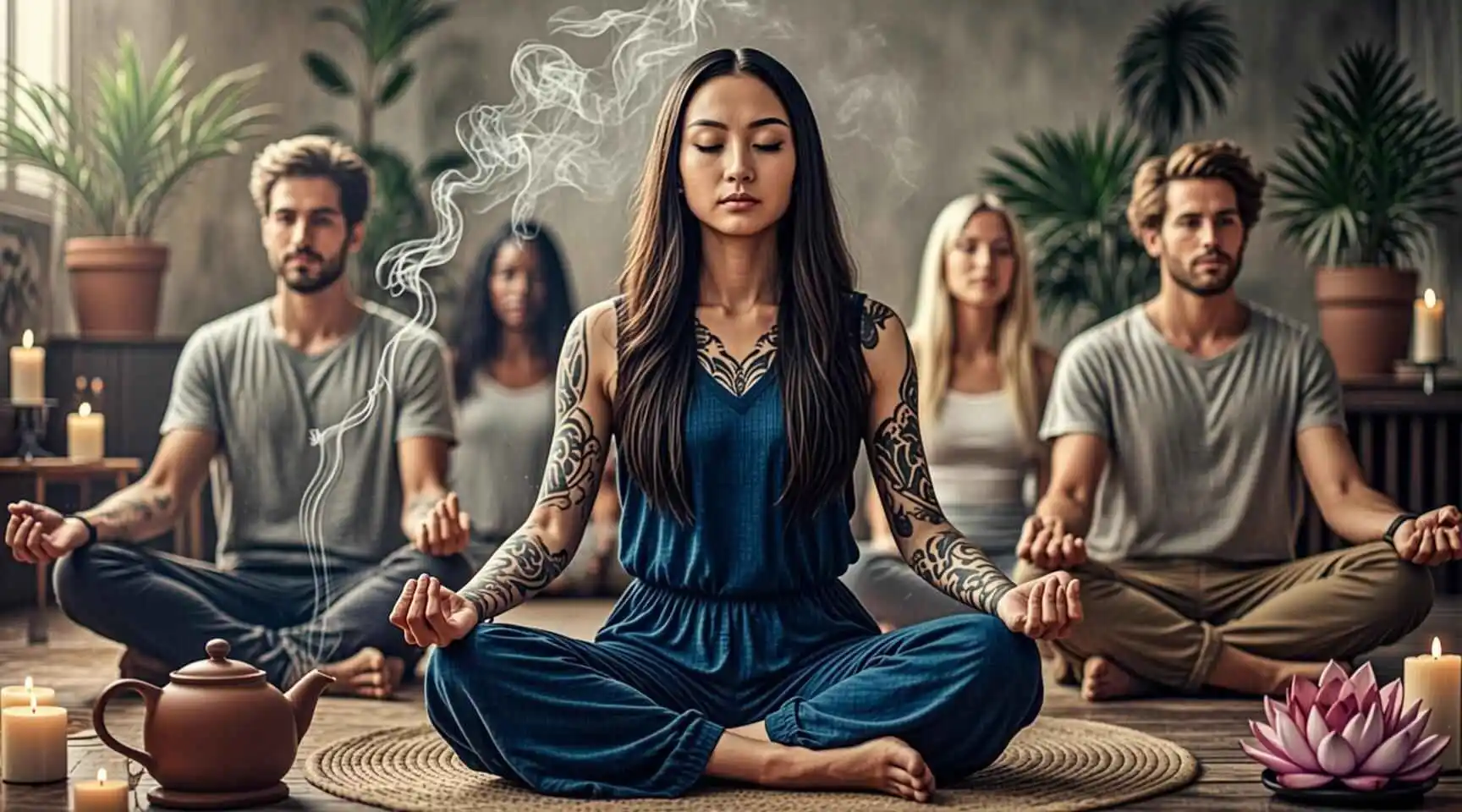
Breath: The Invisible Architect of Reality – Why Pranayama is the Ultimate Transformation Tool
We take approximately 23,040 breaths every single day. That is nearly eight and a half million breaths a year. Yet, for the vast majority of our lives, this fundamental rhythm remains entirely unconscious. We breathe to survive, never realizing that the breath is also the key to thriving. In the ancient wisdom traditions of the East, particularly in the science of Yoga, the breath is not merely a mechanical exchange of oxygen and carbon dioxide; it is the bridge between the visible world of the body and the invisible world of the mind and spirit.
This practice is called Pranayama.
Derived from the Sanskrit roots Prana (life force or cosmic energy) and Yama (control or expansion), Pranayama is often mistranslated as “breath control.” A more accurate translation is “Energy Expansion.” It is the art and science of harnessing the vital energy that fuels every thought, every heartbeat, and every cell in your body.
In our modern era, we are plagued by a new kind of epidemic: the “sympathetic dominance.” We live in a state of chronic, low-level fight-or-flight. Our shoulders are glued to our ears, our jaws are clenched, and our breaths are shallow, utilizing only the top fraction of our lungs. We are over-caffeinated, over-stimulated, and overwhelmed. Anxiety, burnout, insomnia, and auto-immune disorders have become the norm.
This is where Pranayama enters not just as a remedy, but as a revolution.
If you have been looking for a tool that can upgrade your physical health, shatter mental barriers, and unlock spiritual depths without spending a dime, this is it. This blog post will take you on a deep dive into why you should be practicing Pranayama and exactly what it can transform in your life.
The Physiology of Transformation: Why Breath Matters
Before we can understand the magic, we must look at the mechanics. Why is the breath so powerful?
The breath is the only autonomic function of the body that we can consciously control. You cannot make your heart beat faster by simply thinking about it, and you cannot digest your food by willing it. But you can hold your breath, slow it down, or speed it up. This unique feature gives us a “hack” into the autonomic nervous system (ANS).
The ANS has two main branches:
- The Sympathetic Nervous System (SNS): The “Gas Pedal.” It triggers the fight-or-flight response, releasing cortisol and adrenaline to deal with perceived threats.
- The Parasympathetic Nervous System (PNS): The “Brake Pedal.” It triggers the rest-and-digest response, promoting healing, relaxation, and recovery.
Modern life keeps our foot glued to the gas pedal. Pranayama is the mechanism that gently eases it onto the brake. By extending the exhalation and controlling the rhythm of the breath, we stimulate the Vagus nerve—the longest cranial nerve in the body—which acts as the primary switch for the PNS. When the Vagus nerve is activated, your heart rate drops, your blood pressure stabilizes, and your brain waves shift from high-frequency Beta (stress) to Alpha and Theta (relaxation and meditation).
This is not mysticism; this is physiology. By changing the rhythm of your breath, you are sending a direct chemical signal to your brain: “You are safe.”
The 5 Dimensions of Transformation
What happens when you commit to this practice? Transformation is not a singular event; it is a ripple effect that touches every layer of your existence.
-
Transformation of Physical Vitality
The physical benefits of Pranayama are immediate and measurable.
- Cellular Regeneration: Most of us are oxygen-deprived. Shallow breathing leads to an accumulation of carbon dioxide and a lack of oxygen supply to the tissues. Pranayama floods the blood with fresh oxygen (O2), which acts as a fuel for cellular repair and regeneration.
- Detoxification: The breath is the body’s primary exhaust system. Approximately 70% of bodily toxins are released via the lungs. Practices like Kapalabhati (Skull Shining Breath) act as a pump for the lymphatic system and the internal organs, flushing out stagnant blood and toxins.
- Immunity Boost: Stress is the immunosuppressant of the modern age. By lowering cortisol levels, Pranayama strengthens the immune system, making the body more resilient to infections and viruses. Studies have shown that regular practice increases the count of natural killer cells, the body’s first line of defense against pathogens.
- Respiratory Health: The lungs are muscles that can be trained. Pranayama increases lung elasticity and capacity, strengthening the diaphragm and intercostal muscles. This is vital for respiratory health, particularly in an age of pollution and respiratory ailments.
-
Transformation of Mental State
If you feel like your mind is a browser with too many tabs open, Pranayama is the “Force Quit” button.
- Erasing Anxiety: Anxiety causes rapid, shallow breathing. By voluntarily reversing this—making the breath slow, deep, and rhythmic—you physically interrupt the feedback loop of anxiety. It is biologically impossible to remain in a state of panic while breathing slowly and deeply.
- Focus and Concentration: The ancient Yogis said, “Where the breath goes, the mind follows.” By fixing the breath on a specific rhythm or pattern (such as in Nadi Shodhana), the scattered mind is forced to come to a singular point of focus. This trains the brain to sustain attention, improving productivity and cognitive function.
- Emotional Stability: Pranayama creates a “gap” between the stimulus and the response. Instead of reacting impulsively to stress, anger, or sadness, you develop the capacity to pause. Over time, this equanimity becomes your baseline emotional state.
-
Transformation of Sleep
Sleep is the foundation of health, yet millions suffer from insomnia or poor sleep quality. Pranayama, particularly when done before bed, is a potent sleep aid.
- Resetting the Sleep Cycle: Techniques like Ujjayi (Ocean Breath) or Bhramari (Humming Bee Breath) silence the “chatter” of the mind, preparing the nervous system for deep rest.
- Combating Sleep Apnea: By toning the muscles of the throat and improving respiratory control, Pranayama can help reduce the severity of snoring and sleep apnea.
- Improving Sleep Architecture: It’s not just about the hours you sleep, but the depth. Pranayama increases the time spent in REM and deep sleep cycles, where physical repair and emotional processing occur.
-
Transformation of the Energy Body (The Chakras and Nadis)
According to Yogic philosophy, the body is traversed by 72,000 subtle energy channels called Nadis and energy centers called Chakras. When these channels are blocked by stress, toxins, or negative emotions, we feel lethargic, stuck, or “depressed” (which literally implies a lack of energy).
- Unblocking the Flow: Pranayama acts as a cleansing fire (Agni) that burns through these blockages, allowing Prana to flow freely through the Nadis. This results in a tangible sensation of vibrancy, vitality, and “aliveness.”
- Balancing the Hemispheres: The left nostril is linked to the right hemisphere of the brain (creative, lunar, cooling), and the right nostril is linked to the left hemisphere (logical, solar, heating). Practices like Nadi Shodhana synchronize these hemispheres, creating a state of whole-brain coherence.
-
Transformation of Spiritual Awareness
For those on a spiritual path, Pranayama is the accelerator. In the Yoga Sutras, Patanjali states that when the breath is still, the mind is also still.
- Preparation for Meditation: You cannot meditate deeply if your body is restless. Pranayama settles the physical body and the nervous system, creating the perfect soil for the seed of meditation (Dhyana) to grow.
- Connecting to the Universal: As the individual breath becomes one with the cosmic rhythm, the sense of separation (ego) begins to dissolve. Many practitioners report profound experiences of oneness, peace, and connection during deep practice.
The Pranayama Toolkit: 5 Essential Techniques
To achieve these transformations, you need specific tools. Here are the foundational techniques that every practitioner should know and practice.
-
Nadi Shodhana Pranayama (Alternate Nostril Breathing)
The Great Balancer. This is the single most effective technique for balancing the nervous system and clearing the energy channels.
- The Technique: Sit comfortably with a straight spine. Use your right thumb to close your right nostril. Inhale deeply through the left. Close the left with your ring finger, release the right, and exhale through the right. Inhale through the right, close it, release the left, and exhale through the left. This is one cycle.
- Transformation: Balances the hemispheres of the brain, reduces anxiety, calms the mind, and harmonizes the solar/lunar energies. Do this before a stressful meeting or an exam.
-
Kapalabhati Pranayama (Skull Shining Breath)
The Energizer & Detoxifier. A vigorous, heating technique that involves passive inhales and forceful, active exhales. It is an internal shower.
- The Technique: Inhale deeply. Exhale forcefully through the nose while pulling the navel in towards the spine. Let the inhale happen naturally. Repeat at a steady rhythm (approx. 30-60 pumps).
- Transformation: Clears sinuses, detoxifies the lungs, wakes up the digestive system, and boosts energy levels instantly.
- Caution: Avoid during pregnancy, high blood pressure, or menstruation.
-
Bhramari Pranayama (Humming Bee Breath)
The Sound Soother. Named after the black bee, this utilizes sound vibration to induce deep silence.
- The Technique: Close your eyes. Place your index fingers on the cartilage between your cheek and ear (the tragus). Inhale deeply. As you exhale, press the cartilage gently and make a low-pitched humming sound (like a bee). Keep your mouth closed.
- Transformation: Generates vibrations that soothe the nervous system, lowers blood pressure, and induces instant relaxation and sleep. It is excellent for tinnitus.
-
Ujjayi Pranayama (Ocean Breath or Victorious Breath)
The Anchor. A breath often used during physical yoga practice (Asana), but powerful on its own.
- The Technique: Inhale and exhale through the nose. Constrict the back of your throat slightly—as if you were trying to fog up a mirror but keeping your mouth closed. This creates a soft, audible rushing sound, like the ocean.
- Transformation: Generates internal heat, focuses the mind on the sound of the breath, and regulates blood pressure. It keeps the body warm and the mind centered.
-
Sheetali Pranayama (Cooling Breath)
The Thermostat. Designed to cool the physical body and temper the internal fire.
- The Technique: Curl the sides of your tongue upward into a tube or taco shape (stick it out past the lips). If your genetics don’t allow you to curl your tongue, simply purse your lips. Inhale deeply through the curled tongue or pursed lips. Close the mouth and exhale slowly through the nose.
- Transformation: Cools the body, lowers blood pressure, reduces acidity in the stomach, and quiets anger or frustration. Perfect for hot weather or menopausal hot flashes.
Building a Lifelong Practice: The Roadmap
Knowledge is potential; practice is power. Here is how to integrate Pranayama into your daily life to ensure lasting transformation.
The Golden Rules
- Empty Stomach: Always practice on an empty stomach. Leave a gap of at least 3-4 hours after a meal. This prevents cramping and ensures the diaphragm can move freely.
- The Seat: Sit in a comfortable position where your spine is straight. You can sit on the floor with a cushion or on a chair with your feet flat. A straight spine ensures the flow of energy.
- Clean Air: Practice in a well-ventilated room, preferably near a window or outdoors.
- Consistency: 10 minutes of daily practice is infinitely more powerful than 1 hour once a week. The nervous system responds to rhythm and repetition.
The Daily Routine (20 Minutes)
- Morning (5 AM – 7 AM): This is the Brahma Muhurta, the time when the atmosphere is pure and the mind is fresh.
- Start with Kapalabhati (3 rounds) to wake up the body and clear the system.
- Follow with Nadi Shodhana (10 rounds) to balance the mind for the day ahead.
- End with a brief Meditation (5 mins) to integrate the energy.
- Mid-Day (12 PM – 1 PM):
- If you feel a slump or stress building, take 5 minutes for Bhramari. It resets your nervous system instantly.
- Evening (Before Bed):
- Practice Sheetali or gentle Ujjayi for 10 minutes. This signals to the body that the day is done and prepares you for deep sleep.
Common Mistakes to Avoid
- Forcing the Breath: Pranayama should be comfortable (Sukha) and steady (Sthira). If you feel dizzy, lightheaded, or anxious, you are pushing too hard. Stop and return to normal breathing.
- Ignoring the Nose: Unless instructed otherwise, breathe only through the nose. The mouth is for eating; the nose is for breathing. The nose filters, warms, and humidifies the air.
- Skipping the Basics: Do not rush into advanced retention (Kumbhaka) practices without a solid foundation. Master the flow first.
The Philosophy: The Subtle Body
https://youtu.be/ZYR91UAgBwo

