

Why Did a Third-Year Topper Suddenly Feel Like Her Heart Was Failing? (It Wasn’t Her Heart)
A Patient Story From the Wards
A 21-year-old MBBS student named Ananya was rushed to the casualty at 2 a.m. Her chest was tight, her heart was racing at 128 beats per minute, her hands were tingling, and she was convinced she was dying. The on-call resident ran an ECG, checked her troponin, and drew an ABG. Every report came back normal. Her cardiac workup was clean. What she had experienced was not a heart attack — it was a panic attack, triggered after weeks of back-to-back exams, three all-nighters in a row, and almost no real sleep.
Ananya’s story is not unusual. Ask any resident who has done casualty duty, and they will tell you that a striking number of young patients who arrive with “cardiac” symptoms are eventually diagnosed with panic attacks or acute anxiety. And ask any final-year student how they are coping with the pressure of NEET-PG, clinical postings, and ward duties, and many will describe some version of chronic exhaustion that goes far beyond normal tiredness — a state we now call burnout.
As doctors, we are trained extensively in the physiology of the heart, lungs, and kidneys, but many of us reach the wards with only a thin understanding of the physiology of stress itself — the very system that is quietly shaping our patients’ symptoms, and often our own health as students and future clinicians. This article walks through anxiety and burnout the way we would approach any organ system: definition, physiology, types, disorders, and evidence-based management, with the practical goal of helping you recognise these conditions in patients and in yourself.
Definition and Overview
Anxiety is the body’s natural alarm response to a perceived threat. In small, short-lived amounts, it is protective — it sharpens focus before an exam, keeps you alert while crossing a busy road, and prepares the body for quick action. Anxiety becomes a clinical problem when it is excessive, prolonged, or occurs without a proportionate trigger, and when it starts interfering with study, sleep, relationships, or daily function.
Chronic stress is the sustained activation of the body’s stress-response systems over weeks or months, without adequate recovery time in between. Where acute stress is a short, useful burst, chronic stress keeps the body’s alarm system switched on long after the original trigger has passed.
Burnout is a state of physical, emotional, and mental exhaustion caused by prolonged, unrelieved stress — most often connected to one’s work or studies. The World Health Organization classifies burnout in the ICD-11 as an occupational phenomenon, not a medical illness in itself, characterised by three features: exhaustion, cynicism or detachment from one’s work, and reduced professional efficacy.
A panic attack is a discrete, sudden episode of intense fear accompanied by marked physical symptoms — palpitations, breathlessness, chest discomfort, sweating, trembling, and a fear of losing control or dying — that peaks within about ten minutes. Sleep hygiene refers to the set of behavioural and environmental habits that support consistent, good-quality sleep, which is itself one of the most powerful regulators of the stress-response system.
Understanding these four terms together matters because they are connected in a chain: unmanaged chronic stress predisposes a person to panic attacks and, if it continues without recovery, gradually progresses toward burnout. Poor sleep worsens every link in that chain, and improving sleep is one of the fastest ways to interrupt it.
Physiology: How the Stress Response Actually Works
The Autonomic Nervous System and the ‘Fight-or-Flight’ Response
When the brain perceives a threat — real or imagined — the amygdala signals the hypothalamus, which activates the sympathetic nervous system. This causes a rapid cascade: the adrenal medulla releases adrenaline and noradrenaline, heart rate and blood pressure rise, bronchioles dilate, pupils dilate, and blood flow is redirected away from the gut and toward skeletal muscle. This is the same physiology you already know from your pharmacology and physiology classes as the fight-or-flight response, and it explains almost every symptom a patient reports during a panic attack — palpitations, sweating, breathlessness, and a feeling of impending doom.
The HPA Axis and Cortisol
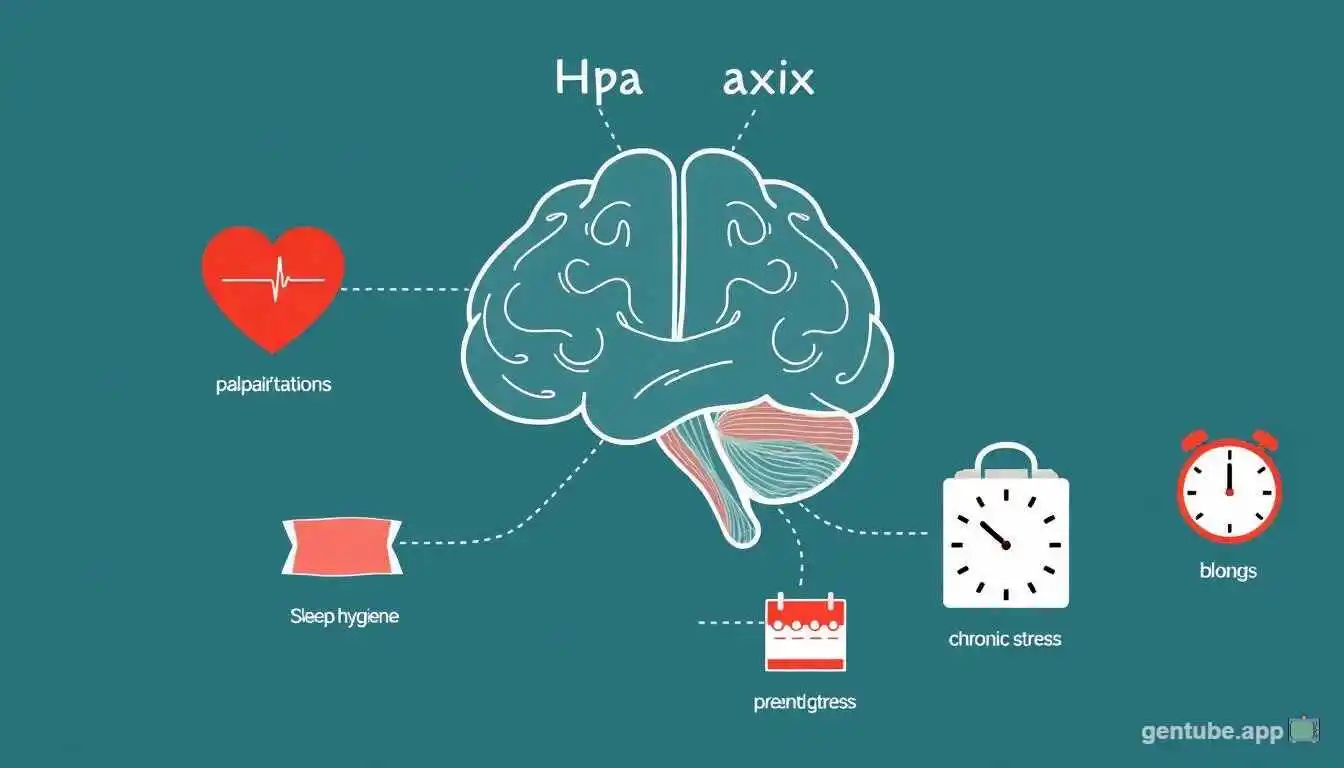
For threats that are ongoing rather than immediate, the body relies on a slower system: the hypothalamic-pituitary-adrenal (HPA) axis. The hypothalamus releases corticotropin-releasing hormone (CRH), which stimulates the anterior pituitary to release adrenocorticotropic hormone (ACTH), which in turn stimulates the adrenal cortex to release cortisol. Cortisol raises blood glucose, suppresses non-essential functions such as digestion and immune activity, and normally follows a negative feedback loop that shuts the system down once the threat passes.
In chronic stress, this feedback loop becomes dysregulated. Cortisol stays persistently elevated, which over time contributes to insulin resistance, hypertension, impaired memory consolidation in the hippocampus, a weakened immune response, and disrupted sleep architecture. This is the biological basis for why medical students under prolonged academic pressure often report frequent infections, poor concentration, and difficulty falling or staying asleep.
Neurotransmitters Involved
- Noradrenaline: drives the alertness and physical arousal seen in acute anxiety and panic
- Serotonin: modulates mood and anxiety; low serotonergic activity is linked to several anxiety disorders, which is why SSRIs are first-line pharmacological treatment
- GABA: the brain’s main inhibitory neurotransmitter; reduced GABAergic tone is associated with heightened anxiety, and this is the target of benzodiazepines
- Dopamine: contributes to motivation and reward; blunted dopaminergic response is thought to underlie some of the reduced drive seen in burnout
Types of Anxiety Response
- Adaptive (normal) anxiety — proportionate, time-limited, resolves once the stressor is removed
- Acute stress response — a short-term reaction to a specific, identifiable event
- Chronic stress — sustained activation without adequate recovery, over weeks to months
- Pathological anxiety — disproportionate, persistent, and functionally impairing, seen in disorders such as GAD and panic disorder
The Yerkes-Dodson Law: Why Some Anxiety Helps Performance
An important concept for medical students to understand — because it is often misunderstood — is that anxiety is not simply ‘bad’ for performance. The Yerkes-Dodson law describes an inverted-U relationship between arousal and performance: a moderate level of anxiety typically improves focus, alertness, and reaction time, up to an optimal point, after which further anxiety impairs performance by narrowing attention, increasing errors, and interfering with working memory. This is why a small amount of pre-exam nervousness can sharpen recall, while overwhelming panic the night before an exam can make even well-prepared material feel inaccessible. The clinical goal is therefore not to eliminate anxiety entirely, but to keep it within the range that supports rather than sabotages performance.
Sleep Physiology in Brief
Normal sleep cycles through non-REM stages (including deep slow-wave sleep) and REM sleep roughly every 90 minutes. Slow-wave sleep is important for physical restoration and memory consolidation, while REM sleep plays a major role in emotional processing. Chronic stress and elevated cortisol reduce the proportion of slow-wave sleep and fragment sleep architecture, which is part of why students under exam pressure often feel they have “slept” but wake up unrefreshed.
Allostatic Load: What Happens When Stress Never Switches Off
Physiologists use the term allostasis to describe the body’s process of maintaining stability through change — adjusting heart rate, blood pressure, and hormone levels to meet a demand. Allostatic load is the cumulative biological ‘wear and tear’ that builds up when this adjustment process is triggered too often, or for too long, without adequate recovery. Instead of returning fully to baseline after each stressor, the body settles at a slightly higher resting state each time, and over months this raises baseline blood pressure, blunts insulin sensitivity, and blunts the normal cortisol awakening response. This concept helps explain why a student who has been under continuous pressure for an entire academic year often cannot simply ‘bounce back’ after one good night’s sleep — the underlying physiological baseline itself has shifted, and reversing it takes sustained, not occasional, recovery.
Effects on the Hippocampus and Amygdala
Chronically elevated cortisol has measurable effects on brain structure and function. The hippocampus, which is rich in glucocorticoid receptors and central to memory consolidation, is particularly sensitive to prolonged cortisol exposure; sustained elevation is associated with reduced hippocampal volume and impaired new memory formation, which may partly explain the ‘my brain feels foggy, I can’t retain anything’ complaint so common during exam season. At the same time, the amygdala — the brain’s threat-detection centre — tends to become more reactive under chronic stress, lowering the threshold at which ordinary events are perceived as threatening. Together, a shrinking hippocampus and an over-reactive amygdala create a physiological loop where a stressed brain becomes both less able to learn calmly and more prone to interpreting everyday situations, such as a difficult viva question, as a genuine threat.
The Immune System Under Chronic Stress
Cortisol is a natural anti-inflammatory hormone in short bursts, but persistent elevation gradually desensitises immune cells to its regulatory signal, a phenomenon called glucocorticoid resistance. The practical result is a paradox: chronically stressed individuals often show both a weakened response to common infections — explaining why so many students report falling sick right before or right after major exams — and, in some contexts, low-grade chronic inflammation, which has been linked in research to worsened mood and fatigue.
Why Medical Training Is a Particular Risk Factor
Several features of medical education map directly onto the known risk factors for burnout described in occupational health research: long duty hours with unpredictable schedules, high stakes attached to performance (exams, viva evaluations, patient outcomes), exposure to suffering and death without adequate debriefing, a hierarchical culture that can discourage admitting difficulty, and long delays between effort and reward (years of training before independent practice). None of these features are unique to India, but the added pressure of competitive entrance and postgraduate examinations layers additional chronic stress onto an already demanding training structure, which is part of why burnout and anxiety rates reported among Indian medical students and resident doctors are consistently higher than in the general population of similar age.
Case Study: Applying the Physiology to a Real Patient
Case: A 24-year-old final-year MBBS student presented to the outpatient department with a three-month history of early morning fatigue, difficulty concentrating during ward rounds, irritability with co-interns, and two episodes of sudden palpitations with breathlessness while studying at night, each lasting about eight minutes and resolving spontaneously.
On history-taking, she reported studying 14–16 hours a day in the lead-up to her university exams, sleeping around four hours a night, skipping meals frequently, and stopping her usual morning walk two months earlier. She described feeling detached from patients on the wards, something that troubled her because she used to feel very connected to patient care.
Clinical reasoning: Her cardiac symptoms, in a young patient with a clean cardiovascular history and a clear temporal link to stress and caffeine intake, were consistent with panic attacks rather than a cardiac event — appropriately ruled out first with a basic workup. Her three-month pattern of exhaustion, detachment from patient care, and a subjective sense of reduced efficiency fit the WHO’s three-domain description of burnout. Her sleep restriction to four hours a night was both a contributing cause and a maintaining factor for both problems.
Management approach: She was managed with a brief psychoeducation session explaining the physiology behind her palpitations (to reduce fear of the symptoms themselves), a structured sleep hygiene plan, breathing-based grounding techniques for acute episodes, and a referral to student counselling services for ongoing support. She was reassessed after four weeks with a marked reduction in panic episodes and improved subjective energy, alongside a modest increase in her nightly sleep to six hours.
This case illustrates a point worth remembering as future clinicians: many young patients presenting with unexplained palpitations, breathlessness, or fatigue deserve a careful stress and sleep history alongside the standard physical workup, because chronic stress and burnout are common, under-recognised, and very treatable.
It is also worth noting what this case teaches about sequencing. Ruling out an organic cause first, rather than assuming anxiety from the outset, is essential — anxiety should generally be a diagnosis reached after appropriate red flags have been excluded, not a default label applied to any young, otherwise healthy patient with palpitations. Once organic causes are reasonably excluded, however, prompt reassurance and psychoeducation about the physiology of panic can itself reduce symptom severity, because much of the distress in a panic attack comes from the patient’s fear of the symptoms themselves — a fear-of-fear cycle that clear explanation can interrupt.
Subtypes of Burnout
Burnout research, particularly the work building on Maslach’s original framework, describes patterns that are useful to recognise clinically. ‘Overload burnout’ occurs in highly driven individuals who keep investing more effort despite diminishing returns, common in toppers who respond to falling performance by studying even harder rather than addressing the underlying exhaustion. ‘Under-challenged burnout’ can occur when a student feels their effort is monotonous or disconnected from meaningful learning, leading to cynicism despite a technically manageable workload. ‘Neglect burnout,’ sometimes called worn-out burnout, develops when a student feels persistently unable to cope and gradually gives up trying to manage demands, often accompanied by a sense of helplessness. Recognising which pattern a student or colleague fits can guide a more tailored conversation than a generic ‘take a break’ suggestion, since each pattern responds better to a different kind of support.
Common Disorders Under This Umbrella
Generalised Anxiety Disorder (GAD)
GAD is characterised by excessive, difficult-to-control worry about multiple areas of life, occurring more days than not for at least six months, accompanied by symptoms such as restlessness, fatigue, poor concentration, irritability, muscle tension, and sleep disturbance. It is one of the most common anxiety disorders seen in general practice and is frequently under-diagnosed because patients present with physical complaints rather than naming their worry directly.
Panic Disorder
Panic disorder involves recurrent, unexpected panic attacks followed by at least a month of persistent worry about having another attack, or significant behavioural changes aimed at avoiding attacks (such as avoiding crowded lecture halls or public transport). It is distinct from having a single panic attack, which can occur in otherwise healthy people under acute stress and does not by itself meet criteria for a disorder.
Social Anxiety Disorder
This involves a marked, persistent fear of social or performance situations — such as presenting a case in front of a unit, or being examined by a professor — where the person fears scrutiny, embarrassment, or negative judgement, often leading to avoidance of clinical presentations and viva examinations.
Burnout Syndrome
As described in ICD-11, burnout has three components: overwhelming exhaustion, growing mental distance from or cynicism about one’s work, and a sense of reduced professional efficacy. It is specifically linked to chronic, unmanaged occupational stress and is common among medical students, interns, and resident doctors, particularly during high-pressure postings and examination periods.
Insomnia Disorder
Insomnia is difficulty initiating or maintaining sleep, or early morning waking, occurring at least three nights a week for three months or more, with daytime impairment. It frequently coexists with anxiety and burnout, and each condition tends to worsen the other if left untreated, forming a cycle that is important to break early.
Adjustment Disorder with Anxiety
This occurs when a person develops significant anxiety symptoms within three months of an identifiable stressor — such as starting internship, shifting cities for a new posting, or a major exam — with symptoms that are out of proportion to the stressor but do not meet full criteria for another anxiety disorder.
Specific Phobia and Health Anxiety in Clinical Training
Two lesser-discussed presentations are common enough in medical training to deserve mention. Specific phobia — such as an intense, disproportionate fear of blood or needles — can genuinely interfere with clinical postings like phlebotomy training, and is generally treatable with graded exposure therapy. Health anxiety, sometimes called illness anxiety, is a heightened, persistent fear of having or developing a serious illness, and is notably common among medical students, who are exposed to detailed disease information daily — a well-documented pattern sometimes informally called ‘medical student syndrome’ or nosophobia, where learning about a disease’s symptoms triggers worry about having that disease oneself.
Overlap With Depression: A Note on Comorbidity
Anxiety and depression frequently coexist, and chronic, unaddressed burnout is a recognised risk factor for the later development of a depressive episode. Features that should raise suspicion of a comorbid depressive disorder rather than anxiety or burnout alone include a persistently low mood present for most of the day, loss of interest or pleasure in activities the student previously enjoyed even outside academic work, feelings of worthlessness or excessive guilt, and any thoughts of death or self-harm. Screening for these features is important in any student presenting with burnout, since the management approach and urgency change considerably if a depressive episode is also present.
Brief Overview of Pharmacological Options
While lifestyle and psychological interventions are first-line for mild to moderate presentations, it is useful for MBBS students to know the broad pharmacological landscape, even though prescribing decisions belong to a treating psychiatrist. Selective serotonin reuptake inhibitors (SSRIs) such as sertraline or escitalopram are generally first-line for GAD and panic disorder, given their favourable side-effect profile compared to older agents, though they typically take two to six weeks to show benefit. Benzodiazepines act quickly by enhancing GABA-mediated inhibition and can be useful for short-term relief of severe acute symptoms, but carry risks of tolerance, dependence, and withdrawal with prolonged use, so they are generally prescribed for the shortest effective duration. Beta-blockers such as propranolol are sometimes used off-label for performance-related physical symptoms, like tremor or tachycardia before a viva, by blunting peripheral adrenergic effects, though they do not address the underlying psychological anxiety itself.
Comparison Table: Telling These Conditions Apart
| Condition | Core Feature | Typical Duration | Key Symptom Pattern |
| Normal Anxiety | Proportionate response to a real stressor | Minutes to a few hours | Resolves once stressor ends |
| Panic Attack | Sudden, intense fear with physical symptoms | Peaks within 10 minutes | Palpitations, breathlessness, chest tightness |
| Panic Disorder | Recurrent attacks plus fear of future attacks | 1 month or more | Avoidance behaviour develops |
| GAD | Excessive worry across many life areas | 6 months or more | Restlessness, fatigue, poor sleep |
| Burnout | Exhaustion linked to chronic work/study stress | Weeks to months, work-linked | Cynicism, reduced efficacy |
| Insomnia Disorder | Chronic difficulty sleeping | 3+ nights/week for 3 months | Daytime impairment |
5 Evidence-Based Tips to Stay Healthy
1. Practice Slow Diaphragmatic Breathing During Acute Anxiety
Slow breathing at around 6 breaths per minute, with a longer exhale than inhale, activates the parasympathetic nervous system through the vagus nerve and helps terminate the acute sympathetic surge of a panic attack. A simple pattern to teach patients and use yourself: inhale for 4 seconds, hold for 4 seconds, exhale for 6 seconds, repeated for two to three minutes.
The physiological logic is straightforward: exhalation is associated with parasympathetic (vagal) dominance, while inhalation briefly favours sympathetic tone. By deliberately lengthening the exhale, you tip the balance of the autonomic nervous system toward calm more quickly than by simply ‘trying to relax.’ This technique works well as a bedside instruction for anxious patients precisely because it requires no equipment, no medication, and can be taught in under a minute during a busy casualty shift.
2. Follow Structured Sleep Hygiene
Evidence-based sleep hygiene includes keeping a fixed wake-up time even on off-days, avoiding screens and caffeine for at least two hours before bed, keeping the bedroom dark and cool, and using the bed only for sleep rather than studying. Consistency in wake time is generally more important for regulating the body’s circadian rhythm than the exact bedtime.
Two further points are often missed by students. First, long daytime naps beyond 20–30 minutes can reduce sleep pressure at night and worsen insomnia, so short naps are preferable to long ones. Second, lying awake in bed for more than about 20 minutes without falling asleep tends to condition the brain to associate the bed with wakefulness and frustration; getting up, doing a quiet, low-stimulation activity in dim light, and returning to bed once sleepy is a well-supported technique known as stimulus control, and it is one of the core components of CBT for insomnia (CBT-I).
3. Use Cognitive Behavioural Techniques for Worry
Cognitive behavioural therapy (CBT) remains the best-studied non-pharmacological treatment for anxiety disorders. A simple technique students can use is scheduling a fixed 15-minute ‘worry time’ each day — when anxious thoughts arise outside that window, they are noted down and deliberately postponed to the scheduled time, which reduces their intrusion into study or sleep.
A second useful CBT-derived tool is cognitive restructuring: identifying an automatic anxious thought (for example, ‘if I fail this viva, my entire career is over’), then examining the actual evidence for and against it, and replacing it with a more balanced statement (for example, ‘one poor viva is a setback, not a verdict on my entire career, and I can still take corrective steps’). This is not about forcing false positivity — it is about training the mind to evaluate threats as accurately as it evaluates a clinical case, rather than defaulting to worst-case interpretations under pressure.
4. Protect Recovery Time to Prevent Burnout
Burnout research consistently shows that recovery periods — even short ones — protect against exhaustion better than reducing total workload alone. Scheduling brief, genuine breaks between study blocks or ward duties, and protecting at least one half-day a week fully away from academic work, measurably reduces burnout risk over a semester.
Equally important is what happens during that recovery time. Passive scrolling on a phone is often reported by students as their main ‘break,’ yet research on recovery experiences suggests that breaks involving genuine psychological detachment from work-related thoughts, along with some element of mastery (a hobby, a skill, light physical activity) or social connection, restore energy more effectively than passive screen time. A twenty-minute walk with a friend, away from the hospital or hostel, is likely to be more restorative than twenty minutes of scrolling through the same device you study on.
5. Build Regular Physical Activity Into the Week
Aerobic exercise has a well-documented anxiolytic effect, partly through improved regulation of the HPA axis and increased endorphin and BDNF levels. Even 20–30 minutes of brisk walking or jogging, three to four times a week, produces measurable reductions in anxiety symptoms and improves sleep quality in multiple clinical trials.
Exercise also appears to improve resilience to future stressors, not just reduce current symptoms — a phenomenon sometimes referred to as ‘stress inoculation,’ where the body’s controlled, repeated exposure to the physical arousal of exercise seems to make its stress-response system more efficient at returning to baseline afterward. For students with very limited time, even short bouts integrated into the day — taking the stairs, a brisk 10-minute walk between ward postings, or a quick set of bodyweight exercises before studying — provide meaningful benefit and are far better than no activity at all.
A Note on Nutrition and Stimulant Use
Diet is a frequently overlooked contributor to the anxiety-burnout cycle in medical students. Skipped meals during long ward postings can cause blood glucose fluctuations that mimic or worsen anxiety symptoms — light-headedness, tremor, and palpitations from hypoglycaemia are easily mistaken for panic. Heavy reliance on caffeine or energy drinks to compensate for poor sleep creates a cycle where stimulant use worsens sleep quality that night, which then increases the perceived need for more caffeine the next day. Simple, practical steps — keeping a small snack on hand during long duty hours and limiting caffeine intake to the earlier part of the day — support the same physiological systems discussed throughout this article and make the other interventions more effective.
A Note on When to Seek Professional Help
Self-management techniques are valuable, but they are not a substitute for professional care when symptoms are severe or persistent. Any student experiencing panic attacks that are increasing in frequency, thoughts of self-harm, an inability to function in daily academic or clinical duties, or symptoms that do not improve despite consistent use of the strategies above should be encouraged to consult a psychiatrist or their institution’s counselling service promptly. Early treatment — whether therapy, medication, or both — is associated with faster recovery and a lower risk of the problem becoming chronic.
Conclusion
Anxiety and burnout are not signs of weakness — they are predictable physiological responses to prolonged, poorly recovered stress, and they follow mechanisms you already study in physiology and pharmacology. As future doctors, recognising the difference between adaptive anxiety, panic attacks, panic disorder, GAD, and burnout will help you manage patients more accurately, order fewer unnecessary cardiac investigations, and offer earlier, evidence-based support.
Just as importantly, medical training itself is a well-documented risk factor for burnout and anxiety. Applying the same evidence-based tools you would recommend to a patient — regulated sleep, structured breathing techniques, protected recovery time, and regular physical activity — is not optional self-care on the side of your training. It is part of practising medicine competently, for your patients and for yourself, across the many years of a demanding career ahead.
Ananya, the student from the beginning of this article, eventually returned to the same casualty department six months later — not as a patient this time, but as an intern helping to manage a young man presenting with almost identical symptoms. She recognised the pattern immediately, ordered the appropriate workup to rule out cardiac causes, and then sat with him for a few extra minutes explaining what a panic attack actually is. That small act, grounded in physiology you have now read through in detail, is exactly the kind of clinical skill this article hopes to build in every reader.
FAQS
1. What is the difference between normal anxiety and an anxiety disorder?
Normal anxiety is proportionate to a real stressor and resolves once it passes. An anxiety disorder involves excessive, persistent symptoms that impair daily function.
2. What causes a panic attack physiologically?
A panic attack results from a sudden surge of sympathetic nervous system activity, releasing adrenaline and noradrenaline, which produces palpitations, sweating, and breathlessness.
3. How long does a typical panic attack last?
Panic attacks usually peak within about ten minutes and resolve within twenty to thirty minutes, though the fear afterward can linger longer.
4. Is burnout classified as a medical illness?
No. The WHO’s ICD-11 classifies burnout as an occupational phenomenon resulting from chronic unmanaged stress, not as a medical or psychiatric diagnosis.
5. What are the three core features of burnout?
Burnout involves exhaustion, growing cynicism or detachment from work, and a reduced sense of professional efficacy.
6. What is the HPA axis?
The HPA axis is the hypothalamic-pituitary-adrenal pathway that releases cortisol in response to stress, via CRH and ACTH signalling.
7. Why does chronic stress raise blood sugar?
Persistently elevated cortisol increases blood glucose to fuel a prolonged stress response, and over time this can contribute to insulin resistance.
8. Which neurotransmitter do SSRIs target in anxiety treatment?
SSRIs increase available serotonin at the synapse, which helps regulate mood and reduce excessive anxiety over several weeks of treatment.
9. How is GAD diagnosed?
GAD requires excessive, hard-to-control worry about multiple areas of life, present more days than not, for at least six months, with associated physical symptoms.
10. Can a single panic attack mean someone has panic disorder?
No. Panic disorder requires recurrent attacks plus at least a month of persistent worry about future attacks or related avoidance behaviour.
11. Why do panic attacks often mimic cardiac events?
Both involve palpitations, chest discomfort, and breathlessness because the sympathetic nervous system directly affects heart rate and respiratory rate.
12. What sleep stage is most important for physical recovery?
Slow-wave (deep non-REM) sleep is most associated with physical restoration and growth hormone release.
13. What sleep stage is linked to emotional processing?
REM sleep plays a major role in processing emotional memories, and its disruption is linked to worsened mood and anxiety.
14. What is the single most important sleep hygiene habit?
Keeping a consistent wake-up time every day, including weekends, is one of the most effective ways to stabilise the circadian rhythm.
15. Why does caffeine worsen anxiety symptoms?
Caffeine blocks adenosine receptors and stimulates the central nervous system, which can mimic or intensify the physical symptoms of anxiety.
16. What breathing pattern helps during a panic attack?
A slow pattern with a longer exhale than inhale, such as inhaling for 4 seconds and exhaling for 6, activates the parasympathetic system and calms symptoms.
17. Is CBT effective for anxiety disorders?
Yes. Cognitive behavioural therapy has strong evidence as a first-line non-pharmacological treatment for GAD, panic disorder, and social anxiety.
18. What is ‘worry time’ in CBT?
It is a technique where a fixed daily time slot is set aside for worrying, and intrusive worries outside that slot are noted and postponed to it.
19. How does exercise help reduce anxiety?
Regular aerobic exercise improves HPA axis regulation and raises endorphin and BDNF levels, both of which reduce anxiety symptoms over time.
20. Can burnout occur without long working hours?
Yes. Burnout is also linked to lack of control, unclear expectations, and insufficient recovery time, not just the total number of hours worked.
21. What is adjustment disorder with anxiety?
It is significant anxiety developing within three months of an identifiable stressor, disproportionate to the stressor but not meeting criteria for another disorder.
22. How is insomnia disorder defined?
Insomnia disorder involves trouble falling or staying asleep at least three nights a week for three months, with daytime impairment.
23. Do anxiety and insomnia worsen each other?
Yes. Anxiety makes falling asleep harder, and poor sleep reduces the brain’s ability to regulate emotional and stress responses the next day.
24. Should screens be avoided before bed?
Yes. Screen light and stimulating content close to bedtime delay melatonin release and make it harder to fall asleep.
25. Why do medical students have higher rates of burnout?
Prolonged academic pressure, long clinical hours, high-stakes exams, and limited recovery time create sustained chronic stress, a major driver of burnout.
26. What physical symptoms can chronic stress cause besides anxiety?
Chronic stress can contribute to hypertension, recurrent infections due to immune suppression, poor memory, and disrupted sleep.
27. Is medication always needed for anxiety disorders?
No. Mild to moderate cases often respond well to therapy, lifestyle changes, and sleep improvement; medication is considered for moderate to severe or persistent cases.
28. When should a panic-like presentation prompt urgent cardiac workup?
Any chest pain or palpitations, especially in patients with risk factors or atypical features, should be evaluated with ECG and relevant investigations before attributing symptoms to anxiety.
29. Can short breaks really reduce burnout risk?
Yes. Studies show that regular, genuine recovery breaks reduce burnout risk more reliably than simply reducing total study or work hours alone.
30. What is the first step if a student suspects burnout in themselves?
Recognising the symptoms early and speaking to a trusted mentor, counsellor, or physician is the first step, since burnout responds well to timely intervention.
Medical Disclaimer: The information provided on this website is for general educational and informational purposes only and is not intended as a substitute for professional medical advice, diagnosis, or treatment. Always seek the advice of your physician or other qualified health provider with any questions you may have regarding a medical condition. Never disregard professional medical advice or delay in seeking it because of something you have read on this website.

