

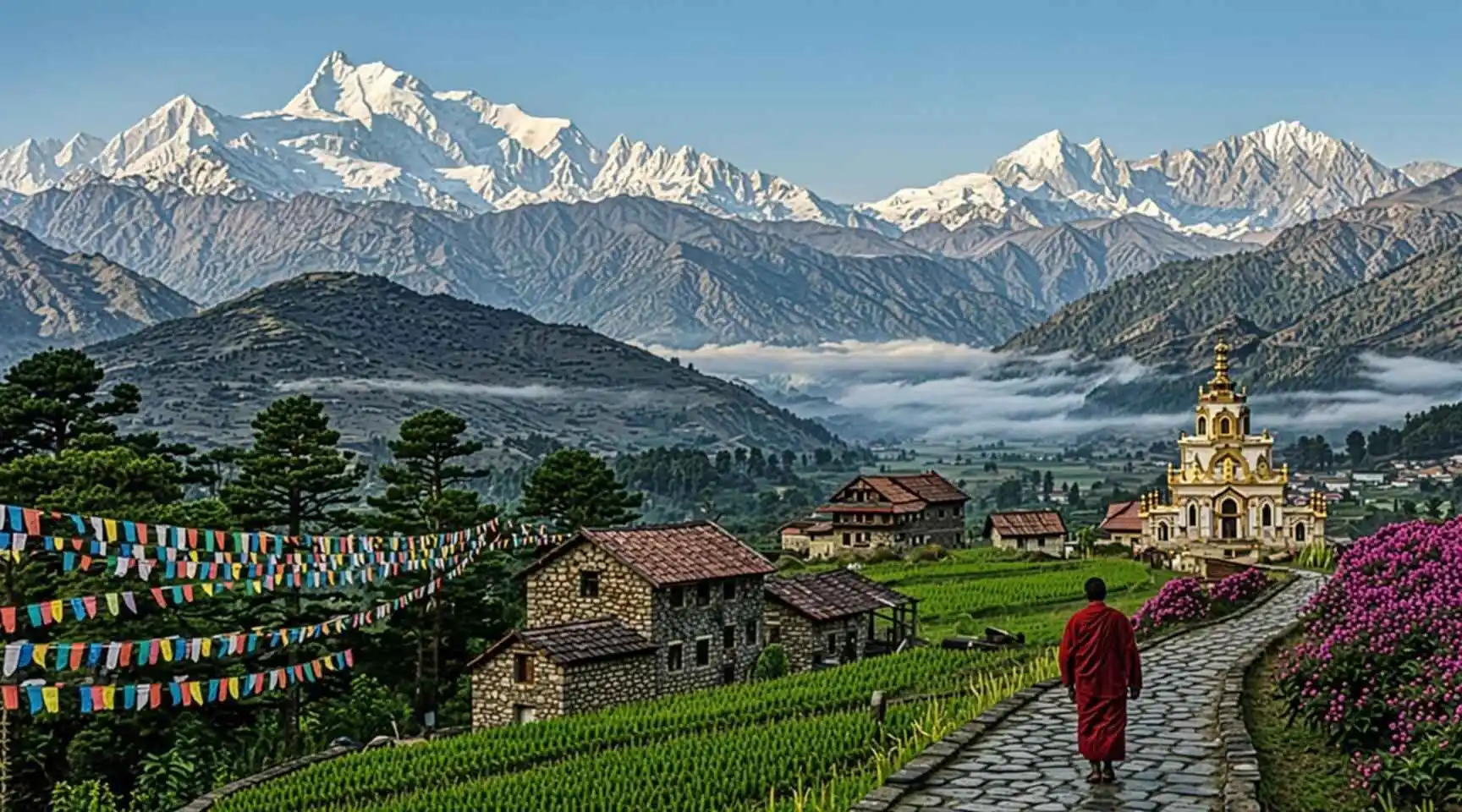
As Nepal navigates the 21st century, it stands at a crossroads. The promise of federalism, inclusion, and sustainable development is tempered by political infighting, economic inequality, and environmental threats.
Climate change is already affecting Nepal. Glaciers are melting, water sources are drying, and extreme weather events are becoming more frequent. The Himalayas are warming faster than the global average, threatening biodiversity, water security, and the livelihoods of mountain communities.
Yet, Nepalis are no strangers to adversity. Their resilience—forged by centuries of isolation, natural challenges, and political upheaval—remains their greatest strength.
Women are emerging as leaders in politics, business, and activism. Figures like Bidhya Devi Bhandari, Nepal’s first female president, and young entrepreneurs in tech, fashion, and education are redefining what’s possible.
Education and health indicators are improving. Literacy rates have climbed, child mortality has dropped, and access to clean water and electricity is expanding.
Environmental awareness is growing. Reforestation projects, plastic bans, and eco-tourism initiatives show that sustainable development is not just a dream but a movement.
Conclusion: Why Nepal Captivates the World
Nepal is more than a destination—it’s an experience. It’s the silence at dawn on a mountain trail, the sound of temple bells echoing in a valley, the warmth of a shared meal with a rural family, and the humbling vastness of a star-filled Himalayan sky.
It’s a country where ancient wisdom meets modern dreams, where spirituality coexists with survival, and where every journey—whether up a mountain or through a village—is a journey within.
To know Nepal is to understand that greatness isn’t always measured by size or wealth, but by depth of culture, strength of spirit, and harmony with nature.
So, whether you come to climb Everest, meditate in a monastery, explore ancient cities, or simply find peace in the hills—Nepal welcomes you. In its mountains, rivers, temples, and people, you’ll find not just a country, but a living, breathing testament to the beauty and resilience of the human spirit.
Welcome to Nepal—where the sky touches the soul.
FAQS
1.What are the must‑visit destinations for a first‑time traveler to Nepal?
The iconic trekking hub of the Annapurna Circuit offers dramatic mountain scenery and vibrant villages. In the south, the Kathmandu Valley’s UNESCO‑listed sites—Pashupatinath, Swayambhunath (the Monkey Temple), and Bhaktapur Durbar Square—provide a deep dive into history, art, and spirituality. For wildlife enthusiasts, Chitwan National Park and Bardia National Park allow you to spot one‑horned rhinos, Bengal tigers, and an impressive array of bird species.
2.When is the best time to trek in the Himalayas?
The prime trekking season runs from late September to early November, when the monsoon rains have cleared and the skies are typically clear, offering stunning mountain vistas. A secondary window is from late February to early May, when spring blossoms color the valleys and temperatures are moderate. During the monsoon (June–August) trails become slippery and visibility is limited, while winter (December–January) brings harsh cold at higher elevations.
3.Do I need a visa to enter Nepal, and how can I obtain one?
All foreign nationals (except citizens of India) require a visa to enter Nepal. Visas are available on arrival at Tribhuvan International Airport, land border crossings, and at the Nepal Immigration Office in Kathmandu. You can also apply online in advance for a Tourist Visa, which speeds up the process and lets you choose the length of stay—15 days, 30 days, or 90 days.
4.How safe is Nepal for solo female travelers?
Overall, Nepal is considered safe for solo female travelers, especially in popular tourist areas where local hospitality is strong. It’s advisable to dress modestly, respect local customs, and avoid traveling alone after dark in remote regions. Keeping copies of important documents, informing someone of your itinerary, and using reputable guides or tour operators further enhance safety.
5.What is the cultural etiquette regarding religious sites?
When visiting temples, monasteries, or shrines, dress modestly—cover shoulders and knees, and remove shoes where required. Always walk clockwise around stupas, and never point your feet toward Buddha images or sacred statues. Photography may be restricted in certain inner sanctums, so ask for permission before taking pictures.
6.How does the Nepalese calendar differ from the Gregorian calendar?
Nepal primarily uses the Bikram Sambat (BS) calendar, which is about 56.7 years ahead of the Gregorian system. For example, the year 2024 AD corresponds to 2080‑2081 BS. Many festivals and official documents reference BS dates, but the Gregorian calendar is also widely recognized, especially in tourism and commerce.
7.What are the major festivals celebrated in Nepal, and when do they occur?
Dashain, the longest and most important festival, spans 15 days in September–October and celebrates the victory of the goddess Durga. Tihar, known as the “festival of lights,” follows a few weeks later and honors deities, animals, and ancestors. Other notable events include Holi (spring colors), Buddha Jayanti (the birth of Siddhartha Gautama), and Maghe Sankranti (mid‑January harvest celebration).
8.Is it necessary to learn Nepali before traveling, and what phrases are most useful?
While English is spoken in urban centers and tourism hubs, learning basic Nepali phrases greatly enhances interactions, especially in rural areas. Useful greetings include “Namaste” (hello), “Dhanyabaad” (thank you), and “Kasto cha?” (how are you?). Polite expressions such as “Maf garnuhos” (excuse me) and “Kati ho?” (how much?) are also appreciated.
9.How reliable is internet connectivity across Nepal?
Major cities like Kathmandu, Pokhara, and Biratnagar have reliable broadband and 4G mobile networks, making streaming and video calls feasible. In remote trekking areas, connectivity can be spotty; you’ll often rely on Wi‑Fi at tea houses, guesthouses, or satellite connections. Purchasing a local SIM card (Ncell or Nepal Telecom) provides the best coverage for most travelers.
10.What currency is used, and can I use credit cards?
The Nepali rupee (NPR) is the official currency. Credit cards (Visa, MasterCard, and sometimes American Express) are accepted in upscale hotels, restaurants, and larger shops in Kathmandu and Pokhara. However, cash is essential in villages, markets, and remote lodges; ATMs are widely available in cities but sparse in the high Himalaya, so withdraw enough before heading out.
11.Are there any health concerns I should be aware of before traveling to Nepal?
Altitude sickness is the primary concern for trekkers; acclimatize properly, stay hydrated, and consider medication like acetazolamide if needed. Vaccinations recommended by major health organizations include Hepatitis A, Typhoid, Tetanus, and, for certain regions, Japanese Encephalitis. Carry a basic medical kit, and purchase travel insurance that covers high‑altitude evacuation.
12.What is the legal drinking age, and are there any restrictions on alcohol?
The legal drinking age in Nepal is 18, and alcohol can be purchased in licensed shops, bars, and restaurants. However, some areas, especially those with a strong Buddhist influence, may have local bans or cultural disapproval of alcohol consumption. Public intoxication is frowned upon, and it is illegal to drink while driving.
13.How environmentally responsible is tourism in Nepal, and what can I do to minimize my impact?
Tourism is a major economic driver, but it also places strain on fragile ecosystems, especially on popular trekking routes. Travelers can reduce waste by carrying reusable water bottles, avoiding single‑use plastics, and adhering to “Leave No Trace” principles. Supporting community‑run lodges, hiring local guides, and participating in clean‑up initiatives also help sustain the environment and local economies.
14.Is it possible to travel to Nepal by land, and what are the major border crossings?
Yes, Nepal shares open borders with India and China (Tibet). Popular Indian crossing points include Sunauli (via the Lumbini route) and Birgunj (connecting to the Nepalgunj–Kolkata highway). The Tibet border at Kodari is currently limited to cargo and pilgrimage traffic, with occasional special permits for adventure travelers. All crossings require valid passports and visas.
15.What are the transportation options within Nepal for getting around the country?
Domestic flights connect Kathmandu with Pokhara, Lukla (gateway to Everest), and other regional hubs, saving time on long distances. Long‑distance buses—ranging from basic to luxury coaches—serve most towns and cities. In cities, taxis, rickshaws, and ride‑hailing apps like Tootle provide convenient short‑range travel.
16.How does the education system work in Nepal, and are there opportunities for volunteer teaching?
Education in Nepal follows a 10+2 structure: ten years of primary and secondary school followed by two years of higher secondary. English, Nepali, and regional languages are core subjects. Numerous NGOs and schools welcome volunteers for short‑term teaching, especially in rural areas, but most require a commitment of at least two weeks and basic teaching materials.
17.What is the significance of the “Mithila” and “Newari” cultures in Nepal?
Mithila, originating in the southeastern Terai, boasts intricate Madhubani paintings, vibrant folk music, and a distinct Maithili language. Newari culture, centered in Kathmandu Valley, is renowned for its centuries‑old architecture, elaborate festivals, and cuisine such as yomari and aloo tama. Both cultures contribute richly to Nepal’s diverse tapestry and are best experienced through local festivals and community visits.
18.Is Nepal a good destination for adventure sports beyond trekking?
Absolutely. The country offers white‑water rafting on the Kali Gandaki and Trishuli rivers, bungee jumping near the Tibetan border, mountain biking on rugged hill tracks, and paragliding over Pokhara’s lake and hills. Rock climbing opportunities exist in the Kathmandu valley and the Pokhara region, while the high Himalaya provide opportunities for mountaineering and ice climbing for seasoned climbers.
19.What are the legal requirements for bringing a camera drone into Nepal?
Drone operators must register their equipment with the Civil Aviation Authority of Nepal (CAAN) and obtain a flight permit before any commercial or recreational use. Flights are restricted near airports, military zones, and certain heritage sites within Kathmandu Valley. Always fly below 400 feet, keep the drone within line of sight, and respect local privacy and wildlife considerations.
20.How does Nepal’s political system function, and what should travelers know about recent political stability?
Nepal is a federal democratic republic with a parliamentary system; the President is largely ceremonial, while the Prime Minister heads the executive. Since the 2006 People’s Movement, Nepal transitioned from monarchy to republic, and while occasional protests occur, the country has enjoyed relative stability for the past decade. Travelers should stay informed of local news, avoid large demonstrations, and follow guidance from their embassy if unrest escalates.
21.What is the typical tipping etiquette for services in Nepal?
Tipping is appreciated but not obligatory. In restaurants, rounding up the bill or leaving 5–10 % for good service is standard. Guides and porters on treks often receive a collective tip at the end of the journey—roughly $10‑$15 per day for guides and $5‑$8 per day for porters. Hotel staff and drivers may be tipped modestly (e.g., $1–$2 per service).
22.Are there any restrictions on photography, especially of religious or military sites?
Photography is generally permitted in public spaces, but certain religious sites restrict images inside inner sanctums, and some monasteries forbid any photography at all. Military installations, police stations, and border areas are strictly off‑limits for photographs. When in doubt, ask a local guide or staff member before snapping pictures.
23.How can I support local artisans while shopping in Nepal?
Purchase directly from cooperatives or artisans’ workshops, where you can verify fair‑trade practices and often learn about the craft. Handicrafts such as pashmina shawls, Thangka paintings, Dhaka fabrics, and wood carvings are best bought from reputable stores in Kathmandu’s Thamel area, Patan’s Patan Museum shop, and the villages of Bhaktapur. Ensure items are hand‑made (not machine‑produced) and inquire about the origin of materials like silk or wool.
24.What unique wildlife can I expect to see in Nepal’s national parks?
Chitwan National Park is famed for its one‑horned rhinoceros, Bengal tiger, and spotted deer, while Bardia National Park offers similar species with fewer tourists. In the far west, Rara National Park shelters the elusive red panda and Himalayan black bear. The Annapurna Conservation Area, though mountainous, is home to snow leopards, Himalayan tahr, and a dazzling variety of alpine birds.
25.How do I stay connected with my home country while traveling in remote areas?
For remote trekking routes, many lodges provide satellite phone services or limited Wi‑Fi at higher‑priced tea houses. Purchasing a local SIM and enabling international roaming as a backup can help in areas with occasional 3G/4G coverage. Carrying a portable power bank and a universal charger ensures your devices stay operational throughout the journey.
Disclaimer: The content on this blog is for informational purposes only. Author’s opinions are personal and not endorsed. Efforts are made to provide accurate information, but completeness, accuracy, or reliability are not guaranteed. Author is not liable for any loss or damage resulting from the use of this blog. It is recommended to use information on this blog at your own terms.

