

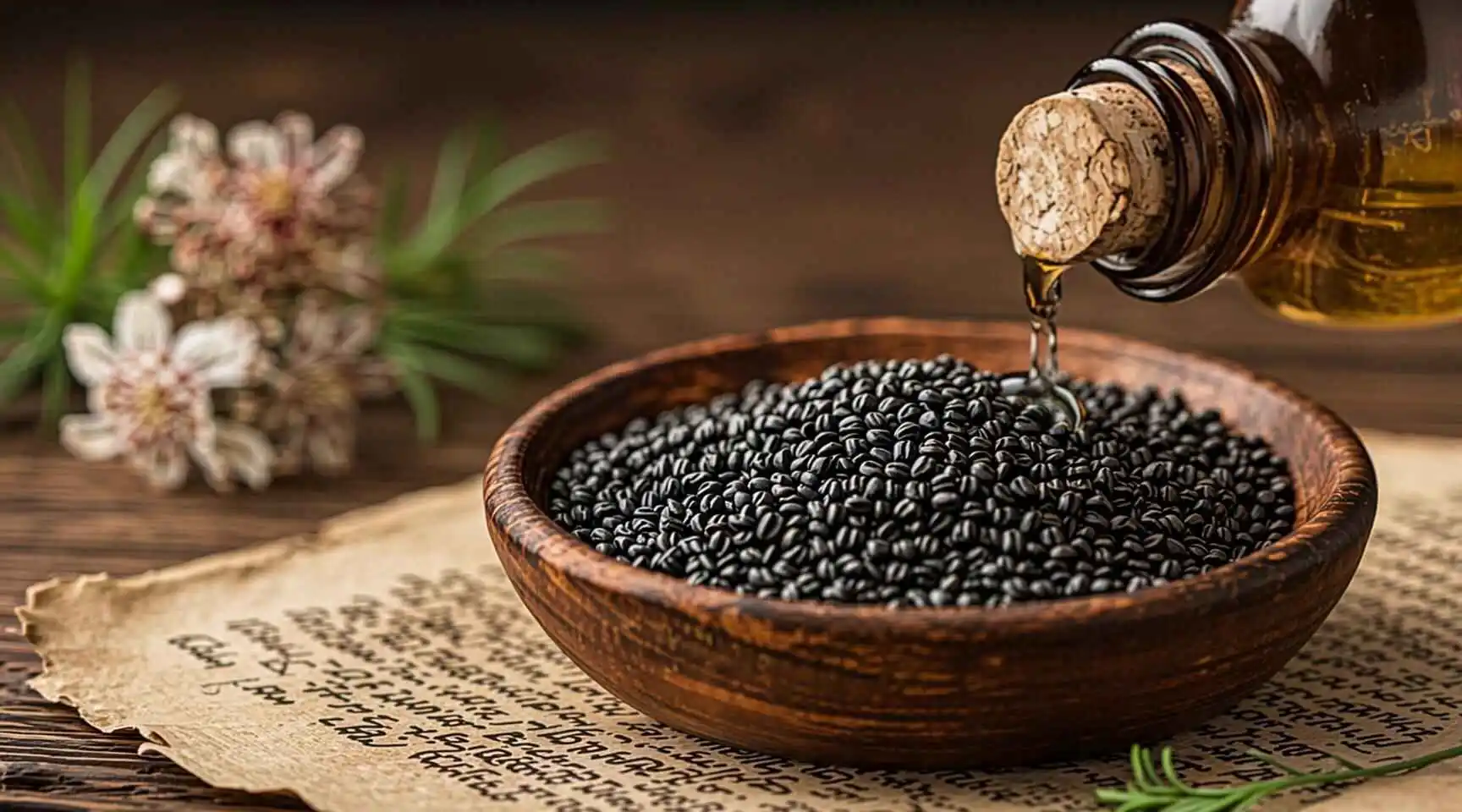
As we look toward the future, Nigella sativa is poised to leap from the shelves of health food stores into the forefront of advanced pharmacology. The greatest challenge with Thymoquinone is its bioavailability. When ingested, it is rapidly metabolized by the liver and cleared from the bloodstream.
To solve this, cutting-edge researchers are exploring nanotechnology. By encapsulating Thymoquinone in lipid nanoparticles or liposomes, scientists can protect the molecule from liver degradation, allowing it to circulate longer and target specific tissues, such as tumors or inflamed joints. This is opening doors for TQ to be used as a targeted cancer therapy and a high-efficacy anti-inflammatory without the side effects of current drugs.
Furthermore, as the world grapples with the crisis of antibiotic resistance, black cumin is being investigated as a novel antimicrobial. Studies have shown that combining black seed oil with conventional antibiotics like gentamicin makes the antibiotics significantly more effective against stubborn, drug-resistant bacteria like MRSA.
Finally, in an era of climate change, Nigella sativa offers agricultural hope. It is drought-resistant, requires minimal water, and thrives in poor soil conditions, making it a sustainable crop for arid regions facing desertification.
Conclusion: The Seed That Time Remembered
It is a rare and beautiful thing when the folklore of the ancients aligns so perfectly with the microscopes of the moderns. The Pharaohs didn’t know what an antioxidant was, and Avicenna didn’t understand the molecular structure of NF-kB, but they observed the results. They watched the sick recover, the breathless breathe, and the wounded heal.
Black cumin is not a magical cure-all that defies science; it is a botanical marvel that confirms science. Its power lies in its intricate, evolutionary chemistry—a chemistry that the human body inherently understands. In a world of synthetic, single-target drugs that often cause as many problems as they solve, Nigella sativa offers a holistic, multi-target approach, working with the body rather than imposing upon it.
The tiny black seed in your spice rack is a time capsule. It carries the wisdom of Egyptian physicians, the faith of Prophets, the curiosity of Islamic scholars, and the rigorous validation of modern biochemists. It has survived 3,000 years of human history not because of clever marketing, but because it works.
The Pharaoh’s secret is out. The question is, what will you do with it?
FAQS
1.What exactly is black cumin?
Black cumin refers to the seeds of the Nigella sativa plant, an annual flowering herb in the buttercup family. It is famous for its tiny, black, crescent-shaped seeds that possess potent medicinal and culinary properties.
- Is black cumin the same as regular cumin?
No. True cumin (Cuminum cyminum) belongs to the parsley family. Black cumin (Nigella sativa) belongs to the buttercup family. They are completely different plants, though black cumin was given its name because its crushed seeds share a similar earthy, warming flavor profile to regular cumin.
- What are the other common names for black cumin?
It is known by many names worldwide, including Kalonji (Hindi/Urdu), Habbat al-Barakah or “Seed of Blessing” (Arabic), Shuniz (Persian), Çörek otu (Turkish), and Kalo jeere (Bengali).
- Is there another spice called “black cumin”?
Yes, Bunium bulbocastanum is also called black cumin and is a true relative of regular cumin. It is larger, darker, and sweeter, and is used widely in Persian and North Indian cooking. However, when people talk about the “miracle” seed, they are almost always referring to Nigella sativa.
- How was black cumin used in ancient Egypt?
It was highly revered. Black cumin seeds were found in the tomb of Pharaoh Tutankhamun to sustain him in the afterlife. The Ebers Papyrus (1550 BCE) also documents its use by Egyptian physicians for gastrointestinal, respiratory, and skin ailments.
- Which Greek physicians prescribed black cumin?
Hippocrates prescribed it for digestive and respiratory issues, while Dioscorides documented its use for headaches, nasal congestion, toothaches, and intestinal worms in his pharmacopoeia, De Materia Medica.
- What is the famous Islamic saying about black cumin?
The Prophet Muhammad is recorded in the Hadith as saying, “Use the black seed, for indeed it contains a cure for every disease except death.” This elevated the seed to a sacred status in the Islamic world.
- What did Ibn Sina (Avicenna) say about black cumin?
The legendary Persian polymath wrote about black cumin in his Canon of Medicine, noting its ability to stimulate the body’s energy, fight fatigue, and purge the body of “cold, damp humors” that caused illness.
- What is the primary active compound in black cumin?
Thymoquinone (TQ) is the primary bioactive compound, making up to 54% of the seed’s essential oil. It is responsible for the vast majority of the seed’s medicinal properties.
- How does Thymoquinone work as an antioxidant?
TQ neutralizes free radicals (unstable molecules that damage cells) by donating electrons. Crucially, it also upregulates the body’s own antioxidant defense systems, boosting the production of superoxide dismutase, catalase, and glutathione.
- How does black cumin fight inflammation?
Thymoquinone inhibits inflammatory enzymes like COX and LOX (the same pathways targeted by ibuprofen) and suppresses NF-kB, a master switch that controls the body’s inflammatory cascade.
- What does it mean that black cumin is an “immunomodulator”?
Unlike synthetic drugs that just suppress or boost the immune system, black cumin balances it. It calms an overactive immune response (helpful for autoimmune conditions) while stimulating white blood cells like Natural Killer cells when the immune system is underactive.
- Can black cumin help with asthma?
Yes. Multiple clinical trials have shown that black seed oil significantly improves asthma symptoms and lung function (FEV1). Thymoquinone acts as a bronchodilator by blocking calcium channels, relaxing the airway muscles.
- Does black cumin affect blood sugar?
Yes. Clinical meta-analyses show that Nigella sativa supplementation significantly reduces fasting blood sugar and HbA1c in diabetic patients by enhancing insulin sensitivity and protecting pancreatic beta cells.
- Can black cumin cure cancer?
It is irresponsible to claim it cures cancer. However, laboratory and animal studies show Thymoquinone induces apoptosis (programmed cell death) in various cancer cell lines while leaving healthy cells unharmed. It is being researched as a promising adjuvant therapy.
- How does black cumin support brain health?
It contains Thymohydroquinone (THQ), a powerful acetylcholinesterase (AChE) inhibitor. AChE inhibitors prevent the breakdown of acetylcholine, a memory neurotransmitter, and are the primary drugs currently used to treat Alzheimer’s disease.
- Is black cumin good for the skin?
Yes. Topical application of black seed oil has been shown to be highly effective in managing eczema, psoriasis, and acne, often performing better than standard steroid creams due to its combined anti-inflammatory and antimicrobial properties.
- What does black cumin taste like?
It has a complex flavor profile: initially bitter and peppery, followed by a warm, oregano-like herbaceousness, and finishing with a lingering, toasted onion note.
- What is Panch Phoron?
It is a five-seed spice blend from Bengal that includes kalonji (black cumin), fenugreek, regular cumin, black mustard, and fennel. It is used for tempering vegetables and lentils.
- How do you unlock the flavor of black cumin seeds?
Dry-toasting the seeds in a hot skillet for 1-2 minutes releases their volatile essential oils. Alternatively, you can temper them by frying in hot oil or ghee until they sizzle.
- Can I just swallow the raw seeds for health benefits?
While you can, it’s not the most effective method. The tough outer husk makes it hard for the body to absorb Thymoquinone. If taking raw seeds medicinally, chew them thoroughly or lightly crush them first.
- What is the difference between black seed essential oil and black seed oil?
Black seed fixed oil (cold-pressed) is the nutrient-rich carrier oil you take by the spoonful or use in cooking. Black seed essential oil is a highly concentrated distillation that is too potent to ingest directly and must be heavily diluted for topical or aromatherapy use.
- How should I store black seed oil?
It should be stored in a dark amber or cobalt glass bottle, away from heat and direct sunlight, which degrade the Thymoquinone and cause the oil to oxidize.
- What is the recommended daily dosage of black seed oil?
For general wellness, 1 to 2 teaspoons (5-10 ml) daily is standard. For specific conditions, studies use 500 mg to 2,000 mg. Always start with a low dose (1/4 tsp) and work your way up.
- Should I take black seed oil with food?
Yes. Taking it with food, especially foods containing healthy fats, is highly recommended as it improves the absorption of Thymoquinone and the seed’s fat-soluble vitamins.
- What is the “die-off” reaction?
When starting black seed oil, some people experience mild bloating or fatigue. This is a Herxheimer reaction, where the body rapidly detoxifies. Starting with a small dose minimizes this effect.
- Is black cumin safe during pregnancy?
Culinary amounts in food are safe, but medicinal doses of black seed oil should be avoided during pregnancy. It has traditional abortifacient properties and can stimulate uterine contractions.
- Does black cumin interact with medications?
Yes. Because it naturally lowers blood pressure and blood sugar, it can cause both to drop too low if taken alongside pharmaceutical drugs for those conditions. It also may slow blood clotting and interact with liver enzymes (CYP450) that metabolize drugs.
- How is nanotechnology being used with black cumin?
Scientists are encapsulating Thymoquinone in lipid nanoparticles or liposomes to protect it from being rapidly metabolized by the liver. This increases its bioavailability, allowing it to target specific tissues like tumors more effectively.
- Why is black cumin considered a good crop for climate change?
Nigella sativa is highly drought-resistant and thrives in poor, arid soil conditions with minimal water, making it a sustainable and resilient agricultural crop for regions facing desertification.
Medical Disclaimer: The information provided on this website is for general educational and informational purposes only and is not intended as a substitute for professional medical advice, diagnosis, or treatment. Always seek the advice of your physician or other qualified health provider with any questions you may have regarding a medical condition. Never disregard professional medical advice or delay in seeking it because of something you have read on this website.

