

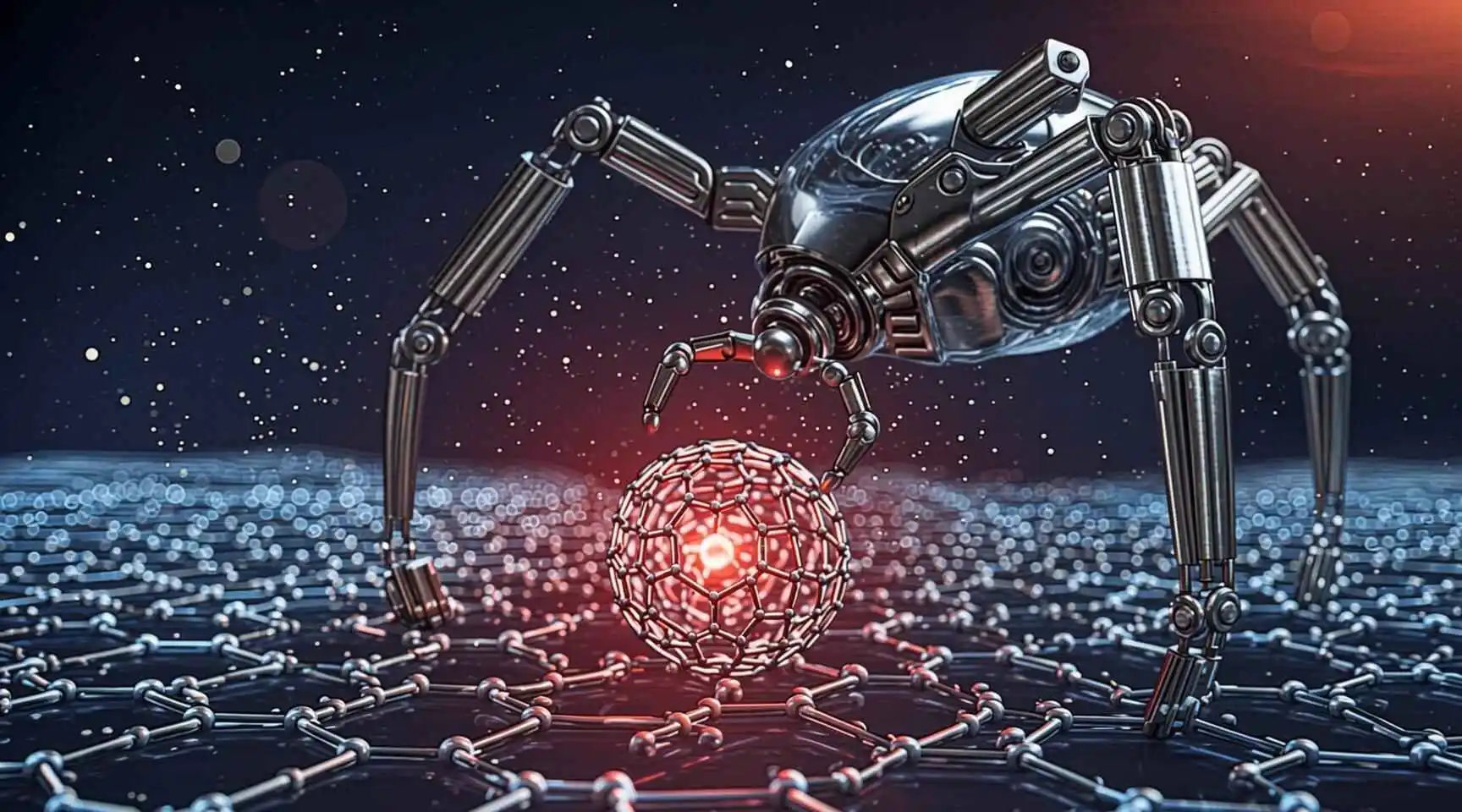
Invisible Giants: How the Science of the Small is Reshaping Our Entire World
Imagine a world where materials repair themselves, where doctors can hunt down cancer cells one by one without a single incision, and where the energy crisis is solved by solar panels painted onto your windows like a coat of varnish. It sounds like science fiction, the stuff of Star Trek or Black Mirror. But the truth is, this future is not just approaching—it is already here, hiding in plain sight.
It is happening at a scale so small that the human eye cannot perceive it. It is happening in the realm of the nanometer—a unit of measurement so tiny that if you were to blow up a marble to the size of the Earth, a nanometer would be the size of a marble.
This is the world of Nanotechnology.
While macro-engineering builds skyscrapers and bridges, nanotechnology arranges atoms and molecules like Lego blocks. It is the manipulation of matter on an atomic, molecular, and supramolecular scale. And it is quietly revolutionizing everything from the clothes on your back to the device you are reading this on.
In this extensive deep-dive, we are going to explore the invisible giants of the technological world. We will uncover the history, the physics, the mind-bending applications, and the ethical dilemmas of engineering the very building blocks of reality.
Chapter 1: Defining the Undetectable
To understand the power of nanotechnology, we must first grasp the scale. It is difficult for the human brain to comprehend dimensions this small.
A meter is something you can walk. A centimeter is the width of a fingernail. A millimeter is a grain of sand. Go smaller. A micrometer is the size of a bacterium. Now, shrink that by a factor of 1,000.
One nanometer is one-billionth of a meter.
To put it into perspective:
- A sheet of paper is about 100,000 nanometers thick.
- A human hair is roughly 80,000 nanometers wide.
- A DNA double helix is about 2 to 2.5 nanometers in diameter.
- A single atom is roughly 0.1 to 0.5 nanometers.
Nanotechnology deals with structures that range in size from 1 to 100 nanometers. Why this specific range? Because this is the “quantum realm.” It is the scale where the standard laws of physics as we experience them (gravity, classical mechanics) begin to give way to the weird and wonderful rules of quantum mechanics.
At this scale, elements can behave completely differently than they do in the macro world. Gold, for instance, is a shiny, yellow, inert metal in the macro world. But if you break gold down into nanoparticles, it can appear red or purple, and it becomes a highly reactive chemical catalyst. Carbon, when arranged in a specific lattice at the nanoscale, becomes a diamond—harder than anything else on Earth. When arranged in a different lattice (a cylinder), it becomes a carbon nanotube, which is 100 times stronger than steel but six times lighter.
This is the core promise of nanotechnology: By changing the arrangement of atoms, we change the properties of matter.
Chapter 2: The History of Thinking Small
The concept of manipulating atoms is not entirely new. In 1959, the legendary physicist Richard Feynman delivered a lecture at the California Institute of Technology titled “There’s Plenty of Room at the Bottom.” In this seminal talk, Feynman theorized that it might be possible to manipulate individual atoms and molecules.
He famously speculated that if we could arrange atoms the way we want, we could create materials with extraordinary properties. He challenged the scientific community to create smaller motors, write the entire Encyclopedia Britannica on the head of a pin, and miniaturize computers. While the audience was intrigued, the tools to achieve such feats did not yet exist.
The term “nanotechnology” was coined later, in 1974, by Professor Norio Taniguchi. However, it wasn’t until the 1980s that the real breakthrough occurred. The invention of the Scanning Tunneling Microscope (STM) and the Atomic Force Microscope (AFM) allowed scientists for the first time to actually “see” and manipulate individual atoms.
In 1989, IBM physicists Don Eigler and Erhard Schweizer demonstrated this power by arranging 35 xenon atoms to spell out the letters “IBM.” It was a publicity stunt, yes, but it was proof of concept. We had moved from observing nature to editing it.
Chapter 3: Nanomaterials – The New Toolbox
The engine of the nanotech revolution is the discovery and synthesis of new materials that simply do not exist in nature. These materials are the building blocks of the future.
- Carbon Nanotubes
Imagine rolling a sheet of graphene (a single layer of carbon atoms) into a cylinder. You get a carbon nanotube. These tubes are the strongest and stiffest materials ever discovered in terms of tensile strength. They conduct heat and electricity better than copper or gold.
- Application: Reinforcing concrete, creating lighter bicycles and sports equipment, and eventually, building the tether for a “space elevator.”
- Graphene
Often called a “wonder material,” graphene is a single layer of carbon atoms arranged in a honeycomb lattice. It is transparent, incredibly conductive, and impermeable to even the smallest atoms (like helium).
- Application: Foldable screens, super-fast transistors, water filtration systems, and high-capacity batteries.
- Quantum Dots
These are tiny semiconductor particles only a few nanometers wide. They glow with a specific color when exposed to light, and the color depends on their size. Smaller dots glow blue; larger dots glow red.
- Application: The vibrant, color-accurate displays on modern QLED TVs and monitors. They allow for purer colors and better energy efficiency than traditional LCDs.
- Nanoparticles
These can be made of metals like silver, gold, or titanium dioxide. Silver nanoparticles, for example, have powerful antimicrobial properties.
- Application: Antibacterial socks, wound dressings, and refrigerators to prevent mold growth.
Chapter 4: Nanomedicine – Healing at the Molecular Level
Perhaps the most awe-inspiring application of nanotechnology is in the field of medicine. Currently, medicine is somewhat blunt. Chemotherapy, for example, kills cancer cells, but it also kills healthy cells, causing hair loss and nausea. Antibiotics kill good bacteria along with the bad.
Nanomedicine promises precision.
Targeted Drug Delivery
Imagine a “smart bomb” for cancer. Instead of flooding the body with toxic chemicals, we can attach chemotherapy drugs to nanoparticles. These nanoparticles are engineered to recognize the specific molecular markers found only on the surface of cancer cells. The nanoparticles circulate through the bloodstream, bypassing healthy tissue, and attach themselves only to the tumor. Once attached, they release their payload directly into the cancer cell. This increases the efficacy of the treatment while drastically reducing side effects.
Regenerative Medicine
Nanotechnology is helping us regrow tissues. Nanofibers can be used to create a “scaffold” that mimics the structure of human tissue. Stem cells are placed on this scaffold, and as they grow, they follow the structure of the nanofibers, effectively growing new skin, bone, or even organs. Scientists have already successfully grown bladders and windpipes using these techniques.
Diagnostics
Nanotechnology allows us to detect diseases earlier than ever before. Nanobiosensors can detect a single virus or a single cancer marker in a drop of blood. This “lab-on-a-chip” technology means that in the future, you might get a full health checkup just by pricking your finger, without waiting days for lab results.
Nanobots
The ultimate goal of nanomedicine is the creation of nanobots—microscopic machines that can swim through the bloodstream. While still largely in the research phase, theoretical nanobots could perform microsurgery, unclog arteries, or destroy bacteria mechanically, rather than chemically.
Chapter 5: Energy and Environment – Saving the Planet with the Small
As the climate crisis deepens, we are looking for solutions to our energy and environmental problems. Nanotechnology offers several high-impact tools.
Next-Generation Batteries
Lithium-ion batteries power our lives, but they have limitations: they charge slowly, they degrade, and they can be dangerous. Nanotechnology is addressing all three. By using silicon nanowires in the anode of a battery, we can increase the surface area significantly. This allows batteries to store ten times more energy and charge in minutes rather than hours. This technology is crucial for the mass adoption of electric vehicles.
Solar Power
Traditional silicon solar panels are expensive to manufacture and have a theoretical efficiency limit. Nanotechnology enables “third-generation solar cells.”
- Thin-Film Solar: Using quantum dots and organic photovoltaics, we can create solar films that are transparent. These could be applied to windows, turning skyscrapers into massive power generators without blocking the view.
- Paint-on Solar: Researchers are developing nanoparticles that can be mixed into paint. You could literally paint your roof or your car with solar energy-harvesting material.
Water Purification
One of the biggest challenges of the 21st century is fresh water scarcity. Nanotechnology offers a solution through advanced filtration. Carbon Nanotube Membranes are so porous they let water flow through them 100 times faster than standard membranes. Yet, the pores are so small that they can filter out salt, bacteria, and even viruses. This could make desalination of seawater vastly cheaper and more energy-efficient, potentially solving the water crisis for arid nations.
Cleaning up Pollution
Nanoparticles can be used to clean up toxic waste. Iron nanoparticles, for example, can be injected into groundwater to break down industrial solvents like TCE (trichloroethylene) into harmless byproducts. This “nanoremediation” is faster and cheaper than digging up contaminated soil.
Chapter 6: Nanotechnology in Electronics and Computing
If you are reading this on a smartphone or laptop, you are already holding a marvel of nanotechnology.
Moore’s Law and Transistors
Moore’s Law famously states that the number of transistors on a microchip doubles about every two years. As transistors get smaller, computers get faster. We are now reaching the physical limits of silicon. We can’t make traditional transistors much smaller without them failing due to quantum tunneling (electrons jumping where they shouldn’t).
Nanotechnology is the solution. Chips are now moving into the sub-10 nanometer range. We are utilizing 3D stacking and new materials like Gallium Nitride (GaN) to continue improving performance. This allows for devices that are not just faster, but more energy-efficient—crucial for AI processing and data centers.
Flexible and Wearable Electronics
Because materials like graphene are transparent, flexible, and conductive, they are perfect for the next generation of electronics. We are moving away from rigid glass-and-metal slabs toward flexible, foldable phones, “smart fabrics” woven with conductive nanofibers, and electronic skin that can monitor your vital signs.
Chapter 7: Consumer Goods and Everyday Life
You don’t need to look to the stars to find nanotech; it is in your kitchen cabinet and on your clothes.
Food
Nanotechnology is changing how we eat and how food is packaged.
- Packaging: “Smart packaging” uses nanoparticles embedded in plastic to detect spoilage. For example, a plastic wrapper might change color if the food inside starts to rot or if the temperature has reached unsafe levels.
- Safety: Silver nanoparticles are used in food storage containers to kill bacteria, extending the shelf life of perishables.
- Texture: Nanoparticles can change the texture of low-fat foods, making them taste creamier without adding fat.
Textiles
The concept of “self-cleaning clothes” is becoming a reality. By treating fabrics with hydrophobic nanoparticles (coatings that repel water), we can create clothes that repel wine, coffee, and mud. This is the same technology known as the “Lotus Effect” (based on the leaves of the lotus flower).
Sunscreen
Have you ever noticed that modern sunscreens go on clear, unlike the thick white paste of the 1980s? That’s nanotechnology. Zinc oxide and titanium dioxide are excellent at blocking UV light, but in their bulk form, they are white powders. When ground down to the nanoscale, they become transparent to visible light while still blocking harmful UV rays.
Chapter 8: The Dark Side – Risks and Ethics
With great power comes great responsibility. While the potential of nanotechnology is boundless, there are legitimate concerns that must be addressed.
Nanotoxicology
Because nanoparticles are so small, they can go places that larger particles cannot. They can pass through cell membranes, cross the blood-brain barrier, and even enter the nucleus of a cell. We do not yet fully understand the long-term effects of inhaling or ingesting synthetic nanoparticles. If carbon nanotubes are similar in shape to asbestos fibers (which are needle-like), could they cause similar lung diseases? This field of study, known as nanotoxicology, is critical to ensuring that these technologies are safe before they are deployed widely.
Environmental Impact
What happens when billions of nanoparticles from sunscreen or industrial waste wash into the ocean? How do they interact with marine life? Some studies suggest that nanoparticles can accumulate in the food chain (bioaccumulation). If we release nanobots or synthetic organisms into the wild, can we control them?
Privacy
As sensors become smaller and cheaper (nano-sensors), they can be embedded everywhere. We face a future where “smart dust”—tiny wireless sensors the size of a grain of sand—could be scattered across a city to monitor traffic, pollution, or people. This raises massive privacy concerns. Who owns the data? Who is watching?
The “Grey Goo” Scenario
This is the worst-case scenario popularized by sci-fi. The theory is that if we create self-replicating nanobots, and they malfunction, they might start consuming all biomass on Earth to fuel their replication, turning the planet into grey goo. While most scientists consider this highly unlikely (it requires engineering capabilities we don’t have), it remains a philosophical topic in the ethics of artificial intelligence and manufacturing.
The Nano-Divide
There is also a socioeconomic risk. Nanotechnology requires massive investment in high-tech facilities. This could widen the gap between wealthy nations and developing nations, creating a “nano-divide” where only the rich have access to advanced medicine, water filtration, and materials.
Chapter 9: The Future – The Molecular Assembly
https://youtu.be/Ro3VHPtOiMU

