

How Black Cumin Survived 3,000 Years to Become Modern Medicine
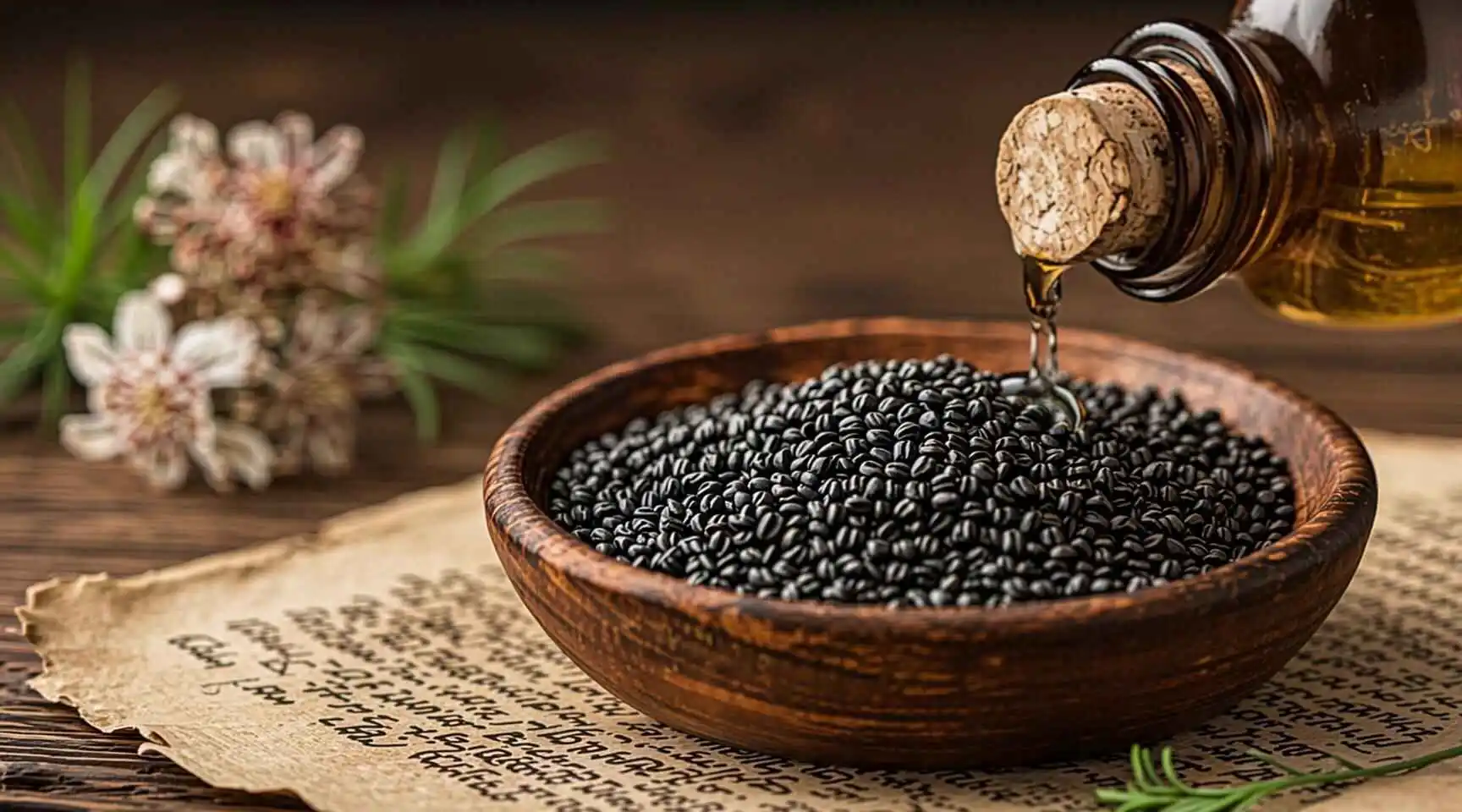
Look closely at the spice rack in your kitchen. Nestled between the mundane paprika and the ordinary oregano, you might find a tiny, pitch-black, crescent-shaped seed. It is unassuming, slightly rough to the touch, and easily mistaken for a stray onion seed. Yet, for over three millennia, this microscopic speck has been revered as a panacea, a culinary treasure, and a spiritual talisman.
This is black cumin—Nigella sativa—and its story is not just one of botanical curiosity, but of human civilization itself.
From the opulent tombs of Egyptian Pharaohs to the feverish laboratories of modern pharmacology, black cumin has survived the rise and fall of empires. It has been prescribed by ancient physicians, championed by prophets, and is now being validated by electron microscopes. But what makes this seed so extraordinary? Is the hype real, or is it just another superfood fad riding the coattails of wellness culture?
Buckle up. We are about to embark on a 4,000-year journey through time, chemistry, and culture to uncover the astonishing truth about the seed historically known as the “remedy for everything but death.”
The Botanical Identity Crisis – What Exactly is Black Cumin?
Before we dive into the history and science, we must clear up a massive botanical confusion that has plagued the spice trade for centuries.
When most people say “black cumin,” they are referring to Nigella sativa. However, the word “cumin” is a misnomer. True cumin belongs to the Cuminum cyminum family (Apiaceae), the same family as carrots and parsley. Nigella sativa, on the other hand, belongs to the Ranunculaceae (buttercup) family.
So, how did a buttercup get stuck with a cumin’s name? The answer lies in the sensory experience. When crushed, Nigella sativa seeds release a volatile oil profile that is strikingly similar to regular cumin—earthy, slightly bitter, and warming—but with added notes of oregano, onion, and black pepper. When the British encountered the spice during their colonial exploits in India, they dubbed it “black cumin” because of its color and flavor resemblance to the familiar spice.
In different parts of the world, it goes by many names:
- Kalonji (Hindi/Urdu)
- Habbat al-Barakah (Arabic, meaning “Seed of Blessing”)
- Shuniz (Persian)
- Çörek otu (Turkish, meaning “bun herb”)
- Kalo jeere (Bengali)
To complicate matters further, there is another spice called black cumin—Bunium bulbocastanum—which is a true relative of regular cumin and is used extensively in Persian and North Indian cooking. It is larger, darker, and sweeter than Nigella sativa.
For the remainder of this deep dive, when we say “black cumin,” we are speaking exclusively about the tiny, triangular, immensely powerful Nigella sativa.
The Pharaoh’s Panacea – Black Cumin in the Ancient World
The earliest traces of Nigella sativa take us back to the cradle of civilization. Archaeological evidence suggests that the plant was originally cultivated in the Mediterranean region, specifically the Levant and Egypt, before spreading eastward.
In 1922, when Howard Carter peered into the tomb of Tutankhamun, he uncovered an unimaginable trove of gold, jewels, and sacred artifacts. But among the treasures were mundane items meant to sustain the boy-king in the afterlife. Carefully placed in the tomb were flasks of olive oil and copious amounts of black cumin seeds. The ancient Egyptians believed the afterlife was a continuation of the earthly journey, and they dare not let their Pharaoh face eternity without his black seed.
But it wasn’t just royalty who relied on it. The Ebers Papyrus, dating back to 1550 BCE, is one of the oldest and most important medical texts of ancient Egypt. It contains over 700 remedies, and black cumin is a recurring star. Egyptian physicians prescribed it for everything from gastrointestinal distress and respiratory ailments to skin inflammation and eye infections. They even used it as a topical treatment for parasites and as an oral contraceptive—making it one of history’s first documented multi-purpose pharmaceuticals.
Across the Mediterranean, the Greeks were taking notes. The “Father of Medicine,” Hippocrates (c. 460–370 BCE), famously prescribed black cumin for digestive issues and respiratory congestion. However, it was the Greek physician Dioscorides (c. 40–90 CE) who truly documented its breadth in his monumental pharmacopoeia, De Materia Medica. He recommended black cumin for headaches, nasal congestion, toothaches, intestinal worms, and to promote milk production in nursing mothers.
From the Nile Delta, the black seed traveled along the Silk Road, embedding itself deeply into the medical and spiritual traditions of the Middle East and South Asia.
The Prophetic Medicine – “The Remedy for Everything But Death”
If ancient Egypt gave black cumin its royal pedigree, the Islamic Golden Age gave it its spiritual immortality.
No discussion of Nigella sativa is complete without quoting the most famous Hadith (saying) of the Prophet Muhammad regarding health. Recorded in the canonical collections of Sahih al-Bukhari and Sahih Muslim, the Prophet is reported to have said:
“Use the black seed, for indeed it contains a cure for every disease except death.”
This single sentence elevated Habbat al-Barakah from a mere herbal remedy to a sacred injunction. It sparked a millennium of intense medical inquiry in the Islamic world.
During the Islamic Golden Age (8th to 14th centuries), scholars didn’t just take the Hadith at face value; they sought to uncover the how and why behind the seed’s power.
Ibn Sina (Avicenna), the legendary Persian polymath whose The Canon of Medicine remained the standard medical textbook in European universities for centuries, dedicated extensive sections to black cumin. He noted its ability to stimulate the body’s energy and help it recover from fatigue and disease. He prescribed it for over 50 conditions, emphasizing its warming and drying properties, which he believed could purge the body of cold, damp humors that caused illness.
Al-Biruni, another brilliant scholar, authored a book specifically on black cumin called Kitab al-Shuniz. He detailed its botanical characteristics and its uses in treating asthma, fever, and paralysis.
Ibn al-Qayyim al-Jawziyya, a prominent 14th-century theologian and physician, wrote extensively on Prophetic medicine. In his book Al-Tibb al-Nabawi, he analyzed the black seed through the lens of contemporary medicine, stating that its power lay in its ability to clear blockages in the body’s systems, thus allowing the body’s natural healing mechanisms to function properly.
This deep-seated reverence meant that for centuries, from the deserts of Arabia to the courts of the Ottoman Empire, black cumin was a staple in every household’s medical kit.
Thymoquinone – The Magic Molecule Inside the Seed
For a long time, Western science viewed the claims of ancient texts with heavy skepticism. “A cure for everything?” the scientists scoffed. “That’s snake oil.” It wasn’t until the late 20th century that biochemists finally cracked the code of the black seed, isolating the compound responsible for its legendary efficacy: Thymoquinone (TQ).
Thymoquinone is a quinone molecule, and it is the primary bioactive component of Nigella sativa essential oil (comprising up to 54% of the oil). Modern pharmacology has revealed that TQ is not just one thing; it is a multi-target agent, which explains why it seems to affect almost every system in the body.
Here is how Thymoquinone operates on a cellular level:
- The Master Antioxidant: Oxidative stress is the rust of the human body. It is caused by free radicals—unstable molecules that damage DNA, proteins, and cell membranes, leading to aging and chronic diseases. While many plants have antioxidants, TQ is exceptionally potent. It donates electrons to neutralize free radicals, stabilizing them before they can cause harm. More remarkably, TQ has been shown to upregulate the body’s own antioxidant defense systems, specifically increasing the production of superoxide dismutase (SOD), catalase, and glutathione—the holy trinity of the body’s internal detox system.
- The Inflammation Saboteur: Chronic inflammation is the root cause of almost every modern disease, from Alzheimer’s to heart disease. TQ works by inhibiting key inflammatory enzymes like cyclooxygenase (COX) and lipoxygenase (LOX)—the exact same pathways targeted by over-the-counter anti-inflammatory drugs like ibuprofen, but without the severe gastrointestinal side effects. Furthermore, TQ suppresses NF-kB, a protein complex that acts as a master switch for inflammation. By turning off NF-kB, TQ effectively stops the inflammatory cascade at its source.
- The Immune Modulator: Unlike synthetic immunosuppressants or immune boosters, TQ is an immunomodulator. If the immune system is overactive (as in autoimmune conditions like rheumatoid arthritis), TQ helps calm it down. If the immune system is underactive, it helps stimulate the production of white blood cells, particularly Natural Killer (NK) cells, which are the body’s primary defense against viral infections and early-stage cancer cells.
Besides Thymoquinone, black cumin contains a synergistic cocktail of other powerful compounds:
- Thymol: An antiseptic and antifungal agent.
- Thymohydroquinone (THQ): A highly potent acetylcholinesterase (AChE) inhibitor, which has massive implications for neurocognitive health.
- Nigellimine: An alkaloid that has shown anti-tumor properties.
- Nigellicine: An alkaloid with anti-inflammatory and anticancer potential.
It is the entourage effect—the way these compounds interact with one another and with the human body—that makes Nigella sativa a pharmaceutical powerhouse.
The Modern Elixir – What Does Science Actually Say?
Over the past two decades, there has been an explosion of scientific literature on black cumin. A search on PubMed for Nigella sativa yields over a thousand peer-reviewed studies. So, what does the data actually show? Let’s separate the robust science from the hyperbole.
- Respiratory Health and Asthma
Perhaps the most clinically validated use of black cumin is for respiratory conditions. Asthma is characterized by chronic airway inflammation and bronchospasm. Multiple double-blind, randomized clinical trials have shown that black seed oil significantly improves asthma symptoms. A landmark study published in the journal Phytotherapy Research found that patients taking Nigella sativa extract experienced a dramatic improvement in their Forced Expiratory Volume (FEV1) and a reduction in the frequency of asthma attacks. The bronchodilatory effect of TQ is believed to work by blocking calcium channels, relaxing the smooth muscles of the airways.
- Metabolic Syndrome, Diabetes, and Obesity
Metabolic syndrome—the cluster of high blood sugar, high blood pressure, and abnormal cholesterol—is the epidemic of the modern age. Black cumin has shown remarkable results in rebalancing metabolism. A meta-analysis of randomized controlled trials published in Complementary Therapies in Medicine concluded that Nigella sativa supplementation significantly reduces fasting blood sugar and HbA1c (a marker of long-term blood sugar control) in diabetic patients. It works by enhancing insulin sensitivity and protecting the beta cells of the pancreas from oxidative damage. Additionally, it has been shown to lower LDL (“bad”) cholesterol and triglycerides while raising HDL (“good”) cholesterol.
- Oncology and Cancer Prevention
This is where the science gets thrilling. While it is wildly irresponsible to claim black cumin “cures” cancer, laboratory and animal studies have shown that Thymoquinone induces apoptosis (programmed cell death) in various cancer cell lines, including breast, colon, prostate, pancreatic, and blood cancers. Crucially, TQ exhibits selective toxicity: it kills the cancer cells while leaving healthy cells unharmed—a selectivity that modern chemotherapy severely lacks. Human clinical trials are still in their infancy, but TQ is being heavily researched as an adjuvant therapy to mitigate the toxic side effects of chemotherapy and enhance its efficacy.
- Neurological Health and Cognitive Decline
The brain is highly susceptible to oxidative stress, which is a primary driver of neurodegenerative diseases like Alzheimer’s and Parkinson’s. Thymohydroquinone (THQ), found in black seed oil, is a powerful acetylcholinesterase (AChE) inhibitor. AChE inhibitors are the primary class of drugs currently used to treat Alzheimer’s disease; they work by preventing the breakdown of acetylcholine, a neurotransmitter vital for memory and learning. Early studies suggest that black cumin oil could protect neurons from amyloid-beta toxicity, the plaque that builds up in Alzheimer’s patients’ brains.
- Dermatology and Skin Health
Cleopatra wasn’t just taking black cumin; she was slathering it on her skin. Modern dermatology is catching up. Studies have shown that topical application of Nigella sativa oil is highly effective in managing eczema (atopic dermatitis), reducing erythema and itching better than standard corticosteroid creams. It also shows promise in treating psoriasis, acne (due to its antimicrobial properties against Cutibacterium acnes), and even preventing scar formation.
The Caveat
It is vital to note that while the research is overwhelmingly positive, many of the breakthrough studies are still in the in vitro (petri dish) or animal trial phases. More large-scale, human clinical trials are needed. Black cumin is not a replacement for prescribed medication; it is a powerful adjunct and a preventative measure.
From Seed to Oil – The Culinary Magic of Black Cumin
If black cumin were only a medicine, it would be revered. But it is also a culinary masterpiece. To only swallow it in a capsule is to rob yourself of one of the most unique flavor profiles in the spice world.
The flavor of Nigella sativa is incredibly complex. At first hit, it tastes slightly bitter and peppery. Then, it warms up with a distinct oregano-like herbaceousness, followed by a lingering, toasted onion note. It is this savory, aromatic depth that makes it indispensable across the culinary landscapes of the Middle East, South Asia, and the Mediterranean.
India and Bangladesh (Kalonji): In the Indian subcontinent, kalonji is a foundational tempering spice. It is a key ingredient in Panch Phoron, a five-seed spice blend from Bengal (alongside fenugreek, nigella, cumin, black mustard, and fennel). When spluttered in hot oil or ghee, the seeds release their essential oils, infusing the fat before vegetables, lentils, or fish are added. It is also scattered over the top of naan and kulcha breads before they are slapped into the tandoor, creating a nutty, crunchy crust.
The Middle East and Turkey: In Turkey, it is çörek otu, the indispensable topping for savory pastries (börek) and sweet breads. In the Levant, it is baked into ka’ak, the iconic sesame and black seed bread rings sold by street vendors. It is ground into spice rubs for lamb, sprinkled over labneh and hummus, and used to flavor pickled turnips and eggplants.
How to Cook with It:
- Dry Toasting: To truly unlock the flavor, dry-toast the seeds in a hot skillet for 1-2 minutes until they become fragrant. This dehydrates the outer shell and releases the volatile oils.
- Tempering (Tadka): Fry the seeds in a tablespoon of hot oil or ghee until they sizzle and pop. Pour this infused oil over a bowl of dal or steamed vegetables.
- Crushing: For a more intense flavor, crush the toasted seeds in a mortar and pestle. Mixed with a little sea salt, it makes an incredible finishing spice for roasted potatoes or fried eggs.
- Baking: Mix whole seeds into your dough for flatbreads, focaccia, or crackers.
Cooking with black cumin doesn’t just make your food taste better; it aids digestion and ensures you absorb the fat-soluble components of the seed.
The Art of Extraction and Cultivation
The potency of black cumin depends entirely on how it is grown and how its oil is extracted. Nigella sativa is a hardy annual plant, flourishing in the dry, arid climates of the Middle East and the Mediterranean. It features delicate, pale blue or white flowers with five petals, surrounded by a spiky, inflated seed pod. When the pods dry, they crack open to reveal the tiny, black treasures inside.
While the seeds themselves are shelf-stable for years when kept dry, the precious essential oil is highly volatile. The quality of black seed oil varies wildly on the market, and understanding extraction is the key to buying an effective product.
- Cold-Pressed Extraction: This is the gold standard. The seeds are crushed by a mechanical press at low temperatures (usually below 50°C/122°F). This method preserves the delicate Thymoquinone, vitamins, and amino acids. If the oil is cold-pressed, it should be proudly stated on the bottle.
- Solvent Extraction: Cheaper oils are extracted using chemical solvents like hexane. While this yields more oil, it leaves behind toxic residues and destroys the heat-sensitive phytonutrients. Avoid these.
- Essential Oil vs. Fixed Oil: This is a critical distinction. The fixed oil (cold-pressed carrier oil) is what you take by the spoonful for health benefits and massage. The essential oil is a highly concentrated distillation that is incredibly potent and can be toxic if ingested directly; it is strictly for aromatherapy or extreme dilution.
When purchasing black seed oil, look for a dark amber or cobalt glass bottle. Light and heat degrade Thymoquinone, so clear glass is a red flag. The oil should have a strong, pungent, almost medicinal aroma; if it smells neutral or rancid, it has oxidized.
The User’s Guide – How to Take Black Cumin Safely
You are convinced. You want to introduce the “Seed of Blessing” into your life. But how? The market is flooded with powders, capsules, oils, and raw seeds. Here is your practical, science-backed guide to dosing and safety.
Which Form is Best?
- The Raw Seeds: Great for culinary use and mild digestive support. However, the tough outer husk makes it difficult for the body to absorb the Thymoquinone. If taking seeds medicinally, they must be chewed thoroughly or lightly crushed.
- Cold-Pressed Oil: The most efficient delivery system for systemic health benefits (immune support, inflammation, metabolic issues). The nutrients are already extracted and highly bioavailable.
- Capsules: Convenient and mask the bitter taste, but ensure you are buying cold-pressed oil in vegetarian gel caps.
Dosage Guidelines
There is no universally established RDA for black cumin, but clinical trials provide us with safe and effective parameters:
- For general immune support and wellness: 1 to 2 teaspoons (5-10 ml) of cold-pressed oil daily, or 1-2 grams of crushed seeds.
- For specific conditions (e.g., asthma, metabolic syndrome): Studies often use dosages ranging from 500 mg to 2,000 mg of oil extract daily.
- The Golden Rule: Start low and go slow. Begin with a quarter teaspoon of oil a day. Black cumin can cause a “die-off” reaction (Herxheimer effect) where the body rapidly detoxifies, leading to mild bloating or fatigue. Increase the dose over a week or two as your body adapts.
Timing
Take black seed oil with food, preferably containing healthy fats (like olive oil or avocado). Thymoquinone and the seed’s fat-soluble vitamins (A, E, D, K) require dietary fat for optimal absorption.
Contraindications and Safety
While generally safe, black cumin is pharmacologically active and interacts with certain conditions:
- Pregnancy: Do NOT take medicinal doses of black seed oil during pregnancy. It has traditional abortifacient properties and can stimulate uterine contractions. Culinary amounts in food are generally considered safe.
- Bleeding Disorders: Thymoquinone may inhibit blood clotting. Discontinue use at least two weeks before any scheduled surgery.
- Blood Pressure and Diabetes Medications: Because black cumin naturally lowers blood pressure and blood sugar, taking it alongside pharmaceutical medications can cause them to drop too low (hypotension or hypoglycemia). Monitor your levels closely and consult your doctor.
- Drug Metabolism: Black seed can affect how the liver metabolizes certain drugs via the CYP450 enzyme system, similar to grapefruit.

