

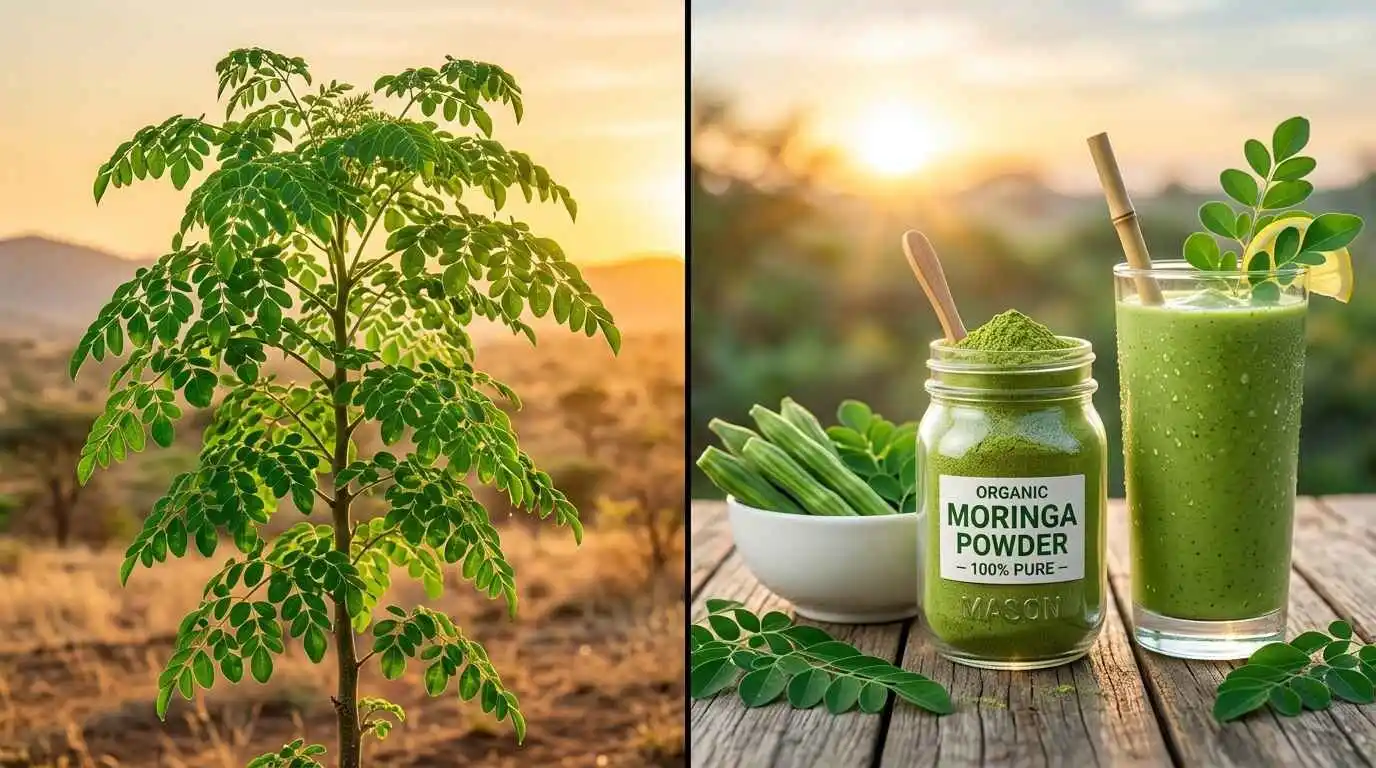
While Moringa is a natural food, it is powerful, and with power comes responsibility.
Pregnancy and Breastfeeding
While the leaves are traditionally used to stimulate lactation, the root, bark, and flowers contain compounds that can cause uterine contractions. Pregnant women should stick to moderate amounts of commercially processed leaf powder and strictly avoid consuming the root or bark extracts.
Medication Interactions
Because Moringa lowers blood sugar and blood pressure, it can amplify the effects of medications for diabetes and hypertension. If you are on insulin or blood pressure medication, consult your doctor before adding Moringa to your diet to avoid hypoglycemia (low blood sugar) or hypotension (low blood pressure).
Digestive Issues
In some people, introducing Moringa powder too quickly can cause a “healing crisis” or mild digestive upset (gas or bloating) due to its detoxifying effects. Start slow and drink plenty of water.
Quality Matters
As with all supplements, sourcing matters. Moringa is a bio-accumulator, meaning it absorbs nutrients from the soil efficiently. Unfortunately, if the soil is contaminated with heavy metals or pesticides, the plant will absorb those too. Always buy organic, certified Moringa powder from reputable sources.
Conclusion: Embracing the Green Revolution
In a world where complexity is often mistaken for quality, Moringa stands out for its simplicity. It is a tree that requires little but gives everything. It bridges the gap between ancient wisdom and modern science, offering a solution to many of the chronic health issues plaguing the 21st century.
Is Moringa a magic bullet that cures all diseases overnight? No. There is no such thing. But it is a foundational element. It provides the raw materials the body needs to heal itself, regulate itself, and thrive. It replaces synthetic vitamins with a whole-food source that our biology recognizes and utilizes efficiently.
By incorporating Moringa into your daily routine, you are not just investing in your own longevity; you are participating in a global shift toward sustainable nutrition. You are choosing a food source that respects the planet and supports the most vulnerable among us.
The revolution is not in a pill bottle; it is green, leafy, and growing in the sun. The revolution is Moringa.
FAQS
1.What is Moringa Oleifera?
Moringa Oleifera is a fast-growing tree native to the foothills of the Himalayas, often called the “Tree of Life” or “Miracle Tree” due to its incredible nutritional density and versatility.
2.What are other common names for the Moringa tree?
It is widely known as the Drumstick Tree (due to the shape of its seed pods), the Horseradish Tree (due to the taste of the roots), and the Ben Oil Tree (named after the oil extracted from the seeds).
3.Why is Moringa considered a “superfood”?
It is called a superfood because it contains an unusually high concentration of vitamins, minerals, and antioxidants, often surpassing common foods like oranges, carrots, and milk in nutrient content.
4.Is every part of the Moringa tree usable?
Yes, nearly the entire tree is useful: the leaves can be eaten or powdered, the pods are eaten as vegetables, the seeds produce oil or purify water, and the flowers can be steeped for tea.
5.Where does Moringa grow best?
Moringa is incredibly resilient and thrives in dry, sandy soil and hot climates where other crops fail, though it is originally native to India.
Nutritional Content
6.How does the Vitamin C content in Moringa compare to oranges?
Moringa leaves contain approximately seven times more Vitamin C than oranges, making them a superior source for immune support and collagen production.
7.Does Moringa really have more calcium than milk?
Yes, Moringa leaves contain about four times more calcium than cow’s milk, making it an excellent option for bone health, especially for those who are lactose intolerant.
- Is Moringa a good source of protein?
Yes, Moringa is rare among plants because it contains all nine essential amino acids, making it a “complete protein” vital for muscle repair and tissue growth.
- How does Moringa compare to carrots regarding Vitamin A?
It contains four times the Vitamin A found in carrots, which is essential for vision, immune function, and skin health.
- Is Moringa high in potassium?
Absolutely. It has three times the potassium of bananas, which is crucial for nerve transmission and maintaining healthy blood pressure.
Health Benefits
- What are the primary antioxidants found in Moringa?
Key antioxidants include Quercetin (which helps lower blood pressure), Chlorogenic Acid (which helps balance blood sugar), and high levels of Vitamin C and Beta-carotene.
- Can Moringa help reduce inflammation?
Yes, Moringa contains anti-inflammatory compounds called isothiocyanates, which can help lower inflammation and pain associated with conditions like arthritis without the side effects of synthetic drugs.
- Does Moringa help regulate blood sugar?
Due to the presence of chlorogenic acid, Moringa can help slow down the absorption of sugar in the gut and stabilize blood sugar levels, which is beneficial for those with or at risk for diabetes.
- Can Moringa improve brain health?
The antioxidants in Moringa offer neuroprotection, potentially combating oxidative stress that leads to neurodegenerative diseases like Alzheimer’s, while its amino acids support mood regulation.
- How does Moringa support heart health?
It supports heart health by lowering cholesterol levels and reducing high blood pressure through its high antioxidant content (specifically Quercetin).
Beauty and Skin
- What is Ben Oil? Ben Oil is a golden oil extracted from Moringa seeds. It is highly stable, resistant to rancidity, and is famous for its moisturizing and antibacterial properties.
- Is Moringa oil good for acne?
Yes, because the oil is similar to natural skin sebum and contains antibacterial and antifungal properties, making it effective at moisturizing skin without clogging pores.
- Does Moringa help with anti-aging?
Its high Vitamin C content boosts collagen production, which helps maintain skin elasticity and reduce the appearance of wrinkles.
- Can Moringa improve hair health?
Yes, it is rich in Zinc and Vitamin A, which are essential for sebum production on the scalp, ensuring hair follicles remain healthy and hair stays strong and shiny.
Environmental Impact
- Can Moringa purify water?
Yes, crushed Moringa seeds contain cationic proteins that act as natural flocculants, binding to dirt and bacteria in water to sink them, allowing clean water to be skimmed off the top.
- How does Moringa help fight malnutrition?
NGOs plant Moringa in developing regions because it grows quickly in poor soil and retains nutrients when dried, providing a dense source of vitamins to populations facing food insecurity.
Usage and Consumption
- What does Moringa taste like?
It has an earthy, slightly grassy flavor similar to spinach or matcha green tea, with a mild peppery kick.
- Is it better to take Moringa powder or fresh leaves?
Both are beneficial. Fresh leaves are great for cooking like vegetables, but dried powder is more nutrient-dense by weight and convenient for adding to smoothies or drinks.
- How should I cook with Moringa powder?
It is best to add Moringa powder after cooking to dishes like soups, stews, or pasta sauces, as high heat can destroy some of its delicate vitamins.
- Can I make tea with Moringa?
Yes, steeping dried leaves or powder in hot water creates a nutritious tea. Adding lemon, ginger, or honey helps balance the earthy flavor.
- What is the recommended daily dosage of Moringa powder?
It is generally recommended to start with 1 teaspoon (approx. 3 grams) per day and potentially increase to 1 tablespoon (6-8 grams) as your body adjusts.
Safety and Precautions
- Is Moringa safe for pregnant women?
While the leaves are generally considered safe and sometimes used to stimulate lactation, pregnant women should strictly avoid consuming the root or bark, which contain compounds that can cause uterine contractions.
- Does Moringa interact with medications?
Because Moringa lowers blood pressure and blood sugar, it can amplify the effects of related medications. Diabetics and those on heart medication should consult a doctor before use.
- Are there any side effects of taking Moringa?
Some people may experience mild digestive issues like gas or bloating when first introducing it, often due to its detoxifying effects. It is best to start with a small dose.
- Does the quality of Moringa matter?
Yes, Moringa is a “bio-accumulator,” meaning it absorbs substances from the soil. If grown in contaminated soil, it can absorb heavy metals, so it is crucial to buy organic, certified Moringa from reputable sources.
Medical Disclaimer: The information provided on this website is for general educational and informational purposes only and is not intended as a substitute for professional medical advice, diagnosis, or treatment. Always seek the advice of your physician or other qualified health provider with any questions you may have regarding a medical condition. Never disregard professional medical advice or delay in seeking it because of something you have read on this website.

