

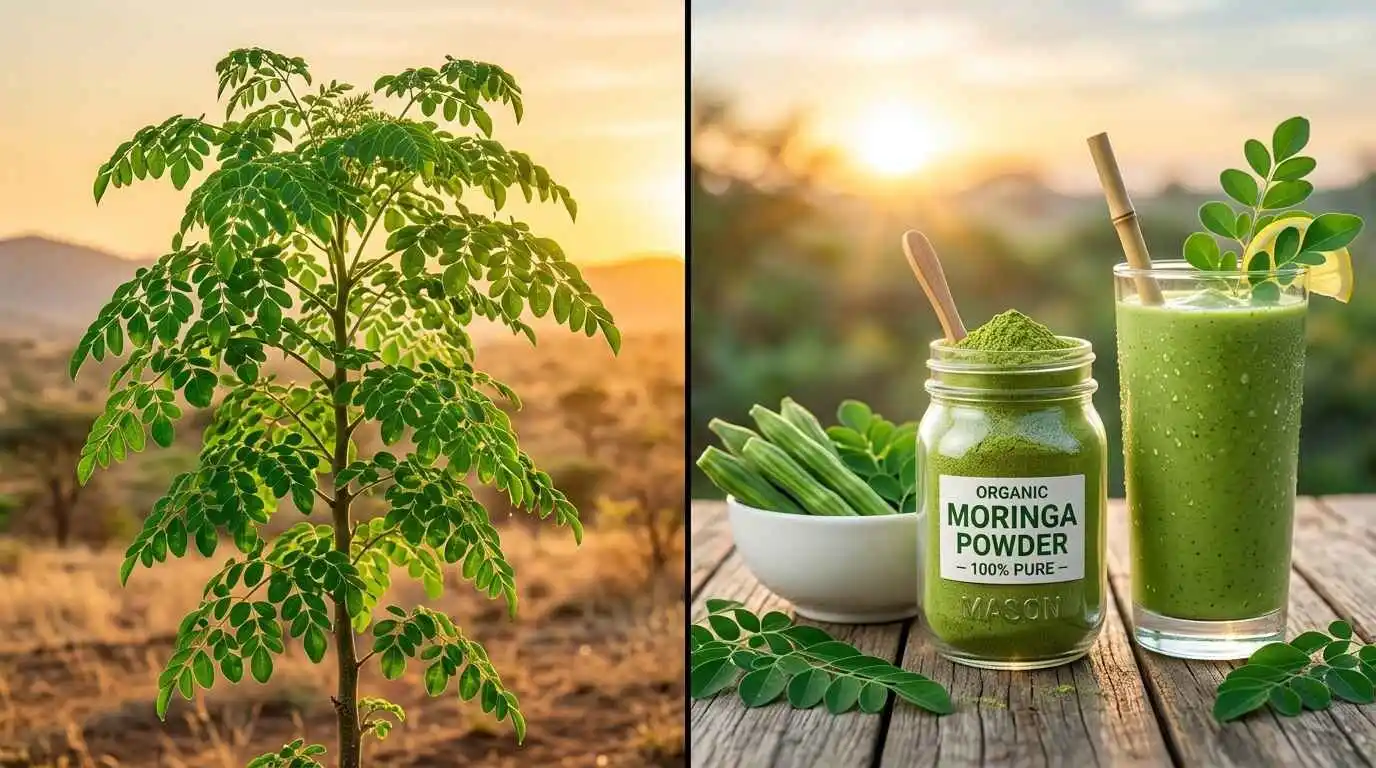
The Green Titan: Why Moringa Is the Most Powerful Plant on Earth
Introduction: The Silent Revolution in Your Spice Cabinet
In the sprawling, chaotic marketplace of modern wellness, new superfoods emerge with the reliability of the tides. One month it is the açai berry from the Amazon; the next, it is a rare algae harvested from the depths of the Pacific. We are constantly searching for the next miracle pill, the one natural compound that will finally grant us boundless energy, perfect skin, and eternal youth. Yet, while we chase the exotic and the expensive, a quiet, unassuming green giant has been standing in the background for thousands of years.
It grows in dry, sandy soil where other crops wither and die. It survives droughts and scorching sun. It has been used by ancient civilizations to treat everything from skin diseases to inflammation. It is known by many names—the Drumstick Tree, the Horseradish Tree, the Ben Oil Tree—but to the scientific community and a growing legion of health enthusiasts, it is known simply as Moringa Oleifera.
Imagine a single tree that can purify water, feed the malnourished, and boost the immune system of the healthy. Imagine a plant whose leaves contain more Vitamin C than oranges, more Vitamin A than carrots, more calcium than milk, and more potassium than bananas. It sounds like the plot of a science fiction novel, yet this botanical reality exists right now.
Moringa is not just a health trend; it is a physiological powerhouse. In this comprehensive guide, we are going to strip away the hype and look at the hard science, the ancient history, and the practical applications of this “Tree of Life.” Whether you are a biohacker looking for an edge, a parent seeking nutrition for your family, or simply someone curious about natural health, prepare to have your understanding of superfoods fundamentally changed.
The Botanical Miracle – A Tree That Refuses to Quit
To understand why Moringa is so potent, you have to understand where it comes from. Native to the foothills of the Himalayas in India, Moringa oleifera is a tree that thrives in adversity. While most delicate plants require fertile soil and precise watering schedules to survive, the Moringa tree is a survivor. It grows rapidly—up to 10 to 15 feet in a single year—and produces seed pods (drumsticks) even during the driest seasons.
This resilience is a clue to its nutritional density. Plants that grow in harsh environments often develop complex chemical defense mechanisms and nutrient storage systems to survive. When we consume these plants, we ingest that same resilience.
The tree is entirely usable, leaving almost no waste.
- The Leaves: Eaten fresh or dried into powder.
- The Pods: Eaten like green beans (immature) or extracted for oil (mature).
- The Seeds: Used to purify water or pressed for oil.
- The Flowers: Steeped into tea.
- The Roots: Used in traditional medicine (though they require caution due to a toxic alkaloid).
The fact that every part of the tree offers value has earned it the nickname “The Mother’s Best Friend” in many cultures across Africa and Asia. It acts as a natural supermarket for rural communities, providing sustenance when other food sources fail.
A Nutritional Density That Defies Logic
Let’s get down to the numbers. When scientists analyze the dried leaves of the Moringa tree, the results are shocking. We are not just talking about “good” nutrition; we are talking about pharmaceutical-grade vitamin density.
The Vitamin Powerhouse
Most of us turn to citrus fruits for Vitamin C, but Moringa leaves contain seven times more Vitamin C than oranges. This is critical for collagen production, immune defense, and fighting oxidative stress.
Then there is Vitamin A. In the developing world, Vitamin A deficiency is a leading cause of preventable blindness in children. Moringa contains four times more Vitamin A than carrots, specifically in the form of beta-carotene, which the body converts easily.
The Mineral Kingpin
Bone health usually sends us reaching for dairy products. However, Moringa boasts four times more calcium than milk. Furthermore, it contains magnesium, which aids in the absorption of calcium, making it a superior bone-building complex for those who are lactose intolerant or vegan.
Potassium is essential for nerve transmission and muscle contraction. Bananas are the famous poster child for potassium, but Moringa leaves contain three times more potassium. This makes it an excellent food for preventing cramps and maintaining healthy blood pressure.
The Protein Puzzle
One of the hardest nutrients to find in the plant kingdom is “complete protein.” Most plant proteins (like those in beans or grains) lack one or more essential amino acids. Moringa, however, contains all nine essential amino acids. This is rare for a plant. It includes leucine (muscle building), isoleucine (energy regulation), and lysine (immune function). For vegetarians and vegans, Moringa is a vital tool for ensuring the body has the building blocks it needs to repair tissue.
The Antioxidant Arsenal – Fighting the Invisible War
We live in an oxidative world. Pollution, processed foods, stress, and UV rays bombard our bodies with free radicals—unstable molecules that damage our cells and accelerate aging. This damage is linked to chronic diseases like cancer, heart disease, and type 2 diabetes.
Moringa is loaded with antioxidants, compounds that neutralize these free radicals.
Quercetin: The Blood Pressure Warrior
Moringa is rich in quercetin, a powerful antioxidant known for its ability to lower blood pressure. Studies have shown that quercetin helps reduce arterial stiffness and improves the function of the endothelial lining of blood vessels. By consuming Moringa regularly, you are essentially giving your blood vessels a protective shield against hypertension.
Chlorogenic Acid: The Blood Sugar Stabilizer
You might recognize chlorogenic acid as the active ingredient in green coffee bean extract, famous for weight loss. However, chlorogenic acid’s real superpower is its ability to moderate blood sugar levels after meals. It slows down the absorption of sugar into the bloodstream, preventing those dangerous spikes and crashes that lead to insulin resistance and diabetes. For anyone struggling with metabolic syndrome or pre-diabetes, Moringa offers a natural, food-based intervention.
Vitamin C and Beta-Carotene
As mentioned earlier, the sheer volume of Vitamin C and beta-carotene in Moringa adds layers of protection. Beta-carotene fights free radicals specifically in the eyes and skin, while Vitamin C regenerates other antioxidants in the body, keeping the defense cycle going.
Inflammation – Putting Out the Fire
Chronic inflammation is often called the “silent killer.” It is the root cause of arthritis, asthma, obesity, and even heart disease. While acute inflammation (swelling after a cut) is a healthy immune response, chronic inflammation (caused by stress, poor diet, or autoimmune disorders) destroys the body over time.
Moringa is a potent anti-inflammatory agent. While synthetic anti-inflammatories like Ibuprofen can damage the stomach lining with long-term use, Moringa offers a natural alternative without the side effects.
Isothiocyanates: The Magic Molecules
The primary anti-inflammatory compounds in Moringa leaves are called isothiocyanates. These molecules inhibit the activity of inflammatory pathways in the body. Research suggests that Moringa’s effects on inflammation are comparable to those of potent pharmaceutical drugs.
Many users of Moringa report a reduction in joint pain and stiffness within weeks of adding it to their diet. By dampening the body’s inflammatory response, Moringa helps lower the overall “load” on the immune system, allowing it to focus on real threats rather than attacking the body itself.
Brain Health and Cognitive Function
We rarely think of food as brain fuel, but the brain is an energy-hungry organ. It consumes 20% of the body’s calories. To function at peak efficiency, the brain needs specific nutrients that are often lacking in modern diets.
Neuroprotection
Moringa has shown promise in the field of neuroprotection. Its high antioxidant content helps protect neurons from degeneration. Oxidative stress is a major factor in conditions like Alzheimer’s and dementia. By reducing this stress, Moringa may help preserve cognitive function as we age.
Mood Regulation
The amino acids and vitamins in Moringa play a role in regulating neurotransmitters. For instance, the body needs magnesium and tryptophan to produce serotonin, the “feel-good” hormone. A deficiency in these nutrients is often linked to depression and anxiety. Moringa provides a natural source of these mood-stabilizing compounds.
Some studies have also indicated that Moringa can help regulate thyroid function, which is crucial because the thyroid hormones directly influence metabolism, energy levels, and mood stability.
The Beauty Tree – Skin and Hair Radiance
The global beauty industry is worth billions of dollars, yet the most effective skincare ingredients often come from the garden. Moringa is a dual-threat here: it works both internally (through consumption) and externally (through oil application).
Moringa Oil (Ben Oil)
The seeds of the Moringa tree yield a golden oil known as Ben Oil. It is incredibly stable and resistant to rancidity, thanks to its high concentrations of antioxidants. But what makes it magical for the skin is its composition. It is remarkably similar to the natural oils (sebum) produced by human skin.
This means Moringa oil absorbs deeply without leaving a greasy residue. It is rich in oleic acid, which penetrates the skin barrier to deliver moisture. It is also antibacterial and antifungal, making it excellent for acne-prone skin.
The Collagen Connection
Because Moringa is so high in Vitamin C, it is a collagen booster. Collagen is the protein that keeps our skin elastic and our hair strong. As we age, collagen production naturally drops, leading to wrinkles and sagging. By flooding the body with the building blocks of collagen, Moringa helps maintain a youthful complexion from the inside out.
Hair Health
Zinc and Vitamin A are vital for sebum production on the scalp, which keeps hair follicles healthy. Without sebum, the scalp gets dry and hair becomes brittle. Moringa provides these nutrients in abundance, promoting thicker, shinier hair growth.
The Environmental Hero – Beyond the Plate
We cannot discuss Moringa without acknowledging its role in global sustainability. This is a tree that gives back to the planet as much as it gives to us.
Water Purification
One of the most fascinating properties of Moringa is its ability to clean water. The seeds contain cationic proteins that act as natural flocculants. When crushed Moringa seeds are added to turbid, dirty water, they bind to the dirt particles and bacteria, causing them to clump together and sink to the bottom. The clear water can then be skimmed off the top and boiled. This low-tech solution is saving lives in rural areas where access to clean water is limited.
Combatting Malnutrition
NGOs and humanitarian organizations have planted millions of Moringa trees across Africa and South Asia. Because it grows fast and retains nutrients even when dried, it is an ideal crop for fighting malnutrition. Nursing mothers are encouraged to take Moringa leaf powder to increase the nutrient density of their breast milk, providing infants with a stronger start to life.
How to Use Moringa – A Practical Guide
So, you are convinced. You want this green titan in your life. But how do you actually use it? The taste is often described as earthy, similar to spinach or matcha green tea, but with a slightly peppery kick.
Moringa Powder vs. Fresh Leaves
If you live in a tropical climate, you can grow the tree and eat fresh leaves. They can be steamed like spinach or added to salads. However, for most of the world, dried leaf powder is the most accessible form. The drying process concentrates the nutrients, meaning a teaspoon of powder is equivalent to a large bowl of fresh leaves.
Smoothies and Shakes
The most popular way to consume Moringa is in a smoothie. The strong earthy flavor is easily masked by fruits like bananas, mangoes, or berries.
- Recipe: 1 cup almond milk, 1 frozen banana, 1 cup spinach, 1 teaspoon Moringa powder, a dash of honey.
Tea
Moringa tea is a gentle way to introduce the herb to your system. Steep a teaspoon of powder (or dried leaves) in hot water. Add lemon and ginger to balance the flavor. This is an excellent afternoon alternative to coffee, providing energy without the jitters.
Cooking with Moringa
Because heat can destroy some delicate vitamins (like Vitamin C), it is best to add Moringa powder after cooking. Sprinkle it into soups, stews, or pasta sauce just before serving. It adds a nutritional kick without significantly altering the flavor profile of the dish.
Dosage Recommendations
For general wellness, start with 1 teaspoon (3 grams) of powder per day. As your body adjusts, you can increase this to 1 tablespoon (6-8 grams). More is not necessarily better; listen to your body.
Safety and Side Effects – The Precautions
https://youtu.be/7926zBwE1SU

