

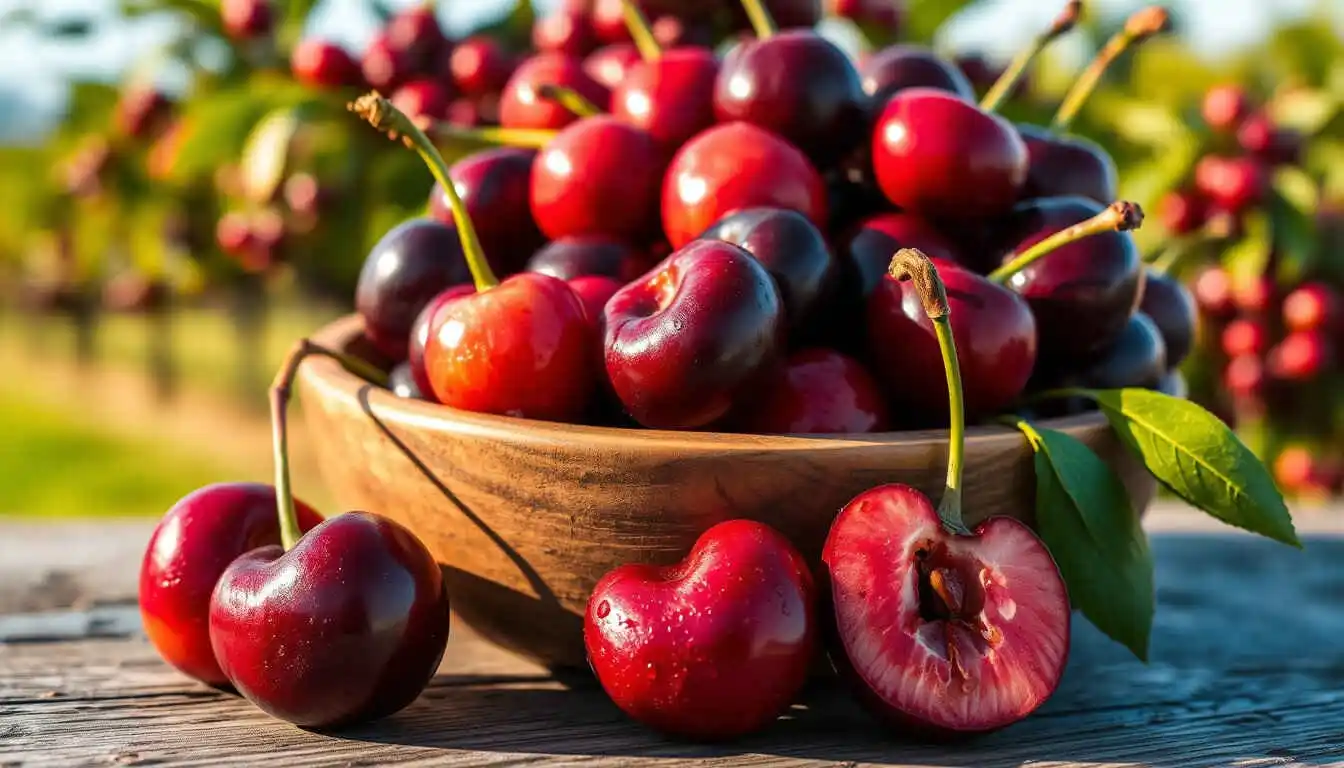
As much as we romanticize the cherry, its future is precarious. The very factors that make growing cherries so difficult—frost, rain, and precise temperature needs—are being exacerbated by global climate change.
The Warming Winters
In regions like the Pacific Northwest and California, winters are getting warmer. Cherry trees are not getting the chill hours they need to enter proper dormancy. This leads to “delayed foliation,” where the trees wake up sporadically, resulting in staggered, uneven ripening. A tree might have ripe cherries and hard green cherries on the same branch, making mechanical or manual harvesting impossible.
The Shifting Maps
As traditional cherry-growing regions become too warm, farmers are being forced to move their orchards to higher elevations and more northern latitudes. The Willamette Valley in Oregon, once a prime cherry region, is slowly being replaced by wine grapes, while cherry production moves into the cooler, higher reaches of Washington state and into British Columbia, Canada.
The Japanese Sakura Crisis
Even the iconic cherry blossoms of Japan are under threat. Studies show that the sakura season has been arriving earlier and earlier over the past century due to rising urban temperatures. In 2021, Kyoto recorded its earliest peak bloom in 1,200 years. While this might seem like a pleasant surprise for tourists, it disrupts the delicate synchronization between the blooming of the trees and the presence of the pollinating insects they rely on, threatening the long-term survival of the species.
Conclusion: Savor the Ruby Jewel
The cherry is a masterclass in contrasts. It is a snack that doubles as medicine. It is a fleeting summer pleasure that requires months of grueling agricultural labor. It is a symbol of both unspoiled innocence and deep sensuality. It bridges the gap between the snow-covered orchards of winter and the blazing heat of summer.
From the ancient Roman roads where Prunus avium first took root, to the chemical vats that birthed the Maraschino, to the modern juicer extracting its anti-inflammatory liquid gold, the cherry has continuously reinvented itself to remain relevant to human desire.
The next time you pop a firm, cold Bing cherry into your mouth, or fold tart Montmorencies into a buttery crust, take a moment to appreciate the miracle of the fruit. You are tasting history. You are tasting the farmer’s gamble against the frost. You are tasting the very essence of summer, which, like the cherry blossom itself, is beautiful precisely because it does not last forever.
Savor the season. Spit the pit. And long live the cherry.
FAQS
1.What is the Japanese tradition of Hanami?
Hanami is the traditional Japanese custom of “flower viewing,” specifically admiring the beauty of cherry blossoms (sakura), which symbolize the ephemeral, fleeting nature of life.
- Who first brought sweet cherry trees to Rome?
Roman general Lucius Licinius Lucullus brought the first sweet cherry trees back to Rome around 70 BC after discovering them during a military campaign in modern-day Turkey.
- Is the story of George Washington chopping down the cherry tree true?
No, the story of young George Washington chopping down the cherry tree and saying “I cannot tell a lie” is a myth invented by biographer Mason Locke Weems to illustrate the president’s moral virtue.
- What genus do cherries belong to?
Cherries belong to the genus Prunus, which also includes plums, peaches, apricots, and almonds.
- What is a drupe?
A drupe is a fleshy fruit with a single seed enclosed in a hard, stony endocarp (the pit). Cherries are drupes, not berries.
- Why should you never chew or crush a cherry pit?
Cherry pits contain amygdalin, a compound that converts to toxic cyanide when metabolized by the human body. Swallowing a whole pit is harmless, but biting into one releases the toxin.
- What is the scientific name for sweet cherries?
Sweet cherries are classified as Prunus avium.
- What is the scientific name for sour cherries?
Sour (or tart) cherries are classified as Prunus cerasus.
- How did the sour cherry originate?
Sour cherries are a natural hybrid that arose in the wild from a cross between the sweet cherry (Prunus avium) and the ground cherry (Prunus fruticosa).
- Who is the Bing cherry named after?
The Bing cherry was named after Ah Bing, a Manchurian Chinese foreman who worked alongside horticulturist Seth Lewelling in Oregon in 1875.
- Why are Rainier cherries so expensive?
Rainier cherries have delicate skin that is highly prone to bruising, requiring extremely careful handling during harvest. Additionally, birds love them, which forces growers to use tactics to protect the crop, driving up the cost.
- Which cherry is considered the standard for fresh eating?
The Bing cherry is the undisputed king of the commercial market and the gold standard for fresh eating.
- What is the best cherry variety for making pie?
Sour cherries, specifically the Montmorency variety, are the best for pie-making because their high acidity cuts through the sugar, and they hold their shape during baking.
- What is the difference between Morello and Montmorency cherries?
Montmorency cherries are bright red with clear, yellowish juice. Morello cherries are darker (almost black when ripe) with deep, blood-red juice and a complex, almond-like flavor.
- Where did the Balaton cherry originate?
The Balaton cherry originated in Hungary and was introduced to the United States in the 1980s. It is a darker, firmer, and slightly sweeter sour cherry.
- What gives dark cherries their deep red color and antioxidant power?
Anthocyanins, a class of flavonoids, give dark cherries their crimson color and provide powerful antioxidant properties that scavenge free radicals in the body.
- How do cherries help with gout?
Studies show that consuming cherries (especially tart cherries) significantly lowers levels of uric acid in the blood, which is the compound responsible for gout attacks.
- Why do athletes drink tart cherry juice?
Tart cherry juice has powerful anti-inflammatory properties comparable to some NSAIDs. It reduces muscle pain, accelerates strength recovery, and decreases markers of inflammation after intense exercise.
- How can cherries help improve sleep?
Cherries are one of the few natural dietary sources of melatonin, the hormone that regulates the sleep-wake cycle. Drinking tart cherry juice has been shown to increase sleep time and efficiency.
- Are cherries safe for people with diabetes?
Yes. Despite their sweet taste, sweet cherries have a remarkably low Glycemic Index (GI) of 22, meaning they cause a slow, steady rise in blood sugar rather than a dangerous spike.
- Why is commercial cherry farming considered so stressful?
Cherry farming is a gamble against nature. Trees need exact chill hours in winter, delicate spring blossoms can be wiped out by a single frost, and rain near harvest can cause the fruit to split and become unsellable.
- What happens to sweet cherries if it rains near harvest time?
The cherries absorb water directly through their skins and expand faster than the skin can stretch, causing the cherries to split or crack, making them unsellable as fresh fruit.
- Can cherries be harvested by machine?
No. Cherries do not ripen once picked and are too delicate for mechanical shaking. Every single cherry sold fresh in a grocery store was hand-picked.
- How were the original Maraschino cherries made?
Originally in the 1800s, they were a luxury item made by preserving Marasca cherries from Dalmatia (modern-day Croatia) in Marasca cherry liqueur.
- How did Prohibition change the Maraschino cherry?
Because the original liqueur was banned, American manufacturers created a cheap, non-alcoholic substitute by bleaching Royal Anne cherries with sulfur dioxide, then soaking them in corn syrup and red dye.
- What kind of thickener is best for cherry pie and why?
Tapioca starch is best because it allows the ruby-red juices to shine without clouding them the way flour does.
- Why do traditional French chefs leave the pits in the cherries when making Clafoutis?
Purists insist the cherries must be unpitted because the pits release a subtle almond flavor during baking that infuses the custard.
- What is “Cherry Bounce”?
Cherry Bounce is a historic colonial American drink made by steeping wild cherries and spices in bourbon or brandy for months. It was reportedly George Washington’s favorite drink.
- How should you store fresh cherries to maximize their shelf life?
Cherries should be stored unwashed in a loosely closed plastic bag in the crisper drawer of the refrigerator. They lose more quality in one hour at room temperature than in a full day in the fridge.
- How is climate change affecting the cherry industry?
Warming winters are depriving trees of necessary chill hours, leading to uneven ripening. This is forcing farmers to move orchards to higher elevations and more northern latitudes, and causing iconic sakura blooms in Japan to arrive historically early.
Medical Disclaimer: The information provided on this website is for general educational and informational purposes only and is not intended as a substitute for professional medical advice, diagnosis, or treatment. Always seek the advice of your physician or other qualified health provider with any questions you may have regarding a medical condition. Never disregard professional medical advice or delay in seeking it because of something you have read on this website.

