

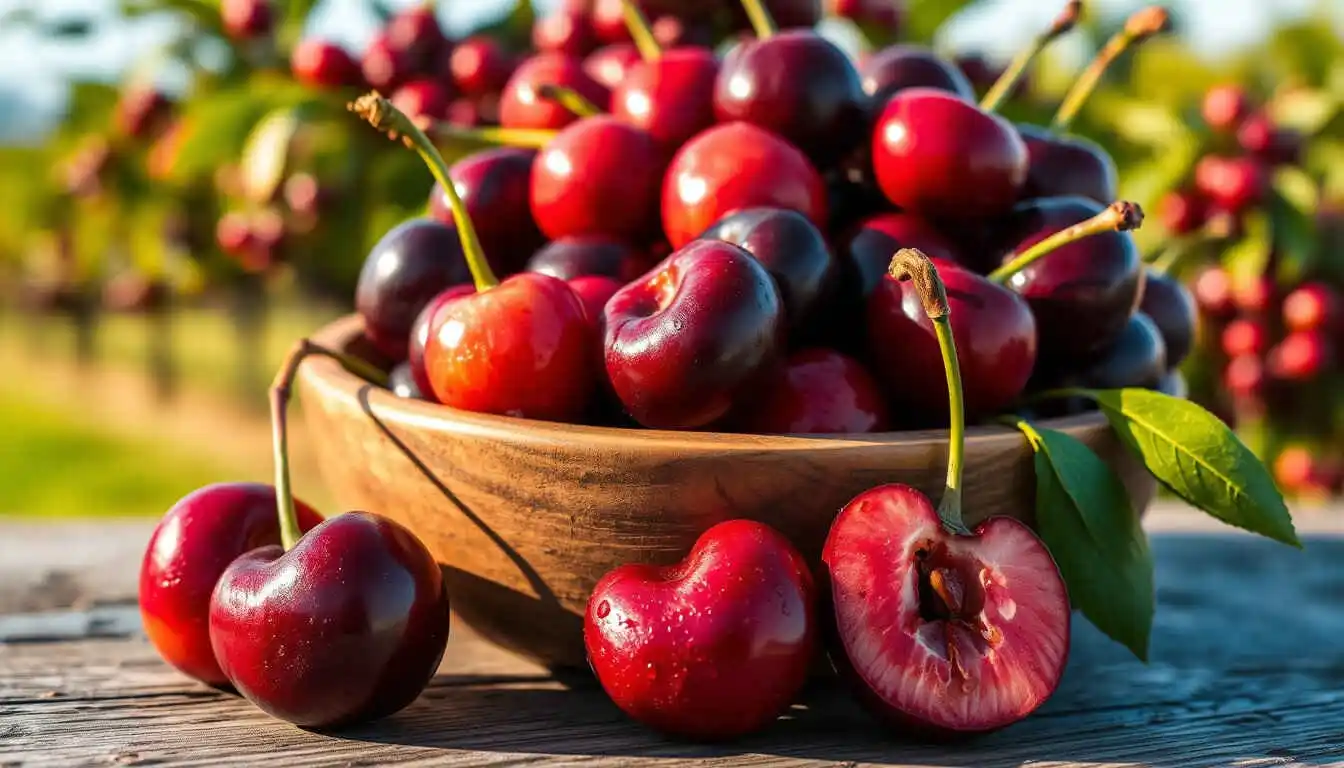
The Ruby Redemption: A Deep Dive into the Juicy, Sensual, and Healing World of Cherries
Have you ever experienced the pure, unadulterated bliss of biting into a perfectly ripe cherry on a warm summer afternoon? That initial pop of the taut skin, the sudden burst of sweet-tart juice flooding your palate, and the inevitable, satisfying spit of the pit—it is a sensory experience that borders on the primal. Cherries are not just a fruit; they are a seasonal obsession, a fleeting moment of summer captured in a bite-sized sphere of crimson and gold.
But how much do you really know about the fruit dangling from those boughs? Behind their glossy, heart-shaped exteriors lies a history of ancient empires, a treasure trove of medicinal secrets, a grueling agricultural gamble, and a culinary versatility that stretches far beyond the pie dish.
Whether you are a casual snacker, a passionate baker, or a health-conscious forager, the cherry has a story that will surprise you. Welcome to the ultimate, 4000-word masterclass on the fruit that has captivated humanity for millennia. Let’s dig in.
The Stone Age Snack: A History Steeped in Blood and Blossoms
Long before they were maraschino-topped on cocktails or baked into rustic tarts, cherries were wild, untamed, and slightly bitter. The history of the cherry is a journey that spans continents and centuries, intertwining with myth, war, and royal obsessions.
The Asian Origins and the Flowering of a Culture
The story begins in the mountains of western Asia and eastern Europe, specifically around the Caspian Sea. But it was in Japan that the cherry—specifically the Prunus serrulata, or the ornamental cherry tree—transcended its status as a mere food source and became a spiritual icon.
The Japanese tradition of Hanami (flower viewing) dates back over a thousand years. Originally an elite practice reserved for the Emperor and the aristocracy, it gradually filtered down to the samurai and eventually the common people. The cherry blossom (sakura) became a profound metaphor for the ephemeral nature of life—breathtakingly beautiful, yet fleeting and fragile. The blossoms bloom brilliantly for only a week or two before falling like snow to the ground, mirroring the life of a warrior: live fiercely, die beautifully, and leave while still at your peak.
Roman Roads and the March of the Sweet Cherry
While the Japanese revered the blossom, the Romans craved the fruit. The sweet cherry, Prunus avium, was discovered by Roman general Lucius Licinius Lucullus around 70 BC during a military campaign against Mithridates VI of Pontus (modern-day Turkey). Pliny the Elder recorded that Lucullus brought the first sweet cherry trees back to Rome.
The Romans were master horticulturalists and road-builders, and they spread the cherry across their vast empire. As Roman legions marched into Britain, France, and Germany, they planted cherry orchards along the way to ensure a steady supply of fruit for the soldiers. Within a few centuries, the cherry had naturalized across the European continent.
The American Dream and the Washington Myth
Cherries crossed the Atlantic with early European settlers in the 1600s, bringing seeds and cuttings to the New World. By the 1800s, commercial cherry orchards were flourishing in the fertile soils of Michigan, Wisconsin, and the Pacific Northwest.
Of course, no history of the American cherry is complete without addressing the most famous myth in American folklore: young George Washington chopping down his father’s cherry tree and confessing, “I cannot tell a lie.” Invented by biographer Mason Locke Weems shortly after Washington’s death, the story was a fabrication meant to illustrate the first president’s moral virtue. Ironically, it cemented the cherry as a symbol of American honesty and integrity—a heavy burden for a small fruit to bear.
Botanical Anatomy of a Crush: Understanding the Prunus Genus
To truly understand the cherry, we must look at its DNA. Cherries belong to the genus Prunus, a massive and economically vital group that also includes plums, peaches, apricots, and almonds. What ties them all together? The stone.
The Drupe Deal: Why Cherries Are Stone Fruits
Botanically speaking, a cherry is not a berry; it is a drupe. A drupe is a fleshy fruit with a single seed enclosed in a hard, stony endocarp (the pit). When you eat a cherry, you are consuming the exocarp (the skin) and the mesocarp (the sweet, fleshy middle). The pit inside is the endocarp, protecting the tiny seed within.
A Crucial Warning: Never, ever chew or crush a cherry pit. Like apricot kernels and apple seeds, cherry pits contain amygdalin, a compound that converts to cyanide when metabolized by the human body. While accidentally swallowing a whole pit will pass harmlessly through your digestive system, biting into one releases the toxic compound. Keep them away from pets and children!
The Great Divide: Sweet Cherries vs. Sour Cherries
In the culinary and agricultural worlds, all cherries are divided into two distinct categories. Understanding this divide is the key to mastering the fruit.
- Sweet Cherries (Prunus avium): These are the fresh-eating champions. They are large, firm, and high in natural sugars. They thrive in mild, dry climates and are incredibly sensitive to rain (which causes the fruit to split on the tree).
- Sour Cherries (Prunus cerasus): Also known as tart or pie cherries, these are smaller, softer, and significantly more acidic. They are the workhorses of the kitchen, requiring sugar to be palatable. They are much hardier than sweet cherries and can withstand colder winters and wetter climates.
Interestingly, Prunus cerasus is not just a wild variant; it is a natural hybrid. Genetic studies show that sour cherries arose in the wild from a cross between sweet cherries (Prunus avium) and the ground cherry (Prunus fruticosa), a small, shrubby, wild cherry from Eastern Europe.
The Royalty of the Orchard: A Guide to Cherry Varieties
Walking through a grocery store, you might think there are only two types of cherries: red and yellow. But in reality, there are over 1,000 cultivated varieties of cherries worldwide. Here is your definitive guide to the kings and queens of the cherry world.
The Sweet Elite (Fresh Eating)
- Bing Cherries The undisputed king of the commercial cherry market, the Bing was developed in 1875 by Oregon horticulturist Seth Lewelling and his Manchurian Chinese foreman, Ah Bing (for whom the cherry is named). Bings are large, round, and boast a deep, glossy maroon skin. Their flesh is firm and incredibly sweet, making them the gold standard for fresh eating.
- Rainier Cherries If Bing is the king, Rainier is the aristocracy. Developed in 1952 at Washington State University, the Rainier is a cross between the Bing and the Van cherry. They are easily recognized by their bi-colored, blushed yellow and red skin. Rainiers are exceptionally sweet, often measuring the highest on the Brix scale (a measure of sugar content). Because their skin is delicate and prone to bruising, they are expensive and treated with utmost care during harvest. Fun fact: birds love Rainiers so much that growers often plant red-leafed cherry varieties nearby to trick the birds into eating the less sweet, red fruit instead.
- Lambert Cherries Similar in color and flavor to the Bing, Lamberts are slightly smaller and more heart-shaped. They ripen a bit later in the season, making them a favorite for extending the fresh cherry window. They have a rich, complex flavor that makes them excellent for both eating and cooking.
- Chelan Cherries Often ripening a full two weeks before the Bing, the Chelan is the herald of the cherry season. Originating in Washington state, they are firm, sweet, and resistant to cracking, making them a reliable early-season treat.
- Sweetheart Cherries As the name suggests, these are heart-shaped and incredibly sweet. They are a late-season variety, often harvested in late July or August, providing a final burst of cherry goodness before the season ends.
The Tart Titans (Cooking & Preserving)
- Montmorency Cherries This is the pie cherry. Originating in the Montmorency Valley of France, this variety accounts for the vast majority of sour cherries grown in the United States. They are bright red with clear, yellowish juice. Their high acidity makes them perfect for baking, as they hold their shape and their tartness cuts through heavy sugars and fats perfectly.
- Morello Cherries The European counterpart to the Montmorency, Morellos are darker, almost black when ripe, and their juice is a deep, blood-red. They are intensely sour and have a complex, almost almond-like flavor from their pits. Morellos are the star of Eastern European preserves, liqueurs (like the German Schwarzwälder Kirschwasser used in Black Forest Cake), and traditional British cherry cobblers.
- Balaton Cherries A relatively new player on the global scene, the Balaton originated in Hungary and was introduced to the US in the 1980s. It is a darker, firmer, and slightly sweeter sour cherry compared to the Montmorency, making it a versatile bridge between the fresh-eating and baking worlds.
Nature’s Candy, But Make It Medicine: The Health Benefits of Cherries
It is easy to assume that something as delicious as a cherry must be a nutritional void, a mere vessel for sugar. But scientists are discovering that the cherry nutrition profile is nothing short of remarkable. The health benefits of cherries have catapulted them from a seasonal snack into the realm of functional superfoods. Let’s unpack the pharmacy hidden inside the fruit.
The Antioxidant Powerhouse: Anthocyanins
What gives dark cherries their deep, crimson color? The answer is anthocyanins—a class of flavonoids with staggering antioxidant power. Anthocyanins are the plant’s natural sunscreen and defense mechanism, and when we consume them, they go to work in our bodies.
Cherries rank among the top 20 foods with the highest antioxidant capacity. These compounds scavenge free radicals, which are unstable molecules that cause oxidative stress, cellular damage, and aging. By neutralizing free radicals, the anthocyanins in cherries help reduce the risk of chronic diseases, including heart disease and certain cancers.
The Gout Buster: Lowering Uric Acid
For centuries, gout sufferers have sworn by cherry juice, and modern science has backed them up. Gout is a form of arthritis caused by the buildup of uric acid crystals in the joints. Studies have shown that consuming cherries—particularly tart cherries—significantly lowers levels of uric acid in the blood. One major study found that gout patients who ate cherries over a two-day period had a 35% lower risk of gout attacks compared to those who did not.
The Athlete’s Secret Weapon: Muscle Recovery
If you’ve ever run a marathon or pushed through a grueling gym session, you know the agony of Delayed Onset Muscle Soreness (DOMS). Enter tart cherry juice.
Tart cherries possess powerful anti-inflammatory properties comparable to some over-the-counter NSAIDs (like ibuprofen). Research on distance runners and cyclists has demonstrated that consuming tart cherry juice before and after intense exercise significantly reduces muscle pain, accelerates strength recovery, and decreases markers of inflammation in the blood. It is nature’s sports drink.
The Sandman’s Snack: Melatonin and Sleep
Struggling with insomnia? Cherries are one of the few natural dietary sources of melatonin, the hormone that regulates our sleep-wake cycles. Tart cherries, in particular, contain high concentrations of melatonin. Studies have shown that adults who drink tart cherry juice in the morning and evening experience increased sleep time and improved sleep efficiency.
Heart Health and Blood Pressure
The potassium in cherries helps balance sodium levels and relax blood vessel walls, which helps lower blood pressure. Furthermore, the anthocyanins help prevent the oxidation of LDL cholesterol (the “bad” cholesterol), a key step in the development of atherosclerosis (hardening of the arteries).
A Diabetic’s Sweet Dream
Despite their sweet taste, sweet cherries have a remarkably low Glycemic Index (GI) of 22—much lower than apples, grapes, or peaches. This means they cause a slow, steady rise in blood sugar rather than a dangerous spike, making them a safe and delicious treat for people managing diabetes or insulin resistance.
The Farmer’s Gamble: Growing Cherries is Not for the Faint of Heart
You might think growing cherries is as simple as planting a tree and waiting for summer. You would be wrong. Commercial cherry farming is widely considered one of the most stressful, high-risk agricultural pursuits in the world. It is a multi-month gamble against the whims of nature.
The Chilling Requirement
Cherry trees are deciduous; they need a period of cold dormancy in the winter to produce fruit the following summer. This is measured in “chill hours” (hours between 32°F and 45°F). If a winter is too mild, the trees won’t wake up properly, leading to delayed, uneven budding and a ruined crop. Conversely, if the winter is too harsh, the fruiting buds can freeze and die.
The Frost Trap
In the spring, cherry trees erupt in beautiful, delicate white blossoms. It is a breathtaking sight, but for a farmer, it is a time of panic. A late spring frost during bloom can wipe out an entire year’s income in a single night. Because cherry blossoms are so fragile, temperatures dropping just below freezing for a few hours will kill the embryonic fruit inside the flower. Farmers wage war against the frost using massive wind machines (to mix warmer air from above with cold air below) and propane heaters, or by continuously spraying the trees with water, which freezes into a protective ice cocoon around the blossoms, insulating them at 32°F.
The Rain Curse
If the blossoms survive the frost and begin to form fruit, the next threat is rain. When sweet cherries are nearing harvest, they are engorged with water and sugar. If it rains, the cherries absorb water directly through their skins. The fruit expands faster than the skin can stretch, causing the cherries to split or crack. A cracked cherry is unsellable as fresh fruit. Farmers race against the weather, hiring massive crews of pickers the moment the fruit is ripe, often working through the night under headlamps to get the fruit off the trees before a storm hits.
The Harvest Handicap
Unlike apples or pears, cherries do not continue to ripen once picked. They must be left on the tree until they reach peak sugar content, and then they must be picked immediately. Because cherries are so delicate, they cannot be shaken from the tree by machines (this would bruise them irreparably). Every single cherry you buy in the grocery store was picked by a human hand, stem and all. This makes cherry harvesting incredibly labor-intensive and expensive.
The Dark Side of the Diner: The Bizarre History of the Maraschino Cherry
No discussion of cherries is complete without addressing the bright red, slightly translucent orb perched on top of a milkshake or submerged in a Manhattan cocktail: the Maraschino cherry. Its history is a strange tale of luxury, prohibition, and chemical alchemy.
The Original Luxury Garnish
Originally, a Maraschino cherry was a purely Italian luxury. In the 1800s, farmers in the Dalmatian region (modern-day Croatia) preserved local Marasca cherries in Marasca cherry liqueur. The result was a delicate, sophisticated, and highly expensive garnish imported strictly for the elite to adorn fine cocktails and desserts.
The Prohibition Hustle
When Prohibition hit the United States in 1920, the import of Marasca liqueur dried up. However, the demand for a cocktail garnish remained. American manufacturers began looking for a way to make a cheap, non-alcoholic substitute. They turned to the Royal Anne cherry—a light-colored, firm variety.
The process they developed was a far cry from the Italian original. The cherries were soaked in a brine of calcium chloride and sulfur dioxide, which bleached the fruit entirely white, stripping away all natural flavor and color. They were then soaked in a high-fructose corn syrup solution, dyed with FD&C Red No. 4 (which was later banned for being carcinogenic and replaced with Red No. 40), and flavored with bitter almond extract (amaretto).
The Oregon Professor’s Reform
By the 1930s, these neon-red cherries were a diner staple, but they were essentially candy-coated chemical sponges. An Oregon State University professor named Ernest Wiegand spent six years developing a better, safer way to process them without alcohol, using a combination of calcium salts to keep the cherries firm. His method is still the basis for the modern Maraschino cherry. While today’s versions are perfectly safe to eat, they are a shadow of the original fruit—a nostalgic, sugary relic of American ingenuity.
From Orchard to Oven: The Culular Symphony of Cherry Recipes
Cherries are incredibly versatile in the kitchen. They bridge the gap between sweet and savory, adding depth, acidity, and a punch of flavor. Here are the best ways to utilize the different cherry varieties in your culinary repertoire.
The Sweet Domain: Pies, Cobblers, and Clafoutis
The Perfect Cherry Pie: Let’s settle the debate: a true cherry pie requires sour cherries, not sweet. Sweet cherries turn to mush and make a cloyingly sweet pie. Montmorency cherries, with their high acid content, hold their shape and provide the necessary tartness to balance the sugar and buttery crust. The trick to a great cherry pie is using a clear thickener like tapioca starch, which allows the ruby-red juices to shine without clouding them like flour would.
The French Classic: Clafoutis: If you want an effortless, elegant dessert, look no further than Clafoutis. A traditional French flan-like dessert from the Limousin region, it is made by pouring a thin, pancake-like batter over fresh, unpitted sweet cherries and baking until puffy and golden. The purists insist the cherries must be unpitted because the pits release a subtle almond flavor during baking that infuses the custard.
The Savory Twist: Meat, Cheese, and Salads
Cherries and meat are a match made in heaven. The sweet-tart profile acts much like cranberry or apple sauce, cutting through the richness of heavy proteins.
- Pork and Duck: A tart cherry reduction (made by simmering sour cherries with red wine, shallots, and thyme) is an exquisite sauce for roasted duck breast or a thick pork chop.
- Cheese Boards: Fresh sweet cherries pair beautifully with creamy, pungent cheeses like Brie, Camembert, or Gorgonzola. The cherry juice cleanses the palate of the rich dairy.
- Salads: Toss halved sweet cherries into a summer salad with arugula, toasted pecans, goat cheese, and a balsamic vinaigrette. The pepperiness of the arugula and the sweetness of the cherry are a revelation.
The Liquid Gold: Cherry Liqueurs and Cocktails
Cherry Bounce: A historic colonial American drink, Cherry Bounce is made by steeping wild cherries and spices in bourbon or brandy for months. It was supposedly George Washington’s favorite tipple.
The Manhattan: The Manhattan cocktail (rye whiskey, sweet vermouth, and bitters) is traditionally garnished with a Maraschino cherry. For an elevated experience, swap the neon cherry for a Luxardo cherry—a genuine, artisanal Italian Marasca cherry preserved in syrup. The difference is night and day.
How to Buy, Store, and Prep Cherries Like a Pro
Because the cherry season is agonizingly short (roughly late May to early August, depending on the region), you need to make the most of every basket. Here is the definitive guide to maximizing your cherry haul.
The Ultimate Pit Test: How to Choose the Best Cherries
Don’t just grab a bag and go. Follow these rules:
- Check the Stems: Green, flexible stems mean the cherries were recently picked. Brown, dry, or missing stems mean the cherries are aging and losing moisture.
- Feel the Firmness: The fruit should be firm and plump. Soft, wrinkly cherries are overripe.
- Look for Color: In dark cherries (like Bing), look for a deep, mahogany-red. Lighter red sweet cherries are underripe. For Rainiers, look for a bright yellow background with a heavy blush of red.
- Leave Them Unwashed: Do not wash cherries until you are ready to eat them. Moisture encourages mold and rot.
The Cold Truth: Storing Cherries
Cherries are highly perishable. They lose more quality in one hour at room temperature than they do in a full day in the fridge. Store them in the crisper drawer of your refrigerator, unwashed, in a loosely closed plastic bag. Stored this way, they will last up to a week.
The Winter Lifeline: Freezing Cherries
To enjoy cherries year-round, freeze them. However, you must pit them first! An unpitted frozen cherry is a hazard and a nuisance. Pit the cherries, spread them out in a single layer on a baking sheet, and freeze until solid. Once frozen, transfer them to airtight freezer bags. They will keep for up to a year and are perfect for smoothies, baking, or making sauces in the dead of winter.
The Cherry Pitter: Your New Best Friend
Pitting cherries with a knife or a paperclip is tedious, messy, and squishes the fruit. Invest in a handheld cherry pitter. It is a small, inexpensive gadget that pops the pit out cleanly in one second, saving you hours of prep time and keeping your kitchen looking like a crime scene.
Pop Culture’s Forbidden Fruit: Symbolism and the Cherry Red Aesthetic
Beyond the kitchen and the orchard, the cherry has embedded itself deeply into our cultural lexicon and aesthetic sensibilities. The cherry is a symbol drenched in duality: it represents both innocence and sensuality.
The Lipstick and the Car
The color “Cherry Red” is iconic. It is the color of classic 1950s lipstick, symbolizing retro femininity and bold allure. It is the ultimate hot rod car paint job—a gleaming, deep red that speaks of speed, danger, and Americana. It is no coincidence that the 1970s rock band Warrant wrote the hit song “Cherry Pie,” using the fruit as a blatant metaphor for female desirability.
The Idiom of Youth
The phrase “cherry picking” refers to selectively choosing the best or most profitable items, a nod to the fact that the best cherries are the highest and hardest to reach on the tree. Furthermore, the phrase “losing one’s cherry” is long-standing slang for losing one’s virginity, directly tying the fruit to themes of purity, deflowering, and sexual awakening. The cherry, with its intact skin and hidden pit, is the perfect metaphor for untouched innocence waiting to be discovered.
The Dark Clouds Over the Cherry Orchard: Climate Change and the Future
https://youtu.be/6KVWWWUMybc

