

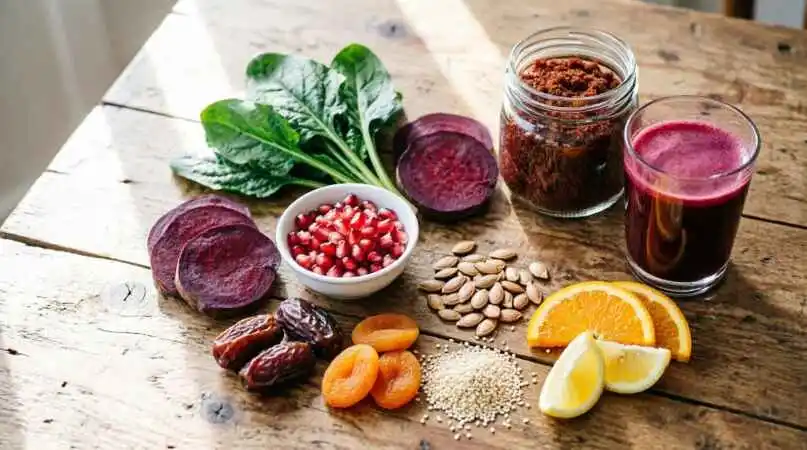
To bring these principles together, here is what a simple, naturally iron-supportive day of eating might look like, adaptable to personal taste and dietary preference.
- Morning: A glass of warm water with lemon, followed by a bowl of fortified oats topped with pumpkin seeds and a handful of berries.
- Mid-morning: A small serving of dates and a few soaked almonds.
- Lunch: A lentil or bean-based dish paired with a fresh salad including tomatoes or bell peppers, and a side of citrus fruit.
- Afternoon: A glass of beetroot and carrot juice, or amla juice, as a refreshing natural tonic.
- Dinner: A vegetable and legume curry cooked in a cast iron pan, served with whole grain rice or roti, and a side of leafy greens sautéed with garlic.
- Evening: A small piece of jaggery with roasted sesame seeds, enjoyed as a traditional, naturally iron-supportive treat.
This kind of eating pattern, repeated consistently over weeks and months, combined with good sleep, gentle movement, and stress management, forms the foundation of a genuinely natural, sustainable approach to preventing anaemia.
Conclusion: Small, Consistent Choices Build Lasting Energy
Anaemia rarely develops overnight, and in most cases, it doesn’t need to be reversed overnight either. What it responds to best is consistency: choosing iron-rich, vitamin C-paired meals more often than not, being mindful of when you drink your tea or coffee, prioritising sleep, moving your body gently and regularly, and paying attention to your body’s signals rather than pushing through persistent fatigue.
Natural remedies and thoughtful lifestyle habits offer a powerful, accessible, and sustainable path toward preventing and managing anaemia for many people. They work best not as isolated quick fixes, but as part of a broader, consistent way of eating and living. And when symptoms persist or worsen despite these efforts, seeking timely medical guidance ensures that natural care and professional care work together, rather than in isolation, toward the same goal: steady energy, healthy blood, and a body that feels genuinely well.
FAQS
Q1. What is anaemia, in simple terms?
Anaemia is a condition where the blood lacks enough healthy red blood cells or haemoglobin to carry adequate oxygen to the body’s tissues, leaving a person feeling tired, weak, and short of breath even during light activity.
Q2. What are the most common early signs of anaemia?
Persistent fatigue, pale skin or nails, dizziness, cold hands and feet, brittle nails, headaches, and shortness of breath during routine activity are among the earliest and most common signs.
Q3. Can anaemia really be improved through diet and lifestyle alone?
In many cases of mild to moderate iron-deficiency anaemia, dietary changes and lifestyle adjustments can meaningfully improve iron levels over time, though moderate to severe anaemia should still be evaluated and monitored by a doctor.
Q4. Which natural foods are richest in iron?
Spinach and other leafy greens, beetroot, pomegranate, dates, jaggery, sesame seeds, pumpkin seeds, lentils, chickpeas, moringa leaves, and dried fruits like raisins and apricots are among the most iron-dense natural foods.
Q5. What is the difference between heme and non-heme iron?
Heme iron comes from animal sources such as meat, poultry, and fish and is absorbed more efficiently by the body, while non-heme iron comes from plant sources like lentils, greens, and seeds and is absorbed less efficiently unless paired with absorption-boosting foods.
Q6. Why is vitamin C so important for people trying to overcome anaemia?
Vitamin C significantly enhances the absorption of non-heme iron from plant foods, so pairing iron-rich meals with citrus fruits, tomatoes, amla, or bell peppers can noticeably improve how much iron the body actually absorbs.
Q7. Are beetroot and pomegranate juice genuinely effective natural remedies?
Beetroot and pomegranate are both rich in iron, folate, and antioxidants that support healthy red blood cell production, and many people find that regularly including them supports better energy levels over time, though they work best alongside a broader iron-rich diet.
Q8. How does jaggery help with anaemia compared to refined sugar?
Unlike refined sugar, jaggery retains natural iron and minerals from sugarcane, making it a commonly used traditional remedy in many households, though it should still be consumed in moderation as part of a balanced diet.
Q9. Can drinking tea or coffee affect iron absorption?
Yes, tea and coffee contain tannins that can significantly inhibit iron absorption, so it is generally advised to avoid drinking them immediately before, during, or right after iron-rich meals.
Q10. What role does folate play in preventing anaemia?
Folate, or vitamin B9, is essential for red blood cell production, and a deficiency can lead to a specific type of anaemia; leafy greens, lentils, beans, and citrus fruits are excellent natural sources of folate.
Q11. Is vitamin B12 deficiency a separate cause of anaemia?
Yes, vitamin B12 deficiency anaemia is distinct from iron-deficiency anaemia and is more common among strict vegetarians and vegans, since B12 is found mainly in animal products, dairy, and fortified foods.
Q12. Can vegetarians and vegans get enough iron naturally?
Yes, though it requires more intentional planning, with a focus on lentils, legumes, tofu, seeds, fortified cereals, and dark leafy greens, ideally paired with vitamin C-rich foods to boost absorption.
Q13. Does cooking in cast iron cookware actually add iron to food?
Yes, cooking acidic foods like tomato-based dishes in cast iron cookware can meaningfully increase the iron content of the food through a natural leaching process, making it a simple, low-cost natural remedy.
Q14. Why should calcium-rich foods not be eaten alongside iron-rich meals?
Calcium can compete with iron for absorption in the digestive tract, so it is generally better to space out calcium-rich foods or supplements from iron-rich meals rather than consuming them together.
Q15. Can regular exercise help with anaemia, or does it make fatigue worse?
Light to moderate regular exercise, such as walking or yoga, can improve circulation and overall energy levels over time, though intense exercise should be approached cautiously and gradually while anaemia is being actively corrected.
Q16. How does sleep quality relate to anaemia recovery?
Good-quality, consistent sleep supports the body’s natural red blood cell regeneration and overall recovery processes, making adequate rest an important, often overlooked, part of a natural anaemia-prevention lifestyle.
Q17. Is stress actually linked to anaemia?
Chronic stress can affect digestion, appetite, and nutrient absorption, and can indirectly worsen anaemia symptoms, which is why stress management techniques like deep breathing, meditation, or light physical activity are often recommended alongside dietary changes.
Q18. What natural drinks are traditionally used to support healthy blood levels?
Beetroot juice, pomegranate juice, amla juice, and dates soaked in water or milk overnight are commonly used traditional natural drinks believed to support healthy iron and haemoglobin levels.
Q19. Why is menstruation a common cause of anaemia in women?
Regular menstrual blood loss, especially in cases of heavy periods, can gradually deplete the body’s iron stores over time, making women of reproductive age particularly vulnerable to iron-deficiency anaemia.
Q20. Are dates an effective natural remedy for anaemia?
Dates are a good natural source of iron, along with fibre and natural sugars, and are often recommended as a simple daily addition to the diet, particularly for pregnant women and those recovering from anaemia.
Q21. How much iron does the average adult need daily?
Iron requirements vary by age, sex, and life stage, with adult men generally needing less than menstruating women, and pregnant women needing significantly more; a healthcare provider can advise on individual requirements.
Q22. Can drinking too much milk contribute to anaemia?
Excessive milk consumption, particularly in young children, can interfere with iron absorption and sometimes displace iron-rich foods from the diet, so moderation is generally advised.
Q23. Is spinach really as iron-rich as commonly believed?
Spinach does contain a reasonable amount of iron, but it is non-heme iron with relatively lower absorption, and it also contains oxalates that can further reduce absorption, so it works best when paired with vitamin C-rich foods.
Q24. What are some warning signs that natural remedies alone are not enough?
Persistent extreme fatigue, rapid heartbeat, fainting spells, very pale skin, chest pain, or shortness of breath at rest are signs that medical evaluation and possibly supplementation or further testing are needed without delay.
Q25. Can pregnancy increase the risk of anaemia significantly?
Yes, pregnancy substantially increases iron and folate requirements to support increased blood volume and foetal development, making pregnant women one of the groups most commonly affected by anaemia.
Q26. Do sesame seeds and pumpkin seeds really help with anaemia?
Both sesame seeds and pumpkin seeds are naturally rich in iron and other minerals, and adding a small daily portion to meals, smoothies, or salads is a simple, practical way to boost dietary iron intake.
Q27. How long does it typically take for natural remedies to improve anaemia symptoms?
Noticeable improvement often takes several weeks to a few months of consistent dietary changes, since the body needs time to rebuild iron stores and increase healthy red blood cell production.
Q28. Are herbal supplements safe for treating anaemia without medical guidance?
Herbal supplements should be approached cautiously and ideally discussed with a healthcare provider first, since some can interact with medications or may not address the underlying cause of anaemia effectively on their own.
Q29. What lifestyle habits should be avoided to prevent anaemia?
Skipping meals, excessive tea or coffee consumption with meals, chronic crash dieting, smoking, excessive alcohol intake, and prolonged lack of sleep are habits that can worsen or contribute to anaemia over time.
Q30. When should someone with suspected anaemia see a doctor rather than relying only on natural remedies?
Anyone experiencing persistent or worsening symptoms, unexplained heavy bleeding, extreme fatigue, or symptoms lasting more than a few weeks should consult a doctor for proper blood testing and diagnosis, since natural remedies work best as a complement to, not a replacement for, medical care when needed.
Medical Disclaimer: The information provided on this website is for general educational and informational purposes onlyand is not intended as a substitute for professional medical advice, diagnosis, or treatment. Always seek the advice of your physician or other qualified health provider with any questions you may have regarding a medical condition. Never disregard professional medical advice or delay in seeking it because of something you have read on this website.

