

Seeing Potential in Everything
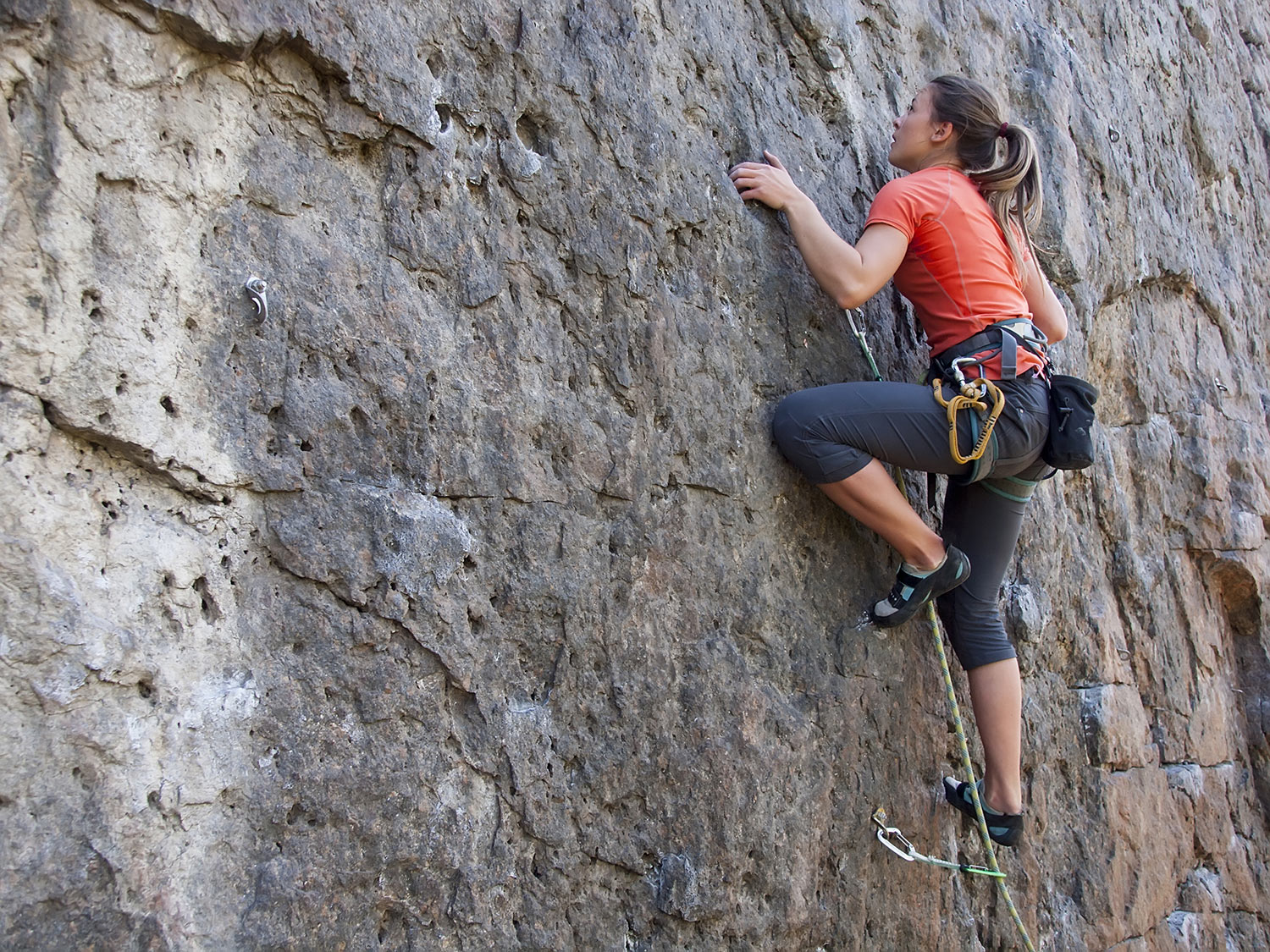
Once you start climbing, you can’t stop seeing the world as a climb. Walking through a city, I find myself scanning brickwork for crimps and ledges. I look at trees and imagine the line I would take to get to the top.
This might sound like a quirk, but it represents a fundamental shift in perception. The world became a place of possibility and play, rather than just a backdrop for existence. Obstacles were no longer just things in my way; they were challenges to be navigated.
This “climber’s eye” changed how I approached problems at work. A project that seemed like an insurmountable wall was just a series of moves. I needed to find the footholds, the rests, and the crux. I needed to be creative. I needed to use the resources around me.
Patience and The Long Game
Climbing is rarely about instant gratification. There are routes I have been working on for years. There is a move called “The Project”—a route that is at your absolute limit, which you try over and over again, session after session, season after season.
Sending a project requires immense patience. It requires accepting that you might not be strong enough today. You might need to train for three months, come back, and try again.
In a culture of instant everything—Amazon Prime deliveries, fast food, 15-second TikToks—climbing taught me the value of the long game. It taught me that some things cannot be rushed. Growth is slow. Strength takes time to build.
This patience has made me a better person. I am more patient with my friends and family. I am more patient with myself. I understand that I am a work in progress, a project that is being sent over a lifetime.
Integration – The Climb Down
The Fear of Success (The Climbing Down)
We often talk about the climb up, but in climbing, getting to the top is only half the battle. You have to get down. Sometimes you walk off the back of the cliff. Sometimes you have to rappel.
Rappelling is often more terrifying than climbing up. You have to trust your gear implicitly as you lower yourself over the edge, leaning back into empty space.
I realized that achieving a goal—whether it’s a promotion, a degree, or a personal milestone—is like the top of the cliff. You feel great for a moment, but then you realize you have to integrate that success into your life. You have to come back down.
Climbing taught me that the descent is part of the journey. It requires just as much focus and care as the ascent. It taught me to be humble. Just because you reached the top of one mountain doesn’t mean you are a master of the universe. You are just a person who needs to get down safely and find the next challenge.
Balance On and Off the Wall
The final lesson climbing gave me is about balance. Literally, if you don’t balance on the wall, you peel off. Metaphorically, if you don’t balance your life, you burn out.
I used to be an “all or nothing” person. If I was working, I was working 80 hours a week. If I was relaxing, I was comatose on the couch. Climbing requires a dynamic tension. You are engaging muscles, but you must also find moments of total relaxation to recover.
I learned to apply this “dynamic tension” to my life. I can push hard at work, but I must find those moments of rest—micro-recoveries—to sustain the effort. I learned that rest is not laziness; it is a tactical necessity for the next send.
Conclusion: The Climb Continues
Rock climbing gave me a new perspective on the world by changing the way I move through it. It turned the world from a flat, two-dimensional screen into a three-dimensional playground. It taught me to look up, to see the textures, and to appreciate the verticality of nature.
But more importantly, it gave me a new perspective on myself. It stripped away my ego, taught me the difference between fear and danger, and showed me that I am stronger and more resilient than I ever believed. It taught me that falling is okay, that asking for help is brave, and that the best view comes after the hardest climb.
I am still not a great climber. I’m probably average, at best. But that doesn’t matter anymore. The joy isn’t in the grade; it’s in the movement.
If you are feeling stuck, if you are feeling small, or if you just need a new way to look at things, I urge you to find a wall. It doesn’t have to be a granite cliff in Yosemite. It can be the plastic wall at the local gym.
Chalk up your hands. Tie the knot. Look up. And start climbing. You might just find that the person you meet at the top of the wall is the person you always wanted to be.
The rock is always there, waiting. It is patient. It is indifferent. And it is ready to teach you, if you are willing to listen.
Detailed Breakdown of Lessons Learned
To summarize the transformative power of this sport, here are the key pillars of my new perspective:
- Embrace the Beginner’s Mind: Competence is comfortable, but incompetence is where growth happens. Being bad at something is the first step toward being good at it.
- Trust the System: You cannot do it alone. Vulnerability and reliance on others are strengths, not weaknesses.
- Fear is Not Danger: Feeling afraid is a biological reaction, not a signal to stop. Assess the risk objectively.
- Failure is Feedback: Falling isn’t a defeat; it’s data. It tells you what to adjust for the next attempt.
- Efficiency Over Force: Brute force burns out. Technique, balance, and strategy are sustainable.
- Presence is Power: Anxiety lives in the future; regret lives in the past. Climbing forces you into the now.
- Respect the Environment: We are temporary visitors on ancient stone. We must tread lightly.
- Patience Wins: Some projects take months or years. Enjoy the process.
Final Thoughts
Rock climbing is often perceived as an extreme sport for adrenaline junkies. And while it can be that, for me, it has been a practice of mindfulness, a physical philosophy, and a community of healing. It gave me a new pair of eyes—eyes that see challenges as puzzles, fear as a tool, and the world as a place to be explored, not just endured.
So, here is to the crimps, the slopers, the splits skin, and the screaming muscles. Here is to the whippers and the sends. Here is to the new perspective.
Now, if you’ll excuse me, I have a project to finish.
Suggested Reading List for Aspiring Climbers:
- The Rock Warrior’s Way by Arno Ilgner (Essential for the mental game)
- Mountaineering: Freedom of the Hills (The bible of outdoor skills)
- Alone on the Wall by Alex Honnold (For inspiration)
Equipment Checklist for Beginners:
- Climbing Shoes (Tight but not painful)
- Chalk Bag
- Harness (Comfortable and safe)
- Belay Device/Carabiner (If you have a partner)
- Helmet (Essential for outdoors)
Medical Disclaimer: The information provided on this website is for general educational and informational purposes only and is not intended as a substitute for professional medical advice, diagnosis, or treatment. Always seek the advice of your physician or other qualified health provider with any questions you may have regarding a medical condition. Never disregard professional medical advice or delay in seeking it because of something you have read on this website.

