

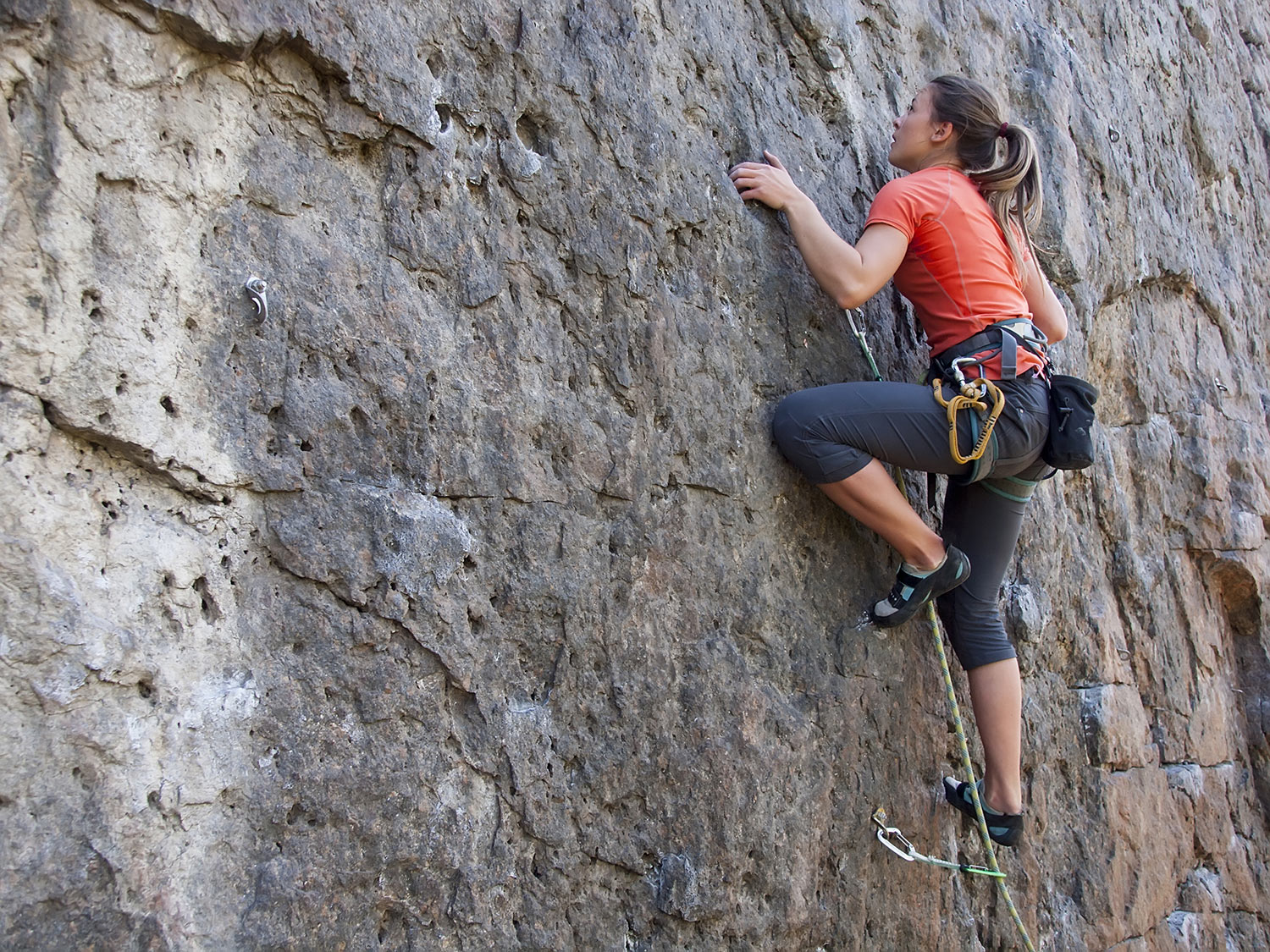
Vertical Horizons: How Rock Climbing Shattered My Limits and Rewired My Brain
Introduction: The Sedentary Slumber and the Call of the Wall
For the better part of my twenties, my life was defined by the horizontal. I moved from bed to desk, to car, to couch, and back to bed. My world was a series of rectangular screens and flat surfaces, punctuated by the occasional hike that served more as a photo opportunity than a physical challenge. I was comfortable, predictably bored, and strangely anxious. I lived in a city of millions, yet I felt a profound sense of isolation and stagnation. I was going through the motions, controlled by a fear of failure that kept me safely within the lines of a standard career path and a safe social circle.
I didn’t know I was looking for a way out until I walked into a rock climbing gym for the first time on a rainy Tuesday afternoon. I wasn’t seeking enlightenment; I was just bored and looking for something to do with a friend who had recently gotten “obsessed.”
The air inside the gym was different—cool, dry, and smelling faintly of rubber, chalk, and sweat. It sounded like a cavern; the echoes of laughter and the dull thud of falling bodies bounced off high ceilings. I looked up at the towering walls, colored with neon holds that looked like candies stuck to a massive artificial cliff. People were suspended in the air, contorted in positions that seemed to defy anatomy.
That first day was a disaster. My arms pumped out within minutes. My fingers slipped. I dangled helplessly on the rope, embarrassed by my own lack of strength. But as I walked out, sore and humbled, I felt a strange spark. It wasn’t just the physical exertion; it was the singular focus. For the hour I was on the wall, I hadn’t thought about my emails, my rent, or my lingering existential dread. I had only thought about the next hold.
I didn’t know it then, but that spark was the ignition of a journey that would fundamentally alter the way I view the world and, more importantly, the way I view myself. This isn’t just a story about learning to climb; it’s a story about how the vertical world taught me to live in the horizontal one.
The Humiliation of Gravity – Confronting Physical Reality
The Shock of Incompetence
We spend much of our adult lives cultivating areas of competence. We become good at our jobs, we know how to navigate social situations, and we know how to pay our bills. We construct a careful image of capability. Rock climbing, especially in the beginning, tears that image down.
I remember my second week clearly. I tried to climb a route labeled “5.9,” a grade that is considered intermediate but manageable. I got halfway up and got stuck. There was a hold three feet to my right and two feet up. It looked reachable. I lunged for it. My hand grazed the plastic, and then I was falling.
The rope caught me, and I swung into the air, spinning gently. Below me, a group of teenagers watched, unimpressed. I felt a hot flush of shame. I wasn’t used to being publicly bad at things. I was used to being prepared, to being smart enough to figure things out.
But climbing doesn’t care how smart you are. It doesn’t care about your job title or your SAT scores. It is a negotiation with gravity, and gravity is an impartial judge. You either have the friction, the strength, and the technique to stick the move, or you don’t.
This humiliation was the first gift climbing gave me. It forced me to become a beginner again. In a world that idolizes mastery and instant success, being a terrible beginner is a radical act. It taught me that feeling stupid is not fatal. In fact, it is a necessary prerequisite for growth. I had to learn to laugh at my failures, to shake off the flash of embarrassment, and to try again. I learned that ego is heavy luggage when you’re trying to get off the ground.
Listening to the Body
As I continued to climb, my relationship with my physical self began to change. For years, my body was mostly a vehicle to transport my head from meeting to meeting. I resented it when it was tired, ignored it when it was hungry, and treated it as an inconvenience.
Climbing demands a partnership with the body. You cannot force your way up a hard route using brute strength alone; you will gas out (a phenomenon climbers call “getting pumped”) and fall. You must learn efficiency. You have to learn to listen to the tension in your fascia, the placement of your center of gravity, and the subtle grip of your fingertips.
I began to notice muscles I never knew existed—the ones in my forearms, my core, and my back. I began to appreciate what my body could do, rather than just how it looked. The mirror at the gym stopped being a place to critique my appearance and started being a place to check my technique. Was my hip close to the wall? Was my weight over my feet?
This shift in perspective was revolutionary. I stopped viewing food as fuel for comfort or boredom and started viewing it as fuel for performance. I started sleeping better, not out of obligation, but out of necessity. My body became an ally in a complex puzzle, rather than a vessel I was stuck in.
The Architecture of Fear – Learning to Trust
The Paradox of the Belay
One of the most profound lessons climbing offers is the concept of the belay. The belayer is the person on the ground holding the rope. Their job is to catch you if you fall. Your life is literally in their hands.
For someone like me, who was fiercely independent and struggled with vulnerability, this was terrifying. Letting go of the wall to rest or to make a big move requires an act of faith. You have to trust that the rope will hold, the gear is solid, and your partner is paying attention.
I vividly recall a moment on an outdoor climb, a terrifyingly exposed face about 60 feet up. I was frozen. My brain was screaming that I wasn’t safe, even though I was clipped into a bolt. I looked down at my belayer, Sarah. She didn’t yell at me to climb. She just locked the rope off, looked me in the eye, and said, “I’ve got you. Sit back.”
I did. I sat back in the harness, letting the rope take my full weight. I dangled over the void, held only by her grip and the gear. In that suspension, the fear dissolved. I realized that safety wasn’t about gripping the rock tighter; safety was about the systems and the people supporting me.
This translated powerfully to my daily life. I realized I had been gripping the “rock” of my life—my problems, my anxieties—with white-knuckled intensity, refusing to let go or ask for help because I felt I needed to be in control. Climbing taught me that leaning on others isn’t a sign of weakness; it’s the only way to climb higher.
Distinguishing Fear from Danger
Climbing also forced me to dissect my own fear. In the “real world,” we often use the words “fear” and “danger” interchangeably. In climbing, they are distinct and separate entities.
- Danger is objective. Is the rope frayed? Is the rock loose? Is the storm rolling in? Danger is a reality that must be managed with logic and safety protocols.
- Fear is subjective. It is the chemical reaction in your brain—the amygdala firing—screaming “Don’t fall!” even when you are safely attached to a top-rope.
I learned that just because I was afraid didn’t mean I was in danger. I could be terrified, shaking like a leaf, but still be perfectly safe.
This realization has been life-changing outside the gym. Now, when I feel fear—before a big presentation, when making a life change, or entering a social situation—I pause and ask: “Am I in danger, or am I just afraid?” Usually, I am just afraid. The fear is just a sensation, a chemical spike. It is not a stop sign. It is simply information. Acknowledging this distinction has allowed me to do things that scare me, because I know that being scared doesn’t mean something is wrong. It often means I am doing something right.
The Mental Chess Match – Problem Solving on the Wall
The Crux
Every route has a “crux”—the hardest sequence of moves, the obstacle that defines the difficulty of the climb. Reaching the crux is where the physical meets the mental.
When I first started climbing, I treated the wall like a ladder. I just wanted to get to the top. I thrashed, I pulled, I muscled my way up, exhausting myself. I failed constantly.
Then, an older climber watched me flail on a route for twenty minutes. He walked over and said, “Stop trying to outmuscle the rock. You can’t beat gravity. You have to dance with it.”
He introduced me to the concept of beta—the solution to the problem. Climbing is essentially physical puzzle solving. You can’t just use raw force; you have to use technique. You have to shift your weight, flag your leg for balance, use a heel hook, or pivot on a thumb.
I began to approach routes like a chess game. I would stand at the bottom, staring up, visualizing the sequences. “Left hand on the red crimp, right foot high, drop the knee, reach for the sloper.”
If I fell, I didn’t just get back on and do the same thing again. That is the definition of insanity, after all. I had to analyze why I fell. Did my feet slip? Was my hips too far out? Did I hesitate?
This analytical approach to failure has bled into every aspect of my life. In my work, when a project failed or a proposal was rejected, I stopped taking it personally. I started looking for the beta. Where was the flaw in the technique? What was the missing piece of the sequence?
I learned that persistence isn’t just about trying harder; it’s about trying differently. It’s about iterating. It’s about being willing to look foolish while you figure out the moves.
Flow State and the Quieting of the Mind
Perhaps the most addictive aspect of climbing is the “flow state.” When you are climbing hard, at the limit of your ability, there is no room for extraneous thought. You cannot worry about your taxes or your ex-partner when you are 30 feet up a wall, balancing on a dime-sized hold.
Your mind narrows to a singular point of focus. The world falls away. There is only the texture of the rock, the sound of your breath, and the next move.
In our hyper-connected, notification-driven world, this kind of silence is a luxury. Meditation has always been difficult for me; sitting still makes my mind race louder. But climbing is active meditation. It is mindfulness in motion.
After a climbing session, I feel a mental clarity that lasts for days. The anxiety noise is dialed down. I have reset my baseline. Climbing became my therapy. It was a place where I could process my emotions subconsciously, channeling my frustration and anger into the rock, converting negative energy into upward momentum.
The Art of Falling – Redefining Failure
Falling is Part of Climbing
If you climb, you will fall. It is inevitable. In fact, if you aren’t falling, you probably aren’t pushing your limits. You are staying in your comfort zone.
For a long time, I was terrified of falling. I would climb until my arms burned so much that I couldn’t hold on anymore, and then I would lower down gently, exhausted but “safe.” I wasn’t falling, but I wasn’t improving.
To get better, I had to learn to fall intentionally. I had to practice “whippers”—big, dynamic falls where you let go of the wall and free-fall for a few seconds before the rope catches you.
My coach set up a drill. He had me climb up, grab a hold, and simply let go. “Scream if you need to,” he said. “Just let go.”
The first time, I hesitated for five minutes. My heart hammered against my ribs. Finally, I uncurled my fingers and dropped. The rope caught me gently. I didn’t die. I wasn’t hurt. I laughed.
We did it again. And again.
Eventually, the fear of falling transformed into an adrenaline rush. I learned that the fall wasn’t the end of the world; it was just a reset button.
This lesson was pivotal for my perfectionism. I had always viewed failure as a catastrophe. If I failed at something, it meant I was a failure. Climbing taught me that failure is just data. Falling tells you that the move was too hard, or your balance was off, or you need more rest. It is feedback, not a judgment of character.
I began to apply this to my life. If I started a business venture that flopped, it was just a fall. I’d dust off the chalk, get back on the rope, and try the next sequence. The stakes in life feel higher than in the gym, sure, but the emotional resilience is the same. When you strip the fear away from failure, you become free to take risks.
The Community – The Tribe of the Vertical
A Unique Culture
The climbing community is unlike any other subculture I’ve encountered. It is a strange blend of intense competition and profound support.
At the gym, you will see people trying to send the hardest routes in the building, grunting and straining, totally locked in. But the moment they finish, they turn around and cheer for the person struggling on the easiest route. There is a camaraderie born from shared struggle.
Because climbing relies on a partner, it inherently builds connection. You have to communicate. “Take!” “Slack!” “Climbing!” You have to trust each other. You see people at their most vulnerable—terrified, exhausted, frustrated.
I have made friends from all walks of life through climbing—doctors, bartenders, students, retirees. On the wall, socioeconomic status and career paths disappear. You are just a climber.
This sense of belonging was something I had been missing. In a digital age where we are “connected” but lonely, the tangible, physical connection of climbing—tying a knot for someone, holding their rope, sharing a high-five after a send—is grounding.
The Ethics of the Outdoors
As I transitioned from the gym to real rock outside, my perspective on the world expanded further. Outdoor climbing introduces you to nature in a way that hiking or camping never does. You aren’t just looking at the scenery; you are interacting with it. You are touching the ancient geological history of the planet.
This interaction fosters a deep respect for the environment. Climbers are generally staunch environmentalists. We see the impact of erosion, of litter, of climate change on the crags we love.
I learned about “Leave No Trace” ethics not as a set of rules, but as a philosophy of reverence. We climb on these giants, and we must protect them. This shifted my worldview. I became more conscious of my consumption, my waste, and my impact on the planet. I realized that I wasn’t just an inhabitant of the earth; I was a participant in its ecosystem. Climbing turned me into an environmentalist not out of guilt, but out of love.

