

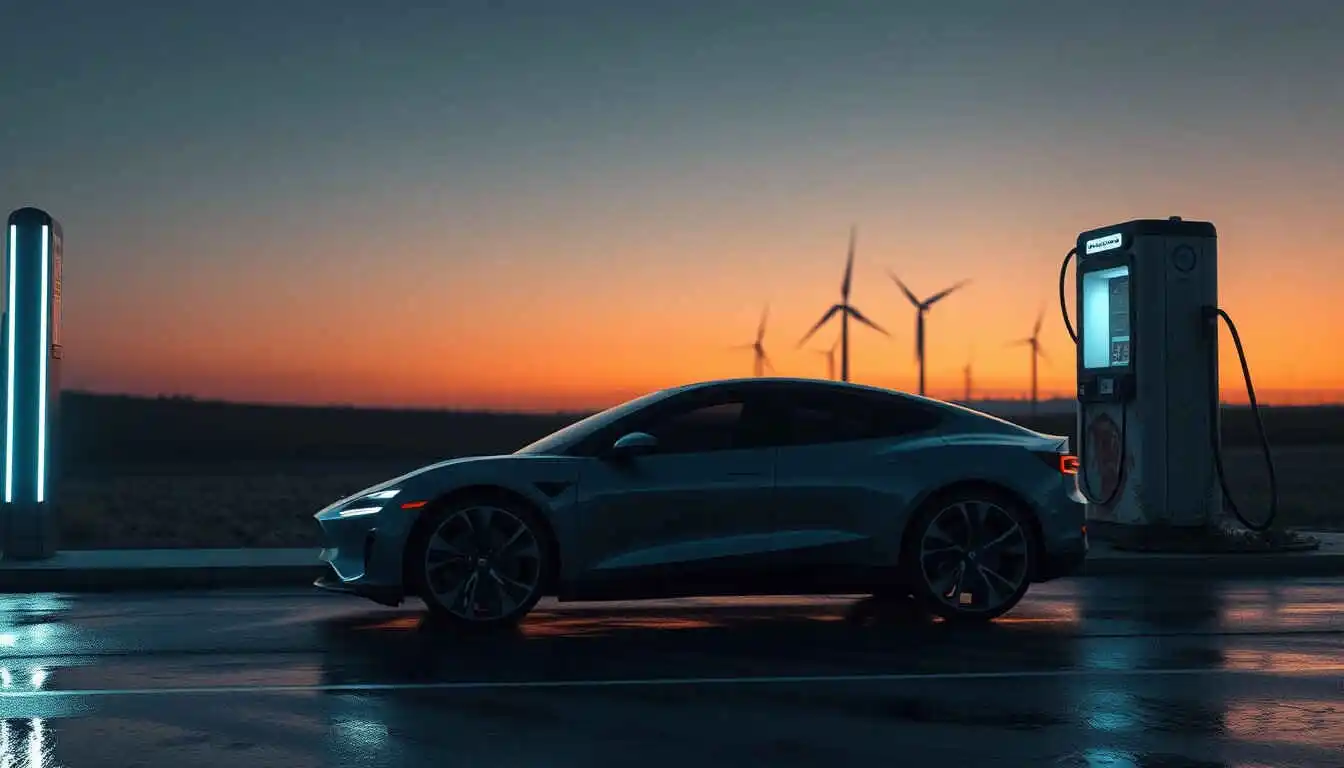
How Electric Vehicles Are Rewiring the World and Killing the Combustion Engine
Introduction: The Quiet Revolution
Close your eyes and picture the soundtrack of the 20th century. What do you hear? The rhythmic chug of a Ford Model T, the guttural roar of a V8 engine, the downshift of a transmission on a busy highway. For over a hundred years, the internal combustion engine (ICE) has been the beating heart of human progress, shrinking the globe and expanding our horizons. But today, that heartbeat is slowly fading into a whisper.
Welcome to the dawn of the electric era.
If you’ve driven in a major city recently, you’ve likely noticed the shift. Sleek, silent vehicles gliding down the street with no tailpipe smoke, no gear shifts, and no gas station visits. The electric vehicle is no longer a quirky niche for eco-warriors or a luxury toy for Silicon Valley elites. It is a full-blown, global paradigm shift that is rewriting the rules of manufacturing, energy, geopolitics, and the very way we interact with the machines that move us.
This isn’t just a change in how we fuel our cars; it is a fundamental rewiring of the world’s economy. The $3 trillion automotive industry is experiencing a seismic shock, and the ripples are being felt in oil fields, Wall Street boardrooms, and suburban driveways alike. But how did we get here? How do these machines actually work? And more importantly, what does the fully electric future look like?
Buckle up. We are about to take a deep dive into the electrified future of mobility.
The Ghost of EVs Past
It is a common misconception that the electric vehicle is a 21st-century invention. In truth, the EV predates the gasoline car. In the late 1800s, electric carriages were the darlings of high society. They were quiet, clean, and required no hand-cranking to start—a feature that made them immensely popular with urban women, who were often excluded from the physical labor required to start early gas cars.
By 1900, a third of all vehicles on the road in the United States were electric. So, what killed the first electric revolution?
Two words: Mass production. When Henry Ford introduced the Model T in 1908, he offered a gasoline car at a fraction of the cost of an electric carriage. Simultaneously, the discovery of vast crude oil reserves in Texas made gasoline cheap and abundant. Coupled with the invention of the electric starter motor (which eliminated the dangerous hand-crank), the internal combustion engine secured its century-long monopoly. Electric cars were relegated to the dustbin of history, remembered only as a curious footnote.
The resurrection began at the turn of the millennium, born not from a lack of oil, but from a surplus of pollution. California’s Zero Emission Vehicle mandate in the 1990s forced automakers to dabble in electricity again. GM’s EV1 became a cult classic, but the program was famously crushed, inspiring the documentary Who Killed the Electric Car?
But the spark had been lit. In 2003, a small startup named Tesla Motors set out to prove that an electric car didn’t have to be a glorified golf cart. The release of the Tesla Roadster in 2008—capable of 0-60 mph in 3.7 seconds and a range of 245 miles—shattered the paradigm. It proved that electricity could be thrilling, sexy, and practical. The rest of the industry was slow to react, but the starting gun had been fired.
The Anatomy of an EV – Far Fewer Moving Parts
To understand why electric vehicles are superior in efficiency and performance, we have to look under the hood—or rather, realize there doesn’t need to be a hood at all.
A traditional internal combustion engine is a symphony of controlled explosions. It requires hundreds of moving parts—pistons, crankshafts, timing belts, spark plugs, and complex transmission systems with up to ten gears—to convert the chaotic energy of burning fossil fuels into rotational force. It is a marvel of engineering, but it is inherently inefficient. Only about 20% of the energy in a gallon of gas actually turns the wheels; the rest is lost as heat and noise.
An electric vehicle, by contrast, is beautifully simple. The core components are:
- The Battery Pack: Typically a massive array of lithium-ion cells stored in the floor of the vehicle, providing a low center of gravity.
- The Inverter: Converts the Direct Current (DC) from the battery into Alternating Current (AC) for the motor.
- The Electric Motor: Uses electromagnets to create a rotating magnetic field, spinning the rotor and driving the wheels directly.
Because the motor delivers maximum torque from zero RPM, an EV can accelerate instantly. There is no lag waiting for the engine to reach peak power, and there is no need for a multi-speed transmission. It’s a single-speed direct drive.
This simplicity translates to profound long-term benefits. With exponentially fewer moving parts, EVs require drastically less maintenance. No oil changes, no spark plug replacements, no exhaust system repairs, and no transmission fluid flushes. The most common maintenance items on an EV are tires, wiper blades, and cabin air filters. This mechanical simplicity is a key component of the electric car benefits that are driving consumer adoption.
Furthermore, the braking system is revolutionized through regenerative braking. When you lift your foot off the accelerator in an EV, the motor reverses its function, becoming a generator. It captures the kinetic energy of the car’s forward motion, converts it back into electricity to recharge the battery, and uses the magnetic resistance to slow the car down. This means that in day-to-day city driving, you rarely use your physical brake pads, allowing them to last for hundreds of thousands of miles.
The Battery Bottleneck and Lithium-Ion
If the motor is the heart of the EV, the battery is its soul—and its most significant bottleneck. The transition to sustainable transportation rises and falls on the advancement of battery technology.
Early EVs and hybrids used Nickel-Metal Hydride (NiMH) batteries, which were heavy and had poor energy density. Today, the industry standard is the Lithium-ion (Li-ion) battery. Lithium is the lightest metal and has an incredibly high electrochemical potential, allowing it to store vast amounts of energy in a compact space.
However, Li-ion batteries are not without their flaws. They are sensitive to extreme temperatures, they degrade over time, and they rely on materials like cobalt and nickel, which carry ethical and environmental mining concerns.
The most crucial metric for EV batteries is energy density—how much energy a battery can hold relative to its weight. Over the last decade, the energy density of Li-ion batteries has roughly doubled while the cost has plummeted by nearly 90%. This is the primary reason EVs have transitioned from 80-mile range compliance cars to 400-mile range road trippers.
Yet, the industry is already looking beyond current lithium-ion chemistry.
- Lithium Iron Phosphate (LFP): Gaining massive popularity, LFP batteries eschew cobalt and nickel, using iron and phosphate instead. They are cheaper, safer, and last longer, though they have slightly lower energy density.
- Solid-State Batteries: Hailed as the holy grail of EV tech, solid-state batteries replace the liquid electrolyte in current batteries with a solid material. This promises to double the energy density, halve the charging time, and virtually eliminate the risk of battery fires. While still facing manufacturing scalability issues, companies like Toyota and QuantumScape are racing to commercialize them by the late 2020s.
The battery is not just a fuel tank; it is a dynamic component of the vehicle’s software, constantly managed by a Battery Management System (BMS) that ensures each cell is balanced, protected from extreme temperatures, and optimized for longevity.
The EV Spectrum – BEVs, PHEVs, and the Bridge
The term “electric vehicle” is an umbrella that covers a spectrum of technologies. Understanding this spectrum is crucial for consumers navigating the EV market trends.
- Mild Hybrid (MHEV): The lowest rung on the electrification ladder. A small 48-volt battery assists the gasoline engine during acceleration and powers electronics when the car is coasting or stopped. You cannot drive an MHEV on electric power alone. It is simply a way to slightly increase the fuel efficiency of a traditional ICE vehicle.
- Hybrid Electric Vehicle (HEV): Pioneered by the Toyota Prius, HEVs have a larger battery and electric motor that can drive the car at low speeds for short distances. However, they cannot be plugged in. The battery is charged entirely through regenerative braking and the internal combustion engine. They offer excellent gas mileage but are ultimately still fossil-fuel cars.
- Plug-in Hybrid Electric Vehicle (PHEV): The PHEV is the ultimate bridge technology. It features a battery large enough to drive 20 to 50 miles on electricity alone, paired with a traditional gas engine. You plug it in at home, and for daily commutes, it functions as a pure EV. For longer road trips, the gas engine kicks in, eliminating range anxiety entirely. PHEVs are incredibly popular right now as charging infrastructure continues to build out, serving as a stepping stone for consumers not ready to go fully electric.
- Battery Electric Vehicle (BEV): The pure electric vehicle. No gas tank, no tailpipe, no oil changes. Ranging from affordable 150-mile commuters to 500-mile luxury sedans, BEVs represent the endgame of sustainable transportation. As battery range continues to improve and charging networks expand, the BEV is positioned to become the dominant form of personal transportation in the coming decades.
The Charging Ecosystem – Fueling the Future
The most significant psychological hurdle for prospective EV buyers is charging. We are conditioned to the five-minute gas station fill-up. The idea of waiting 30 minutes—or overnight—to “refuel” induces a unique anxiety: Range Anxiety.
But understanding EV charging requires a fundamental shift in mindset. You do not go to a station to fuel an EV; you fuel it where you park it.
Level 1 Charging (The Trickle): This uses a standard 120-volt household outlet. It adds about 3 to 5 miles of range per hour. For a daily commute of 30 miles, plugging in overnight is more than sufficient. However, if you deplete a large battery, a full charge on Level 1 can take several days.
Level 2 Charging (The Sweet Spot): This requires a 240-volt outlet (like a dryer or oven uses) and a dedicated home charging station. Adding 25 to 30 miles of range per hour, a Level 2 charger can fully replenish most EVs overnight while you sleep. For the vast majority of EV owners, home Level 2 charging means waking up with a “full tank” every single morning, rendering gas station visits obsolete.
DC Fast Charging / Level 3 (The Highway Lifeline): When on a road trip, you need speed. DC Fast Chargers bypass the car’s onboard charger, delivering direct current straight to the battery at massive voltages. Modern EVs can charge from 10% to 80% in as little as 15 to 30 minutes at these stations.
The rollout of public fast-charging infrastructure is the current frontier of the EV revolution. Tesla’s proprietary Supercharger network—currently numbering over 50,000 stalls globally—has long been the gold standard for reliability and ease of use. Just plug it in, and the car and charger communicate automatically; no credit cards or apps required.
However, the landscape is shifting. With the advent of the North American Charging Standard (NACS), nearly every major automaker is adopting Tesla’s plug. The Combined Charging System (CCS), previously the standard, is being phased out in North America. Furthermore, governments are injecting billions into infrastructure build-outs (like the NEVI program in the US) to ensure fast chargers are available every 50 miles along major highways, turning range anxiety into a relic of the past.
The Green Dilemma – Are EVs Truly Sustainable?
The primary driver of the EV revolution is the urgent need to combat climate change. Transportation accounts for roughly one-fifth of global carbon emissions, and decarbonizing this sector is non-negotiable. But a fair question persists: Are electric vehicles truly zero emissions, and are they genuinely better for the environment?
The “Long Tailpipe” Myth: Critics often point out that if an EV is charged on a grid powered by coal, it isn’t truly zero emissions. This is the “long tailpipe” argument. While it is true that the carbon footprint of an EV depends on its charging source, numerous lifecycle analyses have debunked the myth that EVs are worse than gas cars. Even on a coal-heavy grid, the superior efficiency of electric motors means an EV still produces fewer emissions per mile than a comparable ICE vehicle.
Moreover, the grid is getting greener every day. As wind, solar, and nuclear power replace fossil fuels, EVs automatically become cleaner over their lifespan—a feature a gas car can never claim. When charged on a renewable grid, an EV’s operational emissions drop to absolute zero.
The Manufacturing Footprint: The most valid critique of EVs lies in their manufacturing, specifically the extraction of battery minerals. Mining for lithium, cobalt, and nickel is resource-intensive and can have severe local environmental impacts. Cobalt, in particular, has a dark history of child labor in the Democratic Republic of Congo.
The industry is acutely aware of this and is aggressively seeking solutions:
- Ethical Sourcing: Automakers are forcing supply chain transparency and moving away from untraceable artisanal mining.
- Chemistry Shifts: The rapid adoption of LFP batteries, which use zero cobalt and zero nickel, is dramatically reducing the reliance on the most problematic minerals.
- Battery Recycling: A massive industry is emerging to recycle old EV batteries. Up to 95% of the critical minerals in a battery can be extracted and reused to build new ones, creating a circular economy that will drastically reduce the need for virgin mining in the coming decades.
When you calculate the entire lifecycle—manufacturing, driving, and disposal—an EV breaks even with an ICE vehicle in terms of carbon emissions within 15,000 to 20,000 miles of driving. After that, every mile driven is a net positive for the planet.
The Economics of Electrons vs. Gasoline
Beyond the environmental imperative, the financial case for going electric is becoming impossible to ignore. The Total Cost of Ownership (TCO) is the metric that ultimately wins over the pragmatist.
Upfront Cost vs. Operational Cost: Historically, the biggest barrier to EV adoption has been the sticker price. Battery packs are expensive, pushing the initial purchase price of EVs above their gas counterparts. However, the tides are turning. As battery costs have fallen below $140/kWh and economies of scale have kicked in, we are entering the era of the affordable EV. Cars like the Chevrolet Equinox EV, the Hyundai Kona Electric, and various Chinese domestic offerings are hitting the $30,000 price point. With government tax credits and incentives (such as the $7,500 federal credit in the US), the upfront cost is now at parity or cheaper than gas cars in many segments.
Where the EV truly shines is in the ongoing operational costs.
- Fuel: The cost to “fuel” an EV is a fraction of gasoline. Driving an EV 100 miles typically costs between $3 to $5 if charging at home, compared to $10 to $15 for a gas car. Over a 200,000-mile lifespan, this translates to tens of thousands of dollars in fuel savings.
- Maintenance: With no oil changes, no spark plugs, no timing belts, and minimal brake wear, routine maintenance costs for an EV are roughly half those of a gas vehicle.
Depreciation: While early EVs suffered from rapid depreciation due to fast-moving technology, the market is stabilizing. Tesla’s aggressive price cuts in 2023 and 2024 have impacted the used market, but long-range EVs with robust software support are holding their value better. Moreover, as the transition accelerates, the resale value of used ICE vehicles is expected to plummet, making EVs a safer long-term investment.
The Software-Defined Vehicle
An electric vehicle is not just a car with a battery instead of a gas tank; it is a rolling computer. The shift to electric powertrains has catalyzed a far more profound shift: the transition to the Software-Defined Vehicle (SDV).
In traditional cars, features are hardcoded. If you want better navigation or enhanced performance, you buy a new car. In an EV, the hardware is secondary to the software. Tesla pioneered the Over-The-Air (OTA) update. Just like your smartphone downloads new operating systems, an EV can download new features overnight.
This has massive implications. Tesla has famously increased the range of its cars via OTA updates by optimizing battery management algorithms. They’ve improved acceleration, added entirely new user interfaces, and deployed autonomous driving features—all while the car sits in your driveway.
This shifts the business model entirely. Automakers are moving toward selling features as subscriptions (e.g., heated seats, advanced driver assists) that are already built into the hardware but unlocked via software for a monthly fee. While controversial among consumers, it guarantees a recurring revenue stream for manufacturers long after the car leaves the lot.
The crown jewel of the SDV is Autonomous Driving. Self-driving technology is inextricably linked to the EV revolution. Electric powertrains are far easier to control with digital precision than mechanical gas engines. The massive electrical capacity of EV batteries is required to power the computationally intense AI processors (like Tesla’s FSD computer or Nvidia’s Drive platforms) that process real-time sensor data from cameras, radar, and LiDAR. While fully autonomous Level 5 driving remains a complex regulatory and technological hurdle, the integration of ADAS (Advanced Driver Assistance Systems) is making EVs some of the safest vehicles on the road today.
The Gladiators – Who is Winning the EV War?
The EV landscape is a fierce battleground featuring legacy automakers fighting for survival, tech startups burning cash, and geopolitical heavyweights vying for dominance.
Tesla: The undisputed pioneer and current market leader. Tesla isn’t just a car company; it is an energy and AI company. Their vertically integrated model—designing their own chips, writing their own software, and building their own chargers—has given them a massive moat. However, they face increasing pressure from aging vehicle lineups and the erratic leadership of Elon Musk.
The Chinese Juggernauts: The most significant force in the global EV market is China. Automakers like BYD (Build Your Dreams), NIO, XPeng, and Geely have leveraged massive government subsidies, ruthless efficiency, and dominance over the battery supply chain to produce high-quality, low-cost EVs. BYD has briefly surpassed Tesla in total EV sales globally. These cars are already dominating the Asian, European, and Latin American markets. A 100% tariff on Chinese EVs in the US and heavy tariffs in Europe are the only things keeping them from currently disrupting Western markets, a clear sign of the geopolitical stakes involved.
Legacy Automakers: Volkswagen, Ford, GM, Hyundai/Kia, and Toyota are all undergoing existential transformations. VW is investing billions in its MEB platform but has struggled with software glitches. Hyundai and Kia have emerged as the strongest mainstream contenders, offering stellar EVs like the Ioniq 5 and EV6 with ultra-fast charging capabilities. Ford has seen success with the Mustang Mach-E and F-150 Lightning but is struggling with profitability. Toyota, long a champion of hybrids, was late to the BEV party but is now ramping up efforts with solid-state battery development.
The next five years will see a brutal consolidation. The companies that master vertical integration, battery chemistry, and software will survive. Those that merely bolt batteries onto traditional car architectures will perish.
The Potholes Ahead – Challenges in the Transition
The road to a fully electric future is not without severe potholes. The scale of this transition is staggering, and several major hurdles must be cleared.
- Grid Capacity: The most pressing physical challenge is whether our electrical grids can handle the demand. If an entire neighborhood switches to EVs and plugs them in at 6:00 PM, the local transformer could blow. This requires massive investments in grid modernization, smart charging technology (Vehicle-to-Grid or V2G, where EVs feed power back to the grid during peak demand), and a massive expansion of renewable energy generation to ensure we aren’t just trading a tailpipe for a smokestack.
- The Charging Deserts: While coastal cities and major highways are rapidly gaining infrastructure, rural areas, apartment complexes, and low-income neighborhoods are being left behind. You cannot sell an EV to someone who cannot charge it at home or at work. Solving the “charging desert” problem is an equity issue as much as an infrastructure issue.
- Supply Chain Geopolitics: The 20th century was defined by oil geopolitics; the 21st century will be defined by mineral geopolitics. The concentration of lithium refining in China, cobalt in the DRC, and nickel in Indonesia creates massive supply chain vulnerabilities. The West is racing to onshore battery manufacturing and mineral processing, but it will take a decade to build a resilient, localized supply chain.
- The Dealer Dilemma: In the United States, the franchise dealership model is a massive roadblock. Dealerships make the majority of their profit from servicing gas cars and financing. EVs require little maintenance and are often sold direct-to-consumer (like Tesla and Rivian). Traditional dealers have little financial incentive to sell EVs, creating an awkward bottleneck for legacy brands trying to push their new electric models.
The Horizon – The Future of Mobility
https://youtu.be/QI0Kuvx5gxA

