

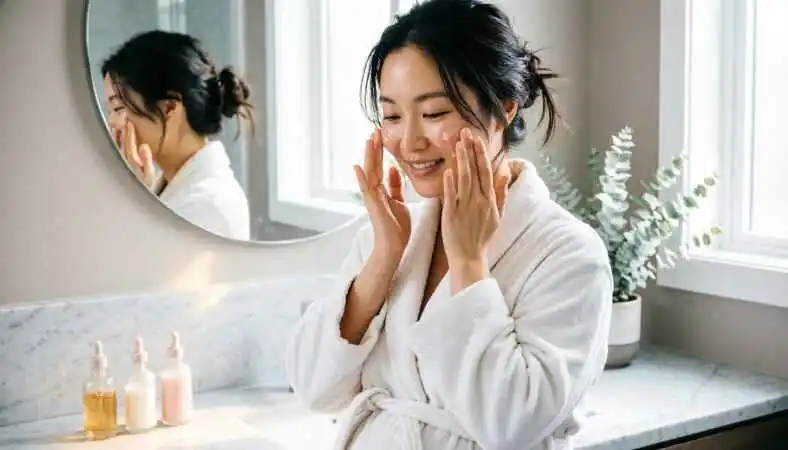
Let’s clear up some common misconceptions about pregnancy skincare.
Myth 1: “You shouldn’t dye your hair during pregnancy.”
- Fact: While hair dye chemicals can be absorbed through the skin, the amount is minimal. Most doctors now say it’s safe, especially after the first trimester. To be extra safe, opt for highlights or balayage where the dye doesn’t touch the scalp, or use natural vegetable dyes like henna.
Myth 2: “Pregnancy makes your nails grow faster and stronger.”
- Fact: Nails often do grow faster due to pregnancy hormones, but they can also become brittle or soft. Use a strengthening nail polish and wear gloves when doing dishes to protect them.
Myth 3: “You should stop exercising to prevent stretch marks.”
- Fact: Exercise helps maintain circulation and keeps skin elastic. Gaining weight steadily and within the recommended guidelines is the best way to prevent rapid skin tearing. Exercise helps manage weight gain.
Myth 4: “Natural or Organic products are always safe for pregnancy.”
- Fact: Poison Ivy is natural. Arsenic is natural. “Natural” is a marketing term, not a regulatory one. Essential oils can be dangerous. Always read the ingredient list, regardless of whether the label says “organic” or “natural.”
Conclusion: Embracing the Journey
Pregnancy is a temporary state, but the memories of how you felt during it last a lifetime. It is easy to get caught up in the mirror, worrying about a new line here or a dark spot there. But try to shift your perspective. Your body is performing a biological miracle. It is building a heart, a brain, ten tiny fingers, and ten tiny toes. If your skin looks a little tired in the process, that is a small price to pay for the life you are creating.
The safest skincare routine is one that makes you feel confident and cared for. Whether that is a 3-step wash-and-moisturize or a full ritual with serums and masks, the act of taking care of yourself is a vital part of motherhood. It teaches you that you matter, too—even when your focus is entirely on someone else.
So, purge the retinol, stock up on the Vitamin C, and wear your sunscreen like a suit of armor. Be gentle with yourself. Be patient with your skin. And get ready to meet the love of your life. You are going to be a great mom, and you are going to glow—maybe not every day, but from the inside out, absolutely.
FAQS
1.Can I keep using my regular moisturizer?
Yes, in most cases. If your moisturizer doesn’t contain active anti-aging ingredients like Retinol, Retin-A, or high doses of salicylic acid, it is likely safe to continue using.
- Is Retinol safe during pregnancy?
No. Retinol and other Vitamin A derivatives (Retinoids, Tretinoin, Adapalene) are linked to birth defects and should be stopped immediately when trying to conceive or as soon as you find out you are pregnant.
- What ingredients should I avoid in my skincare products?
The main ingredients to avoid are Retinoids, Salicylic Acid (in high doses/leave-on products), Hydroquinone, formaldehyde releasers, and chemical sunscreens like Oxybenzone.
- Is Vitamin C serum safe to use while pregnant?
Yes, Vitamin C (L-Ascorbic Acid) is not only safe but highly recommended. It helps brighten skin, fight free radicals, and protect against hyperpigmentation (melasma).
- Can I use Salicylic Acid (BHA) for my acne?
Low concentrations (under 2%) in a cleanser that is rinsed off are generally considered safe by many dermatologists. However, it is best to avoid leave-on treatments, peels, or high doses. Switching to Glycolic Acid or Azelaic Acid is a safer bet.
- Is Hyaluronic Acid safe during pregnancy?
Absolutely. Hyaluronic Acid is a hydrating substance naturally found in the body. It is completely safe and excellent for combating pregnancy-related dryness.
- Do I really need to wear sunscreen every day?
Yes, now more than ever. Pregnancy hormones make your skin more susceptible to sun damage and dark patches (melasma). A mineral sunscreen (SPF 30+) is essential every morning, even indoors.
- What is the difference between chemical and physical sunscreen?
Chemical sunscreens (like Oxybenzone) absorb into the skin to block rays, while physical (mineral) sunscreens (Zinc Oxide, Titanium Dioxide) sit on top and deflect rays. Mineral sunscreens are the preferred choice during pregnancy as they do not enter the bloodstream.
- How can I treat pregnancy acne safely?
Safe alternatives include cleansers with Glycolic Acid, topical treatments containing Azelaic Acid, or Niacinamide. Always avoid oral acne medications like Isotretinoin (Accutane) and Spironolactone.
- Is Benzoyl Peroxide safe for pregnant women?
Benzoyl Peroxide is generally considered safe in low concentrations (like 2.5% or 5%) for spot treatments because only a small amount is absorbed through the skin. However, you should always consult your OB-GYN before using it.
- Why is my skin breaking out now that I am pregnant?
The surge in progesterone increases oil production in your skin glands, which can clog pores and lead to acne. This is most common during the first and second trimesters.
- What are “pregnancy mask” or Melasma?
Melasma (Chloasma) is a common condition where brown or gray-brown patches appear on the face due to hormonal changes stimulating an overproduction of melanin.
- Can I use skin-lightening creams to fade dark spots?
Most prescription skin-lighteners contain Hydroquinone, which has a high absorption rate and should be avoided. Stick to brightening ingredients like Vitamin C, Niacinamide, and Azelaic Acid.
- Is it safe to get facials while pregnant?
Yes, but you must inform your aesthetician that you are pregnant. Avoid facials that involve harsh chemicals, peels, or electric currents. Stick to hydrating or soothing facials.
- Can I use essential oils in my skincare?
You must be careful. Some oils like Clary Sage and Rosemary can trigger contractions. Others like Tea Tree and Lavender are generally safe in low doses but can cause sensitivity. Always check with your doctor and dilute oils properly.
- Is Niacinamide safe during pregnancy?
Yes, Niacinamide (Vitamin B3) is a very safe and effective ingredient. It helps reduce inflammation, regulate oil, and improve the skin barrier, making it great for pregnancy acne.
- Will my skincare routine change each trimester?
Likely, yes. The first trimester is about sensitivity and nausea (avoid strong scents). The second focuses on preventing pigmentation. The third usually requires intense hydration for stretching skin.
- Can I use anti-aging creams?
You should pause anti-aging creams that target cell turnover or deep wrinkles, as these usually contain Retinol or peptides that haven’t been tested for safety. Focus on hydration and antioxidant protection instead.
- Is it safe to use self-tanner during pregnancy?
While DHA (the active ingredient) is likely safe as it only dyes the outer layer of dead skin cells, there is limited research. Many experts suggest avoiding it due to the risk of inhalation (spray tans) or unknown absorption. It is generally safer to embrace your natural skin tone or use a bronzer.
- Can I dye my hair during pregnancy?
Most research suggests that the chemicals in hair dye are not highly toxic. However, many doctors recommend waiting until the second trimester or opting for highlights/balayage where the dye doesn’t touch the scalp.
- How do I prevent stretch marks?
You cannot completely prevent stretch marks as they are genetic, but you can minimize their severity by keeping skin hydrated with cocoa butter, shea butter, or oils to reduce itching.
- Is it normal for my skin to feel itchy?
Yes, as your belly stretches, the skin tightens and dries out. However, if the itching is intense (especially on hands and feet), see a doctor to rule out Cholestasis of Pregnancy.
- Can I use acne medication I was prescribed before pregnancy?
You must stop immediately and call your doctor. Many common acne meds (like Spironolactone, Tetracyclines, and Retinoids) are dangerous for the baby.
- Are “Natural” or “Organic” products automatically safe?
No. “Natural” is a marketing term, not a safety guarantee. Poison ivy is natural. Essential oils can be potent. Always read the ingredient list for pregnancy-specific safety rather than relying on the label.
- Is Glycolic Acid safe?
Yes, Glycolic Acid (an AHA) is generally considered safe in concentrations below 10-15% because it does not penetrate deep into the bloodstream. It is great for exfoliating dry or dull skin.
- Can I use under-eye creams for puffiness?
Yes, but avoid those containing Retinol. Look for caffeine or cucumber to reduce puffiness, which is common due to water retention during pregnancy.
- Should I switch to fragrance-free products?
It is a good idea. Pregnancy hormones heighten your sense of smell, making strong scents nauseating. Fragrances can also be a potential allergen when your skin is more sensitive.
- Is Azelaic Acid safe?
Yes, Azelaic Acid is widely considered a gold-standard alternative to Retinol and Hydroquinone during pregnancy. It treats acne and redness with very low systemic absorption.
- Can I use lip fillers or Botox while pregnant?
Most doctors advise against it. While there is no evidence they harm the baby, medical ethicists recommend avoiding unnecessary cosmetic procedures until after breastfeeding.
- When can I go back to my regular skincare routine?
If you are not breastfeeding, you can usually resume your regular routine (including Retinol) immediately after delivery. If you are breastfeeding, continue to avoid high-dose Retinol and oral medications until you wean.
Medical Disclaimer: The information provided on this website is for general educational and informational purposes only and is not intended as a substitute for professional medical advice, diagnosis, or treatment. Always seek the advice of your physician or other qualified health provider with any questions you may have regarding a medical condition. Never disregard professional medical advice or delay in seeking it because of something you have read on this website.

