

Thinning Hair, Rising Confidence: The Natural Playbook for Fuller Hair Without Surgery or Side Effects
How scalp care, nutrition, and time-tested botanicals can support healthier hair growth, no scalpel required
Somewhere between the first strand left on a pillow and the moment a widening part becomes impossible to ignore, most people go through the same quiet panic: is this normal shedding, or is this the beginning of real hair loss? It is one of the most common concerns people bring to mirrors, dermatologists, and search engines alike, and it is also one of the most misunderstood. Hair thinning is not a single condition with a single fix; it is the visible result of biology, genetics, hormones, nutrition, and daily habits all overlapping at once.
For many people, the instinctive next step is to research hair transplants or prescription medications, both of which can involve real costs, real recovery time, and, in the case of certain drugs, real side effects that some people would rather avoid entirely. What often gets overlooked is how much can be done before reaching for a scalpel or a prescription pad. Scalp health, circulation, nutrient intake, gentle handling, and a handful of well-studied botanical ingredients can meaningfully support the conditions hair needs to grow, thicken, and hold on longer.
This guide walks through the natural side of the hair-thinning conversation: why hair thins in the first place, the science behind the most popular natural remedies, the daily habits that quietly accelerate or prevent hair loss, and a realistic picture of what natural care can and cannot do. None of this promises miracles, and none of it replaces a conversation with a dermatologist if thinning is sudden, patchy, or severe. But for the slow, common, everyday thinning that affects millions of people, natural, side-effect-free strategies can make a genuine difference.
Why Hair Thins in the First Place
To understand how natural remedies help, it helps to understand what is actually happening beneath the scalp. Every hair follicle cycles through phases: a growth phase called anagen that can last several years, a short transitional phase called catagen, and a resting phase called telogen, after which the hair sheds and the follicle eventually starts the cycle again. Losing 50 to 100 hairs a day during this normal cycle is completely typical and nothing to worry about.
Thinning becomes noticeable when this cycle is disrupted in a way that shortens the growth phase, shrinks the follicle itself, or pushes more hairs into the shedding phase at once. The most common long-term cause, particularly in genetically predisposed men and women, is androgenetic alopecia, often described as pattern hair loss. This process is driven largely by dihydrotestosterone, or DHT, a byproduct of testosterone that gradually shrinks sensitive hair follicles over time in a process called miniaturization, producing progressively finer, shorter hairs until some follicles stop producing visible hair altogether.
Beyond genetics and hormones, thinning can also be triggered or worsened by chronic stress, poor sleep, crash dieting, iron or vitamin deficiencies, thyroid imbalances, harsh styling habits, and even the natural slowing of cell turnover that comes with age. Often it is not one single cause but a combination, which is exactly why a multi-pronged natural approach, addressing the scalp, the follicle, the bloodstream, and daily habits all together, tends to outperform any single remedy used in isolation.
Start With the Soil: Why Scalp Health Comes First
It is tempting to think of hair loss purely as a hair problem, but hair cannot grow any healthier than the scalp it grows from. Think of the scalp the way a gardener thinks of soil: even the best seed struggles in compacted, poorly nourished ground. A congested scalp, clogged with excess oil, product buildup, or dead skin cells, can inflame and constrict hair follicles, while poor circulation limits the oxygen and nutrients that reach each follicle’s base.
Gentle, regular cleansing that removes buildup without stripping the scalp’s natural oils is the first natural step many people overlook. Over-washing with harsh, sulfate-heavy shampoos can dry and irritate the scalp, while under-washing allows buildup to accumulate around follicle openings. A balanced routine, using a mild, sulfate-free cleanser a few times a week, keeps the scalp environment clean without triggering the dryness and irritation that can further stress already-vulnerable follicles.
Circulation is the second piece of the scalp puzzle. Blood flow delivers oxygen, glucose, and the nutrients hair follicles need to stay in their active growth phase. Anything that improves scalp circulation, from massage to certain topical ingredients, gives follicles a better environment to do their job, which is precisely why scalp massage has become one of the most consistently recommended natural interventions for hair thinning.
Scalp Massage: A Simple Habit With Real Research Behind It
Scalp massage might sound like a purely relaxing indulgence, but there is genuine physiological reasoning behind its inclusion in nearly every natural hair-care routine. Massaging the scalp increases local blood flow, and some small studies have found that consistent scalp massage over several months is associated with measurable increases in hair thickness, likely due to the mechanical stretching of the dermal papilla cells that influence hair growth, combined with improved nutrient delivery from increased circulation.
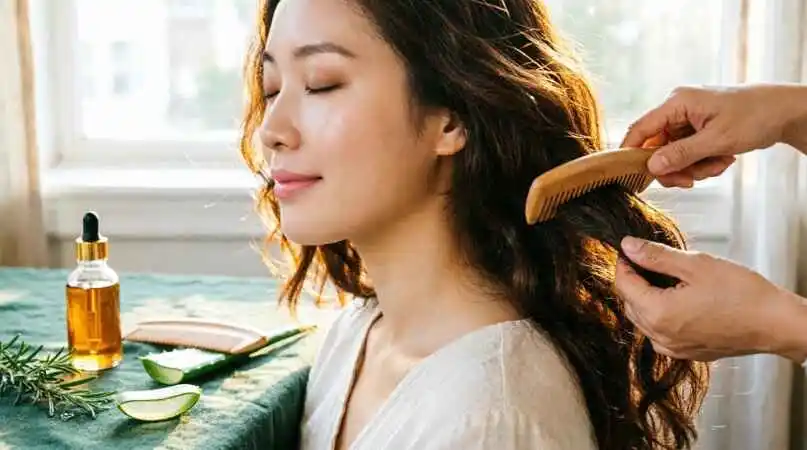
A basic scalp massage routine takes only a few minutes: using the fingertips, not the nails, apply gentle but firm pressure in small circular motions, working systematically across the entire scalp, from the hairline back toward the crown and down to the nape. Doing this for five to ten minutes daily, or every other day, either on dry hair or combined with a natural oil, is enough to build the habit into most routines without requiring special equipment.
Some people also use handheld scalp massage tools or soft-bristled brushes to make the process easier to sustain over time, though fingertip massage remains the simplest and most accessible method, requiring nothing more than a few consistent minutes a day.
Hair cannot grow any healthier than the scalp it grows from — treat the soil, not just the seed.
Natural Oils With the Strongest Track Record
Few natural remedies get more attention in the hair-thinning conversation than essential and carrier oils, and while enthusiasm sometimes outpaces evidence, a handful of oils genuinely have research behind them.
Rosemary oil has emerged as one of the most talked-about natural options in recent years, with at least one clinical comparison finding that topical rosemary oil performed comparably to a common over-the-counter hair-growth treatment over a six-month period, without the scalp irritation some users experience from that treatment. Rosemary oil is thought to work partly by improving microcirculation in the scalp and possibly through mild anti-inflammatory effects on the follicle environment.
Peppermint oil has shown promise in early research for stimulating hair follicles and increasing follicle depth and count in animal studies, likely related to its cooling, circulation-boosting effect on the skin. Because it is quite potent, it should always be diluted in a carrier oil before touching the scalp.
Castor oil is prized for its extremely high ricinoleic acid content, which some people find helps calm scalp inflammation and lock in moisture, making hair appear thicker and shinier even if its direct effect on new follicle growth is less well studied than rosemary oil’s.
Coconut oil remains one of the most-studied hair oils overall, primarily for its ability to penetrate the hair shaft and reduce protein loss from daily grooming and washing, which helps prevent the breakage that can make thinning hair look even sparser.
A practical approach is to use a carrier oil such as coconut, jojoba, or argan oil as a base, and add a few drops of rosemary or peppermint essential oil into it, applying the blend during a scalp massage a few times a week and leaving it in for thirty minutes to overnight before washing it out.
Herbal and Plant-Based Allies for the Follicle
Beyond oils, several plant-derived ingredients have earned a place in natural hair-thinning routines because of how they interact with the same hormonal and inflammatory pathways implicated in pattern hair loss.
Saw palmetto extract, derived from the fruit of a small palm tree, has drawn particular interest because it may work similarly to certain prescription anti-androgen medications by mildly inhibiting the enzyme that converts testosterone into DHT, without the systemic hormonal side effects some people wish to avoid. Some small studies have found modest improvements in hair density among people using saw palmetto topically or orally over several months, making it one of the more evidence-backed natural options for hormonally driven thinning.
Fenugreek seeds, long used in traditional wellness practices, are rich in proteins and nicotinic acid that may help rebuild hair follicles and strengthen the hair shaft. Soaking the seeds overnight, blending them into a paste, and applying the mixture to the scalp for thirty to forty-five minutes before rinsing is a traditional method still commonly used today.
Onion juice has a somewhat unusual reputation, but it is one of the few natural remedies that has actually been tested directly against hair regrowth outcomes in small clinical trials, with several studies reporting improved hair regrowth in people with patchy hair loss after consistent topical application, likely related to its high sulfur content, which supports collagen production and may reduce localized inflammation.
Aloe vera is valued less for stimulating new growth and more for calming an irritated, flaky, or inflamed scalp, creating a healthier environment for existing follicles by soothing conditions like dandruff or seborrheic dermatitis that can otherwise worsen shedding.
Amla, or Indian gooseberry, is a staple of traditional hair-care practices and is prized for its exceptionally high vitamin C and antioxidant content, both of which support collagen production in the scalp and may help protect follicles from oxidative stress, a contributing factor in premature follicle aging.
Feeding Hair From the Inside Out
Hair is one of the most metabolically active tissues in the body, and it is also one of the first things the body deprioritizes when nutrition falls short, which is why crash diets, restrictive eating, and nutrient deficiencies so often show up as noticeable shedding two to three months later.
Protein is the most fundamental building block, since hair is made almost entirely of a protein called keratin. Consistently low protein intake can push more follicles into the resting phase prematurely, so ensuring adequate protein from sources like eggs, fish, legumes, or dairy supports the raw material hair needs to keep growing.
Iron deficiency is one of the most common and most overlooked contributors to hair thinning, particularly in menstruating individuals, since low iron stores can shift hair follicles out of active growth even before standard blood tests flag anemia. Iron-rich foods such as leafy greens, legumes, and lean meats, ideally paired with vitamin C to boost absorption, are a foundational piece of nutritional hair support.
Biotin, vitamin D, zinc, and omega-3 fatty acids round out the list of nutrients most closely tied to healthy hair growth. Biotin supports keratin production, vitamin D plays a role in creating new follicles, zinc supports tissue repair and oil gland function around the follicle, and omega-3s help reduce the kind of low-grade scalp inflammation that can interfere with the growth cycle. A varied diet rich in vegetables, healthy fats, and adequate protein typically covers these needs without requiring supplementation, though people with confirmed deficiencies may benefit from targeted, doctor-guided supplementation.
Hydration deserves a mention too, since a dehydrated body prioritizes vital organs over hair and skin, and chronically low water intake can leave the scalp drier and less resilient than it should be.
Putting It All Together: A Simple Weekly Routine
With so many natural options on the table, the biggest obstacle most people run into is not a lack of remedies but a lack of structure. A scattered routine, trying rosemary oil one week, onion juice the next, and a new supplement the week after, rarely gives any single approach enough time to show whether it is working. A simple, repeatable weekly structure tends to produce far better results than an inconsistent mix of everything at once.
A realistic starting routine might look like this: two to three times a week, apply a warm oil blend, a carrier oil such as coconut or jojoba combined with a few drops of rosemary or peppermint essential oil, and massage it into the scalp for five to ten minutes before leaving it on for at least thirty minutes, or ideally overnight, followed by a gentle, sulfate-free cleanse. On the days without an oil treatment, a quick two-minute dry scalp massage still helps maintain circulation without requiring a full wash cycle.
Nutrition and lifestyle habits run in parallel to this schedule rather than on a separate track. A protein- and iron-rich diet, consistent sleep, and stress management are not one-time interventions but ongoing conditions that either support or undermine everything else in the routine. Someone doing everything right with oils and herbs but sleeping four hours a night and skipping meals is still working against their own follicles.
Tracking progress with monthly photos taken in the same lighting and from the same angle, rather than daily mirror checks, gives a far more accurate picture of change over time, since day-to-day fluctuations in hair appearance are influenced by everything from humidity to styling products and are not a reliable measure of real progress. Most people who stick with a structured routine like this for a full growth cycle, roughly three to six months, are in a much better position to judge whether their approach is genuinely working.
The Daily Habits That Quietly Protect or Damage Hair
Beyond oils and nutrients, everyday habits play an outsized role in how much hair thinning progresses. Chronic stress is one of the best-documented triggers of a temporary but sometimes dramatic shedding pattern called telogen effluvium, in which a stressful event pushes an unusually large number of follicles into the resting phase simultaneously, leading to noticeable shedding two to three months later. Because this type of shedding is stress-triggered rather than hormonally driven, practices that genuinely lower stress, consistent sleep, regular movement, and simple relaxation habits, can meaningfully reduce this particular cause of thinning.
Sleep itself matters beyond stress reduction, since much of the body’s cellular repair, including in hair follicles, happens during deep sleep stages. Consistently poor sleep can disrupt the hormonal balance that governs the hair growth cycle.
Gentle handling of the hair itself matters just as much as what goes on internally. Tight hairstyles worn repeatedly, such as tight ponytails, braids, or buns, can cause a specific type of hair loss called traction alopecia, caused by sustained physical pulling on the follicle rather than any hormonal or nutritional cause. Rotating styles, loosening tension near the hairline, and giving the scalp regular breaks from tight styling all help prevent this avoidable form of thinning.
Excessive heat styling, harsh chemical treatments, and aggressive brushing when hair is wet, when it is at its most fragile, all contribute to breakage that can make existing thinning look more severe than it actually is. Using a wide-tooth comb on wet hair, air-drying when possible, and minimizing high-heat styling tools preserves length and thickness that would otherwise be lost to snapping and split ends rather than true follicle loss.
Setting Realistic Expectations
Natural remedies work slowly, and understanding this upfront prevents the common mistake of abandoning a routine after a few weeks. Because the hair growth cycle unfolds over months, most natural interventions, oils, scalp massage, dietary changes, need at least three to six months of consistent use before meaningful results become visible. Hair that is already miniaturized to the point of no longer producing a visible shaft is unlikely to be revived by any natural remedy, since at that stage the follicle itself has often become dormant.
This is why natural approaches tend to work best either as a preventive strategy for early thinning, a way to slow further progression, or a complement to other treatments a dermatologist might recommend. They are generally not a substitute for medical evaluation when hair loss is sudden, occurs in distinct round patches, is accompanied by scalp pain, redness, or scarring, or is affecting someone’s quality of life significantly. These patterns can indicate underlying conditions such as alopecia areata, scarring alopecias, or thyroid and autoimmune disorders that require targeted medical treatment rather than natural care alone.
The appeal of natural hair care is not that it outperforms medical treatment in every case, but that it offers a genuinely low-risk, side-effect-free starting point that supports the biological conditions hair needs to thrive, works well alongside other approaches if they eventually become necessary, and, for a great many people dealing with the ordinary, gradual thinning that comes with age, genetics, or lifestyle factors, is often exactly enough.
The Takeaway
Hair thinning rarely has one single cause, and it does not need one single solution. A clean, well-circulated scalp, a handful of well-chosen natural oils and botanicals, a nutrient-dense diet, gentler daily habits, and patience measured in months rather than days form a natural framework that supports hair growth without the cost, downtime, or side effects that come with more invasive options.
None of this requires perfection. Small, consistent choices, a weekly oil massage, a slightly gentler hairstyle, a plate with a little more iron and protein on it, add up over the months it actually takes hair to grow. For the millions of people watching their part widen or their ponytail thin and wondering what to do about it, that consistency, more than any single miracle ingredient, is where real natural results tend to come from.
Frequently Asked Questions
| Question | Answer |
| 1. Can hair thinning really be reversed naturally without a transplant? | Early-stage thinning, especially when caused by nutrition, stress, or scalp health, often responds well to consistent natural care, though follicles that have already gone dormant are harder to revive without medical treatment. |
| 2. What causes hair thinning in the first place? | Common causes include genetic pattern hair loss driven by DHT, nutrient deficiencies, chronic stress, thyroid imbalances, harsh styling habits, and the natural effects of aging on the hair growth cycle. |
| 3. How long does it take to see results from natural hair remedies? | Most natural approaches need at least three to six months of consistent use before visible improvement, since the hair growth cycle itself unfolds over several months. |
| 4. Is losing hair every day normal? | Yes, losing 50 to 100 hairs a day is a normal part of the hair growth cycle; concern usually arises when shedding noticeably increases or a widening part or bald patch becomes visible. |
| 5. Does scalp massage actually help hair grow? | Some research suggests consistent scalp massage improves local blood flow and may increase hair thickness over several months by supporting the cells involved in hair growth. |
| 6. How often should I massage my scalp? | Five to ten minutes daily or every other day, using gentle circular fingertip pressure across the entire scalp, is a commonly recommended routine. |
| 7. Is rosemary oil good for hair thinning? | Yes, some research has found topical rosemary oil performs comparably to a common over-the-counter hair-growth treatment over several months, likely by improving scalp circulation. |
| 8. How do I use rosemary oil for hair growth? | Dilute a few drops of rosemary essential oil in a carrier oil like coconut or jojoba oil and massage it into the scalp a few times a week, leaving it on for thirty minutes to overnight before washing. |
| 9. Can peppermint oil help with hair growth? | Early research suggests peppermint oil may stimulate hair follicles and improve circulation, though it should always be diluted in a carrier oil before scalp application. |
| 10. What does castor oil do for thinning hair? | Castor oil is rich in ricinoleic acid, which may help calm scalp inflammation and lock in moisture, making hair appear thicker and reducing breakage. |
| 11. Does coconut oil help with hair loss? | Coconut oil is well studied for reducing protein loss from the hair shaft during washing and grooming, which helps prevent breakage that can make thinning look worse. |
| 12. What is saw palmetto and how does it help hair? | Saw palmetto is a plant extract that may mildly reduce the conversion of testosterone into DHT, the hormone most closely linked to pattern hair loss, without the systemic effects of some prescription options. |
| 13. Does onion juice really regrow hair? | Several small clinical trials have found improved hair regrowth with consistent topical onion juice use, likely related to its sulfur content supporting collagen production and reducing inflammation. |
| 14. How is fenugreek used for hair thinning? | Fenugreek seeds are typically soaked overnight, blended into a paste, and applied to the scalp for thirty to forty-five minutes before rinsing to help nourish the follicle and hair shaft. |
| 15. Does aloe vera help with hair thinning? | Aloe vera mainly helps by calming an irritated or flaky scalp, creating a healthier environment for existing follicles rather than directly stimulating new growth. |
| 16. What nutrients are most important for hair growth? | Protein, iron, biotin, vitamin D, zinc, and omega-3 fatty acids are the nutrients most consistently linked to healthy hair growth and follicle function. |
| 17. Can iron deficiency cause hair thinning? | Yes, low iron stores can push hair follicles out of their active growth phase even before standard tests detect anemia, making iron-rich foods an important part of hair support. |
| 18. Does stress cause hair loss? | Chronic stress can trigger a condition called telogen effluvium, where a large number of follicles shift into the resting phase at once, leading to noticeable shedding a few months later. |
| 19. Can poor sleep affect hair growth? | Yes, much of the body’s cellular repair, including in hair follicles, happens during deep sleep, so consistently poor sleep can disrupt the hormonal balance that supports healthy hair growth. |
| 20. What is traction alopecia? | Traction alopecia is hair loss caused by sustained pulling on the follicle from tight hairstyles like tight ponytails, braids, or buns, rather than hormonal or nutritional causes. |
| 21. How can I prevent traction alopecia? | Rotating hairstyles, loosening tension near the hairline, and giving the scalp regular breaks from tight styling all help prevent this type of avoidable hair loss. |
| 22. Does heat styling make hair thinning worse? | Excessive heat styling can cause breakage that makes existing thinning look more severe, even though it does not directly affect the follicle itself. |
| 23. Should I brush my hair when it’s wet? | Wet hair is more fragile, so using a wide-tooth comb and being gentle, or waiting until hair is dry, helps prevent breakage. |
| 24. Is it better to wash hair less to prevent hair loss? | Not necessarily; a balanced routine with a mild, sulfate-free cleanser a few times a week keeps the scalp clean without the dryness or buildup that can both stress follicles. |
| 25. Can diet alone fix hair thinning? | Diet plays an important supporting role, especially if a deficiency is present, but it works best combined with good scalp care and gentle handling rather than as a standalone fix. |
| 26. When should hair thinning be checked by a doctor? | Sudden hair loss, distinct round bald patches, scalp pain, redness, or scarring are signs that warrant medical evaluation rather than natural care alone. |
| 27. Are natural remedies as effective as hair transplants? | Natural remedies work best for early or gradual thinning and generally cannot restore follicles that have already gone dormant, which is where transplants or medical treatments become more relevant. |
| 28. Can natural hair care be combined with medical treatments? | Yes, many natural practices like scalp massage, gentle styling, and good nutrition can complement medical treatments a dermatologist recommends rather than replace them. |
| 29. What is amla and how does it support hair health? | Amla, or Indian gooseberry, is rich in vitamin C and antioxidants that support collagen production in the scalp and may help protect follicles from oxidative stress. |
| 30. What is the single most important natural habit for hair thinning? | Consistency matters most; regular scalp care, gentle handling, and steady nutrition sustained over several months tend to outperform any single remedy used briefly or inconsistently. |
⚕️Medical Disclaimer:
The information provided on this website is for general educational and informational purposes only and is not intended as a substitute for professional medical advice, diagnosis, or treatment. Always seek the advice of your physician or other qualified health provider with any questions you may have regarding a medical condition. Never disregard professional medical advice or delay in seeking it because of something you have read on this website.

