

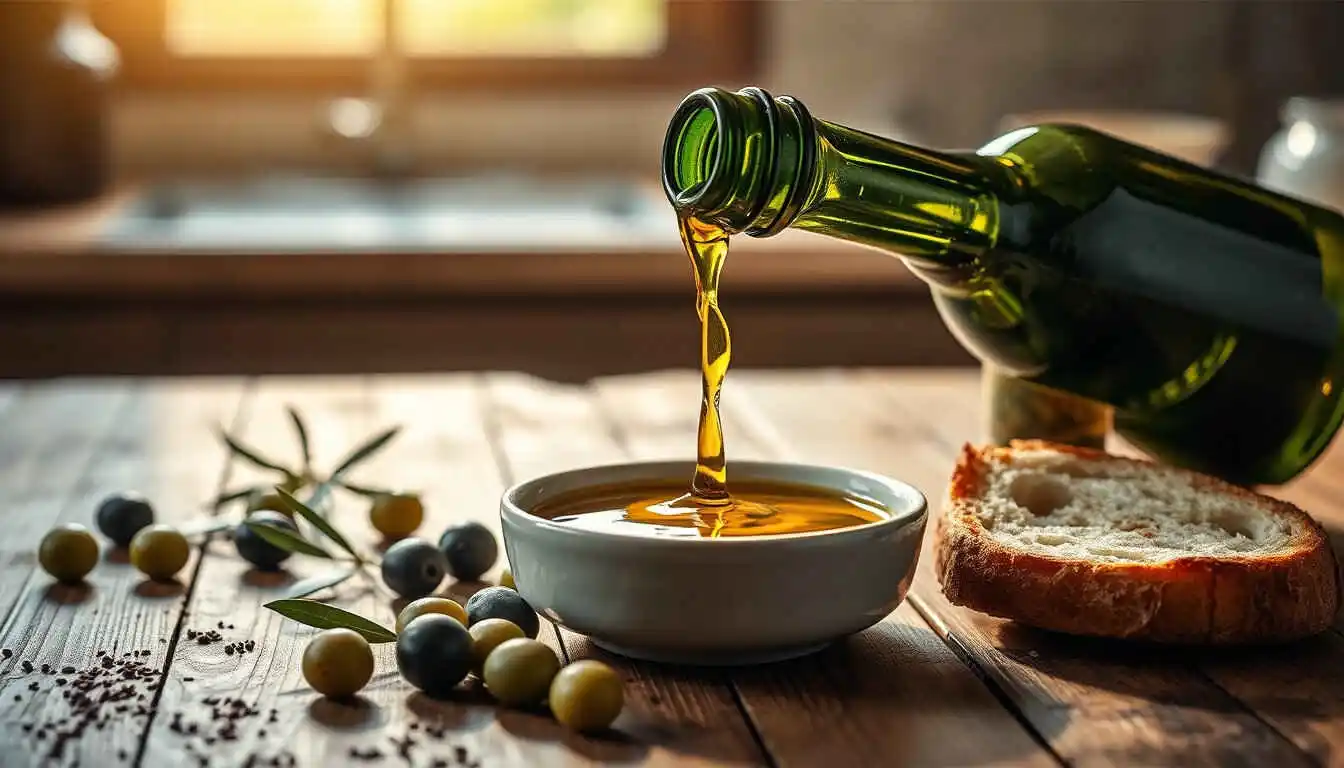
Liquid Gold Unveiled: The Ultimate Guide to Olive Oil, Health, and Culinary Mastery
There is a moment, just as the pale green nectar hits the surface of a roaring skillet, when the kitchen comes alive. The scent is unmistakable—grassy, peppery, faintly reminiscent of sun-drenched Mediterranean coastlines. It is a scent that has launched civilizations, funded empires, sparked wars, and healed the sick. It is the scent of extra virgin olive oil, a substance so revered that ancient athletes rubbed it over their bodies before competing, and Homer himself dubbed it “liquid gold.”
Yet, walk down the aisle of any modern grocery store, and you are met with a labyrinth of confusing labels, bold health claims, and varying price points that range from suspiciously cheap to astronomically expensive. How did a simple fruit press become the epicenter of culinary fraud, dietary dogma, and scientific debate?
Welcome to the ultimate guide to olive oil. Over the next several thousand words, we are going to strip away the myths, decode the labels, explore the profound science behind its health benefits, and teach you how to properly select, store, and cook with the most important ingredient in your pantry. Whether you are a seasoned chef, a health enthusiast, or someone who simply wants to know if the bottle in their cupboard is the real deal, this comprehensive deep dive will forever change the way you look at healthy cooking oils.
Chapter 1: The Ancient Roots of Liquid Gold
To understand olive oil, we must first understand the olive tree (Olea europaea). A symbol of peace, wisdom, and longevity, the olive tree is one of the oldest cultivated trees on the planet, with a history intertwining with the very dawn of human civilization.
The Mythological Origins
Ancient Greeks believed that the olive tree was a gift from the goddess Athena. According to myth, Athena and Poseidon competed for the patronage of the city of Athens. Poseidon struck the ground with his trident, producing a saltwater spring (some say a horse). Athena, in turn, struck the ground and produced an olive tree. The citizens chose Athena’s gift—offering wood, oil, and food—and named the city after her. This myth underscores a profound truth: to the ancient world, the olive tree was the ultimate provider.
From Pharaohs to Gladiators
The Egyptians used olive oil for cosmetic purposes, mummification, and as a lubricant for moving massive stones. The Minoans on the island of Crete established the first known olive oil trade, exporting the precious commodity across the Mediterranean. By the time of the Roman Empire, olive oil was a massive economic engine. Romans categorized oil into distinct grades, from the finest oleum ex albis ulivis (oil from green olives) to the lowest oleum cibarium (lamp oil for the poor).
Gladiators anointed themselves with olive oil before battle, believing it made their muscles supple and their skin impervious. But it was the Roman agricultural writers, like Columella, who codified the cultivation and pressing of olives, establishing techniques that remain remarkably similar today.
Chapter 2: From Grove to Bottle – The Alchemy of Production
The journey from an olive on a branch to the bottle on your table is a race against time. Olives are a fruit, and like all fruits, they are perishable. The quality of cold-pressed olive oil is entirely dependent on how quickly and carefully this process is executed.
The Harvest: Timing is Everything
The harvest season typically runs from October to January. The timing of the harvest dictates the oil’s flavor profile and chemical composition.
- Green Olives (Early Harvest): Harvested early in the season, green olives yield less oil, but the oil is robust, peppery, bitter, and packed with antioxidants. It is often green in color and highly prized by connoisseurs.
- Purple/Ripe Olives (Late Harvest): Harvested later, these olives yield more oil, but the flavor is milder, buttery, and less complex. The oil is often golden yellow.
The method of harvesting is critical. The best oils come from olives hand-picked or gently shaken from the trees using mechanical shakers. Olives that fall to the ground naturally (and may bruise or rot) are often used for lower-grade oils.
The Milling Process
Once harvested, the clock starts ticking. The best producers press their olives within 24 hours of harvesting to prevent oxidation and fermentation.
- Washing & Defoliating: The olives are washed, and any leaves, twigs, or debris are removed. Excess leaves can make the oil overly bitter.
- Crushing: The olives, including the pit, are crushed into a paste. Traditionally, this was done with massive stone wheels. Today, modern hammermills or disk crushers are used, which are faster and minimize oxidation.
- Malaxation: The paste is slowly churned or kneaded at a controlled temperature. This process allows the microscopic oil droplets to coalesce into larger drops. This is where the term “cold-pressed” officially comes into play. To be legally certified as cold-pressed, the paste must be kept below 27°C (80.6°F). Higher temperatures increase yield but destroy the delicate flavors and health-promoting polyphenols.
- Extraction: The paste is moved to a centrifuge, where the solid matter (pomace) is separated from the water and the oil. The oil is then separated from the water in a second centrifuge.
It is important to note that “first press” is largely a marketing term today. Almost all modern extra virgin olive oil is the result of a single extraction process (malaxation and centrifugation), meaning there is no “second press.” The phrase harkens back to the old stone-press days and is now legally protected but largely archaic.
Chapter 3: Decoding the Labels – Understanding Olive Oil Grades
Walking down the oil aisle is like navigating a minefield of buzzwords. Understanding olive oil grades is essential to ensuring you get what you pay for. The International Olive Council (IOC) sets the strict standards, though enforcement varies wildly.
Extra Virgin Olive Oil (EVOO)
This is the pinnacle of olive oil. To be classified as EVOO, the oil must be extracted solely by mechanical means (no chemicals or heat), meet strict chemical criteria (a free acidity level of no more than 0.8%), and pass a sensory evaluation by a certified tasting panel. It must have zero defects and possess positive attributes (fruitiness, bitterness, pungency). It is essentially fresh, raw olive juice.
Virgin Olive Oil
Also mechanically extracted, but with slightly higher acidity (up to 2.0%) and minor sensory defects. It is still a decent oil for cooking but lacks the complex flavor and antioxidant punch of EVOO.
Refined Olive Oil
When virgin oils have high acidity or defects that make them unpalatable, they are sent to a refinery. Here, they are treated with chemicals, high heat, and filters to strip away the flaws, odors, and colors. The result is a bland, odorless oil. By itself, this oil cannot legally be sold as “olive oil” in many countries.
“Pure” or “Classic” Olive Oil
This is where things get sneaky. A bottle labeled simply “Olive Oil” or “Pure Olive Oil” is a blend of refined olive oil and a small percentage (usually 5-15%) of virgin or extra virgin oil. The virgin oil is added solely to give the otherwise dead, refined oil a slight hint of color and flavor. While safe and good for high-heat cooking where you don’t want an olive flavor, it offers none of the profound health benefits of EVOO.
Olive Pomace Oil
After the first pressing/extraction, the leftover pomace (skins, pits, and flesh) still contains a tiny fraction of oil. To extract this, producers use chemical solvents, like hexane. The resulting oil is refined and blended with virgin oil. This is the lowest grade of edible olive oil and is generally best avoided for culinary or health purposes.
Chapter 4: The Health Elixir – Science Behind the Benefits
The Mediterranean diet has long been hailed as one of the healthiest eating patterns in the world, and the cornerstone of this diet is olive oil. The science is no longer just observational; it is deeply mechanistic. Let’s explore the profound olive oil benefits that make this liquid a functional food.
The Fatty Acid Profile
The primary fat in olive oil is oleic acid, a monounsaturated fatty acid (MUFA) comprising about 73% of the oil. MUFAs are considered “healthy fats” because they are liquid at room temperature and solid when refrigerated. Unlike saturated fats, which can drive inflammation, oleic acid has been shown to reduce inflammatory markers. Furthermore, oleic acid is highly resistant to oxidation, making it more stable for cooking than polyunsaturated fats found in seed oils.
The Power of Polyphenols
If the healthy fats are the engine of olive oil’s benefits, the polyphenols in olive oil are the steering wheel. These are powerful, antioxidant-rich micronutrients found exclusively in unrefined (extra virgin) olive oil. When you taste an oil that burns the back of your throat or makes you cough, you are tasting the polyphenols—specifically one called oleocanthal.
- Oleocanthal: This is the rockstar of olive oil polyphenols. Research has shown that oleocanthal has the exact same anti-inflammatory pathway as ibuprofen. It inhibits the COX-1 and COX-2 enzymes, which are responsible for inflammation and pain. This is why populations consuming high amounts of EVOO have lower rates of inflammatory diseases.
- Hydroxytyrosol: Another potent antioxidant that protects the heart and blood vessels. It has one of the highest free-radical scavenging capacities found in nature.
- Oleuropein: The substance responsible for the bitter taste of early-harvest olives, oleuropein has been extensively studied for its ability to lower blood pressure and prevent the oxidation of LDL cholesterol.
Cardiovascular Health
The landmark PREDIMED study, a massive, long-term nutritional intervention study in Spain, demonstrated that a Mediterranean diet supplemented with extra-virgin olive oil resulted in a 30% reduction in the risk of major cardiovascular events (heart attack, stroke, and cardiovascular death) compared to a low-fat diet. EVOO lowers LDL (“bad”) cholesterol, raises HDL (“good”) cholesterol, improves endothelial function (the lining of the blood vessels), and prevents the oxidation of LDL—a crucial step in the development of atherosclerosis.
Cognitive Health and Alzheimer’s Disease
The brain is highly susceptible to oxidative stress, and the fats you eat literally build your brain cells. The MUFAs and polyphenols in EVOO have been shown to cross the blood-brain barrier. Oleocanthal, in particular, has been found in laboratory studies to enhance the clearance of amyloid-beta plaques, the toxic proteins that accumulate in the brains of Alzheimer’s patients. Regular consumption of EVOO is linked to improved memory and cognitive function in aging populations.
Cancer Prevention
While no food is a cure, the Mediterranean diet is associated with lower incidences of certain cancers, particularly breast cancer. The mechanisms are multi-faceted: EVOO’s antioxidants protect DNA from oxidative damage, while its anti-inflammatory properties create an environment hostile to tumor growth. Oleic acid has also been shown to suppress the expression of certain oncogenes (cancer-causing genes).
Chapter 5: The Culinary Maestro – Cooking and Pairing
One of the most pervasive myths in the culinary world is that you cannot cook with extra virgin olive oil. Let’s put this to bed once and for all.
The Smoke Point Myth
The “smoke point” of an oil is the temperature at which it begins to visibly smoke and break down, producing toxic compounds and off-flavors. Detractors claim EVOO has a low smoke point (around 350°F/175°C), making it unsuitable for sautéing or roasting.
However, modern science has debunked this. The smoke point of a high-quality EVOO is actually between 375°F and 410°F (190°C – 210°C), and some robust oils can go even higher. More importantly, because EVOO is packed with antioxidants and stable monounsaturated fats, it resists oxidative degradation far better than polyunsaturated seed oils (like canola or sunflower oil), even when heated. A study published in the American Journal of Clinical Nutrition confirmed that EVOO remains stable under typical cooking conditions (frying, sautéing) due to its high antioxidant content. So, is EVOO the best olive oil for cooking? For everyday sautéing and roasting, absolutely.
Flavor Profiles and Pairings
Choosing an olive oil is like choosing a wine. The terroir (soil, climate, altitude) and the variety of olive dictate the flavor. Understanding these profiles will elevate your cooking from good to extraordinary.
- Delicate/Buttery Oils: Usually from late-harvest olives or certain varieties like Arbequina. These oils are mild, with notes of ripe olives, butter, and sometimes almonds.
- Best for: Baking (substituting for butter), finishing delicate fish like sole, making aioli, or drizzling over fresh mozzarella.
- Medium/Fruity Oils: The workhorses. They have a balanced flavor with notes of grass, green tomato, and herbs.
- Best for: Sautéing vegetables, roasting chicken, making vinaigrettes, and tossing with pasta.
- Robust/Peppery Oils: These come from early-harvest olives (like Coratina or Picual). They are bold, bitter, and will catch in the back of your throat. They are packed with the highest levels of polyphenols.
- Best for: Finishing hearty steaks, drizzling over grilled vegetables, making bruschetta, or pairing with strong cheeses.
Chapter 6: The Buyer’s Guide – How to Buy Authentic Olive Oil
Here is the dark underbelly of the olive oil industry: fraud. Because EVOO is expensive to produce and highly valued, it has historically been a prime target for adulteration. The infamous “Italian Mafia” has been known to cut EVOO with cheaper seed oils, artificially color it with chlorophyll, and mislabel the origin. To buy authentic olive oil, you must be a detective.
5 Rules for Buying Real EVOO
- Look for the Harvest Date, Not Just the Best-By Date: Olive oil is a fresh juice. It does not get better with age. A “best-by” date means nothing if the oil was already two years old when it was bottled. Look for a harvest date (usually within the last 12-18 months).
- Dark Glass or Tin Only: Light is the number one enemy of olive oil, causing photo-oxidation and destroying polyphenols. Never buy olive oil in a clear glass bottle or, worse, plastic. Look for dark green or brown glass, or stainless steel tins.
- Seek Out Certifications: Independent certifications are your best friend. Look for seals from the:
- COOC (California Olive Oil Council): Strict standards requiring testing for both chemistry and sensory defects.
- EVA (Extra Virgin Alliance): A global standard for authentic EVOO.
- PDO/PGI (Protected Designation of Origin): European certifications ensuring the olives were grown and pressed in a specific region.
- Beware of Vague Origins: If the label says “Bottled in Italy” or “Packed in Italy,” the olives probably didn’t come from Italy. It means the company bought cheap oil from Tunisia, Spain, and Greece, blended it in Italy, and slapped an Italian flag on the bottle. Look for specific estates or single-origin mills.
- Price is a Clue: It takes roughly 10-15 pounds of olives to make one liter of oil. If a liter of EVOO costs the same as a cheap bottle of vegetable oil, it is almost certainly not authentic extra virgin. Expect to pay a premium, but know that you are paying for your health.
Chapter 7: Preserving the Gold – Proper Storage
You’ve spent the money on a high-quality bottle of EVOO; now, how do you keep it from going rancid? The enemies of olive oil are well-documented: Heat, Light, Air, and Time.
How to Store Olive Oil
- Keep it Cool and Dark: Store your oil in a pantry or cabinet away from the stove and oven. The constant temperature fluctuations from cooking destroy the oil.
- Limit Oxygen Exposure: Every time you open the bottle, oxygen enters and begins to oxidize the oil. Buy sizes you can consume within 30 to 60 days of opening.
- Use Pour Spouts Wisely: While they look professional, open pour spouts allow constant airflow. Keep the original cap on when not actively using the oil, or use a spout with a cap.
Knowing How to Store Olive Oil and When to Toss It
Good EVOO should smell like fresh grass, artichokes, or green apples. If your oil smells like crayons, old nuts, or waxy crayons, it is rancid. Rancid oil won’t necessarily make you sick in the short term, but it has lost all its health benefits and will ruin the flavor of your food.
Myth Buster: Do not store olive oil in the refrigerator. Condensation forms inside the bottle when you take it out, introducing water into the oil. The cold also causes the oil to solidify and become cloudy, which doesn’t harm it, but the repeated warming and cooling is detrimental.
Chapter 8: Beyond the Kitchen – Skincare and Home Uses
The ancient Greeks and Romans used olive oil for far more than cooking. They recognized its incredible emollient and healing properties. Today, science backs up what the ancients practiced, proving that there are significant olive oil skin benefits.
Olive Oil for Skincare
- Deep Moisturizer: The linoleic acid in olive oil helps lock moisture into the skin without clogging pores (it is comedogenic, but less so than coconut oil for many). A few drops massaged into damp skin after a shower can alleviate dryness.
- Antioxidant Protection: The vitamin E and polyphenols in EVOO protect the skin from UV damage and free radicals, which cause premature aging.
- Wound Healing: The anti-inflammatory properties of oleocanthal can soothe irritated skin, eczema, and minor burns.
- Makeup Remover: Olive oil is incredibly effective at breaking down stubborn, waterproof makeup while nourishing the delicate skin around the eyes.
Hair Care
Olive oil has been used as a hair treatment for centuries, particularly in Mediterranean and Middle Eastern cultures. A warm oil treatment—massaging EVOO into the scalp and hair, leaving it for 30 minutes, and then shampooing—can dandruff, strengthen brittle hair, and add brilliant shine.
Home and Historical Uses
- Wood Polish: A mixture of olive oil and lemon juice makes an excellent, non-toxic polish for wood furniture.
- Leather Conditioner: A small amount rubbed into leather boots or bags can restore suppleness and prevent cracking.
- Lamp Oil: In a pinch, pure olive oil can be burned in an oil lamp. It burns cleanly and smells wonderful, which is why it was the primary source of light for thousands of years.
Chapter 9: Busting the Biggest Olive Oil Myths
Let’s clear the air on a few lingering misconceptions that plague the world of liquid gold.
Myth 1: The “Fridge Test” Proves It’s Real. The Myth: If you put olive oil in the fridge and it solidifies, it’s real. If it stays liquid, it’s fake. The Truth: Completely false. The solidification point of olive oil depends entirely on its fatty acid profile (specifically the ratio of saturated to monounsaturated fats), which varies by olive variety and region. Some real EVOOs will cloud up; others will remain mostly liquid. Adulterators know this, and they often add cheap oils that also solidify.
Myth 2: Cloudy Olive Oil is Better. The Myth: Unfiltered, cloudy olive oil is superior to clear oil. The Truth: Unfiltered oil has tiny particles of olive flesh and water suspended in it. While this can give the oil a more robust flavor initially, these particles act as food for bacteria and accelerate the aging process. Unfiltered oils are fantastic, but they have a much shorter shelf life and should be consumed very quickly. Filtered oils are not “inferior”; they are simply more stable.
Myth 3: Color Indicates Quality. The Myth: The greener the oil, the better the quality. The Truth: Color is merely an indication of when the olive was harvested (green olives make green oil, ripe olives make yellow oil) and the variety of the olive. Professional tasting panels use blue or red tasting glasses specifically so the color of the oil does not influence their judgment of its flavor and quality.
Myth 4: “Light” Olive Oil is Better for You. The Myth: “Light” olive oil has fewer calories or less fat. The Truth: “Light” (or “Extra Light”) refers strictly to the flavor and color of the oil, not its caloric or fat content. All olive oils have exactly the same amount of calories (120 per tablespoon) and fat (14 grams). “Light” olive oil is almost entirely refined oil stripped of all health benefits, mixed with a drop of virgin oil. It is a marketing term designed to appeal to diet culture.
Chapter 10: The Future of Olive Oil
https://youtu.be/u2-z3MuzkYw

