

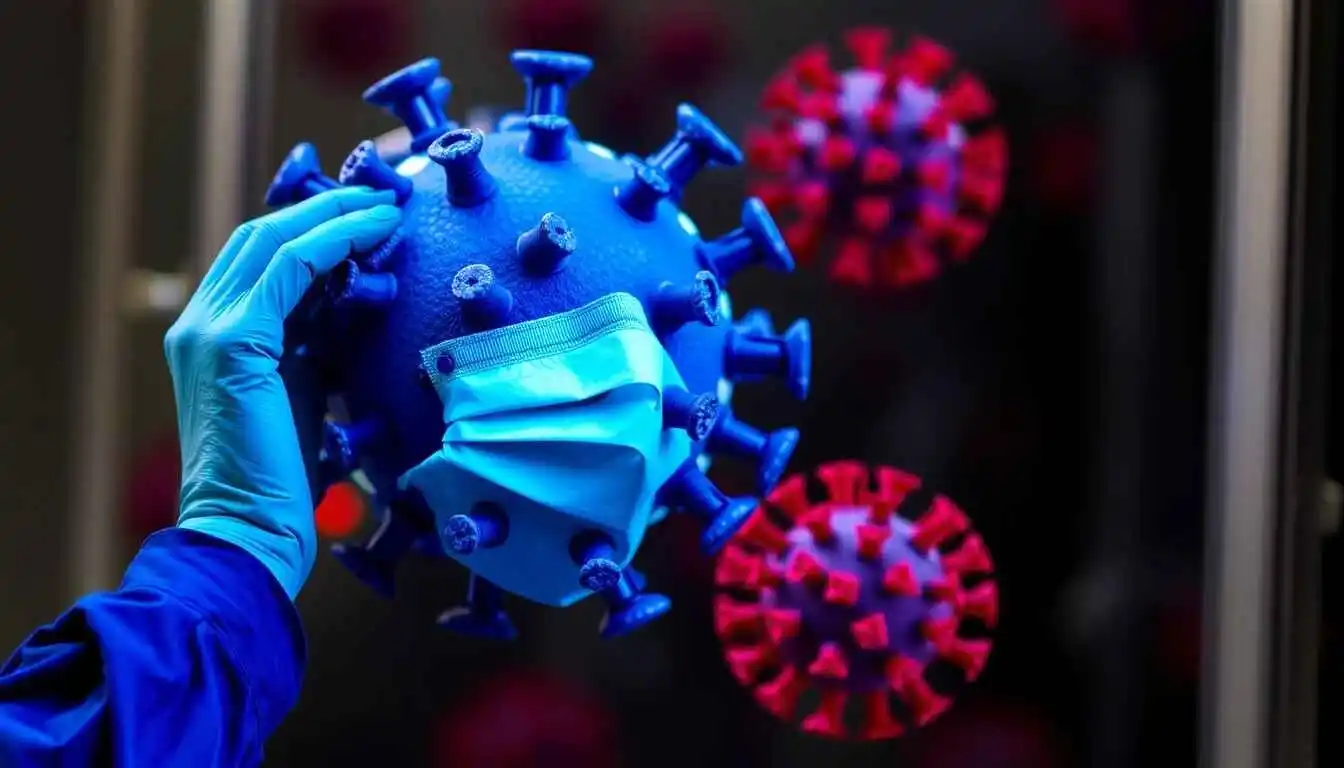
Today, the sirens have stopped. The masks have largely come off. The world appears to be back to normal, bustling with the same chaotic energy as before. But it is an illusion. We are not the same people who entered this crucible.
The after-effects of the COVID-19 pandemic are not temporary glitches; they are the new baseline. We now live in a world where remote work is a right, not a privilege; where chronic illness is a silent epidemic; where children must be academically and socially triaged; and where our political discourse is fraught with a lingering, toxic suspicion.
We are forever marked by the grief of the millions lost, the trauma of the isolation, and the anxiety of the unknown. Yet, we are also armed with the knowledge of our own resilience. We survived the darkest days of the lockdown, adapted to a digital existence, and witnessed the miraculous potential of human ingenuity.
Moving forward requires us to acknowledge the scars we carry. It demands that we invest in public health, repair the mental health of our youth, support those suffering from Long COVID, and rebuild the social trust that was eroded. The world that fractured in 2020 cannot be glued back together exactly as it was. Instead, we must pick up the pieces and forge a new reality—one that is more resilient, more compassionate, and more prepared for whatever invisible siege comes next.
The pandemic taught us that the world can stop on a dime. The aftermath is teaching us how to walk again.
FAQS
1.What was the initial global response to the outbreak of COVID-19?
In early 2020, nations engaged in a synchronized, global retreat, implementing lockdowns, closing borders, and shuttering economies to slow the spread of the virus.
- How did the SARS-CoV-2 virus spread so rapidly across the globe?
The virus exploited the hyper-connected arteries of modern globalization, hitching rides on international flights and spreading through crowded public spaces before the world realized the threat.
- What was the impact of the early pandemic on healthcare systems?
Healthcare systems were overwhelmed; hospitals in places like Northern Italy and New York City reached breaking points, forcing doctors to make unimaginable triage decisions and leading to severe shortages of PPE.
- What is Long COVID?
Long COVID, or Post-Acute Sequelae of SARS-CoV-2 infection (PASC), is a chronic, multi-system condition where individuals experience lingering symptoms long after recovering from the acute phase of the virus.
- What are the common symptoms of Long COVID?
Symptoms include crushing fatigue, brain fog, racing heart rates upon standing (POTS), chronic pain, and persistent shortness of breath.
- Is there a standard cure for Long COVID?
Currently, there is no universal test, standard cure, or predictable timeline for Long COVID, making it a frustrating and long-term condition for sufferers.
- How has Long COVID impacted the workforce?
It has forced hundreds of thousands of people out of the workforce due to chronic illness, draining productivity and placing a heavy strain on disability systems.
- What was the psychological toll of the pandemic lockdowns?
The sudden severance of human connection led to a global mental health crisis, with skyrocketing rates of anxiety, depression, substance abuse, and domestic violence.
- Which demographic was particularly hard hit by the mental health crisis?
The youth experienced a severe impact, missing critical developmental milestones, leading to a declared state of emergency in pediatric mental health.
- How did the pandemic change our perception of other people?
It created a collective hypervigilance, where other human beings were subconsciously viewed as potential vectors of disease, complicating simple social interactions like handshakes.
- What was the economic shock of the pandemic compared to?
The sudden halt of industries like travel, hospitality, and entertainment caused an economic shock comparable to the Great Depression.
- How did the pandemic trigger the Remote Work Revolution?
It acted as a time machine, forcing companies to adopt remote work as a survival mechanism, transforming kitchen tables into boardrooms overnight.
- What is the “Donut Effect” mentioned in the post-pandemic economy?
It refers to populations fleeing expensive, hollowed-out city centers for suburbs and rural areas, which in turn drove up housing costs in those previously affordable regions.
- How has commercial real estate been affected by the pandemic?
Major cities are experiencing ghost towns of empty office towers, devastating the urban ecosystems like local delis, dry cleaners, and public transit that relied on daily office workers.
- What was the “Great Resignation”?
A post-lockdown phenomenon where millions of workers re-evaluated the role of work in their lives, refusing to return to stressful commutes and demanding better pay, flexibility, and purpose.
- What is the “COVID slide” in education?
It refers to the significant drop in standardized test scores in math and reading, representing the massive learning loss caused by prolonged school closures.
- How did the pandemic expose the digital divide in education?
Affluent students transitioned to iPads and quiet study spaces, while low-income students often shared a single smartphone and struggled with spotty Wi-Fi in crowded homes.
- Beyond academics, what did children lose during pandemic school closures?
Children lost crucial socialization, which stunted their ability to navigate conflict, share, and build empathy, leading to spikes in behavioral issues and social anxiety.
- How has the pandemic affected higher education?
With exorbitant tuition no longer justifying Zoom lectures, enrollment numbers are dropping, and a generation is questioning if a traditional degree is still necessary.
- How did the pandemic fracture social trust?
The virus and the mitigation strategies became politicized, turning public health measures like mask-wearing and vaccination into cultural wedge issues.
- What is the “infodemic”?
The rapid spread of misinformation and conspiracy theories about the virus and vaccines through social media algorithms that reward outrage over truth.
- How did the rollout of mRNA vaccines become a point of division?
Despite being a miraculous scientific achievement, the vaccines were met with rampant skepticism and hostility, further eroding trust in the medical establishment.
- What caused the global supply chain disruptions?
Factory shutdowns, port closures, and truck driver shortages caused the “just-in-time” global supply chain to snap, leading to massive product shortages.
- What was the shift from “efficiency” to “resilience” in global trade?
Companies realized that prioritizing the cheapest, fastest production was too risky, and are now focusing on building resilient supply chains that can withstand future shocks.
- What is “nearshoring” or “friendshoring”?
The strategy of moving manufacturing and supply chains closer to home or to politically allied nations to avoid future choke points and reliance on distant adversaries.
- What were some positive innovations that emerged from the pandemic?
The rapid development of mRNA vaccine technology (which is now being applied to cancer and HIV), the mainstream adoption of telehealth, and the “Slow Living” movement.
- How did the pandemic change access to healthcare via telehealth?
Regulatory red tape was removed overnight, democratizing access to mental health counseling and routine medical care, especially for those in rural areas.
- What is the “Slow Living” movement’s connection to the pandemic?
Forced pauses allowed people to step off the treadmill of hyper-productivity, reconnect with family and hobbies, and realize that a less frantic lifestyle was viable.
- Is the world truly “back to normal” now?
No, the world appears normal on the surface, but we are living with a new baseline of remote work, chronic illness, educational gaps, and eroded trust.
- What is required to move forward from the pandemic’s aftermath?
We must acknowledge our scars, invest in public health, repair youth mental health, support Long COVID sufferers, and actively rebuild the social trust that was lost.
Medical Disclaimer: The information provided on this website is for general educational and informational purposes only and is not intended as a substitute for professional medical advice, diagnosis, or treatment. Always seek the advice of your physician or other qualified health provider with any questions you may have regarding a medical condition. Never disregard professional medical advice or delay in seeking it because of something you have read on this website.

