

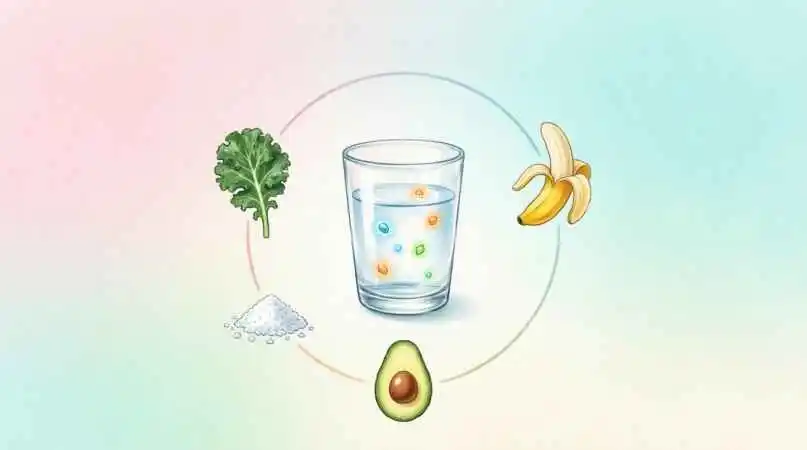
Rather than thinking about electrolytes as a single fix, it can help to see what a naturally balanced day of eating actually looks like. This isn’t a rigid meal plan — it’s an illustration of how easily these minerals can be woven into ordinary meals.
Morning
A bowl of yogurt topped with banana slices and a small handful of pumpkin seeds covers potassium, calcium, and magnesium before the day even gets started, paired with a glass of water to begin the day hydrated rather than playing catch-up later.
Midday
A meal built around leafy greens, beans or lentils, and a piece of whole grain bread offers a steady combination of magnesium, potassium, and a natural, moderate amount of sodium, especially if the meal includes a light dressing with a pinch of salt.
Afternoon
A piece of fruit like an orange, alongside a handful of almonds, makes for a simple snack that reinforces both potassium and magnesium without needing to think about it as a deliberate ‘electrolyte fix.’
Evening
A dinner featuring a source of protein, roasted potatoes with the skin on, and a serving of vegetables rounds out the day’s potassium and magnesium intake, and if the day included heavy sweating or exercise, a small addition of salt to the meal helps replace what was lost.
None of this requires tracking numbers or memorizing mineral charts. Once you understand which foods contribute which electrolytes, balanced eating naturally tends to cover most of your needs without much extra effort.
The Bottom Line
Electrolyte imbalance isn’t a mysterious wellness-industry invention — it’s a genuine, well-documented physiological issue with real causes and a wide range of severity. But it’s also become surrounded by oversimplified advice that treats every symptom as a reason to reach for a flashy product. The truth is more grounded: consistent hydration paired with a varied, whole-food diet resolves the vast majority of mild imbalances, while more serious cases need medical attention rather than a home remedy.
Understanding what electrolytes actually do, recognizing your body’s early warning signs, and building a few sustainable daily habits will do far more for your long-term balance than any single miracle drink ever could.
FAQS
1.What exactly is an electrolyte?
An electrolyte is a mineral that carries an electrical charge when dissolved in body fluids like blood, sweat, or urine. Sodium, potassium, calcium, magnesium, chloride, and phosphate are the main ones, and your nerves, muscles, and heart all rely on their electrical signals to function properly.
2.What does ‘electrolyte imbalance’ actually mean?
It means the level of one or more of these minerals in your blood is too high or too low. Because electrolytes work in careful ratios with each other, even a small shift in one can throw off how your muscles, nerves, and fluid balance behave.
3.What are the earliest signs of an electrolyte imbalance?
Early signs are often subtle and easy to dismiss: mild fatigue, slight headache, muscle twitching, unusual thirst, or a bit of brain fog. These symptoms can overlap with everyday tiredness, which is part of why imbalances are so often missed early on.
4.Can dehydration alone cause an electrolyte imbalance?
Yes. When you lose fluid through sweat, vomiting, or diarrhea, you lose electrolytes along with the water. If you only replace the water and not the minerals, your electrolyte concentrations can become unbalanced even though you’re drinking plenty of fluids.
5.Is drinking more plain water always the fix?
Not always, and it can sometimes make things worse. Drinking large amounts of plain water without replacing lost minerals can dilute your existing sodium levels further, a condition called hyponatremia, which is its own type of electrolyte imbalance.
6.What’s the difference between sodium and potassium’s roles in the body?
Sodium mainly regulates fluid balance and blood pressure and works largely outside your cells, while potassium is essential for muscle contractions, including your heartbeat, and works mainly inside your cells. They function as a coordinated pair, not in isolation.
7.Why does magnesium get overlooked so often?
Magnesium doesn’t get tested as routinely as sodium or potassium in standard blood panels, and its symptoms — muscle cramps, poor sleep, irritability — are easy to attribute to stress or lack of rest, so a deficiency can go unnoticed for a long time.
8.Can stress affect electrolyte balance?
Indirectly, yes. Chronic stress can affect appetite, digestion, sleep, and hormone levels, all of which influence how well your body absorbs and retains minerals, and stress-related sweating or reduced food intake can compound the effect.
9.Does sweating a lot always mean I need electrolyte drinks?
Not necessarily for everyday activity. Casual exercise or short walks in the heat usually don’t deplete electrolytes enough to require a specialized drink. Intense, prolonged sweating — like long runs in hot weather — is where electrolyte replacement becomes more relevant.
10.Are sports drinks a reliable way to fix an imbalance?
They can help replace electrolytes lost during intense exercise, but many commercial sports drinks are also high in added sugar. For everyday hydration, whole foods and water often provide a more balanced, lower-sugar way to maintain your mineral levels.
11.What foods are naturally high in potassium?
Bananas, oranges, potatoes (especially with the skin), spinach, avocados, beans, and yogurt are all strong natural sources of potassium, and eating a variety of these throughout the week is generally more effective than relying on one single food.
12.What foods help restore magnesium levels?
Leafy greens, nuts and seeds (especially pumpkin seeds and almonds), whole grains, dark chocolate, and legumes are all good natural magnesium sources that can be worked into regular meals without needing a supplement.
13.Can I get enough sodium from food without adding table salt?
Yes, in most modern diets. Sodium is naturally present in many foods and is heavily used in processed and restaurant food, so most people already get sufficient — or even excessive — sodium without needing to add much extra salt.
14.Is Himalayan pink salt better than regular table salt for electrolytes?
Not meaningfully. Both are primarily sodium chloride. Pink salt contains trace amounts of other minerals, but not in quantities large enough to significantly change your electrolyte balance compared to regular table salt.
15.Can drinking coconut water fix an electrolyte imbalance?
Coconut water is naturally rich in potassium and contains some sodium and magnesium, making it a reasonable natural option for mild rehydration, though it’s generally lower in sodium than what’s needed to replace significant sweat losses during intense exercise.
16.How does caffeine affect electrolyte levels?
Caffeine has a mild diuretic effect, meaning it can slightly increase urine output and, with it, some mineral loss. For most people who drink caffeine in moderation, this effect is small, but heavy caffeine intake combined with low fluid intake can add up over a day.
17.Can alcohol contribute to electrolyte imbalance?
Yes. Alcohol suppresses a hormone that helps your body retain water, leading to increased urination and mineral loss, which is part of why symptoms like dehydration, headache, and muscle weakness are common after drinking.
18.What role does the kidney play in electrolyte balance?
Your kidneys are the primary regulators of electrolyte levels, filtering blood and deciding how much of each mineral to keep or excrete based on your body’s needs. When kidney function is impaired, electrolyte imbalances become much more likely.
19.Can chronic diarrhea or vomiting cause serious imbalances?
Yes, and this is one of the most common causes of significant electrolyte imbalance. Both conditions cause rapid loss of fluid and minerals, and if they persist for more than a day or two, medical attention is generally recommended.
20.Are certain medications linked to electrolyte imbalance?
Yes. Diuretics, some blood pressure medications, certain antibiotics, and laxatives can all affect how your body retains or excretes electrolytes. If you’re on any of these long-term, periodic blood tests can help catch imbalances early.
21.Can electrolyte imbalance affect sleep?
It can. Low magnesium in particular has been associated with restless sleep and muscle cramps at night, while imbalances in sodium or potassium can contribute to nighttime leg cramps or a racing heartbeat that disrupts rest.
22.Why do muscle cramps happen with low electrolytes?
Muscles rely on a precise balance of sodium, potassium, calcium, and magnesium to contract and relax properly. When these levels drop or shift, muscle fibers can misfire, leading to involuntary cramping or spasms, often in the calves or feet.
23.Can an electrolyte imbalance affect heart rhythm?
Yes, this is one of the more serious potential effects. Potassium, calcium, and magnesium all play a direct role in regulating the heart’s electrical signals, and significant imbalances can lead to irregular heartbeats that require prompt medical attention.
24.How quickly can a mild imbalance be corrected naturally?
Mild imbalances caused by short-term dehydration or diet often improve within a day or two once fluids and mineral-rich foods are reintroduced consistently. More significant or long-standing imbalances usually take longer and may need medical guidance.
25.Is fasting or intermittent fasting a risk factor?
It can be, particularly during extended fasts or if fluid intake drops along with food intake. Since many electrolytes come from food, prolonged fasting without attention to hydration and mineral intake can increase the risk of imbalance.
26.Can a low-carb or keto diet cause electrolyte imbalance?
It’s fairly common in the first few weeks. Lower carbohydrate intake causes the body to excrete more sodium and water, which is why people starting keto or low-carb diets often experience fatigue and headaches sometimes called the ‘keto flu.’
27.Do electrolyte imbalances affect children differently than adults?
Children are generally more vulnerable because their bodies have a smaller fluid reserve, so illnesses like vomiting or diarrhea can lead to imbalance more quickly. Parents are usually advised to seek medical care sooner for children showing these symptoms.
28.Are older adults more prone to electrolyte imbalances?
Yes, for several reasons: reduced thirst sensation, more frequent use of medications like diuretics, and age-related changes in kidney function all make older adults more susceptible, which is why regular check-ups often include electrolyte testing.
29.When should I see a doctor instead of trying to fix it at home?
Seek medical care if you experience severe muscle weakness, confusion, an irregular or racing heartbeat, persistent vomiting or diarrhea, seizures, or if symptoms don’t improve after a day of rehydrating and eating normally — these can signal a more serious imbalance.
30.What’s the single best habit for preventing electrolyte imbalance long-term?
Consistent, balanced hydration paired with a varied diet that naturally includes fruits, vegetables, whole grains, and some salt is the most reliable long-term habit. Electrolyte imbalance is far easier to prevent through steady daily habits than to correct after it develops.
Medical Disclaimer: The information provided on this website is for general educational and informational purposes only and is not intended as a substitute for professional medical advice, diagnosis, or treatment. Always seek the advice of your physician or other qualified health provider with any questions you may have regarding a medical condition. Never disregard professional medical advice or delay in seeking it because of something you have read on this website.

