

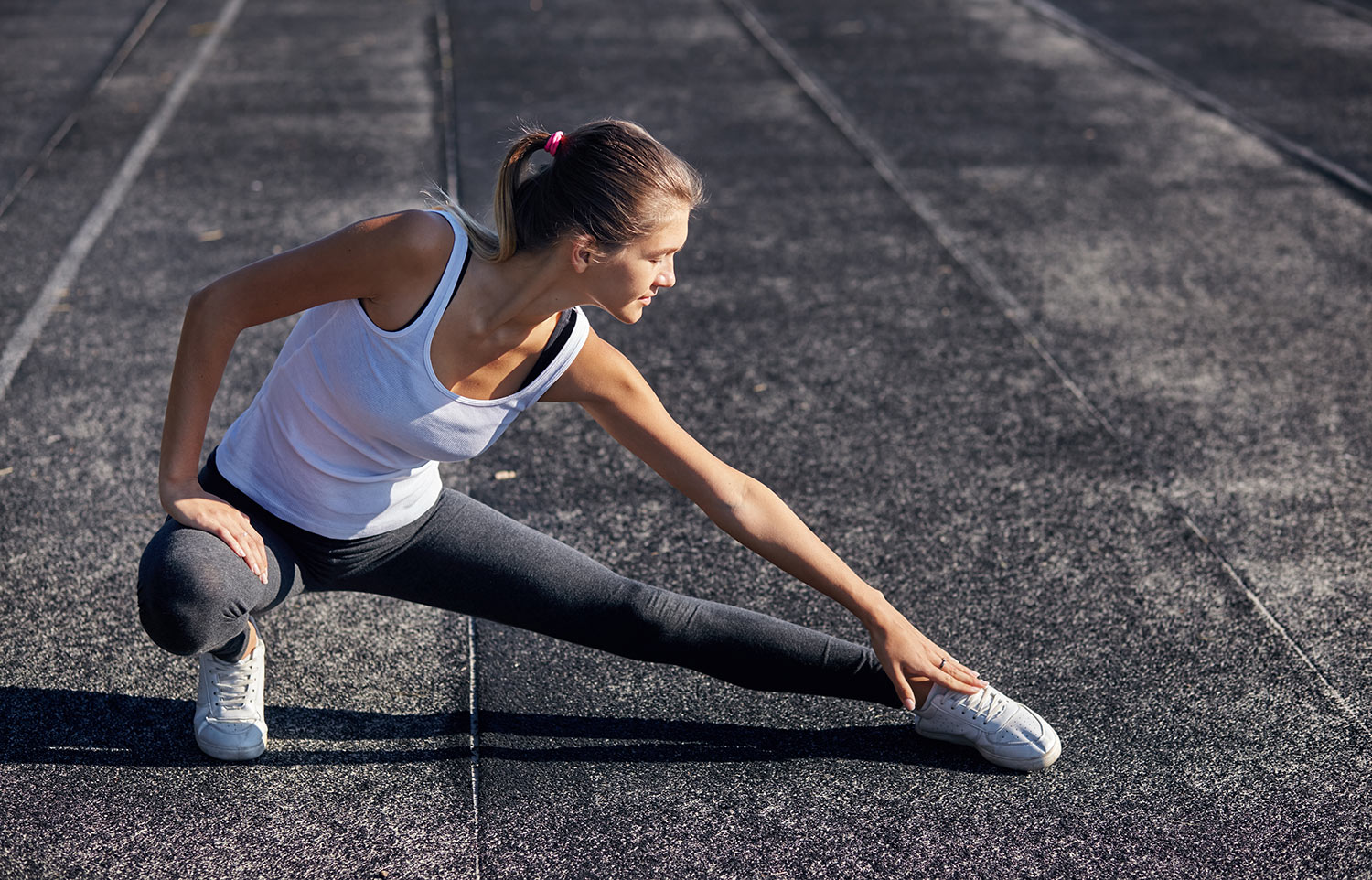
This routine is designed for absolute beginners and advanced athletes alike. It requires no equipment. The only rule is: Never force a stretch. If you feel sharp pain, back off immediately. You are looking for a sensation of mild, tolerable tension that slowly melts away.
Hold each pose for 5 to 10 deep breaths. Focus your attention entirely on the area of your body that is stretching.
- Seated Neck Rolls and Side Stretches
Why we start here: The neck and upper trapezius muscles are the number one storage centers for daytime anxiety. If your neck is tight, your jaw will clench, and your shoulders will hunch, creating a cascade of tension.
How to do it: Sit cross-legged on the floor or in a chair. Sit up tall, imagining a string pulling the crown of your head toward the ceiling.
- Drop your right ear toward your right shoulder. Do not lift your shoulder to meet your ear; keep your shoulders down and back. You can gently rest your right hand on the left side of your head to add a tiny bit of weight, but don’t pull. Breathe deeply into the left side of your neck.
- Slowly roll your chin down toward your chest and over to the left shoulder.
- Repeat this slow, semi-circular motion 5 times.
- Next, look over your right shoulder, keeping your spine straight. Take 3 deep breaths, then look over your left shoulder. This releases the muscles that rotate the cervical spine.
- Seated Spinal Twist (Ardha Matsyendrasana variation)
Why we do this: Twists are incredibly therapeutic for the spine. They compress and then release the abdominal organs, stimulating digestion (which is highly active during sleep) and massaging the deep muscles of the lower back.
How to do it: Sit on the floor with your legs extended. Bend your right knee and place your right foot on the outside of your left thigh.
- Inhale, sit up tall, and reach your left arm straight up toward the ceiling.
- Exhale, twist your torso to the right, placing your right hand on the floor behind you for support. Hook your left elbow on the outside of your right thigh.
- With every exhale, gently twist a fraction of an inch deeper. Keep your gaze over your right shoulder.
- Hold for 5-10 breaths, feeling the rotation in your mid-back, and then repeat on the opposite side.
- Cat-Cow Stretches (Marjaryasana-Bitilasana)
Why we do this: This gentle, rhythmic movement mobilizes the entire spine, releases the lower back, and, most importantly, forces you to link your movement to your breath.
How to do it: Come onto your hands and knees in a tabletop position. Your wrists should be directly under your shoulders, and your knees directly under your hips.
- Cow Pose (Inhale): Drop your belly toward the floor, lift your chest forward, and gently tilt your tailbone toward the ceiling. Do not crunch your neck; look straight ahead or slightly up.
- Cat Pose (Exhale): Reverse the movement. Press the floor away with your hands, round your spine toward the ceiling, tuck your tailbone under, and let your head drop heavily toward the floor.
- Flow between these two poses for 10 full breath cycles, moving as slowly and smoothly as water.
- Child’s Pose (Balasana)
Why we do this: This is the ultimate resting posture in yoga. It gently stretches the hips, thighs, and spine, but more importantly, it is psychologically grounding. The act of folding forward and bringing your forehead to the floor physically shields your eyes and shuts out the outside world, signaling profound safety to the nervous system.
How to do it: From your hands and knees, bring your big toes to touch and spread your knees slightly wider than your hips.
- Sink your hips back to rest on your heels. If your hips don’t reach your heels, that is perfectly fine; just let them hover where they are comfortable.
- Walk your hands forward and melt your chest and forehead down to the floor.
- Your arms can be stretched out in front of you (reaching for the wall) or relaxed down by your sides (palms facing up, which opens the shoulders more).
- Close your eyes. Take 10 deep breaths here. Imagine your body sinking heavily into the floor with every exhale.
- Thread the Needle
Why we do this: Most of us sit hunched over computers, which creates a rigid “armor” in our upper back and chest. This stretch specifically targets the thoracic spine (the middle back) and the muscles between the shoulder blades (rhomboids), breaking up that armor.
How to do it: Start back in a tabletop position (hands and knees).
- Inhale, reach your right arm up toward the ceiling, opening your chest.
- Exhale, “thread” your right arm under your left arm, lowering your right shoulder and right ear to the floor. Keep your hips stacked directly over your knees.
- You can walk your left hand forward for support, or keep it planted under your left shoulder.
- Feel the stretch across the back of your right shoulder and your upper back. Hold for 5-8 deep breaths, then repeat on the left side.
- Lying Figure-Four Stretch
Why we do this: The hips are the body’s emotional junk drawer. They hold an unbelievable amount of tension from sitting all day and from the physical manifestation of stress. Releasing the hips is often the key to releasing lower back pain, which is a massive culprit in nighttime restlessness.
How to do it: Lie flat on your back with your knees bent and your feet flat on the floor, close to your glutes.
- Cross your right ankle over your left knee, creating a “4” shape with your legs.
- Reach your hands through to grab the back of your left thigh and gently pull your left leg toward your chest.
- Keep your right knee open wide. You should feel a deep stretch in the outer part of your right hip and glute.
- If this is too intense, don’t pull as hard. If you want more intensity, gently push your right knee away from you with your right elbow while pulling the left leg in.
- Hold for 10 breaths and repeat on the left side.
- Supine Spinal Twist (Supta Matsyendrasana)
Why we do this: We return to a twist, but this time lying down. Lying twists are profoundly relaxing because the floor completely supports your body weight. You don’t have to use any muscular effort to hold yourself up; you can totally surrender to gravity.
*How to do it: Lie flat on your back. Extend your arms out to the sides in a “T” shape, palms facing up or down (whichever is more comfortable for your shoulders).
- Bring your knees toward your chest, then slowly let both knees drop over to the right side of your body.
- Try to keep your knees and feet stacked.
- You can turn your head to look over your left hand, or keep your head facing the ceiling—whichever feels better for your neck.
- Take deep breaths into your ribcage and belly. With every exhale, imagine your lower back melting into the floor.
- Hold for 10 breaths, then use your core to slowly pull your knees back to center, and drop them to the left side.
- Legs Up the Wall (Viparita Karani) – The Ultimate Easy Win
Why we do this: This is the holy grail of restorative poses. It requires zero flexibility and zero effort, yet the physiological benefits are immense. Elevating the legs promotes venous blood return from the lower extremities back to the heart. It reduces swelling in the ankles and calves, slows the heart rate, and induces a state of deep, systemic calm.
How to do it:
- Sit with one hip touching the wall.
- As you lie back, swing your legs up the wall so the backs of your legs are resting flat against it, and your hips are as close to the wall as is comfortable. (If your hamstrings are tight, move your hips a few inches away from the wall).
- Let your arms rest out to your sides, palms up, or place one hand on your belly and one on your chest.
- Close your eyes. This is not a stretch; it is a rest. Stay here for 2 to 5 minutes. Focus entirely on the rise and fall of your belly.
The Secret Weapon: Synchronizing Breath and Movement
You can do all the stretches listed above perfectly, but if you are holding your breath or breathing shallowly into your chest, you are leaving 50% of the benefits on the table.
Breathing is the only autonomic function in the body that you can also control consciously. This makes it the bridge between your sympathetic and parasympathetic nervous systems.
During your routine, you must practice diaphragmatic breathing (also known as belly breathing). Most adults are “chest breathers.” We take shallow breaths that only expand the upper chest, which actually mimics the breathing pattern of the stress response.
To breathe diaphragmatically:
- Place one hand on your belly, just below your ribcage.
- As you inhale slowly through your nose, imagine you are blowing up a balloon in your stomach. Your belly should push your hand outward. Your chest should remain relatively still.
- As you exhale slowly through your mouth (or nose), draw your belly button back toward your spine, letting the air out completely.
The 4-7-8 Method: If you find your mind racing during your stretches, try the 4-7-8 breathing technique popularized by Dr. Andrew Weil. Inhale through your nose for 4 seconds, hold the breath gently for 7 seconds, and exhale completely through your mouth for 8 seconds. This specific ratio acts as a natural tranquilizer for the nervous system and is incredibly effective when paired with poses like Child’s Pose or Legs Up the Wall.
Common Pitfalls: What NOT to Do Before Bed
As you incorporate this easy win into your life, be mindful of a few common traps that can sabotage your efforts:
- The “No Pain, No Gain” Mentality: This is the quickest way to ruin a bedtime routine. If a stretch hurts, your body will release cortisol in response to the pain. The goal is relief, not achievement. Accept where your body is tonight and gently coax it to relax.
- Comparing to Instagram: Do not look at pictures of ultra-flexible yogis in pretzel shapes and feel inadequate. Flexibility has nothing to do with sleep quality. A completely inflexible person doing a modified, gentle stretch will get better sleep benefits than a flexible person forcing themselves into a painful, advanced pose.
- Turning it into a Workout: If you find yourself sweating, breathing heavily, or feeling your heart rate rise, you are working too hard. Stop, take a deep breath, and switch to a restorative pose like Legs Up the Wall.
- Getting Distracted: Don’t stretch while watching the news, listening to a true-crime podcast, or chatting with your partner about bills. This time is sacred. It is a buffer zone between the chaos of the day and the peace of the night.
- Inconsistency: Like any habit, a stretching routine takes time to rewire your brain. If you only do it once a month, it won’t work. You must do it consistently for at least a week or two before your brain begins to recognize the pattern and automatically start the shutdown sequence when you sit on the floor.
Troubleshooting Your Routine: What If You Still Can’t Sleep?
While a gentle stretch is a powerful tool, it is part of a larger ecosystem of sleep hygiene. If you are stretching diligently but still staring at the ceiling, you may need to address other variables:
- The Caffeine Cut-Off: Caffeine has a half-life of roughly 5 to 6 hours. If you have a cup of coffee at 4:00 PM, half of that caffeine is still circulating in your brain at 9:00 PM, blocking the adenosine receptors that make you feel sleepy. Try setting a strict caffeine curfew of 12:00 PM or 1:00 PM.
- Alcohol’s False Promise: A glass of wine might make you feel drowsy and help you fall asleep faster, but it violently disrupts the architecture of your sleep. It suppresses REM sleep and causes you to wake up frequently in the second half of the night. Alcohol and high-quality sleep are fundamentally incompatible.
- Temperature Control: Your core body temperature needs to drop by about 2 to 3 degrees Fahrenheit to initiate sleep. Keep your bedroom cool—most sleep experts recommend between 60°F and 67°F (15°C to 19°C).
- The “15-Minute Rule”: If you get into bed after your stretch and find yourself lying awake for more than 15-20 minutes, get up. Do not let your brain associate your bed with frustration and wakefulness. Go to a dimly lit room, read a physical book, or do a few more gentle stretches until your eyelids feel heavy, then return to bed.
The Ripple Effect: Benefits Beyond the Bedroom
The beautiful thing about establishing a short, gentle bedtime stretching routine is that the benefits don’t end when you wake up. This easy win creates a positive ripple effect that transforms your daytime life.
First, you will likely notice a reduction in daytime pain. Morning back aches, stiff necks, and tension headaches are often the result of poor sleep posture combined with pre-existing muscular tension. By going to sleep with physically elongated, relaxed muscles, you wake up feeling as though you’ve had a tune-up overnight.
Second, you will build interoception—your awareness of what is happening inside your body. As you practice noticing the subtle sensations of a stretch, you become better at noticing the subtle signs of stress during the day. You will catch yourself clenching your jaw at your desk or hiking up your shoulders while driving, and you will be able to consciously release that tension before it accumulates.
Finally, this routine builds emotional resilience. When you spend 10 minutes a night practicing the art of slowing down, breathing through mild discomfort, and focusing on the present moment, you are training your brain to react less dramatically to the stressors of daily life. You are building a buffer between stimulus and response. Things that would have sent you into a panic a month ago suddenly feel much more manageable.
Conclusion: Your New Non-Negotiable
We live in a culture that constantly demands more. More productivity, more output, more hustle. The idea of spending 10 minutes doing “nothing” but gently stretching and breathing feels almost sinful to our modern sensibilities. We feel like we should be answering emails, folding laundry, or doomscrolling the news.
But sleep is not a luxury; it is the absolute foundation of human health, cognition, and emotional well-being. Without it, everything else falls apart.
You don’t need to buy a $3,000 smart bed. You don’t need to undergo sleep therapy. You don’t need to take pills that leave you groggy the next day.
You just need to get down on the floor, take a deep breath, and give your body permission to let go of the day.
A short, gentle stretch before bed is the ultimate easy win. It costs nothing, it takes almost no time, and it yields profound, life-altering results. Tonight, when you feel that familiar wave of evening exhaustion mixed with mental anxiety, resist the urge to collapse directly into bed with your phone.
Roll out a towel or a mat. Turn down the lights. Move slowly. Breathe deeply. Let the floor hold you up. Give yourself this small gift, and watch as the quality of your sleep—and the quality of your waking life—transforms entirely.
Medical Disclaimer: The information provided on this website is for general educational and informational purposes only and is not intended as a substitute for professional medical advice, diagnosis, or treatment. Always seek the advice of your physician or other qualified health provider with any questions you may have regarding a medical condition. Never disregard professional medical advice or delay in seeking it because of something you have read on this website.

