

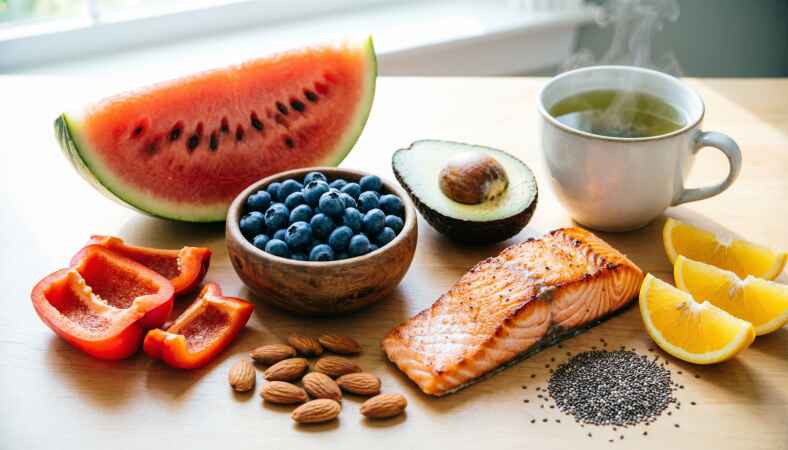
While this guide focuses heavily on nutrition, it would be remiss not to mention that food does not exist in a vacuum. Your skin is the canvas of your overall lifestyle, and diet must be supported by a few foundational habits to truly maximize your glow.
- Sleep (The Ultimate Free Cosmetic) Your skin does the vast majority of its repairing and regenerating while you are asleep. During deep sleep, your body produces Human Growth Hormone (HGH), which is responsible for cellular repair and collagen synthesis. If you are chronically sleep-deprived, you are cutting off your skin’s most crucial healing window. Aim for 7 to 9 hours of quality sleep per night.
- Stress Management (The Cortisol Connection) When you are chronically stressed, your body continuously pumps out cortisol. Cortisol is a catabolic hormone; it literally breaks down tissue, including collagen. It also triggers inflammation, disrupts the gut microbiome, and causes spikes in oil production. You can eat all the antioxidants in the world, but if your cortisol is perpetually high, your skin will suffer. Incorporate deep breathing, meditation, yoga, or simply quiet time into your daily routine to keep cortisol levels in check.
- Mindful Movement Exercise increases blood flow, ensuring that the nutrients you are eating are efficiently delivered to the surface of your skin. The sweating that occurs during exercise also helps to clear out debris from your pores. Just be sure to wash your face gently post-workout to prevent sweat from sitting on the skin and causing breakouts.
Conclusion: Patience, Consistency, and Your New Radiance
Transitioning to a skin-clearing diet is not a quick fix; it is a lifestyle transformation. When you take a pill or apply a harsh acid to your skin, you might see a temporary, forced reaction. But when you change your diet, you are changing the fundamental operating system of your biology.
It is crucial to manage your expectations. Your skin has a 28-day cellular turnover cycle. This means that the skin cells you are looking at in the mirror today were actually built a month ago. Therefore, it will take at least 28 to 40 days of consistent dietary changes before you start to see the full, radiant results of your new eating habits. Do not get discouraged after two weeks. Trust the process. Your body is quietly building new, healthier, more vibrant cells behind the scenes.
Start by making small, sustainable swaps. Swap the soda for green tea. Swap the sugary cereal for chia pudding. Swap the inflammatory dairy milk for almond milk. As you begin to feel the internal benefits of these nutrient-dense foods—more energy, better digestion, clearer thinking—the external benefits will inevitably follow.
By embracing these incredible foods for glowing skin, you are doing more than just improving your appearance. You are lowering your risk of chronic disease, improving your gut health, boosting your mental clarity, and taking ultimate ownership of your well-being. True beauty is an outward reflection of inner health. Nourish your body with the respect and nutrients it deserves, and your skin will glow in gratitude for the rest of your life.
FAQS
The Basics of Diet and Skin
1.Can what I eat actually change my skin?
Yes, absolutely. Your skin is your body’s largest organ, and like any other organ, it requires specific nutrients to function, repair itself, and defend against damage. Topical creams only penetrate the surface; food builds the skin from the inside out.
2.How long does it take to see results from a skin-clearing diet?
Patience is key. The skin naturally renews itself every 28 to 40 days. Therefore, it typically takes about 4 to 6 weeks of consistent dietary changes before you will notice a significant, lasting difference in your skin’s glow and texture.
3.What exactly is the “gut-skin axis”?
The gut-skin axis is a communication network between your digestive system and your skin. If you have an imbalance of bad bacteria in your gut (dysbiosis) from poor diet, it causes systemic inflammation that often shows up on your face as acne, rosacea, or dullness.
4.Does drinking plain water actually improve my skin?
While hydration is vital, drinking plain water doesn’t always equal hydrated skin because water goes to vital organs first. You need water-rich foods (like cucumber and watermelon) paired with electrolytes and healthy fats to actually trap and hold that moisture in your skin cells.
5.Can I just take supplements instead of changing my diet?
Supplements can help fill gaps, but they cannot replace the synergistic effects of whole foods. An orange contains Vitamin C, fiber, and enzymes that work together; an isolated Vitamin C pill lacks this synergy and can sometimes cause digestive upset.
Specific Nutrients for Glowing Skin
- Which vitamin is the absolute best for glowing skin?
Vitamin C is widely considered the ultimate glow vitamin. It is essential for synthesizing collagen, protecting against UV damage, and inhibiting melanin production to fade dark spots and brighten the complexion.
7.Why is Vitamin A so important for acne and anti-aging?
Vitamin A (retinol in skincare, beta-carotene in food) is the master regulator of cell turnover. It helps shed dead, dull skin cells and promotes the growth of new, healthy cells, preventing clogged pores and smoothing fine lines.
8.How do Omega-3 fatty acids help my complexion?
Omega-3s are potent anti-inflammatories. They calm redness and acne, regulate oil production, and fortify the skin’s lipid barrier, locking in moisture and keeping environmental irritants out.
9.What does zinc do for the skin?
Zinc acts as a security guard for your skin. It boosts immune function, kills acne-causing bacteria, reduces oil production, and is vital for healing acne scars and wounds quickly.
10.Do I need to eat collagen to make collagen?
Not necessarily. When you eat collagen (like in bone broth), your body breaks it down into individual amino acids. Your body then reassembles those amino acids into collagen where it’s needed, as long as you also have adequate Vitamin C to facilitate the process.
11.What are antioxidants and why do my skin cells need them?
Antioxidants are molecules that donate an electron to unstable “free radicals” (caused by sun, pollution, stress) to neutralize them. Without antioxidants, free radicals destroy your collagen and cause premature aging.
The Best Foods to Eat
- Are oranges really the best source of Vitamin C?
Surprisingly, no! While oranges are great, red bell peppers contain nearly three times the amount of Vitamin C per ounce than an orange, making them a superior choice for skin health.
13.Can eating carrots really give my skin a natural tan/glow?
Yes! Carrots are packed with beta-carotene, a yellow-orange pigment. When you eat it, it deposits in the fat layers of your skin, giving you a scientifically proven “carotenoid glow” that people subconsciously find highly attractive.
14.Why is bone broth touted as a skin superfood?
Bone broth is simmered for hours, breaking down animal collagen into highly absorbable peptides (glycine and proline). It provides the exact building blocks your body needs to rebuild its own skin scaffolding.
15.Is dark chocolate actually good for my skin?
Yes, but only if it is 70% cacao or higher. Raw cacao is packed with flavanols, which increase blood flow to the skin, boost hydration, and protect against sun damage. Milk chocolate, however, is packed with skin-ruining sugar.
16.How do berries fight aging?
Berries (blueberries, blackberries, raspberries) have the highest antioxidant capacity of almost any food. They contain anthocyanins, which protect your existing collagen from breaking down and strengthen capillaries to reduce redness.
17.Does eating fat make my skin oily?
No, the opposite is true! Healthy fats (avocados, nuts, salmon) actually help regulate oil production. If you starve your skin of fat, it overcompensates by producing excess, thick sebum, leading to clogged pores.
18.Why are sweet potatoes recommended for clear skin?
Sweet potatoes are a massive dose of beta-carotene (Vitamin A), which promotes rapid cell turnover to unclog pores, while also providing a complex carbohydrate that won’t spike your blood sugar.
19.Can green tea clear up my acne?
Green tea contains a powerful antioxidant called EGCG. It has been shown to reduce sebum (oil) production, reduce the inflammation associated with acne, and inhibit the growth of acne-causing bacteria.
20.How does turmeric help my skin?
The active compound in turmeric, curcumin, is one of nature’s strongest anti-inflammatories. It can dramatically reduce the redness, swelling, and active breakouts associated with acne and rosacea.
21.Are eggs good or bad for glowing skin?
Eggs are fantastic for the skin, particularly the yolks. They provide all nine essential amino acids (needed to build collagen) and are rich in lutein, which protects the skin from UV damage and increases hydration.
Foods to Avoid for Better Skin
- Why does sugar cause wrinkles and acne?
Sugar triggers a process called glycation. Excess sugar molecules attach to your collagen and elastin fibers, making them stiff, brittle, and prone to snapping (wrinkles). Sugar also spikes insulin, which triggers oil production and acne.
23.Does dairy really cause breakouts?
For many people, yes. Conventional dairy contains naturally occurring hormones and growth factors meant for baby cows. These hormones severely disrupt human hormones, triggering an overproduction of sebum and cystic acne along the jawline.
24.Are all carbs bad for my skin?
No, only high-glycemic (refined) carbs like white bread, white rice, and pasta are bad. They spike blood sugar and insulin just like pure sugar does. Complex carbs (oats, quinoa, sweet potatoes) are great for skin because they provide sustained energy and fiber.
25.Can fried food make my skin look dull?
Yes. Fried foods and trans fats cause massive systemic inflammation and generate free radicals. They also displace the healthy fats in your cell membranes, resulting in dry, lackluster, and inflamed skin.
26.Does drinking alcohol ruin my glow?
Alcohol is highly dehydrating and causes inflammation. It also diverts hydration away from the skin, dilates blood vessels (causing redness and rosacea flare-ups), and burdens the liver, which is the organ responsible for clearing toxins that affect the skin.
Lifestyle & Practical Application
- Can I just eat well and skip my skincare routine?
While diet does the heavy lifting internally, a basic skincare routine is still necessary to protect against environmental damage (like UV rays and pollution) that you can’t completely control through food. They work best together.
28.Do I need to eat organic foods to get good skin?
Eating organic reduces your exposure to pesticide residues, which can cause hormonal disruption and inflammation. However, eating conventional fruits and vegetables is still vastly better for your skin than eating no fruits and vegetables at all.
29.Does coffee ruin my skin?
Not necessarily, but it can if overconsumed. Coffee is a diuretic, which can dehydrate the skin if you don’t drink extra water. It also spikes cortisol (the stress hormone), which can trigger breakouts. Limit to 1-2 cups and always drink water alongside it.
30.How can I figure out which specific food is breaking me out?
The best method is an “elimination diet.” Remove the most common culprits (dairy, refined sugar, gluten, soy) for 3 to 4 weeks. Then, reintroduce them one by one, waiting a few days between each, to see exactly which food causes a negative skin reaction.
Medical Disclaimer: The information provided on this website is for general educational and informational purposes only and is not intended as a substitute for professional medical advice, diagnosis, or treatment. Always seek the advice of your physician or other qualified health provider with any questions you may have regarding a medical condition. Never disregard professional medical advice or delay in seeking it because of something you have read on this website.

