

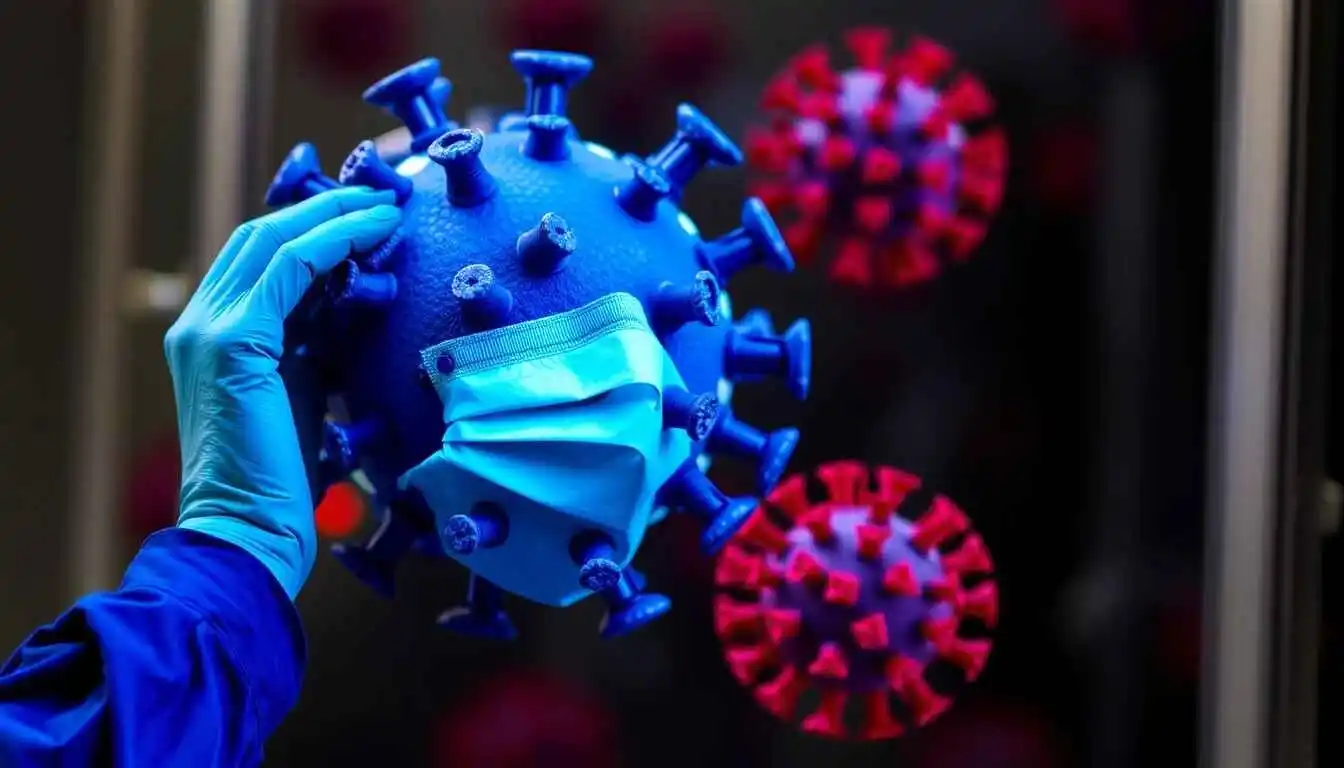
The World That Fractured: Unmasking the COVID-19 Pandemic and the Permanent Scars of Our New Reality
There is a distinct, haunting silence that falls over a city in lockdown. It is a silence punctuated only by the wail of sirens—the grim metronome of a world under siege. If you lived through the spring of 2020, you know exactly what that silence sounds like. You remember the empty shelves, the bleach-wiped groceries, the terrifying graphics on the nightly news showing red spikes consuming the map. You remember the day the world stopped.
But the virus that forced us inside our homes did not merely pause our lives; it fractured them. The COVID-19 pandemic was not a temporary storm to be weathered before stepping back out into the sunshine of the old normal. It was a tectonic shift in the bedrock of human existence. While the emergency phase of the pandemic may have faded from the headlines, the aftershocks continue to reverberate through our bodies, our economies, our psyches, and our societies.
We are now living in the aftermath, navigating a landscape that has been irrevocably altered. To understand where we are going, we must confront the deep, lasting scars of where we have been. This is the story of the COVID-19 pandemic and its long shadow—the after-effects that will define a generation.
The Invisible Siege and the Breaking of the World
In late 2019, whispers emerged from Wuhan, China, about a mysterious pneumonia. Within weeks, those whispers became a roar. The SARS-CoV-2 virus, an invisible adversary no larger than a speck of dust, exploited the hyper-connected arteries of modern globalization. It hitched rides on transatlantic flights, lurked on subway poles, and transferred from hand to hand in crowded theaters.
By March 2020, the unimaginable happened. Nations that had prided themselves on their invulnerability shuttered their doors. Borders slammed shut. The bustling arteries of global commerce calcified. For the first time in modern history, the human species engaged in a synchronized, global retreat. We locked ourselves in our homes, trading our freedom of movement for the preservation of life.
The early days were defined by a potent cocktail of terror and confusion. Hospitals in Northern Italy were overwhelmed, forcing doctors to make unimaginable triage decisions. Refrigerated trucks lined the streets of New York City. Healthcare workers donned garbage bags for protection, their faces bruised by ill-fitting N95 masks. The virus was a terrifying equalizer, striking both the powerful and the poor, yet its impact was ruthlessly unequal, devastating marginalized communities and the elderly with disproportionate cruelty.
We clapped for essential workers from our balconies, a desperate attempt to find solidarity in isolation. We baked bread, hoping the comfort of yeast and flour could normalize the surreal. But beneath the surface of sourdough starters and Zoom trivia nights, the foundations of our society were cracking. We were not just fighting a virus; we were watching the unraveling of the 21st-century social contract.
The Long Shadow — Living with Long COVID
For many, the narrative of COVID-19 was framed as a binary: you survived, or you tragically did not. But as the months wore on, a third, terrifying reality emerged. Millions of people who “recovered” from the acute phase of the virus found that they never truly returned to health. This is the silent epidemic within the pandemic: Long COVID.
Long COVID, or Post-Acute Sequelae of SARS-CoV-2 infection (PASC), is a chronic, multi-system condition that defies simple categorization. Its victims—often young, previously healthy individuals—found themselves trapped in bodies that no longer functioned. The symptom list is a medical hydra: crushing fatigue that makes climbing stairs feel like scaling Everest; “brain fog” that erases mid-sentence thoughts; racing heart rates upon standing (POTS); chronic pain; and relentless shortness of breath.
The medical establishment, initially skeptical, was forced to confront a condition that has no universal test, no standard cure, and no predictable timeline. For Long COVID sufferers, the end of the pandemic lockdowns was a cruel irony. While the rest of the world rushed back to restaurants, offices, and airports, they remained imprisoned in their homes, their lives put on indefinite hold.
The economic and social toll of Long COVID is staggering. It has forced hundreds of thousands out of the workforce, draining productivity and straining disability systems. But the deepest wound is psychological. To suffer from Long COVID is to grieve the loss of your former self, often while facing medical gaslighting from doctors who dismiss your symptoms as anxiety. As we map the after-effects of the pandemic, the millions of chronically ill individuals represent a long-term public health crisis that we are only beginning to comprehend.
The Mind Under Siege — The Mental Health Pandemic
If the virus attacked the respiratory system, the lockdowns and the pervasive climate of fear attacked the human psyche. The pandemic triggered a global mental health crisis of unprecedented scale, the reverberations of which we are still struggling to contain.
Humans are fundamentally social creatures, wired for connection, touch, and shared experience. The sudden, violent severance of these ties led to an epidemic of isolation. For the elderly, it meant dying alone in nursing homes, their final moments witnessed only through an iPad screen. For the young, it meant the critical developmental milestones of proms, graduations, and first dates replaced by pixels on a screen.
The statistics paint a grim picture. Rates of anxiety and depression skyrocketed globally. Substance abuse surged as people sought chemical relief from the unrelenting stress. Domestic violence spiked as victims were trapped behind closed doors with their abusers. But the most alarming impact was on the youth. A generation that was supposed to be inheriting a vibrant world instead found themselves in a digital purgatory, leading to a declared state of emergency in pediatric mental health.
Even as the world reopened, the psychological scar tissue remained. We developed a collective hypervigilance. We began to view other human beings—our neighbors, our coworkers—as potential vectors of disease. The simple act of a handshake became a complex risk assessment. This underlying ambient anxiety has become the background radiation of modern life, a low-grade hum of stress that leaves us exhausted, irritable, and desperate for a safety that perpetually feels out of reach.
The Great Upheaval — Economic Fractures and the Remote Work Revolution
The economic shock of the COVID-19 pandemic was unlike anything seen since the Great Depression. Overnight, entire industries—travel, hospitality, live entertainment—were effectively rendered illegal. Millions of people lost their livelihoods, lining up for miles at food banks. The fragility of the gig economy was exposed, revealing a massive underclass of workers living paycheck to paycheck with zero safety net.
Yet, from this devastation emerged a profound transformation. The pandemic functioned as a time machine, dragging the corporate world a decade into the future in a matter of weeks. The Remote Work Revolution began not as a perk, but as a survival mechanism. Kitchen tables became boardrooms, and sweatpants replaced suits.
This shift has had earth-shattering after-effects. The commercial real estate market in major cities like San Francisco, New York, and London has been hollowed out, leaving ghost towns of empty office towers and devastating the urban ecosystems that relied on office workers—delis, dry cleaners, and transit systems. Meanwhile, a “Donut Effect” has occurred, with populations fleeing hyper-expensive city centers for the suburbs and rural areas, driving up housing costs in previously affordable regions.
More importantly, the pandemic shifted the power dynamic between labor and capital. In what was termed the “Great Resignation” or the “Great Reshuffle,” millions of workers re-evaluated the role of work in their lives. Refusing to return to stressful commutes and rigid schedules, they demanded flexibility, better pay, and purpose. The after-effect is a fundamentally altered labor market where the traditional 9-to-5 is no longer the default, and the definition of a successful career has been decoupled from physical presence in an office cubicle.
The Lost Generation? — Education and the Digital Divide
Of all the sectors devastated by the pandemic, education may take the longest to recover. When schools closed, 1.6 billion children worldwide were sent home. What was initially pitched as a two-week vacation morphed into a year—or more—of disrupted learning.
The shift to remote learning was a stark revelation of the digital divide. In affluent neighborhoods, children transitioned to iPads and private tutors in quiet, spacious homes. In low-income communities, children shared a single smartphone with multiple siblings, trying to connect to spotty Wi-Fi in crowded apartments. The pandemic did not create the achievement gap; it poured gasoline on it.
We are now facing a generational “COVID slide.” Standardized test scores in math and reading have plummeted to levels not seen in decades. But the learning loss is only half the story. The socialization loss is just as critical. School is not merely a place for academic instruction; it is the crucible where humans learn to navigate conflict, share, collaborate, and build empathy. The lack of peer interaction during crucial formative years has led to spikes in behavioral issues, speech delays, and severe social anxiety among children and teenagers.
The after-effect on higher education is equally profound. The narrative of the “college experience” has been disrupted. With the exorbitant cost of tuition no longer justifying the value of Zoom lectures, enrollment numbers are dropping, and a generation is questioning whether a traditional degree is still the golden ticket to the middle class.
The Fractured Trust — Polarization, Science, and the New Social Fabric
Perhaps the most insidious after-effect of the COVID-19 pandemic is the corrosion of social cohesion. The virus did not just attack our bodies; it attacked our trust—in institutions, in science, and in each other.
The pandemic was a political Rorschach test. In a deeply polarized world, a microscopic pathogen became a cultural wedge issue. Mask-wearing was politicized. Vaccines, one of the greatest triumphs of modern science, became the center of a bitter ideological war. The rollout of the mRNA vaccines—a miracle of biotechnology achieved in record time—was met not with universal celebration, but with rampant misinformation, conspiracy theories, and hostility.
This “infodemic” ran parallel to the biological pandemic, spreading through social media algorithms designed to reward outrage and engagement over truth. Public health officials, forced to issue guidance based on rapidly evolving and uncertain data, found their shifting recommendations weaponized by bad-faith actors to discredit science entirely.
The resulting landscape is one of deep skepticism. Trust in government, media, and the medical establishment has plummeted to historic lows. We have retreated into ideological silos, viewing those who disagree with us not just as mistaken, but as dangerous. This fractured trust makes solving future existential crises—be it the next pandemic or climate change—infinitely more difficult. A society that cannot agree on basic reality cannot unite to save itself.
Supply Chains and the Illusion of Infinite Availability
Before 2020, the modern consumer lived in a state of blissful ignorance. We expected next-day delivery, fully stocked grocery shelves, and an endless variety of cheap goods. The pandemic shattered the illusion of infinite availability.
When factories in Asia shut down, ports closed, and truck drivers fell ill, the just-in-time global supply chain snapped. The result was a cascade of shortages that touched every aspect of life. We saw the absurdity of a global toilet paper shortage, the frustration of waiting months for a new car due to a lack of microchips, and the danger of vital medication backlogs.
The after-effect has been a profound rethinking of globalization. The dogma of efficiency at all costs has been replaced by the necessity of resilience. Companies and nations are now scrambling to “nearshore” and “friendshore” their manufacturing, bringing critical supply chains closer to home to avoid future choke points. This shift is triggering a restructuring of global trade, accelerating automation, and contributing to the inflationary pressures that continue to squeeze household budgets around the world.
The Silver Linings — Innovation and Resilience
To write the story of the pandemic as purely a tale of loss would be inaccurate. Humanity is remarkably adaptable, and periods of immense pressure often create diamonds. Amidst the darkness, the pandemic catalyzed innovations and cultural shifts that have profoundly improved our lives.
The most obvious triumph is the revolution in biotechnology. The development of mRNA vaccines proved that the scientific community could move at wartime speed. This technology is now being repurposed to fight cancer, HIV, and other autoimmune diseases, promising a new frontier in medicine.
Telehealth, which had languished in regulatory red tape for years, became mainstream overnight. Access to mental health counseling and routine medical care was democratized for millions, particularly those in rural areas.
Culturally, the forced pause of the pandemic gave many the opportunity to step off the treadmill of hyper-productivity. We reconnected with nature, with our immediate families, and with forgotten hobbies. The “Slow Living” movement gained traction as people realized that a life devoid of a soul-crushing commute was not just a dream, but a viable alternative. We proved that when the world forces us to stop, we have the capacity to reinvent how we live.
The New Baseline — Moving Forward in a Changed World
https://youtu.be/7nqpU1gW0eE

