

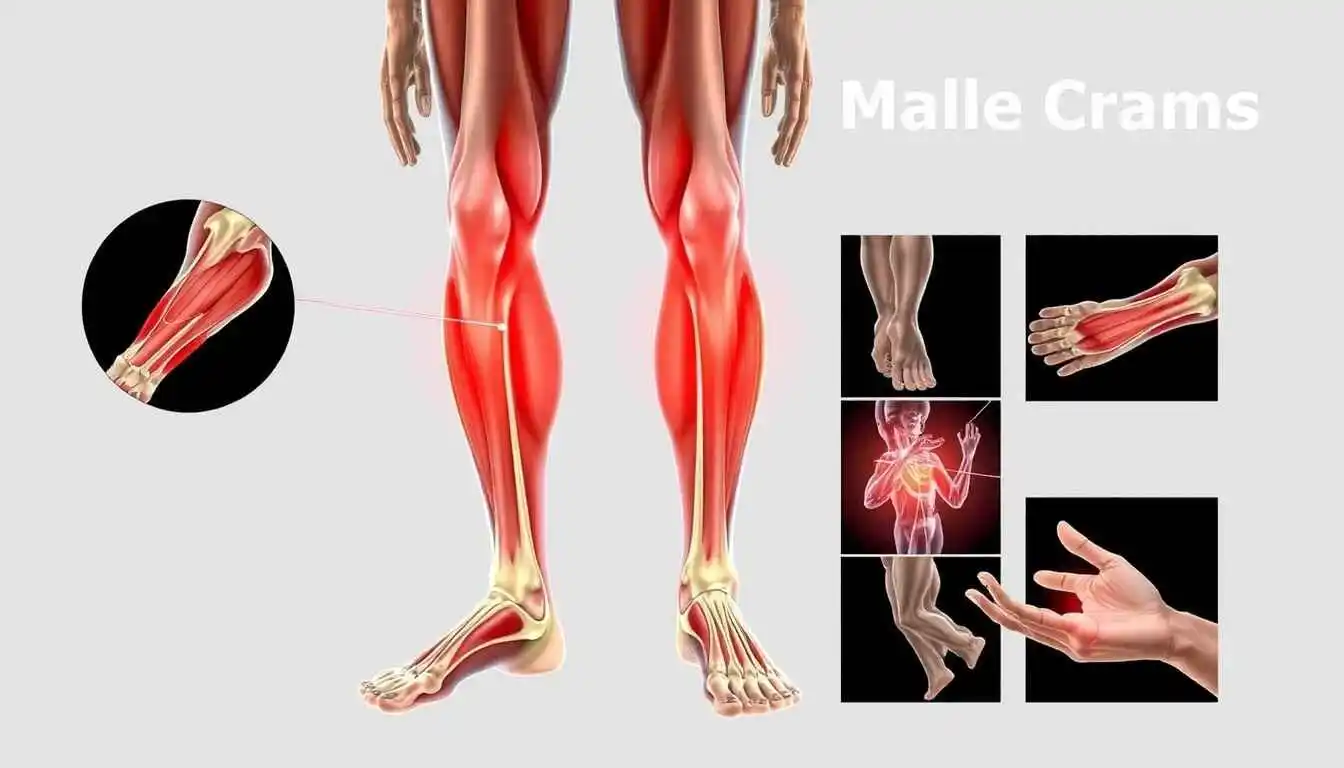
Unlocking the Mystery of Muscle Cramps, Why They Strike, and How to Finally Stop Them
It is 3:00 AM. You are floating in the deep, velvety abyss of a perfect sleep, utterly at peace. Then, without warning, a lightning bolt of agonizing pain shoots through your calf. You jolt awake, gasping, grabbing your leg as the muscle beneath your skin seizes, hardening into a rock-solid knot that feels like it is trying to break through your bone. You writhe, you stretch, you massage, but the assassin has already struck.
By morning, the intense pain has faded, leaving behind a dull, bruised ache—a phantom reminder of the night’s attack. You brush it off. “Just a charley horse,” you tell yourself. But what if it isn’t just a random act of bodily betrayal? What if that cramp is a desperate distress signal from your cellular machinery?
Muscle cramps are one of the most common, yet profoundly misunderstood, human experiences. Nearly everyone will suffer from one at some point in their lives, and for some, they are chronic, debilitating occurrences that destroy sleep, halt athletic careers, and diminish the quality of life. We blame dehydration, we blame a lack of bananas, and we hope for the best. But the science of muscle cramps is far more fascinating—and far more complex—than a simple potassium deficit.
In this comprehensive deep dive, we will dissect the anatomy of a cramp, unmask the hidden triggers lurking in your lifestyle and medicine cabinet, explore the cutting-edge science that is rewriting the textbooks on cramp causality, and arm you with an actionable, step-by-step playbook to prevent and eradicate these sudden seizures from your life forever.
The Anatomy of an Uprising: What Exactly is Happening Inside Your Muscle?
To understand why a muscle cramps, we must first understand how a muscle works. Your body is composed of over 600 skeletal muscles, each a marvel of biological engineering. Within each muscle are thousands of muscle fibers, and within those fibers are tiny contractile units called sarcomeres. Sarcomeres are made of thick (myosin) and thin (actin) filaments. When your brain wants you to move, it sends an electrical signal down a nerve, which releases a chemical messenger (acetylcholine) at the neuromuscular junction. This triggers a cascade of events that allows the actin and myosin to slide across one another, shortening the muscle. When the signal stops, the filaments slide back, and the muscle relaxes.
A cramp occurs when this exquisitely choreographed system goes violently off-script. It is an involuntary, forceful, and sustained contraction of a muscle or group of muscles that refuses to release.
But why does the “off switch” fail? The answer lies in the Alpha Motor Neuron. These are the nerve cells in your spinal cord that control muscle contraction. Think of the alpha motor neuron as the drill sergeant of your muscle. When a cramp happens, the drill sergeant loses his mind. He starts firing rapid, uncontrolled electrical impulses—up to 150 times per second—to the muscle. The muscle obeys, contracting mercilessly.
The prevailing question in sports medicine and neurology has always been: What makes the drill sergeant go rogue? To find out, we must look at the two dominant theories of cramp causality.
The Electrolyte Orchestra: When the Music Stops, the Cramps Begin
For decades, the “Electrolyte Depletion Theory” has been the undisputed king of cramp explanations. It suggests that cramps are the result of an imbalance in the vital minerals that conduct electricity in your body—sodium, potassium, calcium, and magnesium.
Imagine your body as a vast, complex orchestra. The nerves are the conductors, and the electrolytes are the musicians. If the musicians are exhausted, missing, or out of tune, the symphony descends into chaos. A cramp is that chaos.
- Sodium: The Gatekeeper of Hydration
Sodium is the primary electrolyte in the fluid outside your cells. It controls blood volume, blood pressure, and the transmission of nerve impulses. When you sweat, you lose massive amounts of sodium. If you rehydrate with plain water, you dilute the remaining sodium in your blood—a dangerous condition called hyponatremia. Without enough sodium, the electrical signals from your nerves become erratic, causing muscles to seize. This is why the old advice to “just drink water” can sometimes make cramps worse.
- Potassium: The Pacifier
While sodium rules the fluid outside the cell, potassium is the king of the fluid inside the cell. Potassium is crucial for “repolarization”—the process of resetting the nerve and muscle cell after it fires, allowing it to relax. If potassium levels drop, the muscle struggles to return to its resting state, leaving it teetering on the edge of contraction.
- Calcium: The Trigger
Calcium is the actual mechanical trigger for muscle contraction. When a nerve signals a muscle, it causes a release of calcium within the muscle cell, which allows actin and myosin to interact. If calcium levels are dysregulated, the muscle can misfire or fail to release after contracting.
- Magnesium: The Great Relaxer
If calcium is the accelerator, magnesium is the brake. Magnesium is essential for blocking calcium, allowing the muscle fibers to detach and relax. A deficiency in magnesium means the “brakes” are faulty, leading to prolonged, unrelenting contractions. This is why magnesium supplements are often touted as the ultimate cramp cure.
While the electrolyte theory makes perfect sense on paper—and certainly plays a role in heat-related and dehydration-induced cramping—it doesn’t explain everything. It doesn’t explain why swimmers in freezing pools get cramps. It doesn’t explain why a sedentary office worker gets a midnight charley horse. To understand these mysteries, we must look at the new frontier of cramp science.
The Athlete’s Achilles Heel: The Neuromuscular Fatigue Theory
In the late 1990s, a sports scientist named Dr. Martin Schwellnus revolutionized how we think about exercise-associated muscle cramps (EAMC). He noticed that electrolyte depletion couldn’t explain the cramps he saw in marathon runners. If they were just dehydrated, why did cramps almost exclusively happen in the muscles doing the work? Why the calves and hamstrings, and not the biceps?
Dr. Schwellnus proposed the Neuromuscular Fatigue Theory. Here is how it works:
Your muscles have built-in safety sensors: muscle spindles and Golgi tendon organs.
- Muscle Spindles detect when a muscle is stretching too far or too fast and send a signal to the spinal cord to contract the muscle to protect it from tearing.
- Golgi Tendon Organs (GTOs) are located at the junction between the muscle and tendon. They detect when a muscle is contracting too hard and send a signal to the spinal cord to relax the muscle to prevent injury.
Normally, these two sensors balance each other out. But when a muscle becomes exhausted—through intense exercise, improper conditioning, or overloading—the muscle spindles become hyperactive, and the Golgi tendon organs become suppressed. The “contract” signals start overwhelming the “relax” signals. The alpha motor neuron gets flooded with commands to fire, and the muscle seizes.
This theory perfectly explains why cramps happen at the end of a grueling race, or when you try to sprint without warming up. It’s not that you lack potassium; it’s that your nervous system’s safety wiring has short-circuited due to fatigue. It also explains why stretching a cramped muscle provides instant relief: stretching activates the Golgi tendon organ, forcing the muscle to finally let go.
The Midnight Assassin: Decoding Nocturnal Leg Cramps
Athletes aren’t the only victims of muscle cramps. For millions of people, the nightmare occurs not on the track, but in the bed. Nocturnal leg cramps (NLC) primarily affect the calves, hamstrings, or feet, striking during the deepest phases of sleep. They are incredibly common in adults over 50, pregnant women, and individuals with certain chronic conditions.
Why does the body attack itself in the middle of the night? The causes are multifaceted:
- The Mechanics of Sleep: When you sleep on your back, your blankets tuck your toes downward (plantar flexion). This naturally shortens the calf muscle. When the muscle is in a shortened position for hours, it becomes hyperexcitable. A slight movement in your sleep can trigger the muscle spindles, causing a massive cramp.
- Venous Insufficiency: Your veins have one-way valves that push blood back to the heart. When you stand or sit all day, gravity fights this system. If the valves are weak, blood pools in the legs (venous insufficiency). When you lie down at night, the pooled blood shifts, altering the pressure and chemical environment around the calf muscles, triggering spasms.
- Nerve Compression: As we age, the spinal canal can narrow (spinal stenosis), compressing the nerves that travel down to the legs. Lying in certain positions can pinch these already irritated nerves, causing the alpha motor neurons to fire erratically.
- Aging and Muscle Loss (Sarcopenia): As we age, we lose muscle mass and neuromuscular control. The remaining muscle fibers are under more strain, and the nervous system’s ability to coordinate contraction and relaxation degrades, making older adults highly susceptible to nighttime seizures.
The Phantom Triggers: Medications and Medical Conditions That Hijack Your Muscles
Sometimes, a muscle cramp isn’t a primary problem; it’s a symptom of something else going wrong in the body. If you are experiencing sudden, frequent cramps, you must investigate the hidden saboteurs.
Medications That Cause Cramps
- Diuretics: Often prescribed for high blood pressure, diuretics flush water and sodium out of your body, making electrolyte depletion almost inevitable.
- Statins: Cholesterol-lowering drugs can cause muscle inflammation and pain, which frequently evolves into cramping.
- Beta-Agonists: Inhalers used for asthma can stimulate the nervous system, increasing muscle excitability.
- Iron Supplements: High doses of iron can irritate the digestive tract and disrupt electrolyte absorption, leading to systemic cramping.
Underlying Medical Conditions
- Hypothyroidism: An underactive thyroid slows your metabolism, which can disrupt how your body processes minerals and leads to general muscle weakness and cramping.
- Peripheral Artery Disease (PAD): Narrowed arteries reduce blood flow to the limbs. When you walk, the muscles scream for oxygen (claudication), which can feel exactly like a severe cramp.
- Type 2 Diabetes: High blood sugar damages nerves over time (diabetic neuropathy). This nerve damage sends garbled signals to the muscles, resulting in spasms.
- Kidney Disease: The kidneys regulate the body’s electrolyte balance. When they fail, potassium and calcium levels go haywire, making cramps a frequent symptom.
- Liver Cirrhosis: Fluid accumulation and electrolyte imbalances in liver disease are notorious for causing severe muscle cramps.
The SOS Protocol: Immediate Relief When a Cramp Has You in Its Grip
When a cramp strikes, logic goes out the window. The pain is blinding, and panic sets in. You need a protocol that is hardwired into your brain so you can act instinctively. When the assassin strikes, deploy the S.O.S. Protocol:
S – Stretch (Activate the Brakes)
Do not rub or punch the muscle. You must override the alpha motor neuron by activating the Golgi Tendon Organ. You do this by slowly, gently, but firmly stretching the muscle.
- Calf Cramp: Stand up and press the heel of the affected leg into the floor, leaning forward until you feel a deep stretch in the calf. Hold it. Do not bounce. Hold until the contraction releases.
- Hamstring Cramp: Sit on the floor with the cramped leg straight out. Reach for your toes, pulling them back toward your shin.
- Foot/Toe Cramp: Grab your toes and forcefully pull them upward toward your shin.
O – Optimize (Heat and Pinch)
Once the acute seizing has stopped, you need to break the pain loop and relax the remaining tension.
- Apply Heat: A heating pad, a hot towel, or a hot shower will flood the area with blood, bringing oxygen and nutrients to the traumatized muscle fibers and encouraging them to relax.
- Pinch the Lip: This sounds bizarre, but there is science behind it. Acupressure points in the upper lip are connected to the nervous system’s relaxation response. Pinching the area just under your nose firmly with your thumb and index finger can sometimes disrupt the neurological spasm cycle. (This is also the mechanism behind some commercial anti-cramp devices).
S – Supplement (The Quick Hit)
If you are mid-exercise and a cramp hits, take a rapid hit of spicy or sour stimuli.
- The Pickle Juice Miracle: For years, athletes drank pickle juice to stop cramps, assuming it was the sodium. However, studies showed that pickle juice stops a cramp in under 90 seconds—far too fast for the sodium to be absorbed into the bloodstream. It turns out that the acetic acid (vinegar) and the intense sour/spicy taste trigger receptors in the mouth and throat. These receptors send a shockwave signal to the spinal cord, which essentially tells the hyperactive alpha motor neurons to shut down. It is a neural hack.
The Prevention Playbook: Fueling the Machine (Diet and Hydration)
An ounce of prevention is worth a pound of cure. If you are prone to cramps, you must build a physiological fortress. It starts with what you put into your body.
- Hydration is a Strategy, Not an Accident
Do not wait until you are thirsty to drink. By the time you feel thirst, your performance and neuromuscular control are already compromised.
- The Fluid Formula: Drink half your body weight (in pounds) in ounces of water daily. If you weigh 160 lbs, aim for 80 ounces of fluid.
- The Electrolyte Additive: If you are sweating heavily, plain water is the enemy. Add an electrolyte powder to your water bottle. Look for one with a high sodium content (at least 300-500mg per liter) alongside potassium and magnesium.
- The Cramp-Fighting Kitchen
You cannot supplement your way out of a terrible diet. You must eat your electrolytes.
- Sodium: Salt your food. If you are an active sweater, do not be afraid of salt. Broth, pickles, and soy sauce are excellent sodium bombs.
- Potassium: Bananas are the poster child, but sweet potatoes, avocados, spinach, and coconut water actually pack a bigger potassium punch.
- Magnesium: Dark leafy greens, pumpkin seeds, almonds, and dark chocolate are magnesium powerhouses. Because magnesium is hard to absorb in the gut, a transdermal magnesium oil spray applied directly to cramp-prone muscles before bed can work wonders for nocturnal cramps.
- Calcium: Dairy products, fortified plant milks, and sardines with bones will keep your calcium stores robust.
- The Supplement Shelf
If your diet is solid and you are still cramping, consider targeted supplementation:
- Magnesium Glycinate or Malate: These forms are highly bioavailable. Take 200-400mg before bed to aid muscle relaxation and improve sleep quality.
- Taurine: An amino acid that helps regulate the flow of electrolytes in and out of the cell. Doses of 1-3 grams daily have shown promise in reducing cramp frequency.
The Prevention Playbook: Training Smart and Moving Right
Fueling the machine is only half the battle. You must also upgrade the software—the way you move, train, and recover.
- The Warm-Up: Priming the Nervous System
Never go from zero to sixty. A dynamic warm-up increases blood flow, raises muscle temperature, and primes the neuromuscular junctions, preventing the “shock” that triggers the muscle spindles. Think leg swings, high knees, and lunges before a run.
- Progressive Overload
Neuromuscular fatigue is the enemy. If you suddenly double your running distance or lift a weight you haven’t prepared for, your Golgi tendon organs cannot keep up. Increase your training volume and intensity by no more than 10% per week. Give your nervous system time to adapt to the stress.
- Eccentric Strengthening
Eccentric contractions occur when a muscle lengthens under tension (think lowering yourself down from a calf raise, or running downhill). This specific type of strengthening is crucial because it trains the Golgi tendon organs to handle high loads while the muscle is stretched—the exact scenario where cramps usually strike.
- The Bedtime Ritual for Nocturnal Cramps
If the midnight assassin visits you regularly, change your bedtime habits:
- The Calf Stretch: Stand on the edge of a stair step with your heels hanging off. Drop your heels down to stretch the calves deeply. Hold for 30 seconds. Do this 3 times right before bed.
- The Blanket Hack: Keep the blankets loose at the foot of the bed. Tuck them into the end of the mattress so your toes cannot point downward in your sleep, keeping the calf muscle in a lengthened state.
- The Stationary Bike: If you have poor circulation, spend 5-10 minutes on a stationary bike at a very easy pace before bed. This pumps venous blood out of your legs and back to your heart.
Myth-Busting: Separating Cramp Fact from Fiction
The world of cramps is filled with old wives’ tales and outdated advice. Let’s set the record straight.
Myth 1: A Banana Before a Run Will Stop Cramps. The Reality: While potassium is important, eating a banana right before a workout won’t prevent a cramp. It takes hours for the potassium to be digested and absorbed into your bloodstream. Plus, if your cramp is caused by neuromuscular fatigue or a lack of sodium, a banana will do absolutely nothing.
Myth 2: Lactic Acid Causes Cramps. The Reality: This is a relic from the 1970s. Lactic acid (or lactate) is a metabolic byproduct of anaerobic exercise. While it causes the “burning” sensation, it is completely cleared from your muscles within an hour after exercise. It has zero connection to the neuromuscular misfiring that causes a cramp hours later or the next day.
Myth 3: Quinine is a Safe Cure for Leg Cramps. The Reality: For years, people drank tonic water for its quinine content to stop leg cramps. However, the FDA has strictly warned against using quinine for cramps due to its severe side effects, which include dangerous heart arrhythmias, severe bleeding, and organ failure. The risk far outweighs the reward.
Myth 4: Cramps Mean You Are Out of Shape. The Reality: Elite athletes suffer from cramps at vastly higher rates than weekend warriors. Why? Because they are pushing their neuromuscular systems to the absolute limit of fatigue. A cramp isn’t necessarily a sign of poor fitness; it’s often a sign of extreme exertion.
The Red Flags: When a Cramp is More Than Just a Cramp
Most muscle cramps are benign, albeit incredibly painful. However, there are times when a “cramp” is a masquerade for a medical emergency. Seek immediate medical attention if your cramps are accompanied by any of the following red flags:
- It doesn’t go away: A true cramp usually releases after a few minutes of stretching. If the severe muscle lock lasts for hours, it might not be a cramp; it could be a muscle tear, a ruptured tendon, or a severe neurological issue.
- Swelling, redness, or heat: If the cramped area becomes visibly swollen, red, and hot to the touch, this could indicate Deep Vein Thrombosis (DVT), a blood clot in a deep vein. Massaging a DVT can be fatal, as it can dislodge the clot and send it to the lungs.
- No obvious trigger: If you are well-hydrated, well-fed, well-rested, and you start experiencing violent, unprovoked cramps all over your body, it could signal a severe systemic issue like kidney failure, a neurological disorder (like ALS or MS), or a severe infection.
- Skin changes or numbness: If the skin over the cramped muscle turns pale, blue, or cold, or if you lose sensation in the limb, you are likely dealing with a vascular obstruction (PAD or acute ischemia).
Conclusion: Reclaiming Control of Your Muscles
Muscle cramps are a jarring, humiliating reminder of how fragile our biological machinery can be. In a split second, a tiny malfunction in a nerve ending can reduce a powerful human being into a writhing, gasping mess on the floor.
But knowledge is power. By understanding that a cramp is not just a random act of cruelty, but a complex interplay of electrolyte imbalances, neuromuscular fatigue, and environmental triggers, you strip the assassin of its stealth. You can now look at a cramp not as an inevitable curse, but as a data point.
When your calf seizes at 3 AM, you now know to stretch the muscle to activate the Golgi tendon organ. You know to check your hydration and your sodium intake. You know to evaluate your training load to ensure you aren’t fatiguing your nervous system. You know the secret of pickle juice and the danger of tucking your blankets too tight.
You don’t have to live in fear of the next strike. By implementing the diet, the hydration, the smart training protocols, and the immediate relief tactics outlined in this playbook, you can fortify your cellular machinery, quiet the rogue alpha motor neurons, and finally banish the midnight assassin from your life for good.
Sleep peacefully. Run fiercely. Live fully. Your muscles are yours to command.
FAQS
1.What exactly is a muscle cramp?
A muscle cramp is an involuntary, forceful, and sustained contraction of a muscle or group of muscles that refuses to relax on its own.
- What is the “alpha motor neuron” and what does it have to do with cramps?
The alpha motor neuron is the nerve cell in your spinal cord that acts as the “drill sergeant,” telling your muscles to contract. During a cramp, this neuron misfires rapid, uncontrolled electrical impulses (up to 150 times per second), forcing the muscle to seize.
- What are the four main electrolytes involved in muscle cramps?
Sodium, potassium, calcium, and magnesium. They act as the conductors and musicians of your body’s electrical orchestra; if they are out of balance, the signals become chaotic.
- How does sodium prevent muscle cramps?
Sodium controls blood volume and the transmission of nerve impulses. When you sweat out sodium and rehydrate with only plain water, you dilute your blood sodium levels (hyponatremia), leading to erratic nerve signals and cramps.
- Why is potassium crucial for muscle relaxation?
Potassium is essential for “repolarization”—the process of resetting the nerve and muscle cell after it fires. Without enough potassium, the muscle struggles to return to its resting state, leaving it on the verge of contraction.
- What role does calcium play in a muscle cramp?
Calcium is the actual mechanical trigger for muscle contraction. When a nerve signals a muscle, calcium is released to allow the muscle fibers to slide together and contract. Dysregulated calcium levels can cause misfiring.
- How does magnesium act as the “brake” for muscles?
If calcium is the accelerator, magnesium is the brake. Magnesium blocks calcium, allowing the muscle fibers to detach and relax. A magnesium deficiency means your muscles have faulty brakes, leading to prolonged contractions.
- What is the Neuromuscular Fatigue Theory?
It’s the leading theory for exercise-associated cramps, suggesting that cramps are caused by exhausted muscles, not just dehydration. When a muscle is fatigued, the “contract” sensors (muscle spindles) overwhelm the “relax” sensors (Golgi tendon organs), causing the nervous system to short-circuit and the muscle to seize.
- What are muscle spindles and Golgi tendon organs (GTOs)?
They are muscle safety sensors. Muscle spindles detect stretching and tell the muscle to contract to protect it. GTOs detect excessive contraction and tell the muscle to relax. Cramps happen when spindles become hyperactive and GTOs become suppressed due to fatigue.
- Why do cramps often happen at the end of a long race or workout?
Because the muscles are exhausted. The prolonged effort fatigues the nervous system’s safety wiring, causing the “contract” signals to overwhelm the “relax” signals.
- What causes nocturnal leg cramps (the “midnight assassin”)?
Causes include sleeping with toes pointed downward (shortening the calf muscle), venous insufficiency (blood pooling in the legs), nerve compression from spinal stenosis, and age-related muscle loss (sarcopenia).
- Why does tucking your blankets tightly cause night cramps?
Tight blankets force your toes into a downward (plantar flexed) position, which keeps the calf muscle in a shortened state for hours. This makes the muscle hyperexcitable, and a slight movement can trigger a massive spasm.
- What is venous insufficiency, and how does it trigger night cramps?
It’s a condition where weak vein valves struggle to pump blood back up to the heart, causing blood to pool in the legs. When you lie down at night, the pooled blood shifts, altering the pressure and chemical environment around the muscles, triggering spasms.
- Which common medications can trigger muscle cramps?
Diuretics (flush out sodium/water), statins (cause muscle inflammation), beta-agonists (stimulate the nervous system), and high-dose iron supplements (disrupt electrolyte absorption).
- What underlying medical conditions list muscle cramps as a symptom?
Hypothyroidism, Peripheral Artery Disease (PAD), Type 2 Diabetes (due to neuropathy), kidney disease, and liver cirrhosis.
- What is the S.O.S. protocol for when a cramp strikes?
Stretch (activate the GTOs to force relaxation), Optimize (apply heat to increase blood flow, or pinch the upper lip to trigger nervous system relaxation), and Supplement (take a rapid hit of sour/spicy stimuli like pickle juice).
- Why is stretching the very first thing you should do for a cramp?
Gently stretching the cramped muscle activates the Golgi tendon organ, which sends a powerful “relax” signal to the spinal cord, overriding the hyperactive “contract” signals.
- How does pickle juice stop a cramp so fast?
It’s not the sodium (which takes too long to absorb). The acetic acid (vinegar) and intense sour taste trigger receptors in the mouth and throat. These send a shockwave signal to the spinal cord that shuts down the misfiring alpha motor neurons. It’s a neural hack.
- How fast does pickle juice work on a cramp?
Typically in under 90 seconds.
- Can drinking too much plain water cause cramps?
Yes. Drinking excessive plain water without electrolytes during heavy sweating dilutes the sodium in your blood, making cramps more likely.
- What is the daily fluid formula for cramp prevention?
Drink half your body weight (in pounds) in ounces of water daily. For example, a 160 lb person should aim for 80 ounces of fluid.
- What foods are the best sources of cramp-preventing potassium?
While bananas are famous, sweet potatoes, avocados, spinach, and coconut water actually pack a much higher potassium punch.
- What is the benefit of transdermal magnesium oil for cramps?
Magnesium can be difficult to absorb in the gut. Spraying magnesium oil directly onto cramp-prone muscles (like the calves before bed) bypasses digestion and can help relax the muscle locally.
- Is eating a banana right before a workout a good way to prevent cramps?
No. It takes hours for the potassium in a banana to be digested and absorbed into your bloodstream. It won’t provide a quick fix or preventative boost right before exercise.
- Does lactic acid cause muscle cramps?
No. This is an outdated myth. Lactic acid causes the “burning” sensation during exercise, but it is completely cleared from your muscles within an hour after you stop. It does not cause the neuromuscular misfiring of a cramp.
- Is quinine a safe treatment for leg cramps?
No. The FDA strictly warns against using quinine for cramps because it can cause severe, life-threatening side effects, including dangerous heart arrhythmias, severe bleeding, and organ failure.
- Do only out-of-shape people get muscle cramps?
No. Elite athletes actually suffer from cramps at vastly higher rates because they are pushing their neuromuscular systems to the absolute limit of fatigue.
- What is eccentric strengthening and how does it prevent cramps?
Eccentric strengthening involves lengthening a muscle under tension (like slowly lowering yourself from a calf raise). It trains the Golgi tendon organs to handle high loads while the muscle is stretched—the exact scenario where cramps usually strike.
- What is Deep Vein Thrombosis (DVT) and why is it dangerous?
DVT is a blood clot in a deep vein, often in the leg. It can mimic a severe, unrelenting cramp with swelling, redness, and heat. Massaging a DVT can dislodge the clot and send it to the lungs, which can be fatal.
- When should I see a doctor for my muscle cramps?
Seek immediate medical help if the cramp doesn’t go away after stretching, if the area is swollen/red/hot, if you get severe whole-body cramps with no obvious trigger, or if the skin over the cramp is pale, blue, or numb.
Medical Disclaimer: The information provided on this website is for general educational and informational purposes only and is not intended as a substitute for professional medical advice, diagnosis, or treatment. Always seek the advice of your physician or other qualified health provider with any questions you may have regarding a medical condition. Never disregard professional medical advice or delay in seeking it because of something you have read on this website.

