

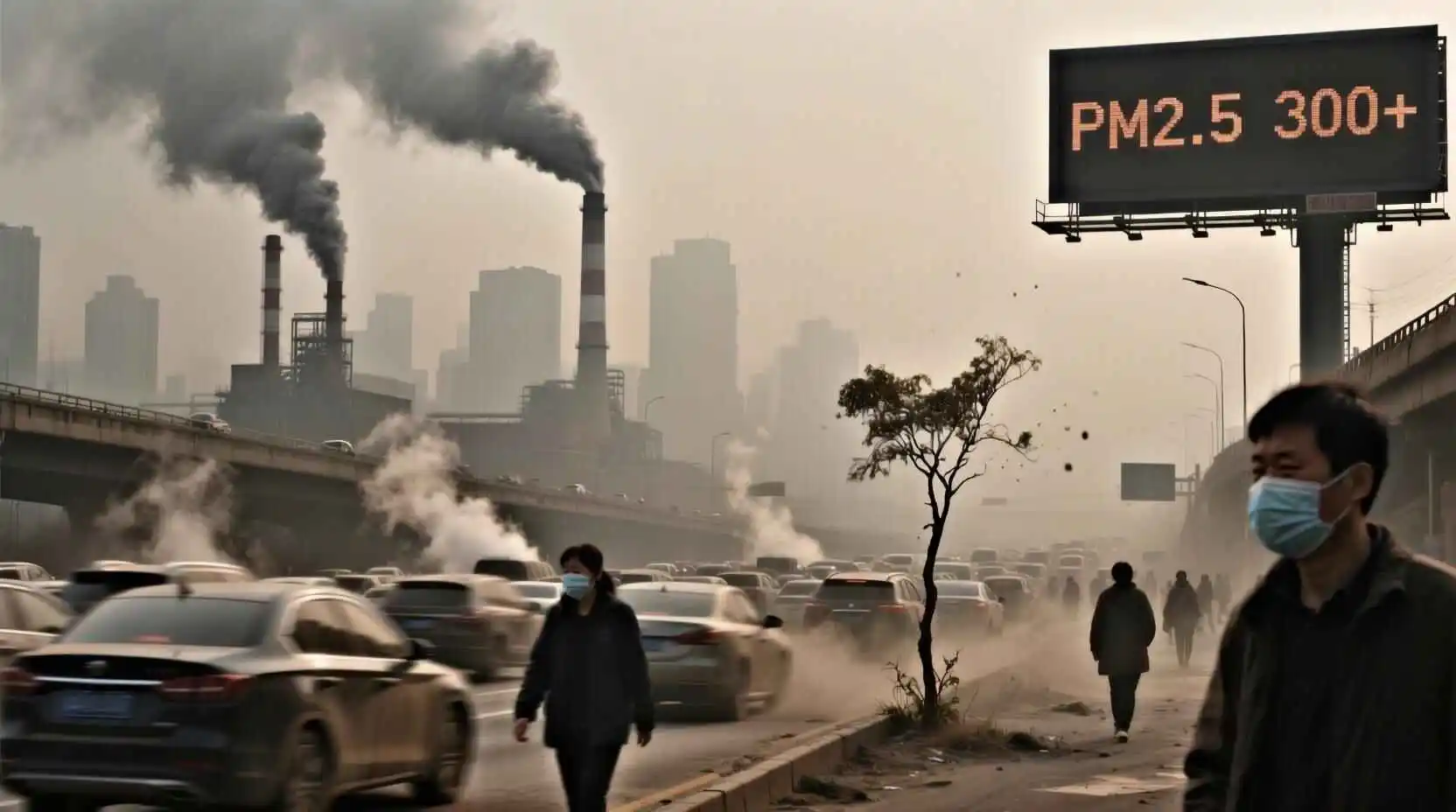
It is easy to feel powerless in the face of such a massive global issue. But individual choices, when multiplied by millions, create change.
- Monitor Your Air: Download an app that tracks the Air Quality Index (AQI) in your area. Adjust your outdoor activities (exercise, walking the dog) based on the data.
- Reduce Your Commute Footprint: If possible, work from home, carpool, bike, or take public transit. Avoid driving during peak hours if you must drive.
- Energy Efficiency at Home: Use energy-efficient appliances. Turn off lights and electronics when not in use. This reduces the demand on power plants.
- Green Your Surroundings: Plant trees in your community. Support local parks. Keep indoor plants to help filter air (though they are no replacement for a purifier).
- Advocate: Vote for leaders who prioritize Environmental Protection. Support policies that tax polluters and subsidize renewables. Raise your voice.
- Reduce, Reuse, Recycle: Lowering your consumption reduces the industrial demand that creates pollution.
- Avoid Burning: Don’t burn leaves, trash, or wood in fireplaces on poor air quality days.
Conclusion: Clearing the Horizon
Air pollution is a crisis that hides in plain sight. It is the heavy haze over a bustling metropolis; it is the invisible dust settling on our pillows; it is the cough of a child living near a highway. It is a threat that respects no borders and spares no demographic.
We have identified the enemies: Particulate Matter, Greenhouse Gases, and toxic chemicals. We have traced them to their sources: the burning of Fossil Fuels, industrial inefficiency, and urban congestion. We have seen the damage: destroyed lungs, failing hearts, and a warming planet.
But the narrative is not yet written in stone. We possess the blueprints for a cleaner future. Through the aggressive adoption of Renewable Energy, the rigorous enforcement of Environmental Protection laws, and a commitment to Sustainable Development, we can reclaim our sky.
The transition will be difficult. It will require economic sacrifice and political courage. But the alternative—a future where the air itself is a weapon—is unacceptable. We are the architects of the atmosphere we breathe. Let us choose to build a world where the sunrise is clear, the breath is deep, and the air is life-giving once more.
Let this be our call to action. Let us clear the air, for ourselves, for our children, and for the planet that hosts us.
FAQS
Basics and Definitions
1.What is air pollution in simple terms?
Air pollution is the release of pollutants into the air that are detrimental to human health and the planet as a whole. It occurs when harmful gases, dust, or smoke enter the atmosphere in large enough amounts to harm living things or damage non-living objects.
- What is the difference between primary and secondary pollutants?
Primary pollutants are emitted directly from a source, such as ash from a volcano or carbon monoxide from car exhaust. Secondary pollutants are not emitted directly; rather, they form in the air when primary pollutants react or interact with one another, such as when sunlight reacts with nitrogen oxides to create ground-level ozone.
- What is PM2.5 and why is it considered the most dangerous pollutant?
PM2.5 stands for “Particulate Matter 2.5.” These are microscopic particles less than 2.5 micrometers in diameter. They are considered the most dangerous because they are so small they can bypass the body’s natural filters, penetrate deep into the lungs, and even enter the bloodstream, affecting major organs.
- What exactly is “Smog”?
Smog is a blend of the words “smoke” and “fog.” It is a type of intense air pollution that looks like a thick, yellowish-black fog. It is typically caused by the reaction of sunlight with nitrogen oxides and volatile organic compounds (VOCs) in the atmosphere, which leaves chemical particles suspended in the air.
- What is the Air Quality Index (AQI)?
The AQI is a standardized tool used by government agencies to communicate how clean or polluted the air is. It runs on a scale from 0 to 500, with higher numbers indicating higher levels of air pollution and greater health risks.
Health Impacts
- How does air pollution affect the lungs?
Air pollutants irritate the respiratory tract, causing inflammation of the lining of the lungs. This can lead to reduced lung function, aggravated asthma, chronic bronchitis, and increased susceptibility to respiratory infections like pneumonia.
- Can air pollution cause heart problems?
Yes. Long-term exposure to polluted air, particularly fine particulate matter, can cause systemic inflammation and oxidative stress, which accelerates atherosclerosis (hardening of the arteries). This increases the risk of heart attacks, strokes, and heart failure.
- Does air pollution affect children differently than adults?
Yes, children are more vulnerable because their lungs, immune systems, and brains are still developing. They also breathe more air relative to their body weight than adults and are often closer to the ground, where heavier vehicle exhaust settles.
- Can air pollution cause cancer?
Yes. The International Agency for Research on Cancer (IARC) classifies outdoor air pollution and particulate matter as carcinogenic to humans (Group 1). Long-term exposure can significantly increase the risk of lung cancer.
- Does air pollution affect cognitive function?
Emerging research suggests that exposure to high levels of air pollution, particularly ultrafine particles, can enter the brain and cause neuroinflammation. This has been linked to cognitive decline in older adults and developmental delays in children.
- Is indoor air pollution a problem?
Yes, indoor air pollution can be just as harmful as outdoor pollution. Sources include tobacco smoke, mold, household chemicals (cleaning agents), and the burning of solid fuels (wood, coal, dung) for cooking and heating, which is a major killer in developing nations.
- Who is most vulnerable to air pollution?
The most vulnerable groups include children, the elderly, pregnant women, people with pre-existing respiratory or heart conditions (like asthma or COPD), and those who work outdoors (like traffic police and construction workers).
Causes and Sources
- What is the main source of air pollution?
The burning of fossil fuels (coal, oil, and natural gas) for electricity, heat, and transportation is the single largest source of air pollution globally. Industrial processes and agriculture are also major contributors.
- How do cars contribute to air pollution?
Vehicles emit a cocktail of pollutants, including Nitrogen Dioxide (NO2), Carbon Monoxide (CO), Particulate Matter (PM), and Volatile Organic Compounds (VOCs). In dense urban areas, vehicle exhaust is often the primary cause of poor air quality.
- How does agriculture cause air pollution?
Agriculture contributes through the emission of ammonia from livestock waste and fertilizers, which reacts with other pollutants to form fine particulate matter. Additionally, the burning of crop residues (stubble burning) creates massive seasonal spikes in air pollution.
- What are volatile organic compounds (VOCs)?
VOCs are chemicals that evaporate easily at room temperature. They are found in many products like paints, solvents, glues, and cleaning supplies. When released into the air, they react with sunlight to form ground-level ozone (smog).
- Can natural events cause air pollution?
Yes, natural events such as volcanic eruptions, wildfires, dust storms, and wind-blown pollen can cause significant air pollution. However, anthropogenic (human-made) pollution is the dominant and most pervasive issue.
Environmental and Climate Impact
- How is air pollution linked to climate change?
Air pollution and climate change are closely linked. Many air pollutants (like CO2 and methane) are also greenhouse gases that trap heat in the atmosphere. Conversely, some pollutants like black carbon (soot) absorb sunlight and accelerate melting, while others like sulfates temporarily cool the planet by reflecting sunlight.
- What is acid rain?
Acid rain is caused when sulfur dioxide (SO2) and nitrogen oxides (NOx) are released into the air, react with water vapor, and fall back to Earth as weak acids. It damages forests, acidifies lakes, and corrodes buildings and statues.
- Does air pollution harm wildlife?
Yes. High levels of ground-level ozone reduce crop yields and stunt plant growth. Heavy metals and pollutants that settle on the ground or in water can be ingested by animals, causing reproductive issues, immune system damage, and poisoning.
Solutions and Protection
- Do air purifiers actually work?
Yes, high-quality air purifiers with HEPA (High-Efficiency Particulate Air) filters are very effective at removing particulate matter (PM2.5 and PM10) and allergens from indoor air. However, they are less effective at removing gases like VOCs unless they have a specialized carbon filter.
- Do surgical masks protect against air pollution?
Standard surgical masks offer minimal protection against PM2.5. To effectively filter out fine particulate matter, one needs to wear a respirator mask, such as an N95 or a mask with a KN95 rating or equivalent, which creates a seal and filters out 95% of particles.
- How does renewable energy help air pollution?
Renewable energy sources (wind, solar, hydro) generate electricity without emitting the pollutants associated with burning fossil fuels. Switching to renewables is the most effective long-term strategy to clear the air.
- What can I do personally to reduce air pollution?
You can reduce your carbon footprint by driving less (using public transit, biking, or walking), conserving energy at home, reducing consumption of goods, avoiding burning trash or leaves, and planting trees. Voting for leaders who support clean energy policies is also impactful.
- What is “sick building syndrome”?
This is a condition where building occupants experience acute health and comfort effects that appear to be linked to time spent in a building, but no specific illness or cause can be identified. It is often caused by inadequate ventilation and indoor chemical pollutants.
Technical and Specific
- What is the difference between PM10 and PM2.5?
The number refers to the particle size in micrometers. PM10 are coarse particles (less than 10 microns) that get trapped in the nose and throat. PM2.5 are fine particles (less than 2.5 microns) that can penetrate deep into the lungs and bloodstream.
- What are the “Six Criteria Pollutants”?
The EPA has identified six “criteria” pollutants for which it sets National Ambient Air Quality Standards: Carbon Monoxide (CO), Lead (Pb), Nitrogen Dioxide (NO2), Ozone (O3), Particulate Matter (PM), and Sulfur Dioxide (SO2).
- Can indoor plants clean the air?
While plants do absorb some gases through photosynthesis, the effect is generally too small to significantly improve air quality in a home or office. You would need an impractical number of plants to match the filtration power of a mechanical air purifier.
- What is an “Airpocalypse”?
The term “Airpocalypse” is often used by the media to describe extreme air pollution events, particularly in Beijing and Delhi, where visibility drops to near zero and air quality indices exceed the maximum readable limits.
- Is air pollution reversible?
Yes, air pollution is reversible. History shows that when strict regulations are implemented (like the Clean Air Act in the US), air quality improves significantly. However, it requires political will, the transition to cleaner technologies, and time for the atmosphere to flush out the pollutants.
Disclaimer: The content on this blog is for informational purposes only. Author’s opinions are personal and not endorsed. Efforts are made to provide accurate information, but completeness, accuracy, or reliability are not guaranteed. Author is not liable for any loss or damage resulting from the use of this blog. It is recommended to use information on this blog at your own terms.

