

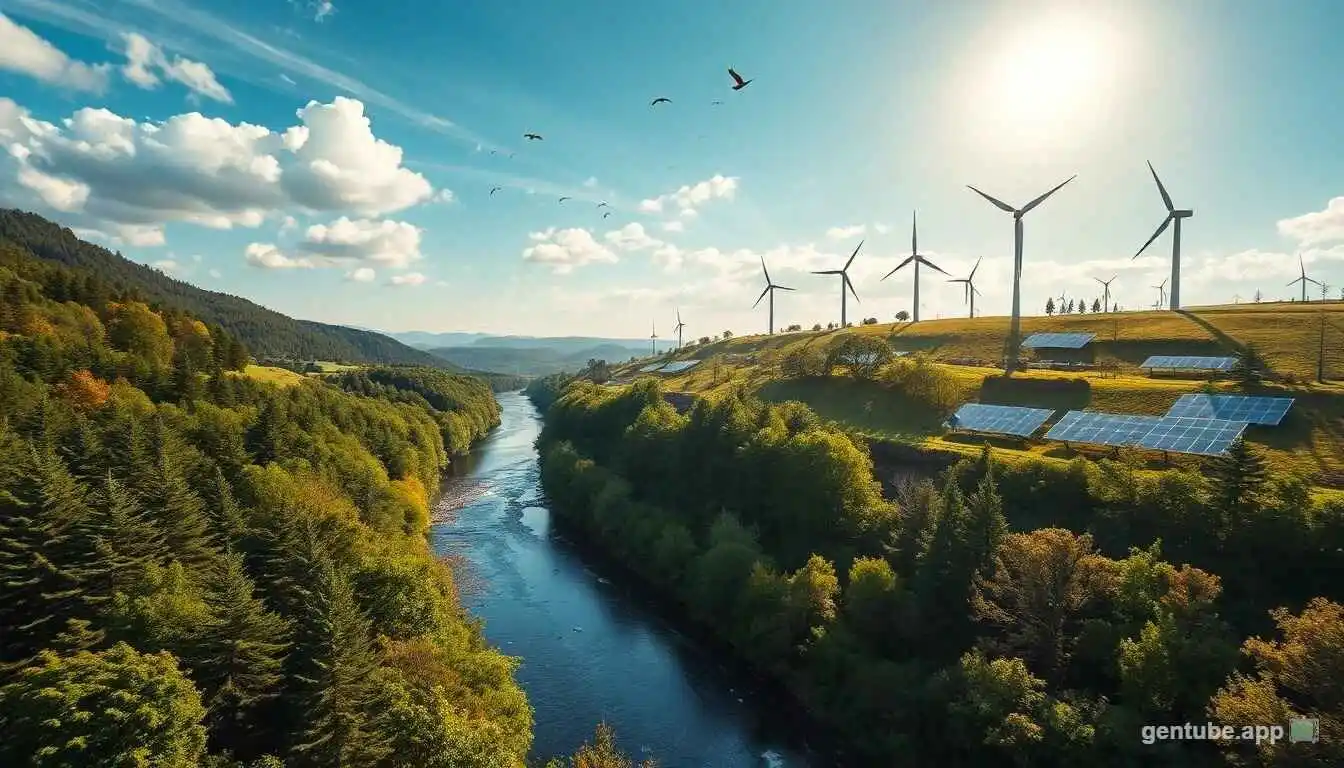
Our Planet Is Sending Warning Signals: Here’s What You Can Actually Do About It
Why the Environment Isn’t Just a “Someday” Problem Anymore
There was a time when environmental issues felt distant — something for scientists in lab coats or activists with picket signs to worry about, while the rest of us went about our daily lives. That time is over. Wildfires now blanket cities in smoke thousands of miles from their source. Coastal towns plan retreats from rising seas. Grocery prices climb as droughts and floods disrupt harvests. The environment isn’t a background issue anymore — it’s the stage on which every other part of modern life plays out.
This guide is designed to cut through the noise. Not another doom-scroll of statistics designed to make you feel helpless, but a clear-eyed look at what’s actually happening to our planet, why it matters to you personally, and — most importantly — what real, practical action looks like at every level, from your kitchen counter to global policy.
Understanding the Environment: More Than Just “Nature”
When people hear the word “environment,” they often picture forests, oceans, and wildlife — the postcard version of nature. But the environment is really the entire interconnected system that sustains life on Earth: the air we breathe, the water we drink, the soil that grows our food, the climate that determines where and how we can live, and the biodiversity that keeps ecosystems functioning.
Every one of these systems is deeply interdependent. Deforestation doesn’t just mean fewer trees — it disrupts rainfall patterns, releases stored carbon, destroys wildlife habitat, and can even affect local temperatures and agriculture hundreds of miles away. Understanding the environment means understanding these connections, not just isolated problems.
The Core Pillars of Environmental Health
- Climate stability — A predictable climate system that supports agriculture, water availability, and human settlement patterns.
- Biodiversity — The variety of plant, animal, and microbial life that keeps ecosystems resilient and functional.
- Clean air and water — Fundamental resources without which human and ecological health collapse.
- Healthy soil — The foundation of food production, carbon storage, and terrestrial ecosystems.
- Sustainable resource use — Consuming natural resources at a rate that allows for regeneration rather than depletion.
The Major Environmental Challenges Facing Us Today
-
Climate Change
Climate change remains the most urgent and far-reaching environmental challenge of our time. Driven primarily by the burning of fossil fuels — coal, oil, and natural gas — greenhouse gas emissions trap heat in the atmosphere, gradually raising global average temperatures. The effects ripple outward: more intense heatwaves, stronger storms, shifting rainfall patterns, melting glaciers and ice sheets, and rising sea levels that threaten coastal communities worldwide.
What makes climate change particularly challenging is its scale and inertia. Emissions released today will continue affecting the climate for decades, meaning the choices made now will shape conditions for generations.
-
Biodiversity Loss
Scientists increasingly describe the current era as a period of accelerated species loss, driven by habitat destruction, pollution, climate change, overexploitation, and invasive species. Biodiversity isn’t just about protecting charismatic animals like elephants or pandas — it’s about maintaining the complex web of relationships that keeps ecosystems stable, from pollinators that support food crops to microorganisms that keep soil healthy.
-
Plastic and Waste Pollution
Plastic production has increased dramatically over the past several decades, and a significant portion ends up in landfills, waterways, and oceans. Plastic doesn’t biodegrade in any meaningful timeframe — it breaks into smaller and smaller pieces called microplastics, which have now been detected in drinking water, food, and even human blood and tissue.
-
Deforestation and Land Degradation
Forests are often called the “lungs of the planet” for their role in absorbing carbon dioxide and producing oxygen, but they also regulate regional water cycles, prevent soil erosion, and provide habitat for the majority of the world’s terrestrial species. Large-scale deforestation, often driven by agricultural expansion, logging, and urban development, undermines all of these functions simultaneously.
-
Water Scarcity and Pollution
Freshwater makes up a small fraction of the planet’s total water supply, and growing populations, agricultural demand, industrial pollution, and climate-driven droughts are placing increasing pressure on this limited resource. In many regions, water scarcity is already a daily reality, not a future threat.
-
Air Pollution
Air pollution from vehicle emissions, industrial activity, and burning fossil fuels contributes not only to climate change but to serious public health issues, including respiratory disease, cardiovascular problems, and premature death. It disproportionately affects low-income communities and urban areas near industrial zones.
-
Soil Degradation
Intensive agriculture, deforestation, and improper land management practices are depleting soil quality worldwide. Healthy soil takes centuries to form naturally, but can be degraded in just a few decades of poor practices, threatening long-term food security.
Why Environmental Health Is Personal Health
It’s tempting to think of environmental issues as separate from daily human concerns, but the connection is direct and measurable:
- Air quality affects respiratory and cardiovascular health. Polluted air is linked to increased rates of asthma, heart disease, and other chronic conditions.
- Water contamination affects nearly everyone. Access to clean water is fundamental to preventing disease and supporting basic health.
- Food security depends on healthy ecosystems. Pollinator decline, soil degradation, and shifting climate patterns all threaten agricultural productivity.
- Extreme weather events displace communities and disrupt livelihoods. Floods, droughts, and heatwaves create ripple effects across housing, employment, and mental health.
- Rising temperatures directly threaten human health. Heat-related illness and death rates climb as extreme heat events become more frequent and intense.
Environmental health and human health aren’t separate categories — they’re two sides of the same coin.
The Role of Businesses and Governments
While individual action matters, systemic change requires action at scale. Governments set policy frameworks — emissions regulations, renewable energy incentives, conservation laws — that shape the choices available to both businesses and individuals. Businesses, meanwhile, control significant portions of global resource use and emissions through manufacturing, supply chains, and product design.
Corporate Sustainability: Beyond Greenwashing
Consumers are increasingly savvy about distinguishing genuine sustainability efforts from “greenwashing” — marketing that overstates environmental credentials without substantive action. Meaningful corporate sustainability typically includes:
- Transparent, third-party-verified emissions reporting
- Genuine investment in renewable energy and efficient supply chains
- Reduced packaging and material waste
- Fair labor practices tied to environmental stewardship
- Long-term commitments with measurable, publicly tracked progress
The Power of Policy
Historical examples demonstrate that coordinated policy action can produce measurable environmental improvement. International cooperation to phase out ozone-depleting substances in the late 20th century led to a documented recovery of the ozone layer over subsequent decades — proof that large-scale environmental problems can be addressed when there’s sufficient political will and international cooperation.
What You Can Actually Do: A Practical Action Framework
Individual action alone won’t solve systemic environmental challenges, but it matters more than cynics suggest — both for its direct impact and for the cultural and market signals it sends. Here’s a practical framework organized by effort level.
Low-Effort, High-Impact Changes
- Reduce single-use plastics. Carry a reusable water bottle, bags, and containers.
- Cut food waste. Plan meals, store food properly, and use leftovers creatively. Food waste in landfills produces significant methane emissions.
- Unplug and switch off. Turn off lights and unplug electronics not in use to reduce phantom energy draw.
- Wash clothes in cold water. This reduces energy use significantly compared to hot water washing.
- Choose reusable over disposable. Cloth napkins, rechargeable batteries, refillable containers.
Medium-Effort Changes
- Reduce meat and dairy consumption, even partially. Animal agriculture is a significant contributor to greenhouse gas emissions, land use, and water consumption.
- Support local and seasonal food. This reduces transportation emissions and often supports more sustainable farming practices.
- Improve home energy efficiency. Better insulation, energy-efficient appliances, and LED lighting reduce both emissions and utility costs.
- Choose sustainable transportation. Walking, cycling, public transit, or carpooling when possible reduces individual carbon footprint significantly.
- Buy less, choose well. Prioritizing durable, repairable products over disposable fast fashion and electronics reduces resource extraction and waste.
Higher-Effort, Higher-Impact Changes
- Switch to renewable energy where available, either through utility programs or home solar installation.
- Reduce air travel or offset unavoidable flights through verified carbon offset programs.
- Advocate and vote. Supporting policies and candidates that prioritize environmental protection has outsized impact compared to individual consumption changes.
- Get involved locally. Community clean-ups, tree-planting initiatives, and local conservation groups create tangible, visible impact.
- Support environmental organizations through donations, volunteering, or amplifying their work.
Common Environmental Myths, Debunked
Myth 1: Individual actions don’t matter because corporations cause most pollution. While it’s true that a relatively small number of companies are responsible for a large share of global emissions, consumer demand drives corporate behavior, and individual actions — especially voting and advocacy — influence policy at scale.
Myth 2: Recycling alone will solve the plastic problem. Recycling is helpful but insufficient on its own. A significant portion of plastic waste is not recyclable in practice, making reduction and reuse far more impactful than recycling alone.
Myth 3: Electric vehicles have zero environmental impact. EVs generally produce fewer lifecycle emissions than gasoline vehicles, particularly as electricity grids incorporate more renewable energy, but battery production and mining still carry environmental costs that continue to be researched and improved.
Myth 4: Nuclear energy is inherently dangerous and dirty. Nuclear power produces electricity with very low direct carbon emissions and has an overall strong safety record compared to fossil fuels when accounting for total historical incidents relative to energy produced, though waste storage and public perception remain ongoing challenges.
Myth 5: Climate change is a distant future problem. Measurable climate impacts — extreme weather, shifting agricultural zones, sea level rise — are already occurring, not confined to a hypothetical future.
Myth 6: Environmental protection and economic growth are always at odds. Renewable energy, green infrastructure, and sustainability-focused industries have become significant sources of job growth and economic opportunity in many regions.
The Science of Ecosystem Resilience
Ecosystems have a remarkable capacity for recovery when given the chance — but that capacity isn’t limitless. Coral reefs, for example, can recover from bleaching events if water temperatures stabilize and stressors are reduced, but repeated bleaching without recovery time leads to permanent degradation. Forests can regenerate after logging or fire, but only if soil health, seed sources, and surrounding biodiversity remain intact.
Understanding this concept of resilience — and its limits — is crucial for effective conservation. It shifts the conversation from purely preventing all disturbance to actively supporting the conditions that allow ecosystems to bounce back: reducing chronic stressors, protecting keystone species, maintaining habitat connectivity, and allowing natural processes room to function.
Environmental Justice: Why Impact Isn’t Evenly Distributed
Environmental degradation doesn’t affect all communities equally. Low-income communities and marginalized populations are disproportionately located near industrial pollution sources, face greater exposure to poor air and water quality, and often have fewer resources to adapt to climate-related disruptions like flooding or extreme heat.
This concept, known as environmental justice, recognizes that effective environmental solutions must address these disparities directly — not just reduce overall pollution levels, but ensure that the benefits of clean environments and the burdens of environmental harm are distributed fairly across communities.
The Circular Economy: Rethinking How We Use Resources
Traditional economic models follow a linear pattern: extract, produce, use, discard. The circular economy proposes an alternative — designing products and systems so that materials are reused, repaired, and recycled continuously, minimizing waste and resource extraction.
Practical examples include:
- Product-as-a-service models, where companies retain ownership of products (like appliances or clothing) and are incentivized to design for durability and repairability
- Modular design, making products easier to repair rather than replace entirely
- Industrial symbiosis, where waste from one process becomes input material for another
- Extended producer responsibility policies that require manufacturers to manage the end-of-life impact of their products
Shifting toward circular economic models represents one of the most promising structural approaches to reducing environmental impact at scale.
Technology’s Double-Edged Role
Technology often gets framed as either environmental savior or villain, but the reality is more nuanced. Renewable energy technology, precision agriculture, and environmental monitoring systems have created powerful tools for reducing environmental impact and tracking ecological health in real time.
At the same time, technology manufacturing carries its own environmental footprint — resource extraction for batteries and electronics, energy-intensive data centers, and electronic waste from rapid device turnover. The environmental value of technology depends heavily on how thoughtfully it’s designed, deployed, and eventually disposed of or recycled.
How Climate and Environmental Action Connect to Daily Life
https://youtu.be/CL_6xi2WXOs
https://youtu.be/CL_6xi2WXOs
It’s easy to feel like environmental issues exist “out there,” separate from everyday routines. But the connection runs through nearly every daily decision:
- The food on your plate connects to land use, water consumption, and transportation emissions.
- The clothes you wear connect to water pollution, chemical use, and textile waste.
- The energy powering your home connects to fossil fuel extraction or renewable infrastructure.
- The products you buy connect to resource extraction, manufacturing emissions, and eventual waste.
Recognizing these connections doesn’t need to produce guilt or paralysis — it can instead offer a sense of agency, revealing the countless small decision points where more sustainable choices are genuinely possible.
Looking Forward: Reasons for Cautious Optimism
Amid legitimate concern, there are genuine grounds for hope. Renewable energy costs have fallen dramatically over the past decade, making solar and wind increasingly competitive with fossil fuels in many markets. Reforestation and ecosystem restoration projects around the world are demonstrating that degraded landscapes can recover. Youth-led climate movements have shifted public discourse and political pressure. International cooperation, while imperfect, continues to evolve through ongoing climate agreements and biodiversity frameworks.
None of this means the work is done — far from it. But environmental progress isn’t a fantasy; it’s an ongoing, achievable process built through policy, innovation, and collective action.
Final Thoughts: Small Actions, Collective Impact
Protecting the environment isn’t about achieving personal perfection or single-handedly solving climate change. It’s about recognizing your role within a much larger system — one where individual choices, community action, business practices, and government policy all interact to shape outcomes.
Start where you are. Reduce what you can. Advocate where you’re able. And remember that environmental protection isn’t a burden separate from a good life — clean air, stable climate, healthy food systems, and thriving ecosystems are the foundation that makes a good life possible in the first place.
FAQS
1.What is the environment, in simple terms?
The environment refers to the natural world around us, including air, water, soil, climate, plants, animals, and the interconnected systems that sustain life on Earth.
2.What is the biggest environmental problem today?
Climate change is widely considered the most urgent and far-reaching environmental issue, as it intersects with and worsens many other challenges, including biodiversity loss, water scarcity, and extreme weather.
3.What causes climate change?
Climate change is primarily driven by greenhouse gas emissions from burning fossil fuels, deforestation, and certain industrial and agricultural practices, which trap heat in the atmosphere and raise global temperatures.
4.How does deforestation affect the environment?
Deforestation releases stored carbon dioxide, disrupts regional rainfall patterns, destroys wildlife habitat, and accelerates soil erosion, affecting both local ecosystems and the global climate.
5.What is biodiversity, and why does it matter?
Biodiversity refers to the variety of life on Earth, including species, genetic diversity, and ecosystems. It matters because diverse ecosystems are more resilient, productive, and better able to withstand environmental stress.
6.How does plastic pollution affect ocean life?
Marine animals often ingest or become entangled in plastic debris, while microplastics accumulate throughout the food chain, affecting marine organisms from plankton to large predators.
7.What are microplastics?
Microplastics are tiny plastic particles, generally less than five millimeters in size, formed as larger plastic items break down. They’ve been detected in oceans, soil, drinking water, and even human tissue.
8.Can individual actions really make a difference for the environment?
Yes. While systemic change requires policy and corporate action, individual choices influence market demand, and collective individual action, especially voting and advocacy, can drive meaningful systemic change.
9.What is a carbon footprint?
A carbon footprint is the total amount of greenhouse gases, primarily carbon dioxide, generated by an individual, organization, product, or activity, usually expressed in terms of carbon dioxide equivalent.
10.How can I reduce my carbon footprint at home?
Improving energy efficiency, reducing energy use, choosing renewable energy where available, minimizing waste, and reducing meat consumption are effective ways to lower a household’s carbon footprint.
11.Is climate change reversible?
Some effects, like certain temperature increases and sea level rise, are considered largely irreversible on human timescales, but limiting future emissions can prevent the most severe projected impacts and allow some natural systems to stabilize or recover.
12.What is renewable energy?
Renewable energy comes from naturally replenishing sources such as sunlight, wind, water, and geothermal heat, in contrast to finite fossil fuels like coal, oil, and natural gas.
13.Why is water scarcity a growing concern?
Population growth, agricultural demand, industrial use, pollution, and climate-driven droughts are placing increasing strain on limited freshwater resources in many regions worldwide.
14.What is the circular economy?
The circular economy is an economic model focused on reducing waste by designing products and systems for reuse, repair, and recycling, rather than the traditional linear “take, make, dispose” approach.
15.How does air pollution affect human health?
Air pollution is linked to respiratory diseases, cardiovascular problems, and increased mortality risk, with children, older adults, and those with existing health conditions being especially vulnerable.
16.What is environmental justice?
Environmental justice is the principle that all communities, regardless of income or race, should have fair access to a clean environment and should not bear a disproportionate share of environmental harm.
17.Are electric vehicles actually better for the environment?
Generally yes, especially over their full lifecycle and as electricity grids shift toward renewable energy, though battery production does carry environmental costs that researchers continue working to reduce.
18.What is ocean acidification?
Ocean acidification occurs when oceans absorb excess carbon dioxide from the atmosphere, lowering the pH of seawater and threatening marine organisms, particularly those with calcium carbonate shells or skeletons, like coral and shellfish.
19.How do wildfires relate to climate change?
Rising temperatures, prolonged droughts, and shifting precipitation patterns linked to climate change create drier conditions that increase the frequency and intensity of wildfires in many regions.
20.What can businesses do to be more environmentally responsible?
Businesses can reduce emissions across their supply chains, invest in renewable energy, minimize packaging waste, ensure transparent sustainability reporting, and design products for durability and recyclability.
21.Is recycling actually effective?
Recycling helps reduce waste and resource extraction, but its effectiveness varies significantly by material and region; reducing consumption and reusing materials generally have a greater environmental impact than recycling alone.
22.What role do forests play in fighting climate change?
Forests absorb and store significant amounts of atmospheric carbon dioxide, making forest conservation and reforestation important strategies for mitigating climate change.
23.How does agriculture impact the environment?
Agriculture affects the environment through land use change, water consumption, greenhouse gas emissions from livestock and fertilizer use, and potential soil degradation from intensive farming practices.
24.What is sustainable development?
Sustainable development refers to meeting present needs without compromising the ability of future generations to meet their own needs, balancing economic, social, and environmental considerations.
25.How does climate change affect food security?
Shifting weather patterns, increased droughts and floods, and changing growing seasons can reduce agricultural yields and disrupt food supply chains, threatening food security in vulnerable regions.
26.What is the ozone layer, and why is it important?
The ozone layer is a region of the stratosphere that absorbs most of the sun’s harmful ultraviolet radiation, protecting living organisms from excessive UV exposure.
27.Has environmental policy ever successfully solved a major problem before?
Yes. International cooperation to phase out ozone-depleting substances led to documented recovery of the ozone layer, demonstrating that coordinated policy action can effectively address global environmental challenges.
28.What can I do locally to support environmental protection?
Participating in community clean-ups, supporting local conservation organizations, advocating for sustainable local policies, and supporting local, sustainable businesses all contribute to environmental protection at the community level.
29.How does consumer behavior influence corporate environmental practices?
Consumer demand for sustainable products and transparency incentivizes businesses to adopt more environmentally responsible practices in order to remain competitive and meet market expectations.
30.What gives experts hope about the future of the environment?
Falling renewable energy costs, successful ecosystem restoration projects, growing public awareness, youth-led climate movements, and ongoing international cooperation all provide grounds for cautious optimism about future environmental progress.
Disclaimer: The content on this blog is for informational purposes only. Author’s opinions are personal and not endorsed. Efforts are made to provide accurate information, but completeness, accuracy, or reliability are not guaranteed. Author is not liable for any loss or damage resulting from the use of this blog. It is recommended to use information on this blog at your own terms.

