

The Silent Siege: Unmasking the Invisible Killer in Our Midst
Introduction: The Grey Horizon
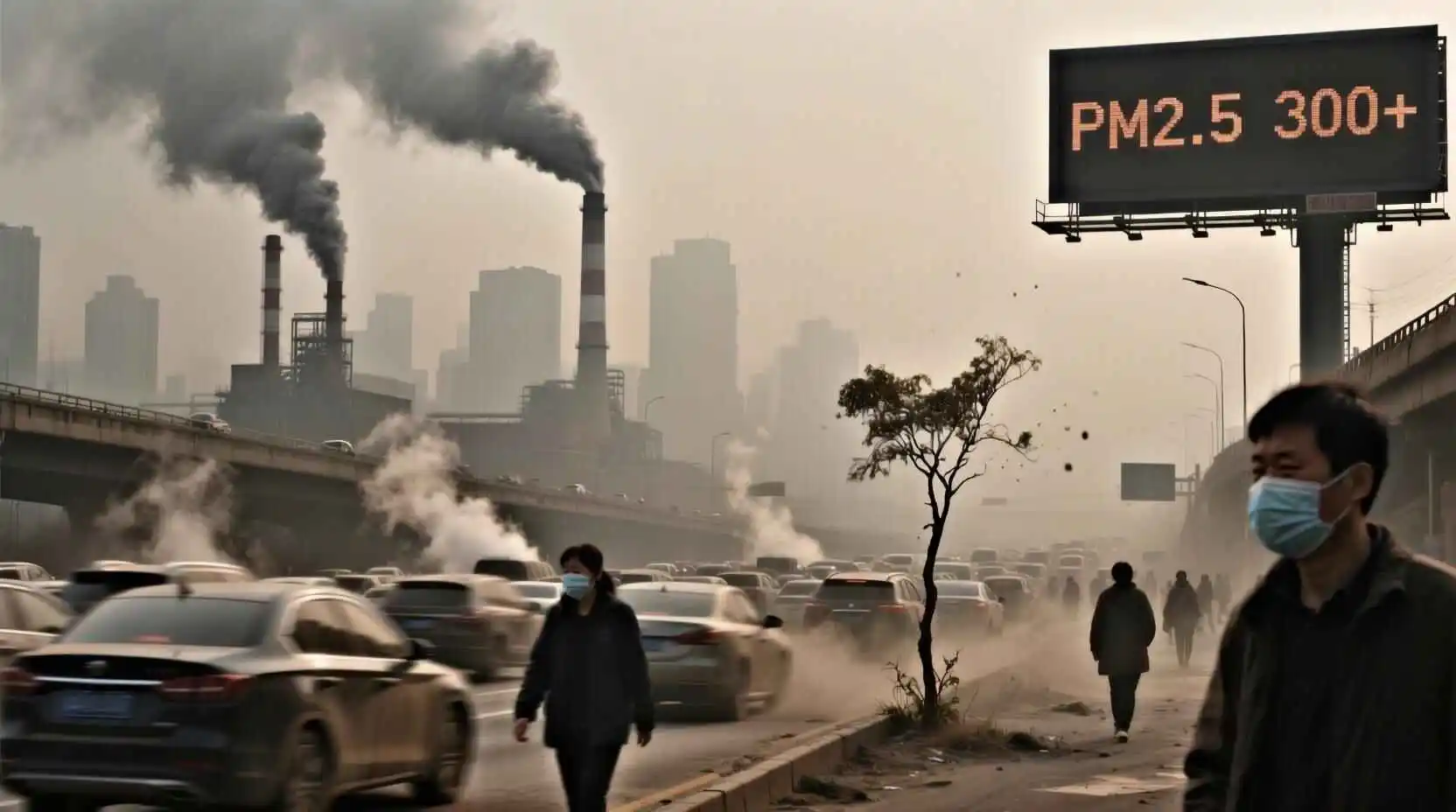
We wake up to it, often without noticing. It paints the sunrise in hues of bruised orange and sickly yellow. It settles on our windowsills, a fine, gritty dust that refuses to be wiped away. It catches in the back of our throats, a dry, metallic tickle that signals the beginning of a chronic cough. It is the shroud of the modern city, the smoky haze of industrial progress, and the silent, invisible thief stealing years from our lives.
We are talking about Air Pollution.
It is the single largest environmental health risk of our time. According to the World Health Organization (WHO), almost the entire global population (99%) breathes air that exceeds WHO guideline limits and contains high levels of pollutants. Imagine a disaster movie where the threat is everywhere—in our homes, on our streets, in the deepest reaches of our oceans—and yet, we cannot see it with the naked eye. This is not science fiction; it is the daily reality for billions of people.
While we often fixate on the dramatic visuals of oil spills or deforestation, the degradation of our air is a more insidious crisis. It is a slow-motion violence. It does not kill instantly; it wears us down, attacking our lungs, our hearts, and even our brains. In this comprehensive exploration, we will dive deep into the causes, the terrifying consequences, and the urgent solutions required to clear the air. We will look at the chemistry of the atmosphere, the politics of industry, and the very air we breathe right now.
Part I: What Exactly is Air Pollution?
To understand the enemy, we must define it. Air pollution occurs when harmful or excessive quantities of substances including gases, particles, and biological molecules are introduced into Earth’s atmosphere. It is not just “smog”—a portmanteau of smoke and fog—but a complex cocktail of chemical reactions and particulate matter.
The atmosphere is a delicate, life-sustaining blanket of gases held in place by gravity. It is composed primarily of nitrogen (78%) and oxygen (21%), with trace amounts of argon, carbon dioxide, and other gases. This delicate balance has allowed life to thrive for millennia. However, the industrial revolution and the subsequent explosion of human population and activity have disrupted this balance in a geological blink of an eye.
Air pollutants can be solid, liquid, or gas. They originate from both natural sources—like volcanic eruptions, wildfires, and dust storms—and human activities. While nature contributes to the baseline of atmospheric particulates, it is the anthropogenic (human-made) pollutants that tip the scales from manageable to catastrophic.
The Classification of Pollutants
Broadly speaking, pollutants are categorized into two types:
- Primary Pollutants: These are emitted directly from a source. Examples include sulfur dioxide from coal burning, carbon monoxide from car exhaust, and ash from industrial smokestacks.
- Secondary Pollutants: These are not emitted directly. Instead, they form in the air when primary pollutants react or interact. A classic example is ground-level ozone, which forms when sunlight reacts with nitrogen oxides (NOx) and volatile organic compounds (VOCs).
Understanding this distinction is crucial because it explains why air quality can vary so drastically day-to-day, depending on sunlight, temperature, and wind patterns.
Part II: The Toxic Cocktail – Major Pollutants Explained
To truly grasp the severity of the issue, we need to get up close and personal with the specific chemicals and particles that are damaging our lungs. These are the primary agents of the silent siege.
- Particulate Matter (PM): The Invisible Invaders
Perhaps the most dangerous of all pollutants is Particulate Matter (PM). These are microscopic solid or liquid particles suspended in the air. They are categorized by their diameter:
- PM10 (Coarse Particles): These are particles with a diameter of 10 micrometers or less. Think of the dust you see floating in a shaft of sunlight or the grit on a windy day. These are caught in the nose and throat and are often expelled naturally.
- PM2.5 (Fine Particles): These are the killers. With a diameter of 2.5 micrometers or less, they are about 30 times smaller than the width of a human hair. Because they are so small, they bypass the body’s natural defenses—nose hairs and mucus—and lodge deep in the lungs and even enter the bloodstream. PM2.5 comes from vehicle exhaust, burning wood, and industrial processes.
- PM0.1 (Ultrafine Particles): These nanoparticles are so small they behave almost like gases, passing through lung tissue directly into the blood and circulating to organs.
Particulate Matter is responsible for the vast majority of health impacts associated with air pollution, including respiratory infections, lung cancer, and cardiovascular disease.
- Nitrogen Dioxide (NO2): The Urban Scourge
This is a reddish-brown gas with a characteristic sharp, acrid odor. It is primarily produced by the burning of fuel in cars, trucks, buses, and power plants. NO2 is a major contributor to the yellow-brown haze often seen hanging over congested cities. It is highly reactive and plays a key role in the formation of ozone and particulate matter. High levels of NO2 inflame the lining of the lungs and increase susceptibility to respiratory infections.
- Sulfur Dioxide (SO2): The Industrial Legacy
SO2 is a colorless gas with a pungent, irritating smell. It is produced largely by the burning of Fossil Fuels at power plants and other industrial facilities, as well as by the smelting of mineral ores that contain sulfur. When released into the atmosphere, SO2 reacts to form fine sulfate particles that contribute significantly to PM2.5 pollution. It is also the primary cause of acid rain, which acidifies lakes and streams, damages forests, and accelerates the decay of buildings and statues.
- Carbon Monoxide (CO): The Silent Suffocator
We often hear about carbon monoxide in the context of faulty home heaters, but it is also a major outdoor pollutant. It is a colorless, odorless gas produced by the incomplete combustion of carbon-containing fuels. When inhaled, CO displaces oxygen in the blood, depriving the heart, brain, and other vital organs of oxygen. While it usually dissipates quickly outdoors, in traffic-heavy urban canyons, it can reach levels that pose a risk to people with heart disease.
- Ground-Level Ozone (O3): A Good Molecule in the Wrong Place
Ozone is confusing because it has a “Dr. Jekyll and Mr. Hyde” personality. Stratospheric ozone (the “ozone layer”) is good; it protects us from the sun’s ultraviolet rays. However, ground-level ozone is bad. It is created by chemical reactions between NOx and VOCs in the presence of sunlight. It is a powerful oxidant that irritates the airways, causing coughing, chest tightness, and pain when taking a deep breath. It is essentially a chemical burn on the lung tissue.
Part III: The Root Causes – The Engines of Emission
Where does all this pollution come from? While the sources are diverse, they can generally be traced back to human activity and our insatiable demand for energy and goods.
The Combustion of Fossil Fuels
The elephant in the room is Fossil Fuels—coal, oil, and natural gas. The burning of these fuels to generate electricity, heat homes, and power vehicles is the single largest source of air pollution globally.
- Coal Power Plants: These behemoths pump out massive quantities of SO2, NOx, and mercury. Despite the growth of renewables, coal remains a dominant energy source in many developing nations, driving economic growth at the cost of air quality.
- Transportation: In many cities, the internal combustion engine is the primary culprit. The millions of cars, trucks, motorcycles, and buses on the road are a constant source of NOx, CO, and PM2.5.
Industrial Processes and Manufacturing
Beyond energy generation, the act of making things pollutes the air. Cement production, steel smelting, chemical manufacturing, and mining all release specific pollutants. Solvents used in paints, dry cleaning, and printing release VOCs, which fuel ozone creation.
Agriculture and Livestock
Agriculture is a surprisingly large source of air pollution.
- Ammonia: This colorless gas is released from livestock waste and fertilizers. While not directly toxic to humans in small amounts, ammonia reacts with other pollutants to form secondary PM2.5.
- Burning Fields: In many parts of the world, farmers burn crop stubble after the harvest. This creates massive seasonal spikes in air pollution, visible from space.
Waste Management
Open burning of waste—landfills catching fire or the deliberate burning of plastic and trash—releases a toxic cocktail of chemicals, including dioxins and furans, which are highly carcinogenic.
Part IV: The Human Toll – A Public Health Emergency
The statistics are staggering, but the human stories behind them are heartbreaking. The impact of air pollution on human health is pervasive and devastating.
The Assault on Respiratory Health
The lungs are the first line of defense and the primary victim. For children, whose lungs are still developing, exposure to high levels of pollution can lead to reduced lung function that persists for life. It is a major trigger for asthma attacks. In fact, studies have shown that children living in high-pollution areas have significantly higher rates of asthma, bronchitis, and pneumonia.
Respiratory Health is compromised by constant inflammation. The pollutants cause the airways to swell, produce excess mucus, and become hyper-reactive. For the elderly, this can be fatal. Chronic Obstructive Pulmonary Disease (COPD), which includes chronic bronchitis and emphysema, is exacerbated and often caused by long-term exposure to polluted air.
Cardiovascular Disease: The Heart of the Matter
Perhaps the most surprising finding of recent years is that air pollution is a major risk factor for heart disease and stroke. When PM2.5 enters the bloodstream, it causes systemic inflammation and oxidative stress. This leads to atherosclerosis (the buildup of plaque in arteries), which can result in heart attacks and strokes. The WHO estimates that air pollution contributes to about 25% of all deaths from heart disease and stroke.
Neurological Impact and Cognitive Decline
New research suggests that breathing dirty air affects the brain. Ultrafine particles can travel up the olfactory nerve (the nerve responsible for smell) directly into the brain. This inflammation is linked to neurodegenerative diseases like Alzheimer’s and Parkinson’s. Moreover, studies have shown that children exposed to high pollution have lower IQs and higher rates of cognitive development delays.
The Vulnerable: Inequality in the Air
Air pollution does not affect everyone equally. The burden is disproportionately borne by the poor and marginalized communities who often live near highways, power plants, and industrial zones. In low- and middle-income countries, the mortality rate from air pollution is significantly higher. This is an issue of Environmental Protection intersecting with social justice.
Part V: The Environmental Impact – Beyond Human Health
While the human cost is paramount, the environment is also reeling from the effects of pollution.
Climate Change: The Feedback Loop
Air pollution and Climate Change are two sides of the same coin. Many of the pollutants that harm our health, particularly CO2 and methane, are also the primary drivers of global warming. However, the relationship is complex. Some pollutants, like black carbon (soot), absorb sunlight and heat the air, accelerating melting in the Arctic. Others, like sulfate aerosols, actually reflect sunlight and temporarily cool the planet, masking the true extent of global warming. As we clean up our air by removing cooling aerosols, we must be aggressive in cutting greenhouse gases to prevent a spike in temperatures.
Acid Rain and Eutrophication
Sulfur and nitrogen emissions can be carried thousands of kilometers by the wind before falling back to Earth as acid rain. This destroys forests, acidifies lakes (killing fish), and damages soils. When these nitrogen compounds settle on waterways, they cause eutrophication—an explosion of algae growth that depletes oxygen in the water, creating “dead zones” where marine life cannot survive.
Damage to Ecosystems and Wildlife
It is not just humans who breathe. Animals, birds, and insects also suffer. Ozone damages plant leaves, reducing their ability to photosynthesize and grow. This impacts agricultural yields (threatening food security) and weakens natural ecosystems. Heavy metals released into the air settle on the ground and are taken up by plants, entering the food chain.
Part VI: Measuring the Menace – Understanding Air Quality Index (AQI)
How do we know if the air is safe to breathe? We rely on the Air Quality Index (AQI). This is a standardized scale used by government agencies to communicate how clean or polluted the air is.
The AQI usually runs from 0 to 500. The higher the number, the greater the level of air pollution and the greater the health concern.
- 0-50 (Green): Good. Air quality is satisfactory.
- 51-100 (Yellow): Moderate. Acceptable for most people.
- 101-150 (Orange): Unhealthy for Sensitive Groups. People with lung disease, older adults, and children should limit exertion.
- 151-200 (Red): Unhealthy. Everyone may begin to experience health effects; sensitive groups may experience more serious effects.
- 201-300 (Purple): Very Unhealthy. Health alert: everyone may experience more serious health effects.
- 301-500 (Maroon): Hazardous. Health warnings of emergency conditions; the entire population is more likely to be affected.
Monitoring apps and stations have become essential tools for residents of polluted cities. They allow people to plan their day—exercising outdoors when the AQI is low and staying indoors with air purifiers when it spikes.
Part VII: The Global Hotspots – A World Tour of Smog
While air pollution is a global problem, there are specific regions that suffer disproportionately.
South Asia: A Suffocating Crisis
Every winter, cities like Delhi, Lahore, and Dhaka make headlines for their hazardous air quality. A combination of agricultural stubble burning, fireworks during festivals like Diwali, vehicle emissions, and cool, stagnant weather traps pollutants near the ground, creating a toxic smog that can last for weeks. Visibility drops to mere meters, and hospitals are flooded with patients struggling to breathe.
East Asia: Industrial Giants
China has famously battled its “airpocalypse” in recent decades. Rapid industrialization led to severe smog. However, China has waged an aggressive “war on pollution” over the last ten years, shutting down coal plants and imposing strict vehicle standards. While Beijing has seen improvements, challenges remain in other industrial centers.
The Global South: The Indoor Threat
In many parts of Africa and Latin America, the biggest air pollution threat is indoor. The reliance on solid fuels like wood, charcoal, and animal dung for cooking and heating creates massive indoor pollution. In poorly ventilated homes, the levels of PM2.5 can be many times higher than outdoor levels, causing severe respiratory issues for women and children who spend the most time near the hearth.
Part VIII: The Path Forward – Solutions and Innovations
The situation is dire, but it is not hopeless. We have the technology and the know-how to clean up our air. It requires political will, economic investment, and individual action.
The Shift to Renewable Energy
The most critical solution is the transition away from Fossil Fuels toward Renewable Energy. Solar, wind, hydroelectric, and geothermal energy produce zero air emissions during operation. Decarbonizing the electricity grid would have an immediate and profound impact on air quality. Investing in battery storage is also key to managing the intermittent nature of renewables.
Sustainable Transport
We must rethink how we move. Expanding public transit systems—electric subways, trams, and buses—can take millions of cars off the road. Promoting cycling and walking through safe infrastructure not only reduces pollution but improves public health. The transition to Electric Vehicles (EVs) is also accelerating, removing tailpipe emissions from cities entirely.
Regulatory Frameworks and Environmental Protection
Laws work. The Clean Air Act in the United States is a prime example. Since its implementation, major air pollutants have dropped significantly, even as the economy has grown. This proves that economic growth does not require dirty air. Stronger emissions standards for industry, power plants, and vehicles are essential. We need robust Environmental Protection agencies with the teeth to enforce these standards globally.
Green Architecture and Urban Planning
Designing cities for fresh air is vital. Green spaces and urban forests act as “lungs,” filtering pollutants and absorbing CO2. Building design should emphasize natural ventilation to reduce the need for air conditioning (which consumes energy and pollutes indirectly). Vertical gardens on buildings can help scrub pollutants from the urban canyon.
Technological Interventions
Innovations like carbon capture technology, which catches CO2 at the smokestack, and smokestack scrubbers that remove SO2 and NOx, are improving. Indoor air purifiers with HEPA filters have become a lifeline for millions in polluted cities. However, technology is often a “band-aid” solution; we must address the root cause: the emission itself.
Part IX: The Role of Sustainable Development
Ultimately, cleaning up our air is about redefining progress. Sustainable Development is development that meets the needs of the present without compromising the ability of future generations to meet their own needs.
Air pollution creates a massive economic burden. Health costs from pollution run into the trillions of dollars. Lost productivity due to illness and premature death stunts economic growth. By investing in clean air, we are investing in a robust economy. Healthy populations are more productive, innovative, and resilient.
Achieving the UN Sustainable Development Goals (SDGs), specifically Goal 3 (Good Health and Well-being) and Goal 11 (Sustainable Cities and Communities), is impossible without addressing the air quality crisis. It requires a holistic approach that integrates energy policy, transport planning, housing, and public health.
Part X: What Can You Do? – Individual Actions in a Collective Crisis
https://youtu.be/AmUYtYXBxBg

