

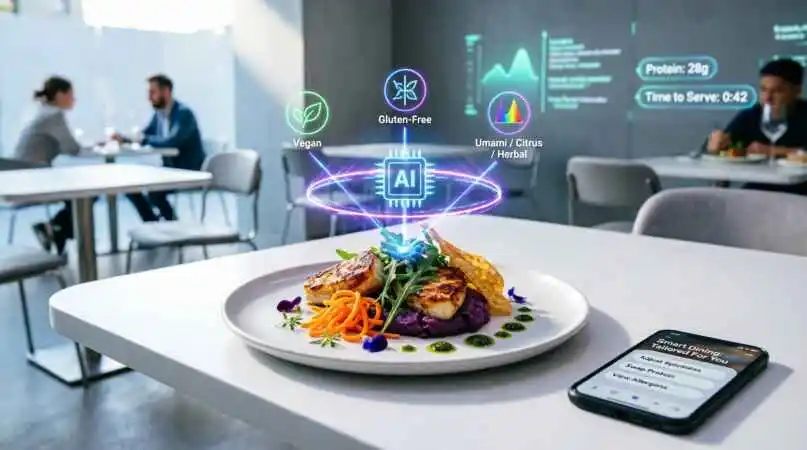
- Calibrate Taste Preferences Regularly: Your palate changes. Update your flavor profile quarterly through the app’s tasting module to prevent recommendation stagnation.
- Maintain Sensor Hygiene Diligently: Dirty cameras and thermal sensors cause cascading errors. Follow cleaning schedules religiously; don’t wait for error messages.
- Use Feedback Loops Actively: Rate every meal honestly. The AI improves only with accurate data. Silent dissatisfaction teaches the system nothing.
- Keep Human Oversight During Transition: Never go fully autonomous immediately. Run parallel human-robot operations for 30 days to catch edge cases and build staff confidence.
- Document Edge Cases: When the system fails unexpectedly, record details meticulously. These anomalies become your custom troubleshooting knowledge base and vendor improvement requests.
Conclusion: The Future Is Personalized, Not Just Automated
After a decade of reviewing kitchen technology, I can state unequivocally that Smart Dining: How AI and Robotic Kitchens Are Customizing What We Eat has moved from speculative futurism to practical reality. The value proposition is no longer about replacing humans; it is about augmenting human capability to deliver nutrition and enjoyment at a level previously impossible at scale.
The technology is not perfect. It struggles with creativity, demands significant investment, and raises valid privacy concerns. But for contexts where consistency, personalization, and nutritional precision matter—senior living, healthcare facilities, athletic training centers, and health-conscious households—the benefits outweigh the limitations.
As sensors become cheaper, algorithms more nuanced, and robots more dexterous, the gap between automated efficiency and human warmth will continue to narrow. The goal is not a kitchen without people. It is a kitchen where technology handles repetition and precision so that humans can focus on creativity, connection, and care. That is the true promise of smart dining, and it is finally within reach.
FAQS
1.What is smart dining?
Smart dining uses AI and robotics to personalize meals based on individual health data and preferences. It combines precision cooking with adaptive learning for customized nutrition.
2.How does AI customize my food?
AI analyzes your biometric data, dietary restrictions, and taste history to generate unique meal specifications. It adjusts ingredients, portions, and cooking methods in real-time.
3.Are robotic kitchens safe?
Yes, certified systems meet strict safety standards including emergency stops and collision detection. They undergo rigorous testing before deployment in food service environments.
4.Can smart dining replace human chefs?
No, it augments them. Robots handle repetitive tasks while humans focus on creativity, quality control, and guest interaction. Collaboration produces better outcomes than replacement.
5.What health data do these systems use?
Systems may integrate wearable data, medical records, and self-reported preferences. All data usage requires explicit consent and follows HIPAA/GDPR compliance standards.
6.How much does a commercial smart kitchen cost?
Entry-level systems start around $40,000; full installations range $100,000-$300,000+. Costs vary by scope, brand, and integration requirements.
7.Do robotic kitchens reduce food waste?
Yes, precise portioning and predictive inventory typically reduce waste by 20-30%. Sensors also identify spoilage earlier than manual inspection.
8.Can I use smart dining at home?
Residential options exist but are limited. Precision cookers and smart ovens offer partial functionality; full robotic kitchens remain commercially focused.
9.How accurate is nutritional tracking?
Sensor-verified systems achieve 95%+ accuracy versus 70-80% for manual estimation. Actual ingredient weight and cooking loss are measured, not assumed.
10.What happens if the robot malfunctions mid-cook?
Systems have fail-safes including automatic shutdown and human override protocols. Backup processes ensure food safety is never compromised during technical issues.
11.Do smart kitchens work with any menu?
They excel with modular, component-based menus. Complex traditional cuisines requiring improvisation face compatibility challenges without significant adaptation.
12.How long does implementation take?
Commercial installations typically require 4-8 weeks including site prep, integration, testing, and staff training. Timeline depends on facility complexity.
13.Is my dietary data secure?
Reputable vendors encrypt data end-to-end and process sensitive information locally. Always review privacy policies and request data handling documentation before签约.
14.Can the system learn new recipes?
Yes, through supervised learning. Chefs demonstrate techniques once; the system replicates and refines them. Continuous updates expand capability over time.
15.What maintenance do robotic kitchens need?
Daily cleaning, weekly calibration, and monthly professional service are standard. Preventive maintenance prevents costly downtime and ensures food safety compliance.
16.Do customers notice a difference in food quality?
Studies show higher satisfaction scores due to consistency and personalization. However, some miss human touch; balancing tech with hospitality remains critical.
17.Can smart dining accommodate allergies safely?
Yes, automated systems eliminate cross-contamination risks through dedicated tooling and sanitation cycles. Allergen protocols are executed with zero deviation.
18.How does pricing compare to traditional dining?
Initial costs are higher, but operational savings from reduced waste and labor often offset premiums within 18-24 months. Consumer pricing varies by market positioning.
19.What skills do staff need to operate these systems?
Technical literacy, basic troubleshooting, and collaborative workflow management. Training programs typically span 2-4 weeks depending on system complexity.
20.Can I integrate smart dining with my existing POS?
Most enterprise systems offer API integrations with major POS platforms. Verify compatibility during evaluation; custom development may be required for legacy systems.
21.Do robotic kitchens improve speed of service?
During peak hours, yes—consistent throughput without fatigue. Off-peak, human teams may be faster for small batches. Optimal scheduling maximizes both.
22.What cuisines work best with automation?
Bowl concepts, assembly-line formats, and standardized international dishes perform optimally. Artisanal bread baking and haute cuisine present greater challenges.
23.How does the system handle ingredient variability?
Computer vision assesses each item individually and adjusts processing accordingly. Extreme outliers are flagged for human review to maintain quality standards.
24.Are there environmental benefits to smart dining?
Reduced waste, optimized energy use, and efficient water consumption contribute to sustainability. Some systems also track carbon footprint per meal.
25.Can elderly users benefit from smart dining?
Absolutely. Texture modification, nutrient fortification, and medication-aware preparation address senior-specific needs while maintaining dignity and choice.
26.What warranty coverage is typical?
Standard warranties cover parts and labor for 1-2 years. Extended service agreements include preventive maintenance and priority response times.
27.How do I train the AI on my preferences?
Through initial onboarding surveys, meal ratings, and optional taste tests. The system refines its model continuously based on your feedback patterns.
28.Does smart dining work for large events?
Scalability is a key advantage. Systems maintain consistency across hundreds of covers without quality degradation, unlike human teams under pressure.
29.What happens during power outages?
Battery backups preserve critical functions; manual override procedures ensure food safety. Recovery protocols minimize disruption when power restores.
30Where is this technology heading next?
Advances in tactile sensing, emotional recognition, and sustainable ingredient sourcing will deepen personalization while addressing current limitations in creativity and adaptability.
Disclaimer: The content on this blog is for informational purposes only. The author’s opinions are personal and not endorsed. Efforts are made to provide accurate information, but completeness, accuracy, or reliability are not guaranteed. The author is not liable for any loss or damage resulting from the use of this blog. It is recommended to use the information on this blog at your own discretion.

