

The Southern Beacon: ‘We Need Politicians and Experts’ – How Chile is Putting the Climate Crisis First
Introduction: A Laboratory for the Future
In the long, narrow ribbon of land that is Chile, the climate crisis is not a distant theory debated in air-conditioned conference halls. It is a visceral, daily reality. It is the smoke from a thousand wildfires choking the sky. It is the bone-dry bed of a lake that once provided water to a valley of farmers. It is the retreated glacier exposing rock that hasn’t seen the sun in millennia.
For decades, this South American nation—a sliver of land wedged between the Andes mountains and the Pacific Ocean—was known primarily for its copper, its wine, and the brutal economic experiments of the Pinochet dictatorship. But today, Chile is emerging as something entirely different: a global laboratory for democratic climate action.
While major powers in the Global North bicker over incremental changes and deny the severity of the looming catastrophe, Chile is attempting to rewrite the fundamental rules of its society. Driven by a generation of young activists and a government that has unapologetically embraced the urgency of the hour, Chile is weaving climate action into the very fabric of its laws and economy.
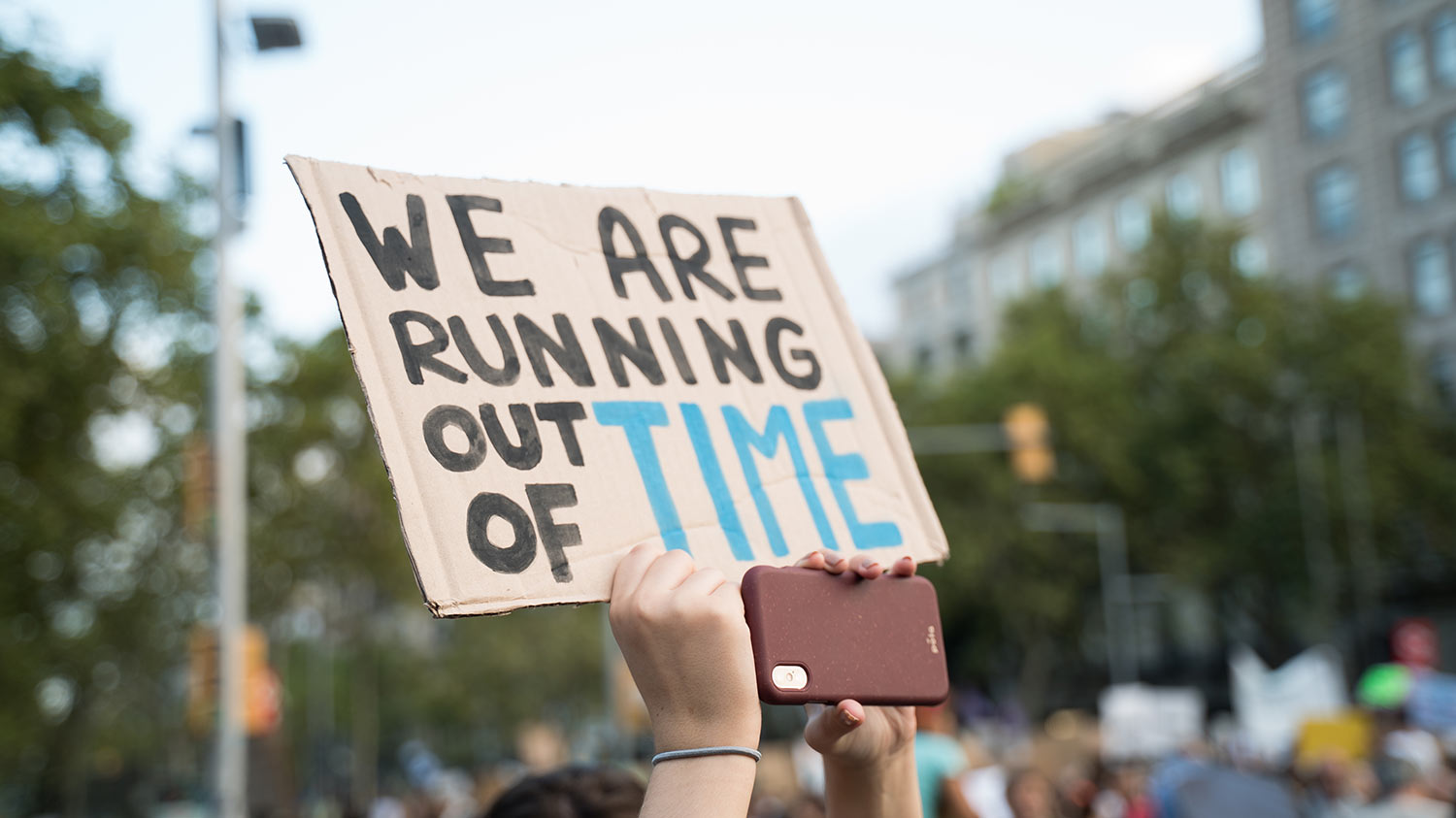
The rallying cry of this movement—summed up succinctly by environmental leaders, scientists, and President Gabriel Boric alike—is simple but profound: “We need politicians and experts.”
This phrase represents a rejection of the populist rejection of science, and a rejection of the kind of hollow environmentalism that offers green rhetoric while subsidizing fossil fuels. Instead, Chile is forging a new path where political will is married with scientific rigor. They are attempting to prove that a developing nation, rich in extractive resources, can pivot to a green economy without collapsing.
This is the story of how Chile is putting the climate crisis first, battling the ghosts of its neoliberal past, and trying to save its water, its land, and its people.
Chapter 1: The Megadrought – A Nation Running Dry
To understand why Chile is acting with such urgency, one must understand the water. Chile is currently suffering from a “megadrought” that has lasted for over 13 years. It is the longest dry spell in the country’s recorded history, stretching back a millennium.
The rivers that feed the Central Valley—the agricultural heartland of the nation—are dwindling to trickles. In the Pelequén sector, the Cachapoal River has simply disappeared. In the north, the Atacama Desert, the driest non-polar desert in the world, is expanding.
This crisis has forced the climate conversation from the fringes to the center of Chilean life. It is no longer about “saving the polar bears” for the average Chilean; it is about survival. It is about whether small-scale avocado farmers can keep their land, or whether they will be bought out by agribusiness giants who can drill deeper wells.
The water crisis exposed a fatal flaw in the Chilean model: the privatization of water. Enshrined in the 1980 Constitution written under Pinochet, water rights were treated as private property, separate from the land itself. This meant that while a campesino (peasant) might own the soil, the water flowing underneath it could belong to a mining company hundreds of miles away.
This model worked fine when water was abundant. But as the climate heated up and the rain stopped, it became a weapon of mass destruction. The “experts”—the hydrologists and climatologists—sounded the alarm. They used data to show that the water rights were being allocated at levels that were mathematically impossible to sustain.
This convergence of scientific data and human suffering created the political pressure necessary for change. It created the mandate for the new government to declare a “Water Emergency” and begin the Herculean task of rewriting the water code. In Chile, the climate crisis is not an environmental issue; it is a social justice issue.
Chapter 2: The Marriage of Science and State
The phrase “We need politicians and experts” is more than a slogan; it is a governing philosophy.
When Gabriel Boric, the 36-year-old former student protest leader, took office in 2022, he did something unusual for a Latin American politician: he elevated scientists to positions of real power. He appointed a geophysicist, Maisa Rojas, as his Minister of the Environment.
This was a signal. It told the world that Chile was done with climate denial. Maisa Rojas is not a career politician; she is a veteran of the Intergovernmental Panel on Climate Change (IPCC). She has spent her career studying the atmosphere. Her appointment marked a shift toward “evidence-based governance”—a model where policy is drafted in response to data, not ideology.
This administration passed the Framework Law on Climate Change (Ley Marco de Cambio Climático), a piece of legislation that legally binds the state to carbon neutrality by 2050 at the latest. But the law goes further than just targets. It institutionalizes the role of experts.
The law created the Council of Ministers for Climate Change, but crucially, it also established a Scientific Committee on Climate Change. This committee, composed of independent researchers, has the legal authority to review and advise on national climate plans. They are the watchdogs, ensuring that the politicians don’t fudge the numbers or kick the can down the road.
In a world where “fake news” often drowns out scientific consensus, Chile has built a mechanism to amplify the experts. The politicians provide the mandate and the execution; the scientists provide the roadmap. It is a symbiosis designed to insulate long-term climate survival from the short-term volatility of election cycles.
Chapter 3: The Constitutional Gamble – Rewriting the Social Contract
Perhaps the most ambitious aspect of Chile’s climate pivot was the attempt to rewrite the Constitution. While the specific draft constitution was rejected in a September 2022 referendum, the process and the discourse it ignited have permanently altered the landscape.
The proposed constitution was the first in the world to explicitly address the climate crisis in a comprehensive way. It would have enshrined the rights of nature, giving legal personhood to rivers, glaciers, and ecosystems. It declared that the state had a duty to protect the environment and to mitigate the climate emergency.
Although the specific text was voted down (largely due to economic fears and political polarization rather than environmental objections), the window has been opened. The “Green” constitution is no longer a fringe idea; it is a destination.
The current debate in Chile is about how to balance the need for economic development—lithium and copper mining are the engines of the economy—with the imperative of ecological preservation. The old constitution, a relic of the neoliberal Chicago Boys, prioritized extraction above all else. The new consensus, forged in the heat of the climate crisis, is that extraction cannot come at the cost of extinction.
The drive to put the climate crisis first is now moving through the legislature and regional councils, bit by bit. The “politicians and experts” coalition is learning from the referendum defeat, realizing that they must pair environmental ambition with economic security to win the trust of the people. But the seed has been planted: the constitution of the future must be green.
Chapter 4: The Green Hydrogen Revolution – Economic Survival as Climate Action
Chile is not just talking about reducing emissions; it is reimagining its economy. The country possesses the best solar irradiance on the planet in the Atacama Desert and some of the strongest winds on earth in Patagonia.
For decades, these resources were untapped. But now, Chile has launched a National Green Hydrogen Strategy. The goal is to produce the cheapest green hydrogen in the world by 2030.
Why does this matter? Because green hydrogen—produced by splitting water using renewable electricity—is the fuel of the future. It can replace coal in steel manufacturing, oil in shipping, and gas in heavy industry.
Chile is positioning itself not just as a supplier of raw materials (copper/lithium) but as a supplier of the energy transition itself. The “experts” have mapped out the zones where the wind and sun are optimal. The “politicians” have streamlined the permitting processes and offered tax breaks to attract billions of dollars in foreign investment from companies like Enel, Engie, and HIF Global.
This is a masterclass in putting the climate crisis first by making it profitable. It decouples economic growth from carbon emissions. It creates jobs in the regions that have been left behind, offering a “Just Transition” for workers in the fossil fuel sector.
In the port of Punta Arenas, plans are underway for a massive synthetic fuel plant that will use wind power to create fuel for airplanes. If successful, it will be a world-first. It is the kind of moonshot thinking that happens when you let experts dream and politicians build.
Chapter 5: The War on Coal – A Just Transition
Chile has historically relied on imported coal and gas for power. But in recent years, it has led Latin America in the decarbonization of its energy matrix.
In 2019, the government signed a landmark agreement with major energy generators (Enel, Colbún, Engie, AES Andes) to phase out coal plants by 2040. They have since accelerated that timeline, aiming to close them by 2025 in many cases.
But putting the climate crisis first means dealing with the human cost. The coal plants are located in specific communities—like Mejillones and Huasco—where the entire economy revolves around the mines and the power stations. If you just turn off the lights, you destroy livelihoods.
This is where the “Just Transition” strategy comes in. It is a policy framework driven by social experts and environmentalists working together. It involves retraining coal workers for jobs in solar installation, green hydrogen production, and ecosystem restoration.
The government is investing in these regions, building infrastructure and vocational schools. They are turning the “brown” economy into a “green” one. It is a delicate, difficult process, but it is essential. Chile understands that you cannot have a sustainable climate policy if it leaves the working class behind. The social unrest that rocked Chile in 2019 was a stark reminder that inequality is the greatest threat to stability.
Chapter 6: The Lithium Dilemma – Fueling the World, Protecting the Salt Flats
There is a bitter irony at the heart of Chile’s climate strategy. To fight the climate crisis, the world needs batteries. To make batteries, the world needs lithium. And Chile has the largest lithium reserves in the world, located in the salt flats of the Atacama.
Extracting lithium consumes massive amounts of water in a region where there is almost none. It threatens the fragile ecosystems of the flamingos and the indigenous communities who have lived there for centuries.
So, how does Chile put the climate crisis first when it is being asked to tear up its own backyard to save the planet?
This is the hardest test for the “politicians and experts” alliance.
The experts (biologists, hydrologists, indigenous leaders) have argued that the current “free-for-all” model of extraction is unsustainable. They have pushed for a new state-led strategy where the government has a controlling stake in lithium production.
The politicians, led by President Boric, are attempting to navigate this minefield. They have proposed a strategy where the state creates a National Lithium Company. This would allow the government to control the pace of extraction, ensuring that environmental standards are met and that profits are shared with the local communities, rather than just vanishing into the coffers of multinational corporations.
It is a high-wire act. If they stop extraction, they stall the global energy transition. If they allow unfettered extraction, they destroy their own environment. Chile is trying to forge a “third way”—a model of resource nationalism that is rooted in environmental stewardship. They are insisting that the lithium must be “Green Lithium,” extracted with the lowest possible footprint and maximum benefit to the local population.
Chapter 7: Protecting the Glaciers – The Law of Ice
In June 2022, Chile made history by passing a law to protect its glaciers. It was a victory that was over a decade in the making, a triumph of persistence by scientists and activists against the powerful mining lobby.
Chile’s glaciers are the water towers of the country. They store water in the winter and release it slowly in the summer, feeding the rivers that irrigate the central valleys. But climate change is melting them at an alarming rate. Mining activity, which generates dust and alters the microclimate, accelerates this melting.
The new law bans mining in protected glacier areas, requires environmental impact assessments for projects near glaciers, and establishes a national registry of glaciers.
The passage of this law was a classic example of the “experts and politicians” dynamic. Glaciologists spent years gathering data, flying over the Andes, and mapping the ice sheets. They proved that mining was causing irreversible damage. The politicians then took that data and fought the legislative battle in Congress, facing down accusations that they were destroying jobs.
In passing the law, Chile declared that some things are more important than economic growth. It declared that ice, frozen water, is a living entity that deserves protection. It was a bold statement of priorities: the climate crisis comes first.
Chapter 8: The Forests – From Monocultures to Biodiversity
Chile is a country of forests. The native forests in the south are vast, carbon-sucking reservoirs of biodiversity. However, for decades, the state subsidized the planting of monoculture pine and eucalyptus plantations. These trees grow fast and feed the timber and pulp industry, but they drink the water dry and destroy the native undergrowth.
When wildfires swept through Chile in 2017, burning vast swathes of the landscape, the link between these monocultures and the intensity of the fires became undeniable. The “experts” warned that these plantations were essentially green deserts—tinderboxes waiting for a spark.
The current government is shifting course. They are promoting the “Restoration of Native Forests.” They are offering incentives for landowners to replace water-guzzling pines with native species like the Roble and the Raulí.
This is not just about capturing carbon; it is about restoring the hydrological cycle. Native forests absorb rain and release it gradually, mitigating the flood/drought cycles that are becoming more extreme. It is a long-term play, a recognition that you cannot solve the climate crisis with industrial forestry alone. You need nature-based solutions designed by ecologists.

