

The Sledgehammer and the Scapegoat: How the Federal Reserve’s Interest Rate Hikes Are About to Shaft American Workers
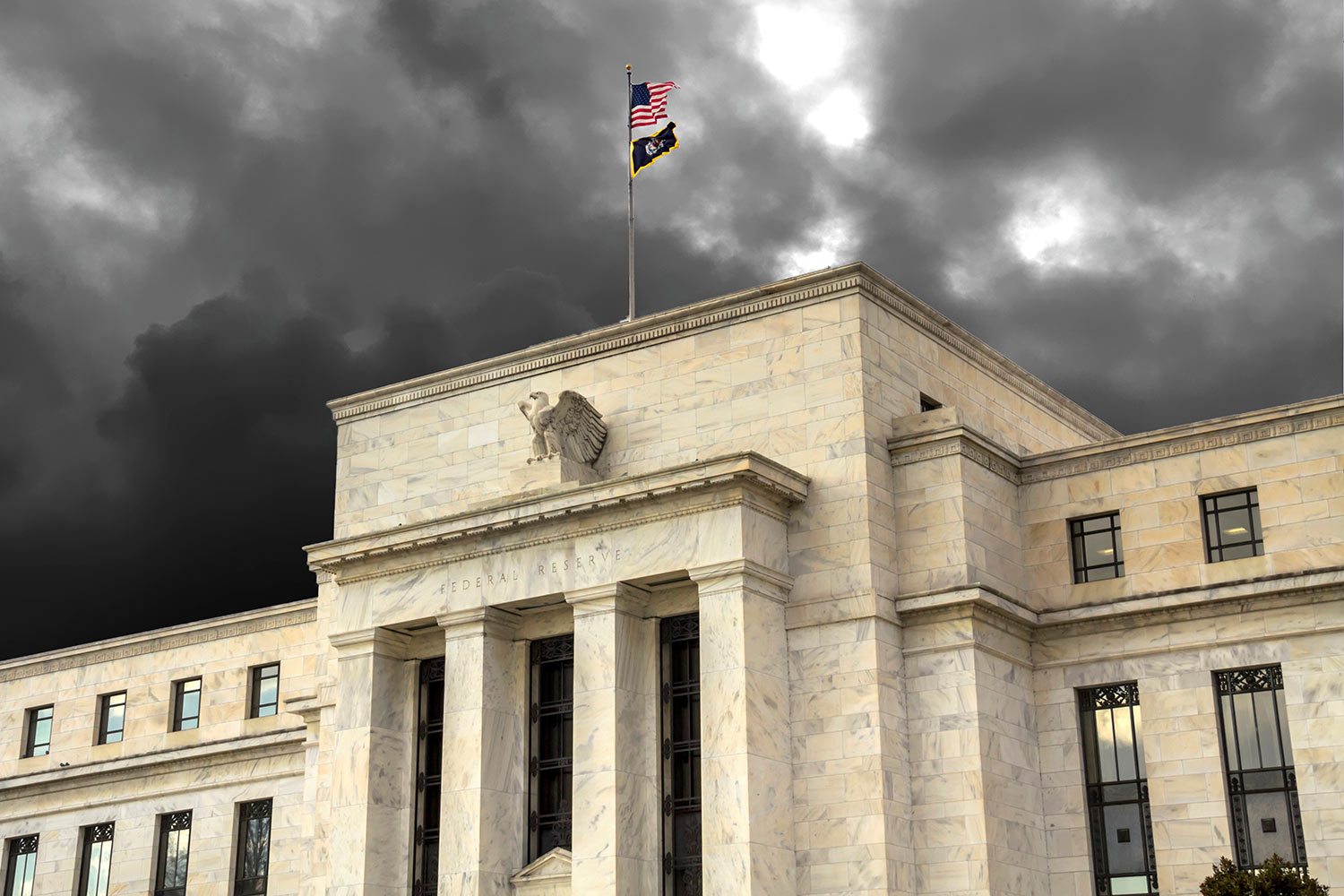
There is a building in Washington, D.C., shrouded in an aura of impenetrable, almost priestly authority. It is constructed of white marble, deliberately designed to resemble a Greek temple, projecting an image of stoic, apolitical wisdom. This is the headquarters of the Federal Reserve, the central bank of the United States.
Inside this temple, a dozen unelected officials—the Board of Governors and the presidents of the regional reserve banks—periodically gather to make a decision that will ripple through the lives of over 330 million Americans. They do not vote on a law. They do not propose a tax. They simply adjust a single, obscure-sounding number: the target for the Federal Funds Rate.
And right now, the whispers from those marble halls are growing louder. The data is shifting, the inflation ghosts are restless, and the Federal Reserve is preparing to do what it has done historically, time and time again. They are about to raise interest rates.
When they do, the financial pages will cheer. Wall Street analysts will write glowing op-eds about the Fed’s “resolve.” Pundits will praise Jerome Powell for his “courage” in making the tough calls. But beneath the polished economic jargon and the market euphoria lies a brutal, unspoken reality: Raising interest rates is not a precision instrument. It is a sledgehammer. And the anvil upon which that sledgehammer falls is the American worker.
To understand why the Fed is about to shaft the working class, we have to strip away the dense, academic jargon of macroeconomics and look at the raw, mechanical reality of how a rate hike actually functions in the real world. We must examine the Fed’s true mandate, the myth of the “soft landing,” the housing market hostage situation, and the insidious way monetary policy is used to discipline labor.
This is the story of how the most powerful economic institution in the world uses the threat of unemployment to keep wages down, protect corporate profit margins, and systematically transfer wealth from the bottom up.
Chapter 1: The Mechanics of the Sledgehammer
To understand the crime, you must first understand the weapon.
When the Federal Reserve raises the “Federal Funds Rate,” they are essentially dictating the cost of borrowing money between commercial banks. But this number acts as the gravitational center of the entire US financial system. When the Fed pulls this lever up, the cost of all money goes up.
The mortgage rate on a suburban home ticks upward. The interest rate on a small business loan to buy a new delivery van spikes. The APR on a working-class family’s credit card—which they are using to buy groceries because their wages haven’t kept pace with inflation—shoots into the stratosphere. The cost of capital for a multinational corporation looking to build a new factory becomes prohibitively expensive.
Why would the Fed deliberately make life more expensive? The stated goal is always the same: to “cool down” the economy and fight inflation.
The theory, born in the halls of academia and polished over decades, goes something like this: If you make borrowing too expensive, businesses will stop expanding and stop hiring. If people lose their jobs or fear losing their jobs, they will stop buying things. If people stop buying things, demand drops. When demand drops, companies have to stop raising prices. Inflation is cured.
Read that sequence again. Let it sink in.
The Federal Reserve’s primary, and some would argue only, tool for fighting inflation is to intentionally induce economic pain. It is a policy of austerity by proxy. It is a strategy that relies entirely on making the American worker poorer, more insecure, and more desperate, so that they stop spending money.
They do not have a tool to fix broken supply chains. They do not have a tool to increase the supply of oil or grain or microchips. They cannot pass legislation to break up corporate monopolies that are price-gouging consumers. They have exactly one lever: the cost of money. And pulling that lever means pulling the rug out from under the labor market.
When the Fed raises rates, they are effectively looking at the American workforce and saying: “There are too many of you with good jobs, and you are spending too much money. We need some of you to lose your jobs so the economy can calm down.”
Chapter 2: The Dual Mandate Myth
Whenever a populist critic points out that the Fed is hurting workers, the standard defense is deployed: The Fed has a “dual mandate.”
Codified by Congress in 1977, the Federal Reserve is legally tasked with achieving two goals: maximum employment and stable prices (usually defined as 2% inflation). Defenders of the Fed will argue that they are just balancing these two equally important mandates. When inflation runs hot, they must pivot away from maximum employment to protect the purchasing power of the dollar.
It sounds perfectly reasonable in a textbook. In reality, the dual mandate is a polite fiction. In the halls of the Eccles Building, price stability is the supreme deity, and maximum employment is merely a sacrificial lamb offered at its altar.
We saw this brutal hierarchy exposed during the pandemic recovery. As the economy roared back to life in 2021 and 2022, the labor market achieved something remarkable: unemployment plummeted to historic lows, and for the first time in a generation, working-class wages began to rise at a pace that outstripped inflation. Service workers, warehouse workers, and drivers suddenly had leverage. They could demand better pay, better conditions, and sign-on bonuses.
The Federal Reserve looked at this—the most robust labor market in half a century—and panicked. They didn’t see a triumph of employment; they saw a “wage-price spiral.” They theorized that if workers continued to get raises, corporations would just pass those labor costs onto consumers, causing infinite inflation.
Notice the asymmetry here. When corporations use their monopoly power to jack up the price of groceries by 15% while recording record profit margins, the Fed calls it “transitory” or “supply-driven.” They patiently wait for it to resolve. But when a McDonald’s worker successfully organizes and wins a $3-an-hour raise, the Fed immediately starts drafting plans to hike interest rates to crush the labor market.
The dual mandate is a myth because the Fed is institutionally, culturally, and philosophically wired to view tight labor markets as a threat. To the central banker, an employed, well-paid working class is a liability. A loose, insecure, underemployed working class is a feature, not a bug, because it keeps labor “compliant” and inflation in check.
Chapter 3: The “Soft Landing” Illusion and the Reality of “Quiet Firing”
In recent years, you have undoubtedly heard the phrase “soft landing” repeated ad nauseam by financial journalists and government officials. A soft landing is the holy grail of central banking. It is the idea that the Fed can raise interest rates just enough to kill inflation, but not so much that it causes a recession or mass unemployment. It’s like defusing a bomb while blindfolded, using only a butter knife.
The media will point to the low headline unemployment rate and claim the Fed has achieved the impossible. But any working-class American will tell you that the unemployment rate is a lagging, deeply flawed metric. It does not count the people who have given up looking for work. It does not measure the quality of the jobs.
To truly understand how the Fed’s rate hikes shaft workers, we have to look past the headline numbers and look at the phenomenon of “quiet firing” and labor degradation.
When the Fed makes borrowing expensive, businesses don’t immediately fire everyone in a dramatic, 2008-style layoff. Instead, they engage in subtle, insidious cost-cutting measures designed to make workers’ lives miserable enough that they quit on their own.
They freeze hiring, meaning the remaining workers have to absorb the workload of their departed colleagues for the exact same pay. They slash hours, turning full-time employees into part-time gig workers struggling to afford rent. They eliminate bonuses, cut back on benefits, and halt maintenance, creating a dilapidated, stressful work environment.
This is the direct, localized impact of a Federal Reserve rate hike. The Fed doesn’t fire you; your boss does—but your boss is only doing it because the Fed made the economic environment so hostile that survival mode kicked in.
Furthermore, the mere threat of a rate hike is weaponized against labor. How many times in the last year have you heard a manager say, “You should be lucky to have a job in this economy,” or “Don’t push for a raise right now, the Fed is raising rates and we might have to downsize”?
The Fed’s hawkish rhetoric acts as a psychological suppressant on the working class. It instills a pervasive, low-grade terror that crushes labor organizing. Why strike for better conditions if the central bank is actively trying to put you on the unemployment line? The Fed acts as the ultimate strikebreaker, operating from a thousand miles away, without ever having to look a worker in the eye.
Chapter 4: The Housing Market Hostage Situation
Perhaps nowhere is the cruelty of Fed rate hikes more viscerally felt by the American worker than in the housing market. For the vast majority of working-class and middle-class Americans, a home is not a speculative asset; it is the primary mechanism for building generational wealth and achieving financial security.
When the Fed aggressively raises interest rates, they blow up the housing market. Mortgage rates, which sat comfortably around 3% during the pandemic, violently spike to 7% or 8%.
Let’s do the math on what this actually means for a worker trying to buy a modest $400,000 home.
- At a 3% interest rate, the monthly principal and interest payment is roughly $1,686.
- At a 7.5% interest rate, that exact same house costs $2,797 a month.
That is an increase of over $1,100 a month. That is $13,200 a year in pure, unadulterated theft from the working class, handed directly to the banking sector in the form of interest. It is a $1,100 pay cut that doesn’t show up on any W-2.
Who gets shafted by this? The young worker. The tradesman. The young couple trying to get out of a rat-infested apartment complex. They are priced out of the American Dream entirely, forced to continue renting from massive private equity firms that are swooping in to buy the very homes the workers can no longer afford.
Meanwhile, who is protected? The older, wealthier generation that already locked in their 3% mortgages. The Wall Street landlords who buy houses in cash and don’t care about mortgage rates. The banking class that reaps the windfall of higher interest income.
The Fed’s housing policy is creating a permanent renting class—a feudal system where the working class toils endlessly to pay tribute to the asset-owning class. And the most infuriating part? The Fed will look at the drop in housing demand caused by these unaffordable rates and proudly declare that they are “making progress on shelter inflation.” They are curing the disease by killing the patient.
Chapter 5: The Credit Card Trap and the War on the Poor
While the housing market locks out the aspirational working class, the credit card market actively hunts down the vulnerable working class.
Americans currently hold over $1 trillion in credit card debt—a staggering, unprecedented number. Why? Because for the bottom 60% of the country, real wages have been stagnant for forty years when adjusted for inflation. When groceries go up 20%, and rent goes up 15%, and the car breaks down, the working class doesn’t have stock portfolios to liquidate. They have a Visa card with a 24% APR.
When the Federal Reserve raises its benchmark rate, credit card APRs follow like a shadow. The minimum payments go up. The interest charges consume the majority of the monthly payment. A worker who is already drowning in debt to survive is suddenly hit with a massive, legally sanctioned wealth extraction by the credit card companies—companies that are emboldened by the Fed’s rate hikes.
This creates a devastating poverty trap. The worker has to allocate more of their shrinking paycheck just to service the interest on their survival debt. This means they have less money to spend at local businesses. Those local businesses see their revenue drop, leading them to cut hours or lay off workers.
The Fed claims they are fighting inflation. But by driving up the cost of borrowing for the poorest Americans, they are actively deflating the purchasing power of the working class. They are taking money directly out of the hands of the people who spend 100% of their income back into the real economy, and they are funneling it to the financial sector, which parks it in speculative assets. It is a perverse, upward redistribution of wealth, disguised as macroeconomic prudence.
Chapter 6: The Wall Street vs. Main Street Bifurcation
To fully grasp the obscenity of Federal Reserve rate hikes, you must look at how the stock market reacts to them.
There is a perverse joke played on the American public by financial media. When a jobs report comes out showing massive job growth and rising wages, what happens? The stock market often drops. Why? Because a strong labor market means the Fed might raise rates. The markets literally cheer for the weakening of the American worker.
Conversely, when a report comes out showing rising unemployment, mass layoffs in the tech sector, or a cooling economy, what happens? The stock market surges. Why? Because a dead labor market means the Fed will cut rates, juicing corporate profits and stock buybacks.
This is the brutal reality of the modern American economy. The interests of Wall Street are diametrically opposed to the interests of Main Street.
When the Fed raises rates, they are acting as the enforcement arm of the financial elite. Corporate CEOs will go on CNBC and complain about “labor costs” and “tightness in the market.” They will use the Fed’s rate hikes as an excuse to initiate mass layoffs—not because the company is failing, but to artificially inflate their profit margins and boost their stock price before earnings calls.
We saw this in the tech sector recently. Companies like Meta, Amazon, and Google laid off tens of thousands of highly skilled workers, not because they were going bankrupt, but because they wanted to “streamline” operations in the new, high-interest-rate environment. The stock prices of these companies soared on the backs of the newly unemployed.
The Fed provides the cover for this corporate malfeasance. By creating an atmosphere of monetary tightening, they give corporations the perfect alibi to shaft their workers. “We’d love to keep you,” the corporation says, “but the Fed is raising rates, and we have to protect our shareholders.”
Chapter 7: Scapegoating Labor for Corporate Greed
Perhaps the most morally repugnant aspect of the Fed’s impending rate hike is the underlying narrative that justifies it: the lie that workers are the cause of inflation.
During the recent inflationary spike, the Fed and the financial media pushed a concept called the “wage-price spiral.” They warned that if workers continued to demand higher pay to keep up with the cost of living, businesses would just raise prices, creating an endless loop of inflation. Therefore, the logic went, workers had to accept a pay cut (in real terms) for the good of the country.
This is economic gaslighting of the highest order.
Let’s look at the actual data. Did inflation spike because a burger flipper got a $2-an-hour raise? No. Inflation spiked because of a confluence of factors: pandemic-era supply chain collapses, corporate consolidation leading to monopolistic pricing power, and massive, unprecedented supply shocks in energy and agriculture following a geopolitical war in Europe.
While working-class wages were rising, they were barely catching up to the inflation that had already occurred. Workers weren’t driving inflation; they were desperately trying to swim against the tide of it.
Meanwhile, corporate profit margins hit their highest levels in 70 years. Companies like Kraft Heinz, Procter & Gamble, and Tyson Foods openly admitted on their earnings calls that they were raising prices far beyond the actual increase in their costs, simply because they had the market power to do so and consumers had no choice but to pay. This is called “greedflation.”
But the Federal Reserve, bound by its neoliberal orthodoxies, cannot bring itself to critique corporate power. It is much easier, and politically safer, to look at the macroeconomic aggregates and declare that “labor is too tight.”
By raising interest rates to crush the labor market, the Fed is essentially punishing the victim. They are telling the American worker: “You caused this mess by asking for a living wage. Now you must lose your job so that the corporations who actually inflated the prices can maintain their record profit margins.”
It is a masterclass in shifting blame. The Fed shafts the worker, and then convinces the worker that it was their own fault.

