

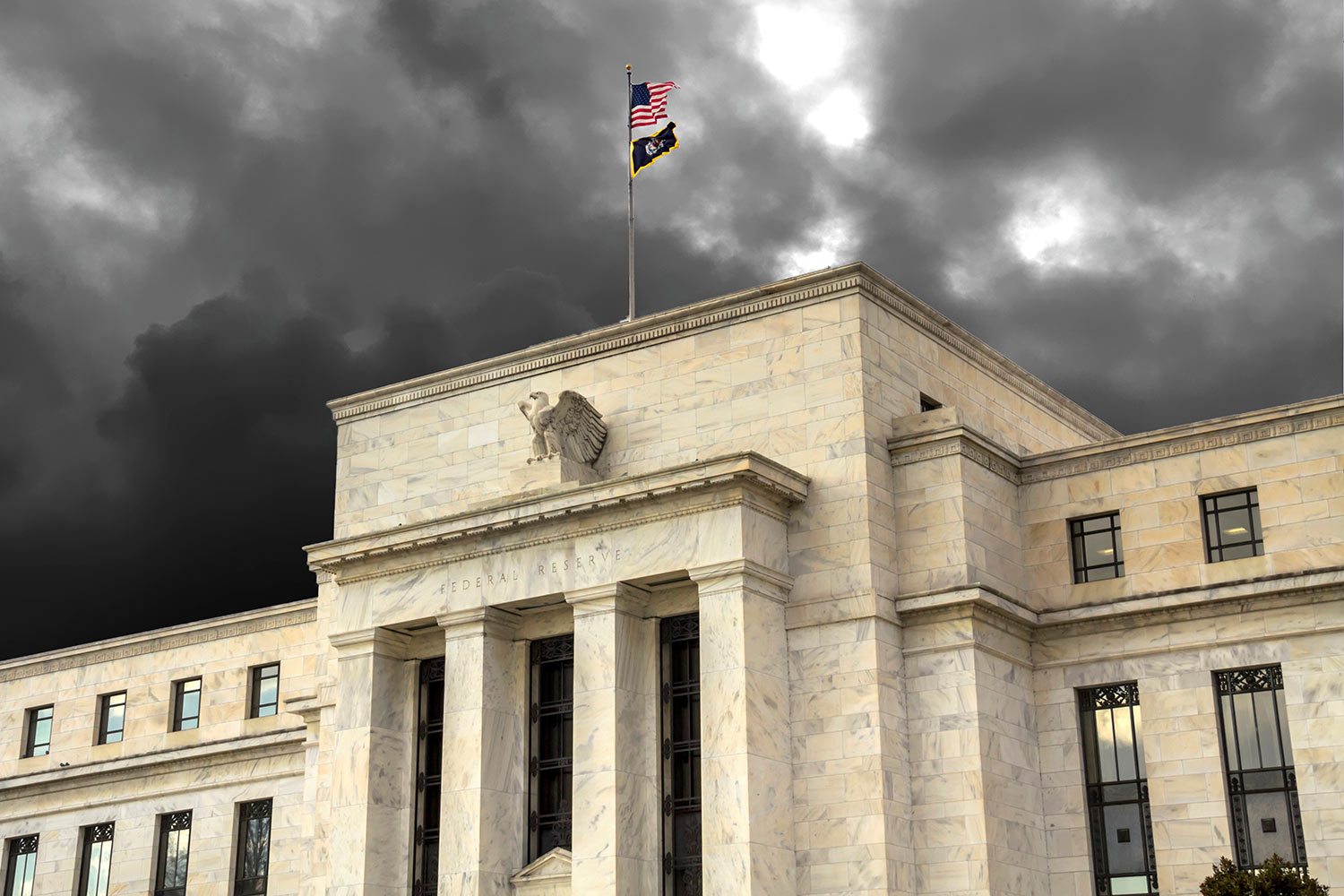
It is also vital to understand that the Fed’s decisions do not exist in a vacuum. The US Dollar is the world’s reserve currency. When the Federal Reserve raises interest rates, it doesn’t just make money expensive in America; it makes dollars expensive globally.
Emerging markets—countries in Latin America, Africa, and parts of Asia—often borrow money in US dollars. When the Fed hikes rates, the value of the dollar surges, and the cost of servicing that debt skyrockets for these poorer nations. Capital flees these developing nations and flows back into US Treasury bonds, seeking safe, high yields.
This triggers massive inflation, currency collapses, and severe austerity measures in the developing world. Why does this matter to the American worker? Because this global instability eventually boomerangs back to Main Street.
When emerging markets collapse, it disrupts global trade, destroying the export markets for American manufacturing and agriculture. It creates massive waves of climate and economic migration, which is then weaponized by right-wing politicians to divide the American working class along racial and nationalistic lines.
The Federal Reserve is acting as a global vacuum cleaner, sucking up capital from the poorest parts of the world to stabilize the US economy, while the American worker is told they must suffer through higher unemployment to do their part. The Fed’s rate hikes are an act of global economic imperialism, and the American working class is just the collateral damage happening closer to home.
Chapter 9: The Psychological Toll of Manufactured Scarcity
Economics is not just about numbers on a spreadsheet; it is about human psychology. And the psychological toll of the Federal Reserve’s rate-hike regime on the American worker is profound and largely invisible.
Human beings are not rational economic actors; we are deeply social creatures whose sense of self-worth is tied to our ability to provide for ourselves and our families. When the Fed initiates a policy designed to induce “fear” and “caution” in the economy, they are weaponizing anxiety.
Imagine being a 35-year-old father of two, working a middle-management job. You hear on the news that the Fed is raising rates to combat inflation. You read in the Wall Street Journal that a recession is likely. You hear your CEO talking about “headcount reductions” on the quarterly earnings call.
Even if you don’t lose your job, your behavior fundamentally changes. You stop looking for a better job. You stop asking for that promotion. You accept the fact that your bonus is canceled. You stop taking your family out to dinner on a Friday night. You hoard cash, just in case. You live in a state of perpetual, low-grade dread.
This manufactured scarcity destroys the human spirit. It turns a vibrant, dynamic workforce into a cowering, compliant one. It kills innovation—how can a worker take a risk on a new idea if they are terrified of being the first one laid off?
The Fed, in its sterile, academic way, calls this “cooling demand.” In the real world, it is called depression. It is the systematic extinguishing of hope. The central bank is essentially running a psychological operation on the American public, convincing them that they must accept a lower standard of living for the sake of “stability.”
Chapter 10: Is There an Alternative? (Why the Fed Won’t Take It)
Defenders of the Federal Reserve will inevitably throw their hands up and ask, “Well, what are they supposed to do? Just let inflation run rampant and destroy the currency? Do you want to end up like Zimbabwe or Weimar Germany?”
This is a classic false dichotomy. It assumes that the only two options on the table are “crush the working class with rate hikes” or “hyperinflationary collapse.” It ignores the fact that there are structural, legislative, and fiscal tools available to fight inflation that do not require sacrificing American workers.
- Fix the Supply Chains: Much of the recent inflation was supply-driven. The government could invest heavily in domestic manufacturing, port infrastructure, and logistics to ensure that goods flow smoothly. A well-functioning supply chain is inherently deflationary.
- Enforce Antitrust Laws: Break up the massive corporate monopolies that control meatpacking, agriculture, airlines, and telecommunications. When four companies control 80% of a market, they can dictate prices regardless of what the Fed does with interest rates. Competition is the best cure for inflation.
- Targeted Fiscal Intervention: Instead of the Fed using a blunt sledgehammer to crush all demand, the government could use targeted fiscal policy. Cap the price of essential goods like insulin. Provide direct subsidies for childcare and housing to lower the cost of living. Tax the windfall profits of oil companies and energy conglomerates.
- Price Controls: While anathema to the neoliberal consensus, strategic price controls on essential goods have been used successfully in American history (during WWII, for example) to prevent corporate profiteering during crises.
Why doesn’t the Fed advocate for these solutions? Because the Fed is an institution built by, and for, the financial class. They view fiscal policy (Congress passing laws) as messy, political, and inefficient. They view their own monetary policy (tweaking interest rates) as “scientific” and “pure.”
More importantly, the structural solutions listed above would require taking power away from corporations and monopolies. Raising interest rates, conversely, empowers the financial sector and protects corporate profit margins. The Fed chooses the path that preserves the existing power structure, even if it immiserates the working class.
Conclusion: The Temple Must Be Called Out
As the Federal Reserve prepares to once again pull the trigger on an interest rate hike, we must strip away the academic jargon and view the action for what it truly is.
It is not a necessary medicine. It is not a courageous stance against inflation. It is a deliberate, calculated policy choice to shaft the American worker in order to protect the wealth of the asset-owning class.
It is a policy that tells a young couple they cannot buy a home. It tells a single mother that her credit card interest is going up because the economy is “too strong.” It tells a factory worker that his shift is being cut so that the corporation’s stock buybacks can continue. It tells a generation that the American Dream is just too expensive right now, and they must accept their diminished place in the economic hierarchy.
When Jerome Powell steps to the podium in the marble temple on Constitution Avenue, adjusts his glasses, and somberly announces a rate hike, he is not just changing a number. He is issuing a pink slip to thousands of invisible Americans. He is silently enacting an economic policy that relies on the intimidation and impoverishment of the people who actually build, move, and maintain this country.
The American worker is the most productive workforce in human history. They did not cause this inflation. They merely demanded a fair share of the pie after decades of stagnation. For that sin, the Federal Reserve is preparing to bring the hammer down.
It is time to stop treating the Fed as an infallible priesthood. It is time to recognize that their tools are broken, their mandates are skewed, and their victims are real. The next time the markets cheer a rate hike, listen closely to the silence that follows. That silence is the sound of the American worker, getting shafted once again.
Disclaimer: The content on this blog is for informational purposes only. Author’s opinions are personal and not endorsed. Efforts are made to provide accurate information, but completeness, accuracy, or reliability are not guaranteed. Author is not liable for any loss or damage resulting from the use of this blog. It is recommended to use information on this blog at your own terms.

