

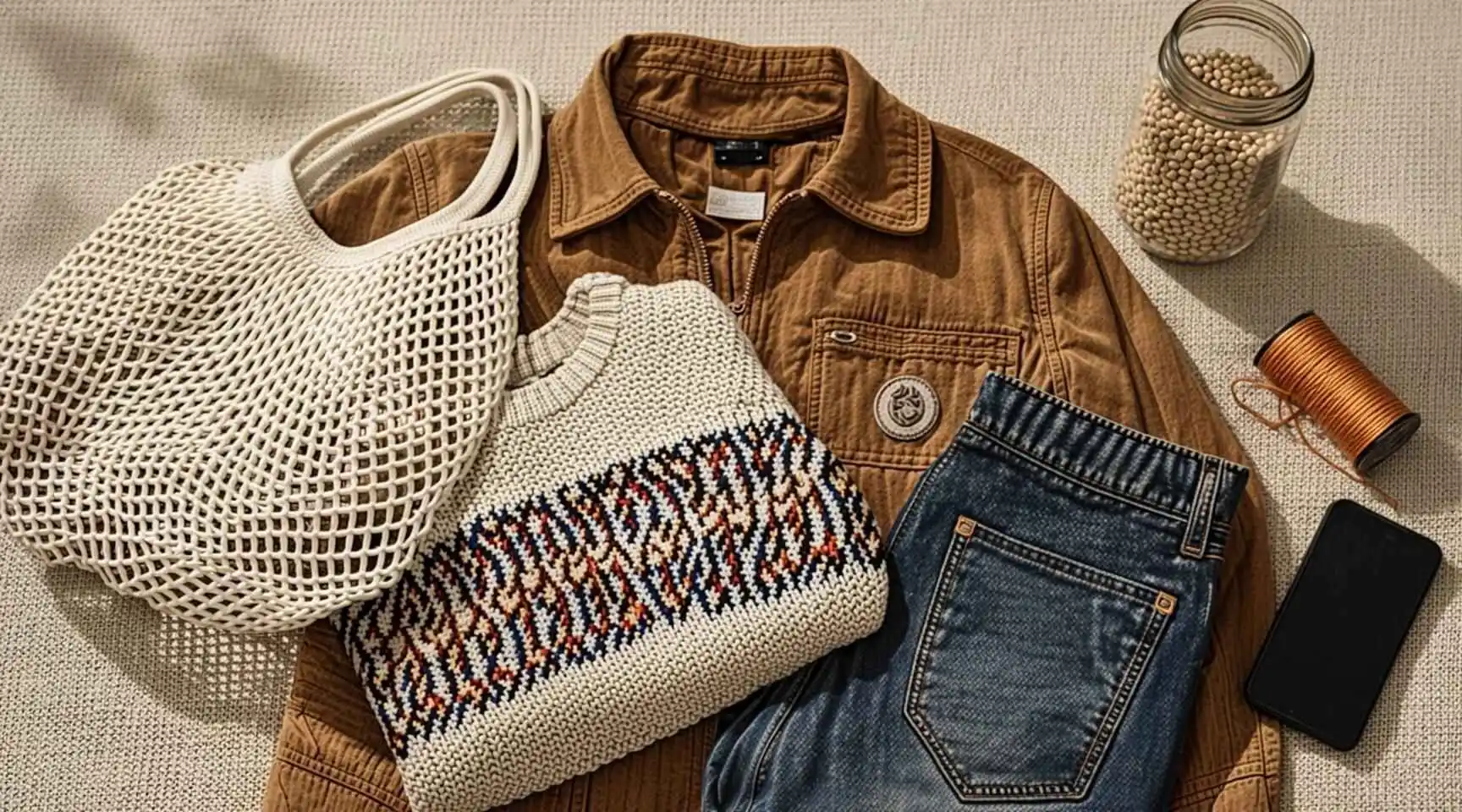
We have covered the practical steps—the math, the thrifting, the repairing, the certifications. But none of it matters if you don’t protect your mind. The reason you overspend is not because you lack willpower; it is because you are fighting against trillion-dollar algorithms designed to exploit your psychological vulnerabilities.
Curating Your Digital Diet
Unfollow every influencer whose content relies on “hauls,” “try-ons,” and promoting discount codes. Their entire income model is predicated on making you feel inadequate so you buy things you don’t need. Replace them with creators who teach repair, thrifting strategies, cooking from scratch, and financial independence. You must change the algorithmic inputs to change your behavioral outputs.
The “Emotional Cart” Strategy
Retail therapy is a scientifically proven phenomenon; shopping releases dopamine. However, you can hack this biological response. When you feel stressed, sad, or bored and have the urge to shop, do not ban yourself from shopping (which causes rebound bingeing). Instead, create a “Fantasy Cart.” Go to your favorite sustainable or high-end websites, and fill a cart with everything you want.
But do not check out. Just let it sit there. Close the tab. The act of selecting the items and visualizing owning them triggers a surprising amount of the same dopamine release as buying them. By morning, the urge will have passed, and you will have saved hundreds of dollars.
Finding Joy in Non-Material Fulfillment
Ultimately, the shift to sustainable budget shopping requires filling the void that consumerism leaves behind. When you stop chasing the high of a new purchase, you have to replace it with something substantive. Invest the money you didn’t spend into experiences: a community garden plot, a pottery class, a hiking trip, or a good meal with friends. These things build actual, lasting happiness and memories, rather than the fleeting, synthetic joy of an arriving cardboard box.
Conclusion: The Quiet Rebellion
In 2026, the pressure to consume is relentless. The screens in our pockets are glowing vending machines, constantly whispering that we are one purchase away from being happier, more attractive, and more successful. The eco-luxury brands whisper that we are bad people if we can’t afford to buy their expensive version of virtue.
Reject both narratives.
Shopping sustainably on a budget is not a compromise; it is a profound act of rebellion. It is a refusal to participate in an economic system that extracts labor from the Global South, pumps microplastics into our oceans, and leaves us drowning in debt and clutter.
By mastering the second-hand matrix, embracing repair, building a capsule wardrobe, and arming yourself against greenwashing, you take your power back. You realize that you never needed to buy your way into sustainability—you just needed to stop throwing your money away on disposability.
True wealth isn’t measured by the pristine tags hanging in your closet. It’s measured by the peace of mind you feel knowing your footprint is small, your home is uncluttered, and your bank account is secure. Be intentional. Be radical. Buy less, choose well, make it last.
FAQS
Shop Sustainably on a Budget
1.Is it really possible to shop sustainably on a budget in 2026, or is it just a marketing myth?
It is entirely possible. The myth is that sustainability equals buying expensive “eco-luxury” items. True budget sustainability means opting out of fast fashion entirely by utilizing second-hand markets, repairing what you own, and buying less overall.
2.Why do eco-friendly brands always seem so expensive?
You are often paying a “green premium” for marketing and novel sustainable materials. As a budget shopper, you bypass this by ignoring new “green” products and focusing on the millions of tons of high-quality used clothing already in circulation, which costs a fraction of the price.
3.How do I start transitioning to a sustainable wardrobe when I barely have any money to spare?
Start with the “One In, One Out” rule and the 30-Wear Test. You don’t need to buy anything new to start; simply stop buying cheap things impulsively, wear what you have until it wears out, and replace items only when necessary via thrift stores.
Circular Economy Fashion
4.What exactly is “circular economy fashion”?
It is a system that opposes the traditional “take, make, dispose” model. It focuses on keeping clothes, shoes, and materials in use for as long as possible through sharing, leasing, reusing, repairing, and recycling.
5.How does buying second-hand contribute to the circular economy?
When you buy a used jacket from a resale app, you are taking an existing item and keeping it in active circulation. You are preventing it from entering a landfill and removing the need for a brand to manufacture a new jacket, thus closing the loop.
- Isn’t circular fashion just a trendy buzzword for what our grandparents did?
Essentially, yes. Our grandparents mended socks, handed down coats, and bought sturdy goods. The “circular economy” is just applying that exact same common-sense logic to modern supply chains and digital marketplaces.
Second-Hand Shopping Tips
- How has second-hand shopping evolved by 2026?
It has moved from digging through disorganized physical bins to utilizing AI-powered search engines on apps like Vinted or Depop, where you can upload a photo of a designer item and instantly find exact second-hand matches.
- What is the “Keyword Sniper” technique?
Instead of searching generic terms like “jacket,” you search for high-quality materials (“100% wool,” “full-grain leather”) or legacy durability brands (“L.L. Bean,” “Land’s End”) to instantly filter out cheaply made fast-fashion junk on resale sites.
- How do I avoid buying damaged goods when shopping online second-hand?
Always ask sellers for close-up photos of high-stress areas: armpits, crotch seams, buttonholes, and the underside of collars. If a seller refuses to provide these, walk away from the purchase.
Thrift Flipping
- What does “Thrift Flipping” mean?
It is the practice of buying cheap, ill-fitting, or outdated second-hand garments and altering them—either by sewing, cropping, hemming, or dyeing—to create custom, high-fashion pieces that look brand new.
- Do I need to be an expert seamstress to thrift flip?
No. In 2026, community Maker Spaces and local tool libraries allow you to use industrial sewing machines and sergers for free or very low cost. Simple flips, like cropping an oversized blazer or hemming a maxi skirt, require very basic skills.
- Is visible mending considered thrift flipping?
Yes. Visible mending (like Japanese Sashiko stitching) is a form of flipping where you use colorful threads and embroidery to patch holes, turning a damaged thrifted item into a unique, hand-crafted art piece rather than throwing it away.
Eco-Friendly Lifestyle
- Does living an eco-friendly lifestyle mean I have to sacrifice aesthetics and style?
Not at all. In fact, building a capsule wardrobe of high-quality, timeless second-hand pieces often results in a much more sophisticated, “quiet luxury” aesthetic than wearing loud, fast-fashion micro-trends.
- How does reducing my screen time help the environment?
The algorithms driving social media are designed to trigger impulse buys. By curating a digital diet that blocks “haul” influencers, you reduce the temptation to consume, which directly reduces manufacturing demand and shipping emissions.
- What is the “Emotional Cart” strategy?
When you feel stressed and want to shop for a dopamine hit, fill an online cart with items but do not check out. The act of curating the cart provides a psychological dopamine release without spending money or generating waste.
Greenwashing
- How do I spot greenwashing when shopping on a budget?
Ignore vague, unregulated buzzwords like “eco-friendly,” “conscious,” or “sustainably made” if they are not backed by hard data. These are marketing tools used to justify a higher price tag.
- Which certifications actually prove a brand isn’t greenwashing?
Look for rigorous, third-party audits: GOTS (Global Organic Textile Standard) for fabrics, B Corp for overall company ethics, Fair Trade Certified for labor, and OEKO-TEX for chemical safety.
- Can a cheap fast-fashion brand be sustainable if they launch a “recycled” collection?
Usually, no. This is a classic greenwashing tactic known as “piecemeal sustainability.” If a brand produces 10 million items a year and 1,000 of them are made from recycled plastic, the brand as a whole is still highly destructive.
Cost Per Wear
- What is the “Cost Per Wear” (CPW) formula?
Divide the total price of the item by the estimated number of times you will wear it. For example, a $100 coat worn 200 times costs $0.50 per wear, making it vastly cheaper than a $20 coat worn 5 times ($4.00 per wear).
- Why is CPW a better metric than just looking at the price tag?
The price tag only tells you the initial financial pain. CPW tells you the long-term value. Fast fashion is designed to fail, meaning its long-term CPW is actually astronomically high.
- How does the 30-Wear Test tie into Cost Per Wear?
The 30-Wear Test is the baseline for ensuring a low CPW. If you cannot commit to wearing an item 30 times, the CPW will be too high, and the purchase is both a financial drain and an environmental waste.
Clothing Rental Services
- How do clothing rental services fit into a budget?
Renting is incredibly cost-effective for “high-impact, low-frequency” events like weddings, galas, or vacations. Renting a $400 dress for $40 is vastly cheaper than buying one outright, and it prevents a single-use garment from sitting in a closet.
- Is renting clothes actually sanitary?
Yes. By 2026, rental platforms use commercial-grade, eco-friendly dry cleaning and ozone sanitation processes between every single rental. The hygiene standards are often higher than those of standard retail fitting rooms.
- What happens if I damage a rented garment?
Most reputable rental services offer minor damage protection for a small added fee (often just a few dollars). However, because you are treating the clothes well as part of an eco-friendly lifestyle, severe damage is rare.
Sustainable Materials
- Are synthetic materials like polyester ever sustainable?
Virgin polyester (plastic) is highly destructive. However, recycled polyester prevents plastic from entering landfills. The absolute most sustainable material, though, is any second-hand material, regardless of its original fiber, because it requires zero new resources to produce.
- Why does the blog say a second-hand polyester shirt is better than a new organic linen shirt?
Because the organic linen shirt required massive amounts of water, land, and energy to grow, harvest, weave, and ship to you. The second-hand polyester shirt’s carbon footprint is exactly zero—it already exists.
- How do I wash synthetic materials sustainably?
Always wash synthetics in a microplastic-catching bag (like a Guppyfriend) on a cold, gentle cycle. This prevents the synthetic fibers from breaking off and polluting the water supply with microplastics.
Capsule Wardrobe
- What exactly is a capsule wardrobe?
It is a curated, minimal collection of highly durable, mix-and-match garments that all coordinate based on a strict color palette. It removes decision fatigue and stops impulse buying because everything goes together. 29. How do I build a capsule wardrobe on a budget?
Define a palette of three neutrals and two accents. Then, use the “Keyword Sniper” method on second-hand apps to find high-quality legacy brands that fit this palette. Never buy an item unless it matches at least three things you already own.
Zero Waste Shopping
- How does zero waste shopping apply to fashion and budgeting?
Beyond clothing, zero waste means avoiding disposable trend items. In the kitchen, it means buying staples (rice, spices, lentils) from grocery store bulk bins using your own jars. This is often 40% to 60% cheaper than buying pre-packaged goods and generates zero plastic waste.
Disclaimer: The content on this blog is for informational purposes only. Author’s opinions are personal and not endorsed. Efforts are made to provide accurate information, but completeness, accuracy, or reliability are not guaranteed. Author is not liable for any loss or damage resulting from the use of this blog. It is recommended to use information on this blog at your own terms.

