

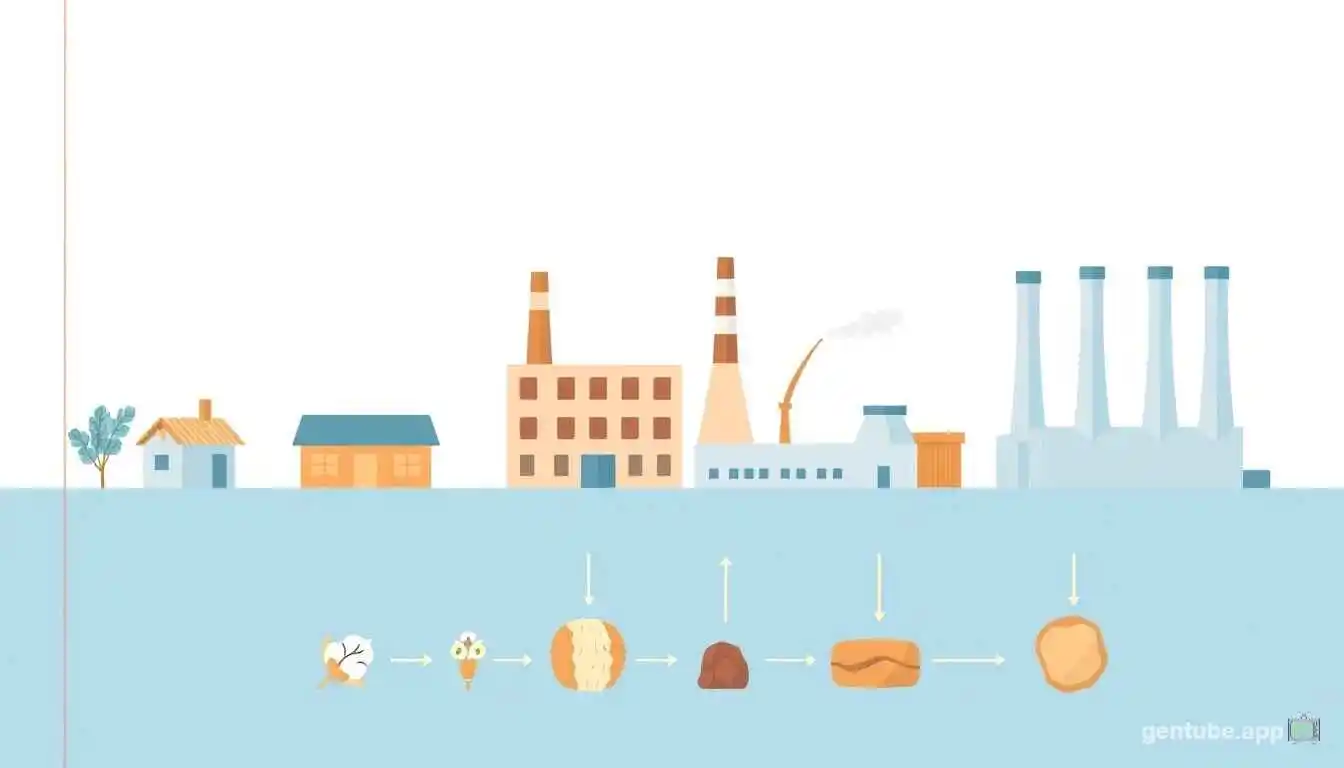
Many economies eventually shift toward becoming service-based economies, where sectors like banking, IT, and healthcare dominate. This shift often happens as manufacturing becomes more automated and efficient.
Q21. Why do governments classify industries by ownership?
Ownership classification helps governments design appropriate policies, subsidies, and regulations for each type of industry. Public, private, joint, and cooperative industries all require different kinds of support and oversight.
Q22. What is an example of a mineral-based industry?
Iron and steel manufacturing is a classic example, since it depends directly on iron ore as its core raw material. Cement and aluminium production are other common mineral-based examples.
Q23. What is an example of an agro-based industry?
Cotton textile manufacturing is a common example, since cotton is grown as an agricultural crop before processing. Sugar mills and food processing units are other typical agro-based examples.
Q24. How does size classification affect the kind of government support an industry receives?
Small-scale and cottage industries often receive special loans, subsidies, and simplified regulations to help them survive and grow. Large-scale industries are generally expected to be more self-sufficient with less direct financial support.
Q25. What is the biggest exam mistake students make with this topic?
The most common mistake is mixing up two separate classifications, such as assuming size and ownership always match. Remembering that each classification is judged independently avoids this error.
Q26. How can I remember the difference between all these industry types quickly?
Use a simple four-question checklist for every industry: what raw material, who owns it, how big is it, and how much capital versus labour does it use. Running through these four questions in order makes classification almost automatic.
Q27. Why do exam questions often describe a completely new, unfamiliar industry?
This format tests whether a student truly understands the classification logic rather than having memorised a fixed list of named examples. A student with genuine understanding can classify any new example just as confidently as a familiar one.
Q28. Are cooperative industries common in every country?
Cooperative industries are especially common in sectors like dairy and sugar production in agricultural economies. Their prevalence varies by country, depending on local farming structures and government support for cooperative models.
Q29. What role do small-scale industries play in employment?
Small-scale industries are often major sources of local and regional employment, especially in developing economies. They also tend to distribute income more widely across smaller towns and rural areas compared to large, centralised industries.
Q30. What is the best way to revise industry classification quickly before an exam?
Focus on your four-lens checklist and practise applying it to two or three unfamiliar, invented examples rather than only re-reading textbook definitions. This application-based practice mirrors how most exam questions on this topic are actually framed.
Disclaimer: The content on this blog is for informational purposes only. The author’s opinions are personal and not endorsed. Efforts are made to provide accurate information, but completeness, accuracy, or reliability are not guaranteed. The author is not liable for any loss or damage resulting from the use of this blog. It is recommended to use the information on this blog at your own discretion.

