

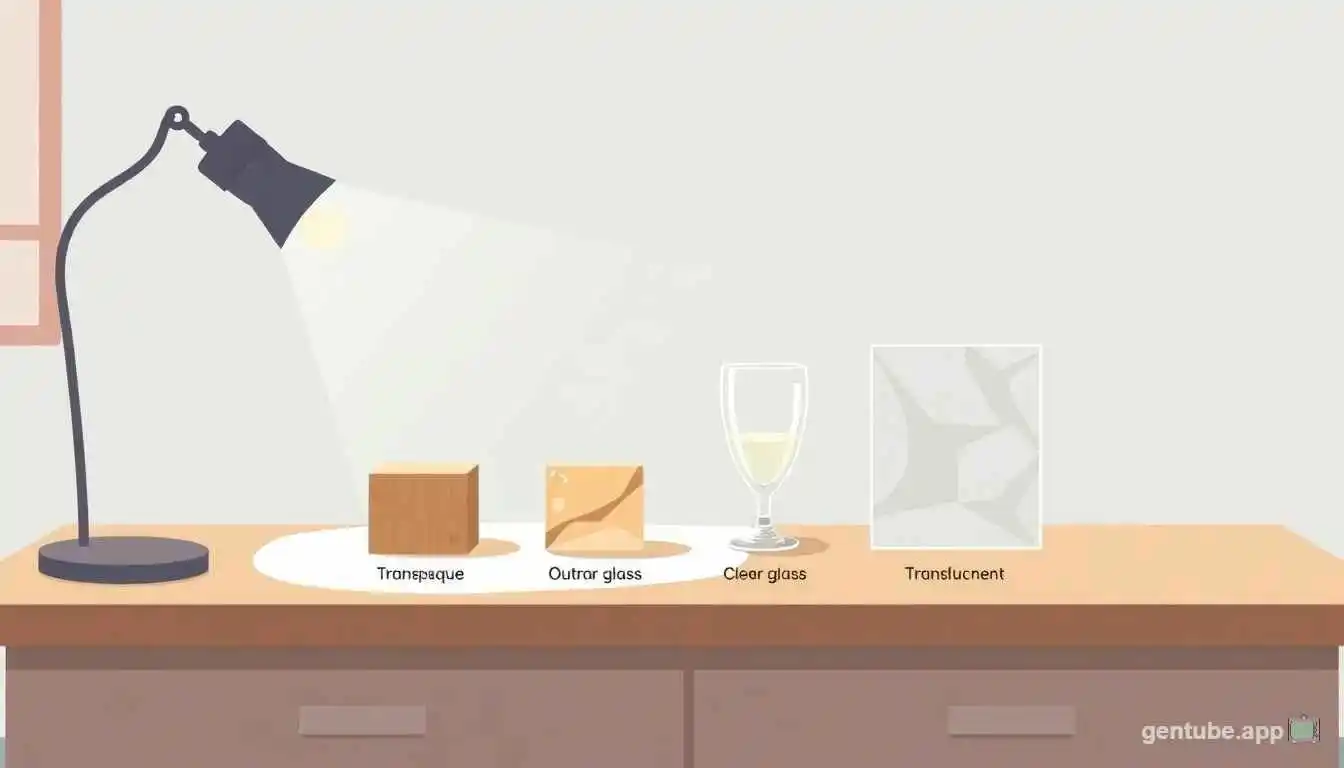
1. Do the Torch Test at Home
Before reading any definition, take a torch and test five random household objects in a dim room. This single ten-minute activity builds a mental picture that no amount of textbook reading can replace.
2. Sort Objects Into Three Groups
Make a simple three-column chart labelled opaque, transparent, and translucent, and try placing at least fifteen objects from your own home into the correct column. Sorting by hand strengthens memory far better than passive reading.
3. Explain It to Someone Younger
Teaching the idea to a younger sibling or friend, in your own simple words, forces you to notice any gaps in your own understanding immediately.
4. Connect It to a Bigger Topic
Link opaque objects to a solar eclipse, a shadow puppet show, or sunglasses. Connecting a small concept to something bigger and more interesting makes it far easier to recall during an exam.
5. Draw the Light Ray Diagram Yourself
Instead of just reading a diagram in a textbook, draw your own simple sketch showing the light source, the opaque object, and the shadow. Drawing it by hand, even roughly, cements the sequence in memory much better than reading it does.
Combine a few of these five strategies together for the best results. A student who tests objects at home, sorts them into a chart, and then explains the idea out loud to a friend or sibling is engaging with the topic in three different ways, and that kind of repeated, varied practice is exactly what turns short-term memorising into long-term understanding that survives well past exam day.
Conclusion: A Small Topic With a Big Impact
Opaque objects might seem like a small, simple chapter tucked early into a science syllabus, but as Aryan’s question and Meera’s story both showed me, it quietly supports so many bigger ideas that come later, from shadows and eclipses to optics and safety equipment. The best way to truly understand it is not by memorising a definition, but by testing it yourself with a torch and a few everyday objects.
So the next time you switch on a torch in a dark room, take thirty seconds to notice what happens when the light meets a book, a spoon, or a glass of water. That small habit of noticing is exactly what turns a textbook definition into real, lasting understanding.
As a teacher, the lesson I keep coming back to is this: students rarely forget ideas they discover for themselves, even when the idea is as simple as light stopping at a wooden door. Give any student a torch, five minutes, and a handful of household objects, and they will teach themselves most of this chapter far better than any explanation on a whiteboard ever could. That is the real, lasting value of understanding opaque objects, not just for an exam next week, but for the way it quietly shapes how students observe and question the world around them from that point on.
FAQS
1.What is the simplest definition of an opaque object?
An opaque object is anything that light cannot pass through at all. It blocks the light completely and forms a dark shadow behind it.
2.Is wood an opaque object?
Yes, ordinary wood is opaque because no light passes through a solid wooden block or door. That is why a closed wooden door blocks your view completely.
3.Why do opaque objects cast shadows?
They cast shadows because they stop light rays from travelling further. The dark area behind the object is simply the space where light never reached.
4.Can an opaque object become transparent?
Under normal classroom conditions, no. An object’s opacity depends on its material structure, so a brick or a spoon will not turn see-through on its own.
5.What happens to light when it hits an opaque object?
The light is either absorbed as heat or bounced back as reflection. Almost none of it manages to travel through the material.
6.Are all dark-coloured objects opaque?
Not necessarily. Colour and opacity are different properties; a dark piece of tinted glass can still let some light through, so it is not fully opaque.
7.What is the difference between opaque and translucent?
Opaque objects block light entirely, while translucent objects let some scattered light pass through. A frosted glass window is a good translucent example.
8.Why is glass usually transparent but a mirror is opaque?
Plain glass lets light pass straight through its structure, while a mirror has a metallic coating at the back that reflects light instead of letting it pass.
9.Do liquids count as opaque objects?
Some do. Milk and muddy water are opaque liquids because tiny particles inside them scatter and block light, unlike clear water.
10.How can a student test if something is opaque at home?
Hold the object in front of a torch in a dark room. If no light appears on the other side, the object is opaque.
11.Why does this topic matter outside the science classroom?
Opaque materials are used everywhere, from sunglasses and curtains to protective clothing and building walls, so understanding them connects to daily life.
12.Is metal always opaque?
Almost all metals in everyday thickness are opaque because their tightly packed atoms absorb and reflect light rather than letting it through.
13.Can thickness change whether something is opaque?
Yes, thickness matters a lot. A thin sheet of some plastics may let a little light through, while a thicker block of the same plastic becomes opaque.
14.Why do some exam questions confuse opaque with ‘dark’?
Students often assume dark equals opaque, but a white sheet of paper is also opaque even though it is light in colour, since colour and opacity are separate ideas.
15.What everyday object is a good example to remember opaque objects?
A brick wall is one of the easiest examples, since no light passes through it and it always creates a clear, sharp shadow.
16.How does understanding opaque objects help in geography or astronomy?
It explains natural events like solar eclipses, where the moon acts as an opaque object blocking sunlight from reaching parts of the earth.
17.Why do curtains work well as room darkeners?
Thick curtain fabric is opaque, so it blocks most outside light from entering, which is exactly why heavy curtains are chosen for bedrooms.
18.Are shadows always the same shape as the opaque object?
The shadow shows the outline of the object but its size can stretch or shrink depending on the angle and distance of the light source.
19.What is the easiest experiment for teaching opaque objects in class?
Shining a torch on different classroom items like a book, a plastic ruler, and a glass jar, then asking students to record what happens on a screen behind each one.
20.Why do surgeons and dentists use opaque lead aprons?
Lead is a dense opaque material that blocks harmful X-rays from passing through and reaching the body, which keeps patients and staff safer.
21.Can an opaque object still reflect light well?
Yes, in fact many opaque objects, like a shiny metal spoon, reflect light strongly even though none of that light passes through them.
22.How is this topic usually tested in school exams?
Exams often ask students to classify objects as opaque, transparent, or translucent, or to explain shadow formation using simple diagrams.
23.Why does a solar eclipse happen because of an opaque object?
The moon is opaque, so when it moves between the sun and the earth, it blocks sunlight and creates a shadow that causes the eclipse.
24.Is human skin opaque?
Yes, human skin is opaque, which is exactly why doctors use special opaque, light-blocking equipment like X-ray machines to see structures underneath it.
25.What role do opaque materials play in safety equipment?
Helmets, protective goggles with tinted coatings, and safety vests often use opaque materials to block impact, glare, or harmful rays effectively.
26.Why is it useful to compare opaque, transparent, and translucent together?
Comparing all three side by side helps students notice the pattern clearly instead of memorising three separate, disconnected definitions.
27.Do opaque objects absorb all colours of light equally?
Not always. An opaque red object absorbs most colours but reflects red light back to your eyes, which is why we see it as red.
28.How can teachers make this lesson more memorable?
Using a real torch demonstration with everyday objects works far better than only reading the definition, since students remember what they see and try themselves.
29.What is a common exam mistake with this topic?
Many students forget that shadows only form because of opaque objects and mistakenly think translucent objects can create equally sharp, dark shadows.
30.Why should young students care about opaque objects at all?
It builds the foundation for later topics like light, optics, and even space science, so a strong grasp now makes future lessons much easier to follow.
Disclaimer: The content on this blog is for informational purposes only. The author’s opinions are personal and not endorsed. Efforts are made to provide accurate information, but completeness, accuracy, or reliability are not guaranteed. The author is not liable for any loss or damage resulting from the use of this blog. It is recommended to use the information on this blog at your own discretion.

