

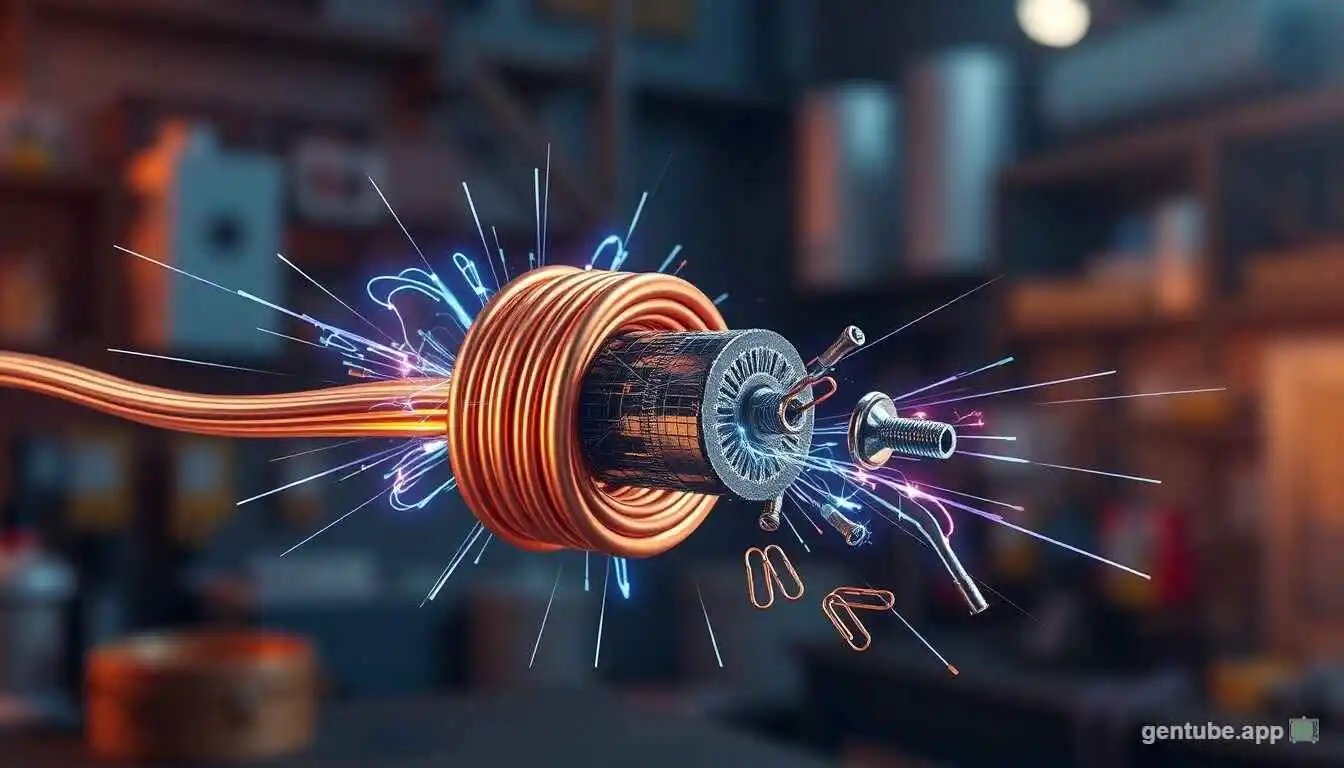
Far from being a relic of nineteenth-century science, electromagnet technology continues to evolve rapidly. Advances in superconducting materials, including research into materials that superconduct at higher and more practical temperatures, promise to make extremely powerful electromagnets more efficient, more compact, and less costly to operate, potentially transforming fields ranging from medical imaging to clean energy transmission.
Electric vehicles and maglev transportation systems are also driving renewed interest in electromagnet design, as engineers seek more efficient motors, lighter components, and stronger, more reliable magnetic systems to improve range, speed, and performance. Meanwhile, miniaturization trends in electronics continue to push electromagnet designers to create ever-smaller coils capable of producing usable magnetic forces within compact modern devices.
As the world moves toward cleaner energy and more advanced technology, the electromagnet — a two-hundred-year-old invention rooted in a simple coil of wire — remains as relevant and essential as ever, quietly powering the innovations of tomorrow just as it powered the innovations of the past.
Conclusion: A Simple Idea With Extraordinary Reach
From William Sturgeon’s humble horseshoe-shaped coil in 1824 to the superconducting giants inside today’s MRI machines and particle accelerators, the electromagnet has proven itself to be one of the most versatile and enduring inventions in the history of science and engineering. Its core idea remains beautifully simple: run electric current through a coil of wire around a magnetic core, and you create a magnet that can be switched on, switched off, strengthened, weakened, or reversed entirely at will.
That simplicity is exactly what makes the electromagnet so powerful — not just in the physical sense, but in its sheer usefulness. It is the reason your phone can produce sound, the reason your car can start, the reason doctors can see inside your body without surgery, and the reason massive cranes can lift tons of scrap metal with ease. The next time you hear a doorbell ring or watch a scrapyard crane swing a car through the air, you’ll know exactly what invisible force is making it happen.
FAQS
Q1. What is an electromagnet?
A: An electromagnet is a type of magnet in which the magnetic field is produced by an electric current flowing through a coil of wire, usually wound around a ferromagnetic core such as iron. Unlike a permanent magnet, its magnetism can be switched on and off simply by controlling the electric current.
Q2. Who invented the electromagnet?
A: The electromagnet was invented by William Sturgeon in 1824. He demonstrated that wrapping insulated wire around an iron core and passing current through it created a controllable magnetic field, laying the foundation for modern electromagnetism.
Q3. How does an electromagnet work?
A: When electric current flows through a coil of wire, it generates a magnetic field around the wire according to Ampere’s Law. Wrapping the wire into a coil and placing a ferromagnetic core inside concentrates and strengthens this field, turning the assembly into a magnet as long as current flows.
Q4. What materials are used to make an electromagnet?
A: A typical electromagnet uses insulated copper wire for the coil and a soft ferromagnetic material such as iron, steel, or a nickel-iron alloy for the core, because these materials magnetize easily and lose their magnetism quickly once current stops.
Q5. Why is soft iron used as the core instead of steel?
A: Soft iron is used because it has high magnetic permeability and low retentivity, meaning it magnetizes strongly when current flows but does not retain magnetism once the current is switched off, which is essential for a controllable electromagnet.
Q6. What factors affect the strength of an electromagnet?
A: The strength of an electromagnet depends on the number of turns in the coil, the amount of current flowing through it, the type and quality of the core material, and the overall shape and length of the coil.
Q7. Does increasing the number of coil turns increase magnetic strength?
A: Yes, increasing the number of turns in the coil increases the magnetic field strength, since each additional loop of wire contributes its own magnetic field, and these fields add together along the coil’s axis.
Q8. Does increasing current increase the strength of an electromagnet?
A: Yes, magnetic field strength is directly proportional to the current flowing through the coil. Higher current produces a stronger magnetic field, though excessive current can overheat the wire and damage the insulation.
Q9. What is the difference between an electromagnet and a permanent magnet?
A: A permanent magnet retains its magnetism continuously without external power, while an electromagnet only exhibits magnetism when electric current flows through its coil, allowing its strength and polarity to be controlled or turned off entirely.
Q10. Can an electromagnet’s polarity be reversed?
A: Yes, reversing the direction of current flow through the coil reverses the magnetic poles of the electromagnet, a property widely used in devices such as motors and relays.
Q11. What is the right-hand rule in relation to electromagnets?
A: The right-hand rule is used to determine the direction of the magnetic field: if you curl the fingers of your right hand in the direction of current flow around the coil, your thumb points toward the north pole of the electromagnet.
Q12. What are the main types of electromagnets?
A: Common types include solenoid electromagnets, horseshoe electromagnets, toroidal electromagnets, superconducting electromagnets, and electromagnets used in relays, motors, and lifting devices, each shaped for a specific application.
Q13. What is a solenoid electromagnet?
A: A solenoid electromagnet is a straight coil of wire that produces a uniform magnetic field along its axis when current flows through it, commonly used in valves, actuators, and switching devices.
Q14. What is a superconducting electromagnet?
A: A superconducting electromagnet uses coils made from superconducting materials cooled to extremely low temperatures, allowing them to carry very high currents with virtually no electrical resistance, producing extremely strong magnetic fields used in MRI machines and particle accelerators.
Q15. Where are electromagnets used in daily life?
A: Electromagnets are used in everyday devices such as electric doorbells, speakers, headphones, electric motors, generators, transformers, relays, circuit breakers, and magnetic locks.
Q16. How are electromagnets used in industry?
A: In industry, powerful electromagnets are used in scrap yards to lift and sort heavy metal objects, in maglev trains for propulsion and levitation, and in manufacturing for magnetic separation and material handling.
Q17. How does an electromagnet work in an electric motor?
A: In an electric motor, electromagnets create rotating magnetic fields that interact with permanent magnets or other electromagnets, producing a force that causes the motor’s shaft to rotate continuously.
Q18. How is an electromagnet used in an MRI machine?
A: MRI machines use extremely powerful superconducting electromagnets to generate a strong, stable magnetic field that aligns hydrogen atoms in the body, enabling detailed imaging of internal tissues and organs.
Q19. Why do electromagnets get hot during use?
A: Electromagnets get hot because the coil wire has electrical resistance, and as current flows through it, some electrical energy is converted into heat due to resistive losses, a phenomenon known as Joule heating.
Q20. Can electromagnets be dangerous?
A: Powerful electromagnets can be dangerous because they can attract metal objects with great force, interfere with pacemakers and electronic devices, and generate significant heat, so proper safety precautions and shielding are necessary in industrial and medical settings.
Q21. What is the difference between an electromagnet and an inductor?
A: While both involve current flowing through a coil, an inductor is primarily used in circuits to store energy in a magnetic field and resist changes in current, whereas an electromagnet is designed specifically to produce a usable external magnetic field, often with a ferromagnetic core.
Q22. What is meant by the strength of an electromagnet being measured in?
A: The strength of a magnetic field is typically measured in units called tesla or gauss, with tesla being the standard SI unit and gauss being a smaller, commonly used unit in some engineering contexts.
Q23. Does the shape of the core affect electromagnet performance?
A: Yes, the shape of the core significantly affects performance. A horseshoe or U-shaped core, for example, brings both poles closer together, concentrating the magnetic field for stronger localized attraction compared to a straight core.
Q24. What happens to an electromagnet when the current is switched off?
A: When the current is switched off, the magnetic field collapses almost immediately because a soft iron core has low retentivity, meaning it loses nearly all its magnetism once the driving current stops.
Q25. Can an electromagnet lift more weight than a permanent magnet?
A: Yes, large industrial electromagnets can be engineered to lift far more weight than typical permanent magnets because their strength can be scaled up by increasing current and coil turns, something not possible with fixed permanent magnets.
Q26. What safety precautions are needed when working with electromagnets?
A: Safety precautions include using proper insulation, avoiding overheating through current limits or cooling systems, keeping sensitive electronic devices and magnetic storage media away from strong fields, and following manufacturer guidelines for high-power industrial units.
Q27. How do relays use electromagnets?
A: A relay uses a small electromagnet to mechanically operate a switch; when current flows through the relay’s coil, the resulting magnetic field pulls a metal armature that opens or closes electrical contacts, allowing a small signal to control a larger circuit.
Q28. What role do electromagnets play in speakers and headphones?
A: In speakers and headphones, an electromagnet coil interacts with a permanent magnet, and as the audio signal current varies, the resulting changing magnetic force vibrates a diaphragm, producing sound waves.
Q29. Are electromagnets used in renewable energy systems?
A: Yes, electromagnets are essential components in generators used in wind turbines and hydroelectric plants, where the interaction between magnetic fields and rotating coils converts mechanical energy into electrical energy.
Q30. What is the future of electromagnet technology?
A: The future of electromagnet technology includes advances in superconducting materials for stronger and more efficient fields, miniaturized electromagnets for compact electronics, and improved designs for electric vehicles, maglev transport, and clean energy generation.
Disclaimer: The content on this blog is for informational purposes only. The author’s opinions are personal and not endorsed. Efforts are made to provide accurate information, but completeness, accuracy, or reliability are not guaranteed. The author is not liable for any loss or damage resulting from the use of this blog. It is recommended to use the information on this blog at your own discretion.

