

Why Can’t You See Through a Wall? The Curious Science of Opaque Objects
Introduction: The Question That Stopped My Class Cold
A few years back, I was teaching a Grade 6 science class, and one student named Aryan raised his hand with a question that had nothing to do with the worksheet in front of him. He asked, ‘Ma’am, why can’t I see my friend standing behind the classroom door, but I can see him clearly through the window?’ The rest of the class laughed a little, thinking it was a silly question. I did not think it was silly at all. I put down my chalk and asked the class to think about it for a minute.
That one question turned into one of the best lessons I ever taught. We picked up random objects from the classroom, a torch, a wooden ruler, a glass tumbler, a notebook, and a plastic sheet, and we tested each one against the light. Within twenty minutes, every student in that room understood something that textbooks often explain in a dry, forgettable paragraph. They understood opaque objects, not because they memorised a definition, but because they saw the idea happen in front of their own eyes.
What struck me most that day was how quickly the room changed. A few minutes earlier, students were staring at the clock, waiting for the period to end. Once they had a torch in their hands and a real question to answer, the same students were arguing over whose object would let more light through, comparing notes, and calling me over to settle small disagreements. That is the moment I realised this small, often-overlooked topic deserves far more attention than the single paragraph it usually gets in a textbook.
This blog post is written the same way I taught that class. Simple language, real examples, and a clear step-by-step explanation, so that whether you are a student preparing for an exam, a parent trying to help your child with homework, or a fellow teacher planning a lesson, you walk away actually understanding the topic instead of just repeating a sentence from a textbook. By the end, you will not just know the definition of an opaque object, you will be able to spot one, explain one, and answer almost any exam question thrown at you about it.
What Are Opaque Objects?
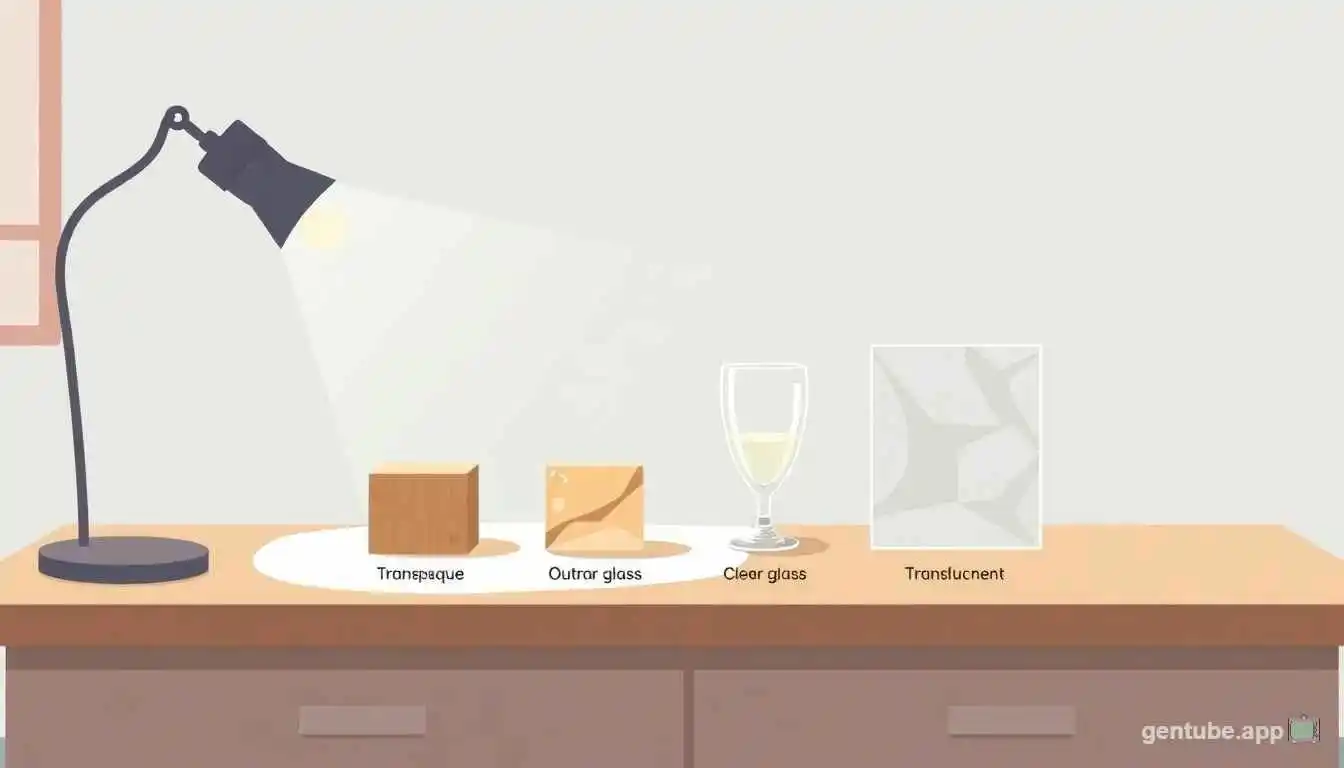
An opaque object is any material or object that does not allow light to pass through it. When light rays hit an opaque surface, they are either absorbed by the material or bounced back as reflection. None of the light manages to travel through to the other side.
A Simple Way to Remember It
Think of it this way: if you cannot see anything on the other side of an object when light shines on it, that object is opaque. A brick wall, a wooden table, a steel spoon, and a thick book are all everyday opaque objects. You already interact with dozens of them every single day without even realising it.
The Science Behind It
Every material is made of tightly or loosely packed particles. In opaque materials, these particles are usually packed in a way that scatters and absorbs light energy almost completely. That is exactly why a torch beam stops dead the moment it hits a closed wooden door, instead of passing through to the other room.
It also helps to remember that opacity is not fixed forever for every single material in every form. A thin sheet of paper held up to bright sunlight sometimes lets you notice a faint glow through it, while a stack of a hundred pages of the same paper blocks light completely. This tells us opacity often depends on thickness and density as much as it depends on the material itself, which is a small detail that helps students avoid careless mistakes in tricky exam questions.
Why Understanding Opaque Objects Actually Matters
Some students ask why this topic matters at all, since it seems so obvious in daily life. Here is the honest answer: this simple concept is the foundation for much bigger topics later on, including light, optics, shadows, eclipses, and even how X-ray machines and sunglasses work.
- It builds the base for understanding shadow formation, which appears again in geography while explaining solar and lunar eclipses.
- It connects science to real objects around the house, making abstract lessons feel practical and easy to relate to.
- It appears frequently in school exams, from simple one-line definitions to diagram-based questions about light and shadows.
- It explains why certain safety tools, like lead aprons in hospitals or tinted glasses, are designed the way they are.
Once a student truly grasps opaque objects, ideas like transparency, translucency, reflection, and shadow length stop feeling like separate, confusing topics and start feeling like one connected story about light.
There is also a quieter, longer-term reason this topic matters. Science education, at its core, is about training young minds to observe the world carefully and ask why things happen the way they do. A student who genuinely understands why a wall blocks light is practising the same kind of careful thinking they will later use in chemistry, biology, and even mathematics. Small, well-understood ideas like this one build the mental habits that bigger subjects depend on later.
Core Concepts: How Light Behaves With Opaque Objects
To really understand this topic, it helps to break it down into three smaller ideas that work together every time light meets an opaque surface.
1. Absorption
When light hits an opaque object, part of the light energy is absorbed into the material and often turns into heat. This is why a black car parked in the sun feels much hotter than a white one, since darker opaque surfaces absorb more light energy.
2. Reflection
The remaining light that is not absorbed bounces off the surface of the opaque object. This reflected light is actually what allows us to see the object at all. Without reflection, an opaque object would appear as a plain black shape with no visible colour or detail.
3. Shadow Formation
Because opaque objects do not let light pass through, they block light rays and create a dark region behind them, called a shadow. The size and sharpness of the shadow change depending on how close the light source is and at what angle it shines.
A useful classroom demonstration is moving a torch closer to and further from an opaque object while a screen stays fixed behind it. Students quickly notice that moving the torch closer makes the shadow larger and blurrier, while moving it further away makes the shadow smaller and sharper. This single observation often answers several exam questions about shadow size at once, since it shows cause and effect directly instead of asking students to imagine it.
Types of Opaque Objects You Meet Every Day
Opaque objects are not limited to one material or category. Once students start looking around, they usually find opaque objects everywhere.
- Solid natural materials, such as wood, stone, and soil.
- Metals, including iron, steel, aluminium, and copper.
- Everyday household items, like books, wooden furniture, and ceramic plates.
- Certain liquids, such as milk, paint, and muddy river water.
- Human and animal bodies, since our skin does not allow light to pass through.
- Fabrics and clothing materials, especially thick cotton, denim, and leather.
Notice how different these items are from one another. A steel spoon and a glass of milk have almost nothing in common, yet both are opaque, because opacity depends on how a material interacts with light, not on how it looks or feels.
It also helps to look beyond the classroom for a moment. Buildings, roads, vehicles, furniture, and most packaging around us rely on opaque materials for strength, privacy, and safety. Architects choose opaque walls to keep rooms private, car manufacturers use opaque metal panels for the body of a car, and food companies often use opaque packaging to protect contents from sunlight. Once students start noticing this pattern, they begin to see science not as a separate subject confined to a textbook, but as something explaining the design choices behind almost everything around them.
How It Works: A Step-by-Step Breakdown
Here is the process broken into simple steps, exactly how I explain it on the whiteboard.
- A light source, such as the sun, a bulb, or a torch, sends out light rays in straight lines.
- These light rays travel forward until they meet an object in their path.
- If the object is opaque, its particles absorb most of the light energy and reflect the rest back.
- None of the light manages to pass through to the space behind the object.
- The area behind the object, where light could not reach, appears dark and forms a shadow.
Once students can walk through these five steps confidently, they can explain almost any opaque object example correctly, even ones they have never seen in class before.
It is worth pausing on step three for a moment, since it is where most confusion happens. Absorption and reflection are not competing processes, they happen together, in different proportions depending on the material and its colour. A shiny silver spoon reflects a large share of the light that hits it, which is why it looks bright, while a dull black stone absorbs most of the light instead, which is why it looks dark and often feels warmer when left in sunlight. Both objects are equally opaque, since neither lets any light pass through, but they handle the light that hits them very differently.
A Real Classroom Story: How One Student Went From Confused to Confident
I want to share what happened with a student named Meera, who struggled badly with this chapter during her first attempt at a class test. She had memorised the definition word for word, but when the exam asked her to explain why a torch beam stopped at a closed notebook, she left the answer blank. She told me later that the words in the textbook ‘did not feel real’ to her.
So we tried something different. I gave her a small torch, a notebook, a glass bottle, and a thin plastic sheet, and asked her to test each one at home and write down what she noticed, in her own words, without looking at the textbook first. A week later, she came back with a notebook full of simple observations, written the way she actually understood them, not the way a textbook phrased them.
In her retest, Meera scored full marks on the opaque objects question, and more importantly, she could now explain the idea to her younger brother without hesitating. Her honest feedback stayed with me: ‘I finally understood it because I saw it happen instead of just reading about it.’ That single sentence still shapes how I teach every science topic today.
What made Meera’s case especially interesting was what happened a month later, during a chapter on eclipses. When I asked the class to explain why a solar eclipse occurs, most students hesitated, but Meera’s hand went up immediately. She explained, in her own words, that the moon is an opaque object, and when it moves between the sun and the earth, it blocks sunlight the same way her notebook blocked the torch beam at home. That is exactly the kind of connection this topic is meant to build, one simple idea quietly supporting several bigger ones that come later.
Benefits of Understanding Opaque Objects Properly
- Stronger exam performance, since questions on light, shadows, and eclipses become far easier to answer.
- Better real-life awareness, from choosing curtains to understanding why sunglasses block glare.
- A smoother path into advanced topics like optics, reflection, and the electromagnetic spectrum in higher grades.
- Improved confidence during practical experiments, since students already know what result to expect.
- Sharper observation skills, as students start noticing light and shadow patterns in everyday surroundings.
These benefits rarely stay limited to a single test or chapter. A student who understands opaque objects properly usually finds it easier to grasp related ideas later, such as how eyeglasses correct vision, how photography depends on controlling light, or why certain fabrics are chosen for curtains and umbrellas. Small, well-understood building blocks like this one tend to pay off again and again across a student’s science journey, long after the original chapter has been marked and closed.
Common Mistakes and Challenges Students Face
Over the years, I have noticed the same handful of mix-ups appear again and again, so it helps to address them directly.
Mistake 1: Assuming Dark Colour Means Opaque
Many students believe only dark-coloured objects are opaque. This is incorrect, since a white sheet of paper is also completely opaque, even though it is light in colour. Opacity depends on the material structure, not on colour.
Mistake 2: Confusing Opaque With Translucent
Students often mix up opaque objects with translucent ones, like frosted glass, which do allow a small, scattered amount of light through. A quick torch test usually clears up this confusion within seconds.
Mistake 3: Thinking All Metals Behave the Same
A very thin sheet of certain metals, like gold leaf, can technically let a tiny trace of light through under special conditions, which surprises many students who assume every metal is fully solid and opaque at any thickness.
Mistake 4: Forgetting That Shadows Prove Opacity
Some students can define opaque objects correctly but fail to connect that idea to shadow formation in exam diagrams, losing marks on questions that combine both concepts together.
Mistake 5: Ignoring the Role of the Light Source
A surprising number of students forget that shadows depend just as much on the light source as on the object itself. Two identical opaque objects can produce very different shadows if one is lit by a single torch and the other by broad daylight, since daylight comes from many directions at once and softens the shadow’s edges. Remembering that light source, object, and shadow always work together as one system helps avoid this common slip.
Opaque vs Transparent vs Translucent: Quick Comparison Table
| Property | Opaque Object | Transparent / Translucent |
| Light passage | Blocks light completely | Transparent lets light pass fully; translucent lets some scattered light through |
| Shadow formed | Sharp, dark, clearly defined | Very faint or no shadow at all |
| Example objects | Wood, brick, metal spoon, book | Clear glass, clean water, frosted glass, thin curtain |
| What you see through it | Nothing at all | Objects clearly (transparent) or blurry shapes (translucent) |
| Common daily use | Walls, furniture, doors, safety aprons | Windows, spectacles, bathroom glass, water bottles |
5 Proven Study Tips and Strategies for This Topic
https://studio.youtube.com/video/CjYn58kNSHQ/edit

