

The Real Existential Crisis: Why the EU’s Problems Are Homegrown, and Brexit Is a Mere Distraction
Introduction: The Phantom Menace
In the immediate aftermath of the 2016 referendum, the prevailing narrative in Brussels and across European capitals was one of existential dread. The Brexit vote was not merely seen as a political or economic adjustment; it was viewed as the first crack in the dam. Pundits, politicians, and prophesiers of doom warned of a “domino effect.” If Britain could leave, surely the Dutch would follow with “Nexit,” the French with “Frexit,” and the Italians with “Italexit.” The European Union, we were told, was facing its greatest crisis since its inception—the threat of disintegration from within.
Fast forward to 2024, and that narrative has not only failed to materialize, but it has also been entirely inverted. The European Union is indeed facing a profound, multi-layered existential crisis. It is a crisis of economics, security, demography, and democratic legitimacy. It is a storm of “poly-crises,” as EU officials like to term the convergence of war, inflation, and climate change. Yet, amidst this tumultuous sea, Brexit stands out as an anomaly: it is no longer a problem for the EU. In fact, in the grand scheme of the Union’s current tribulations, Brexit is a solved equation, a historical footnote, and arguably, a cautionary tale that has inadvertently strengthened the bloc’s cohesion.
The thesis of this deep dive is simple but necessary to understand the future of the European continent: The EU is facing grave, systemic difficulties that threaten its stability and global relevance, but Brexit isn’t one of them. By obsessing over the self-inflicted wounds of a departing member, we risk ignoring the far more dangerous metastasizing cancers within the remaining 27.
Part I: The Brexit That Never Was (The Failed Domino Effect)
To understand why Brexit is no longer a problem for the EU, we must first look at what didn’t happen. The fear in 2016 was contagion. The rise of populist parties in France, the Netherlands, and Italy seemed to suggest a continent ready to tear up the treaties.
However, the psychological impact of Brexit acted as a powerful vaccine for the remaining member states. The British experience—characterized by political chaos in Westminster, shortages on shelves, a plummeting currency, and the logistical nightmares of the Northern Ireland Protocol—served as a real-time advertisement for the benefits of EU membership. The abstract notion of “sovereignty” collided with the concrete reality of economic exclusion.
Marine Le Pen in France and Geert Wilders in the Netherlands, while still influential, have largely softened or abandoned their outright “exit” platforms. They realized that while voters might want to reform the EU or curb migration, they do not want the economic suicide of leaving the Single Market. The “Remain” sentiment across Europe actually hardened post-2016. The EU did not crumble; it circled the wagons.
Furthermore, the legal and financial settlement—the Withdrawal Agreement—was largely managed on the EU’s terms. The UK paid its divorce bill, adhered to the Irish border solution (albeit reluctantly), and left the single market. For Brussels, the bureaucracy worked. The Article 50 process, which many feared was a trap for the EU, proved robust. The UK is now a “third country.” It is a neighbor, sometimes a difficult one, but it is no longer an internal political headache holding back integration. The British MEPs are gone, removing a bloc of largely Eurosceptic voters from the European Parliament. In a dark irony, Brexit cleansed the Parliament of some of its most ardent internal critics.
Part II: The Real Problem – The Economic Divergence and the “Sick Man” Narrative
If Brexit is a phantom, the economic stagnation of the Eurozone is a nightmare. This is the first of the EU’s real problems.
The EU’s economic engine is sputtering. For decades, the narrative was that the EU was a wealthy, stable counterweight to the chaotic capitalism of the US and the state-controlled model of China. Today, that narrative is fraying. Germany, the locomotive of the European economy, is struggling. The “Wirtschaftswunder” (economic miracle) is over, replaced by stagnant growth, deindustrialization, and an energy crisis precipitated by the war in Ukraine.
Germany’s reliance on cheap Russian gas was a strategic error of monumental proportions, one that was exposed brutally when the taps were turned off. The subsequent shift to expensive LNG and renewables has hammered German manufacturing competitiveness. Since Germany is the market for French luxury goods and Italian machinery, a German sneeze causes a continental pneumonia.
Compare this to the United States. The US economy has roared ahead in the post-COVID landscape, powered by massive fiscal stimulus and a tech sector that dominates the globe. The EU, by contrast, has been slow to digitize and lags severely in Artificial Intelligence, biotechnology, and advanced manufacturing. The “productivity gap” between the EU and the US is not just a statistic; it represents a divergence in living standards and global power.
This economic malaise is structural. The Euro, while a successful currency for trade, remains an incomplete project. It lacks a fiscal union to match the monetary union. When a crisis hits, the EU does not have a central treasury to transfer funds effectively from rich regions to poor ones, as the US federal government does. The result is a “doom loop” where banks hold sovereign debt, and sovereigns bail out banks, creating a fragile financial ecosystem.
Brexit, in this context, is irrelevant. The UK’s GDP growth outside the EU has been lackluster, but the EU’s growth inside the bloc is equally concerning. The problem isn’t Britain leaving; it’s that the remaining members are struggling to find a new economic model that works in a world moving away from globalization and towards protectionism.
Part III: The Demographic Cliff – The Silent Killer
Perhaps the most insurmountable problem facing the EU, which has nothing to do with Brexit, is demography. Europe is old, and it is getting older.
The EU has some of the lowest fertility rates in the world. Countries like Italy, Spain, and Poland are facing a demographic winter. The pension systems established in the post-war era were designed for a pyramid structure: a broad base of young workers supporting a small apex of retirees. That pyramid is inverting. We are heading toward a scenario where a shrinking workforce must support a ballooning population of pensioners.
This creates a “pensioner democracy” where political power is concentrated in the hands of the elderly, who vote to protect their benefits, often at the expense of investment in education, infrastructure, and the future—issues that drive younger voters away. This gerontocracy stifles innovation and reform.
The demographic decline also exacerbates labor shortages. The EU needs millions of workers to keep its economies running—nurses, truck drivers, IT specialists. But the EU has an “integration problem.” While the economy needs migrants, the political climate in many member states is fiercely anti-migration. The rise of the AfD in Germany, the PVV in the Netherlands, and the Meloni government in Italy signals a society at war with its own economic necessities.
Brexit did not cause the German birth rate to fall. Brexit did not cause Italy’s population to shrink. These are deep-seated cultural and economic issues within the member states. The UK, conversely, has dealt with its labor shortages largely by allowing high levels of non-EU immigration—a sovereign choice that has caused its own internal political friction. The EU’s demographic crisis is a ticking time bomb that will explode social security systems and intergenerational solidarity long before the fallout of the UK departure is felt.
Part IV: The Rule of Law and Democratic Backsliding
While the EU constantly worried about the UK “leaving,” it failed to notice that some members were already “leaving” in spirit, while staying in the structures. This is the crisis of Rule of Law, most prominently exemplified by Hungary and, until recently, Poland.
This is a far greater threat to the EU’s integrity than Brexit. Brexit was an honest divorce; one party said, “We don’t fit, we are leaving.” The situation in Hungary is a hostile takeover. Prime Minister Viktor Orbán has famously described his vision for an “illiberal democracy.” His government has systematically dismantled the independence of the judiciary, restricted press freedom, and captured EU funds for patronage networks.
This creates a “parasitic” problem. Hungary (and previously Poland under PiS) enjoys the financial benefits of EU membership—receiving net transfers of billions of euros—while actively undermining the EU’s core values. The EU has struggled to find legal mechanisms to stop this. Article 7, the “nuclear option” for suspending voting rights, has been rendered toothless by political vetoes.
This internal rot is a structural weakness. It makes the EU look hypocritical on the world stage. How can the EU lecture Serbia or Turkey on democratic standards when an authoritarian regime sits within its own council chambers? The recent thaw in Poland with the Tusk government offers a glimmer of hope, but the structural tension remains: the EU is a club of values, but it has no effective bouncer to kick out members who break the rules.
Brexit was a clean break. The “Orbán problem” is a cancer that the EU cannot easily excise without killing the patient. It paralyzes decision-making, particularly regarding foreign policy (Hungary’s blocking of aid to Ukraine is a prime example) and budget allocation. This is an internal political crisis that threatens the soul of the Union, entirely disconnected from the UK’s departure.
Part V: The Security Vacuum and the War in Ukraine
The war in Ukraine fundamentally rewrote the European security architecture. For decades, the EU lived in a “holiday from history,” relying on the American security umbrella provided by NATO. That era is over.
The EU is now facing a hostile Russia on its doorstep. This presents two massive problems. First, the cost of rearmament. EU nations have spent decades underinvesting in defense. To rebuild credible deterrence, hundreds of billions of euros must be found—money that is already scarce due to the economic stagnation mentioned earlier. This means cuts to social spending or higher taxes, fueling further public discontent.
Second, the reliance on the United States is now a strategic liability. The potential return of Donald Trump or a similar isolationist administration in Washington sends shivers down the spines of EU leaders. The EU has been forced to pursue “Strategic Autonomy”—the ability to act independently in defense. But this is easier said than done. The EU defense market is fragmented, with different tanks, planes, and calibers of ammunition. Integrating these systems is a logistical nightmare.
Where does Brexit fit into this? Ironically, Brexit removed a major obstacle to EU defense integration. The UK, historically, was skeptical of an “EU Army” or independent EU defense structures, fearing they would undermine NATO. With the UK out, the EU has moved faster on projects like PESCO (Permanent Structured Cooperation). The UK is now a third-party partner, signing security pacts with individual nations. The problem of European defense is massive, but it is a problem of the EU’s own making (complacency) and geopolitical circumstance. It is not caused by Brexit; in fact, the UK outside the EU has been one of the strongest military supporters of Ukraine, acting in parallel.
Part VI: The Climate vs. Farmer Wars
Another raging fire within the EU, entirely unrelated to the UK, is the backlash against the Green Deal. The EU positioned itself as the global leader in climate legislation, aiming for carbon neutrality by 2050. While the ambition is noble, the implementation has triggered a “greenlash” that is shaking the political foundations of the Union.
From the Dutch farmers’ protests over nitrogen emissions to the Polish coal miners fearing for their livelihoods, the EU is accused of imposing top-down diktats that ignore local realities. The “Yellow Vests” in France, the tractor blockades in Brussels—these are the sounds of a Union struggling to balance its high-minded goals with the economic survival of its working classes.
The EU is currently engaging in a “Strategic Dialogue” to walk back some of the harsher green targets, a tacit admission that they pushed too far, too fast. This tension exposes a fundamental flaw in the EU’s governance: the “Democratic Deficit.” Brussels technocrats draft complex regulations that affect every citizen, yet the average citizen feels disconnected from the process. The European Parliament is often seen as a rubber stamp for the Commission.
This is a crisis of legitimacy. When farmers spray manure on the EU headquarters, they aren’t protesting Brexit. They are protesting a regulatory state they feel no ownership over. The resurgence of the far-right in the European Parliament elections is a direct consequence of this friction. The EU is struggling to maintain the consent of the governed on a scale that Brexit never addressed.
Part VII: The Migration Asylum Pact – The Unsolvable Dilemma
If one issue defines the EU’s difficulty, it is migration. The 2015 migration crisis shook the Union to its core, revealing deep divisions between the “frontline” states (Italy, Greece) and the “destination” states (Germany, Sweden), and the “reluctant” states (Hungary, Poland).
After years of bickering, the EU recently passed the New Pact on Migration and Asylum. It is an attempt to create a “fair” system where countries that don’t want migrants can pay to keep them out, and countries on the border can process them faster. However, this pact has satisfied almost no one. Human rights groups call it a cruel “Fortress Europe” policy; right-wing governments call it an “open borders” surrender.
The irony is thick. Brexit was largely driven by the UK’s desire to “take back control” of its borders. Yet, the EU is still struggling to control its external borders. The UK, outside the EU, is dealing with the Channel crossings crisis, proving that leaving the EU does not solve the migration issue. For the EU, migration remains a perpetual problem of the periphery vs. the center, of humanitarian values vs. political expediency. It is an internal political wound that festers and refuses to heal, independent of whether the UK is in or out.
Part VIII: Brexit as a Benefit – The “British Blocker” Theory
To further dismantle the idea that Brexit is an EU problem, we must consider the “British Blocker” theory. For decades, the UK acted as a brake on deeper European integration. It consistently opposed deeper fiscal union, pushed for a wider, looser EU (expanding eastward rather than deepening bonds), and demanded opt-outs from the Euro and Schengen.
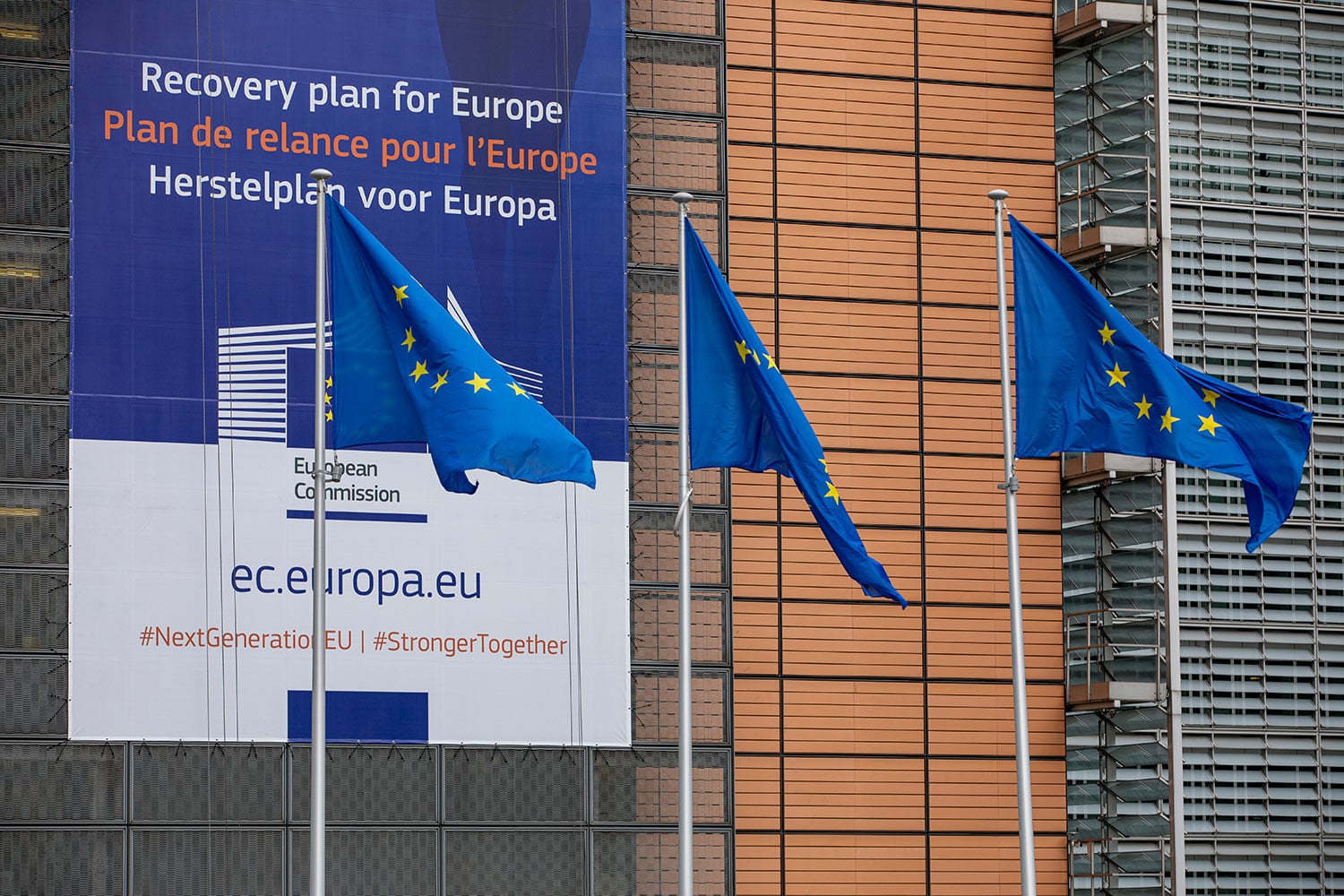
With the UK gone, the “core” of the EU—France and Germany, along with the Benelux countries—found it easier to move forward. The idea of a “Multi-Speed Europe,” where a core group integrates faster than the periphery, has gained traction. The post-COVID recovery fund, “NextGenerationEU,” saw the EU take on collective debt for the first time—a leap toward federalism that the UK would have almost certainly vetoed.
In defense, as mentioned, the EU is freer to act. In financial regulation, the EU is carving out autonomy for the Eurozone, slowly chipping away at the City of London’s dominance by moving euro-denominated clearing into the bloc.
Brexit removed the awkward guest from the dinner party. While the guest was rich and powerful, they were also constantly complaining about the menu and refusing to pay for the wine. Now the remaining guests can eat in relative ideological harmony, even if the food (the economy) isn’t as good as it used to be.

