

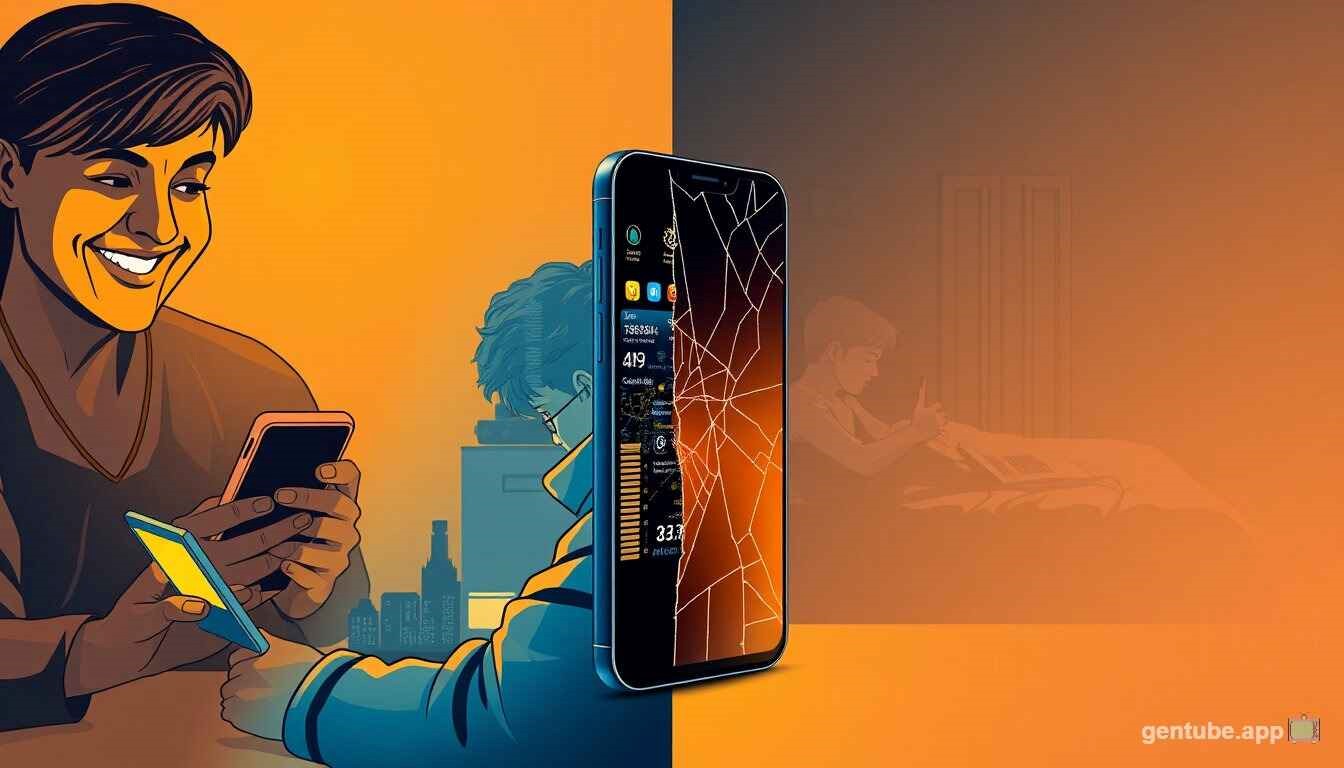
The goal is not to villainize the phone. It is to see it clearly. The phone is a tool — and like all powerful tools, its impact depends almost entirely on the intention and awareness with which it is used.
There are practical strategies that research supports for healthier phone use:
Set intentional boundaries. Designate phone-free times: during meals, the first hour of the morning, the last hour before bed, during conversations with people you love. These are not restrictions — they are choices about what receives your attention.
Turn off non-essential notifications. Every notification is a tiny hijacking of your attention. Most of them are not urgent. Most of them can wait. The average person receives 65-80 notifications per day; most of them interrupt a task for a reward that does not justify the interruption.
Use grayscale mode. Color screens are more stimulating. Switching your phone to grayscale reduces the dopaminergic pull of colorful apps and makes the phone less compulsively attractive.
Create physical distance. Charge your phone in a room other than your bedroom. Put it in a drawer during work sessions. Make it physically inconvenient to access in moments when you need focus or presence.
Audit your apps. Remove apps that provide stimulation but not value. Social media apps designed for passive consumption are the most significant culprits. If you cannot delete them, use time-limit features.
Model healthy use for children. The phone behaviors that children observe in their parents and caregivers become their baseline expectation for what phone use looks like. Being present — really present — is one of the most powerful things a parent can do in the smartphone era.
The phone is not going away. Nor should it. Its advantages are real, profound, and life-changing for billions of people. But so are its costs — and pretending otherwise does not serve anyone.
The question is not whether to use a phone. The question is: who is in charge — you, or the phone?
Conclusion: The Most Important Device Conversation You Will Have Is With Yourself
We are the first generation to fully inhabit the smartphone world, and the first to fully reckon with what it does to us. We do not yet have all the answers. The research is still emerging. The long-term consequences for children who have grown up with smartphones from infancy are not yet fully known.
What we do know is this: the phone is neither savior nor villain. It is a mirror of human priorities, human strengths, and human weaknesses. It amplifies what we bring to it. It rewards engagement and punishes neglect — but sometimes what it calls “engagement” is actually avoidance, and what it calls “connection” is actually comparison.
The greatest skill of the twenty-first century may not be coding, or data analysis, or artificial intelligence literacy. It may be the ancient, utterly non-digital skill of paying attention — of being present in your own life, in your own body, in your own relationships — in a world that is doing everything in its technological power to redirect that attention elsewhere.
Use your phone. Use it wisely. Use it with intention. Use it as a tool — and refuse, every day, to become its.
FAQS
1.How many times does the average person check their phone per day?
Research suggests the average person checks their phone approximately 96 times per day — roughly once every 10 minutes during waking hours. Some studies put the figure even higher for heavy users, particularly among younger age groups.
- At what age should children get their first smartphone?
There is no universal answer, but many child psychologists and pediatric organizations now recommend delaying smartphone ownership until at least age 13–14, and social media access until 16. Several countries and U.S. states are legislating minimum age requirements for social media platforms. The key factors are maturity, parental supervision, and clear household guidelines.
- Is phone addiction a real medical condition?
While “smartphone addiction” is not yet a formally classified disorder in the DSM-5, many mental health professionals recognize it as a genuine behavioral addiction with neurological similarities to substance dependence. Terms like “problematic smartphone use” and “smartphone use disorder” are increasingly used in clinical and research literature.
- Does using a phone before bed actually affect sleep?
Yes, significantly. Blue light from phone screens suppresses melatonin production, making it harder to fall asleep and reducing sleep quality. Additionally, the psychological stimulation of content keeps the mind in an alert state. Sleep researchers typically recommend a “digital sunset” of at least one hour before bed.
- What is “phubbing” and why does it matter?
Phubbing is the act of snubbing someone in a social situation by focusing on your phone instead of them. Research shows that even the presence of a phone on a table — whether used or not — measurably reduces the quality and perceived intimacy of a face-to-face conversation.
- Are smartphones making us less intelligent?
There is no strong evidence that phones reduce intelligence. However, there is evidence that habitual fragmented phone use may reduce capacity for sustained deep attention — the kind required for complex problem-solving, reading, and creative work. The concern is less about IQ and more about cognitive habits.
- How much screen time is too much for adults?
The World Health Organization and most health bodies do not set a hard daily limit for adults, but research suggests negative effects begin to appear at more than four hours of recreational screen time per day. Quality matters more than quantity — purposeful use (video calls, work, learning) is very different from passive consumption.
- What are the main physical health risks of smartphone use?
Key physical risks include text neck (cervical spine strain), eye strain and myopia, repetitive strain injuries in thumbs and wrists, disrupted sleep, physical inactivity, and risks from distracted walking and driving.
- Can phones be beneficial for mental health?
Yes, in specific contexts. Mental health apps providing meditation, breathing exercises, CBT tools, mood tracking, and crisis support have genuine evidence of benefit. Telehealth via phone has expanded mental health access dramatically. However, passive social media consumption is generally associated with worsened mental health.
- What is the “attention economy” and how does it affect phone users?
The attention economy refers to the economic model in which digital platforms earn revenue by selling users’ attention to advertisers. Platforms are therefore designed to maximize time spent on them, using psychological techniques (variable reward, infinite scroll, social validation) to make the phone as compelling as possible. Understanding this model helps users make more conscious choices.
- How do phones affect children’s language development?
Excessive phone/screen time in very young children (under 2) is associated with reduced language development, as children learn language through live human interaction, not screen-based input. For older children, moderate and supervised use with educational content can be neutral or positive, while passive entertainment-heavy use displaces more beneficial activities.
- Is it dangerous to use your phone while driving?
Extremely. Research consistently shows that texting while driving impairs reaction time to a degree comparable to or exceeding drunk driving. Even hands-free calling creates significant cognitive distraction. Most countries have laws against handheld phone use while driving; enforcement remains a major challenge.
- What privacy risks come with using a smartphone?
Significant risks include location tracking by apps and operating systems, behavioral data collection by social media and advertising platforms, vulnerability to phishing attacks, SIM-swapping fraud, app permissions that access microphone and camera unnecessarily, and the aggregation of personal data that can be sold, leaked, or subpoenaed.
- How can I reduce my phone screen time?
Practical strategies include turning off non-essential notifications, setting app time limits (built into iOS and Android), using grayscale display mode, charging your phone outside the bedroom, designating phone-free times and zones, deleting apps that provide stimulation without genuine value, and using physical alarm clocks instead of phone alarms.
- What is “nomophobia”?
Nomophobia (NO MObile PHone phOBIA) is the fear or anxiety of being without one’s mobile phone or unable to use it. It is increasingly documented as a recognized psychological phenomenon, with symptoms including anxiety, sweating, and agitation when a phone is unavailable or out of battery.
- Can phones be good for the elderly?
Absolutely. For elderly users, smartphones offer significant advantages: video calls with family, emergency alert and fall detection features, health monitoring apps, telehealth access, navigation assistance, reminders for medication, and access to entertainment that combats isolation. With proper support in learning to use them, phones can meaningfully improve quality of life for older adults.
- What are the environmental consequences of smartphone manufacturing?
Smartphone manufacturing requires mining rare earth minerals (cobalt, lithium, tantalum) often under environmentally destructive conditions. Manufacturing a single phone produces a significant carbon footprint. Globally, phones contribute to the world’s fastest-growing electronic waste stream, which contains toxic materials requiring careful disposal. Extending the life of your device by repairing rather than replacing it is the most impactful individual action.
- How do phones affect family relationships?
Research shows that family dinner table phone use is associated with reduced conversation quality and parental responsiveness. Children of parents who frequently use phones in their presence show higher rates of behavior problems, as they interpret parental phone use as emotional unavailability. Conversely, shared positive phone activities — watching family videos, video-calling relatives — can strengthen family bonds.
- Do phones help with learning and education?
Significantly, when used purposefully. Access to educational apps, online courses, e-books, language learning platforms, and instructional video has democratized education globally. Students with phone access can supplement classroom learning, access resources unavailable locally, and learn at their own pace. The challenge is managing distraction during study time.
- What is the relationship between social media (on phones) and teen depression?
Multiple large-scale studies show correlations between heavy social media use and increased rates of depression, anxiety, and low self-esteem in adolescents — with girls showing stronger effects than boys. Proposed mechanisms include social comparison, cyberbullying, sleep disruption, and displacement of in-person social activities. The debate about causation versus correlation continues, but the associations are strong enough to concern researchers and clinicians.
- Are there benefits to using a phone for fitness and health?
Yes. Fitness tracking apps, step counters, workout guides, nutrition trackers, sleep monitors, and mental wellness tools can meaningfully support healthy behaviors. The key is using these tools purposefully rather than allowing them to become another source of compulsive checking.
- What is “digital minimalism” and is it realistic?
Digital minimalism, popularized by author Cal Newport, is the philosophy of being intentional and selective about digital tool use — retaining only the tools that genuinely serve your values and eliminating those that don’t. It does not mean giving up your phone; it means consciously deciding how and when to use it. Many people find it a practical and sustainable approach.
- How do phones affect face-to-face social skills?
Heavy phone use — especially texting and social media — can reduce the amount of practice people get with the discomfort and nuance of in-person conversation, including reading body language, managing silences, navigating conflict directly, and maintaining eye contact. This is particularly concerning during adolescence, when these skills are most naturally developed through social interaction.
- Can using a phone cause eye damage?
Prolonged screen use causes eye strain, dryness, and fatigue (collectively called Computer Vision Syndrome or Digital Eye Strain). Strong evidence also links childhood screen time to the development and progression of myopia (nearsightedness). Long-term retinal damage from blue light at typical phone usage levels remains debated, but the optometric community recommends regular breaks and reduced evening screen exposure as precautions.
- How have phones changed journalism and news consumption?
Phones have made news consumption instantaneous and continuous, enabling real-time reporting from anywhere in the world and allowing citizen journalism to challenge traditional media gatekeepers. However, they have also enabled the rapid spread of misinformation, shortened news attention spans, created filter bubbles through algorithmic personalization, and made it harder for quality journalism to compete financially for attention against sensational content.
- What is “FOMO” and how do phones contribute to it?
FOMO (Fear Of Missing Out) is the anxiety that others are having experiences you are not part of. Social media on phones amplifies FOMO by providing a constant, curated stream of other people’s social activities, creating the impression that everyone else’s life is more exciting, connected, or fulfilling than one’s own. Research links high FOMO to lower life satisfaction and higher social media engagement in a self-reinforcing cycle.
- Is it possible to use a smartphone in a psychologically healthy way?
Yes. Research on “active” versus “passive” phone use suggests that purposeful, social, and goal-directed phone use (video calling friends, creating content, learning) is associated with much better psychological outcomes than passive, mindless, or comparison-driven use (scrolling feeds, watching others’ highlights). Conscious, intentional use is the key differentiator.
- How have smartphones changed the economy?
Phones have created entirely new economic categories: the gig economy, mobile commerce, the creator economy, mobile banking and fintech, app development, social media marketing, and mobile-first businesses. They have also disrupted traditional industries including retail, banking, taxis, hotels, television, and print media. In developing economies, mobile phones have been one of the most powerful tools for economic inclusion and poverty reduction.
- What should parents do to protect children from the negative effects of phones?
Key strategies include delaying smartphone ownership and social media access as long as feasible, using parental controls and time-limit tools, keeping phones out of bedrooms at night, having open and ongoing conversations about online experiences, modeling healthy phone use themselves, and creating phone-free family times and spaces. Most importantly, maintaining open communication so children feel safe discussing problems they encounter online.
- What does the future of smartphone use look like?
The smartphone is likely to evolve significantly — with augmented reality glasses, AI assistants, and wearable technology potentially distributing the phone’s functions across more of the body and environment. But the fundamental human questions will remain the same: who controls your attention, how much of your life do you spend in screen-mediated experience versus direct experience, and what kind of relationship with technology genuinely serves human flourishing? These are questions each generation will need to answer for itself.
Disclaimer: The content on this blog is for informational purposes only. Author’s opinions are personal and not endorsed. Efforts are made to provide accurate information, but completeness, accuracy, or reliability are not guaranteed. Author is not liable for any loss or damage resulting from the use of this blog. It is recommended to use information on this blog at your own terms.

