

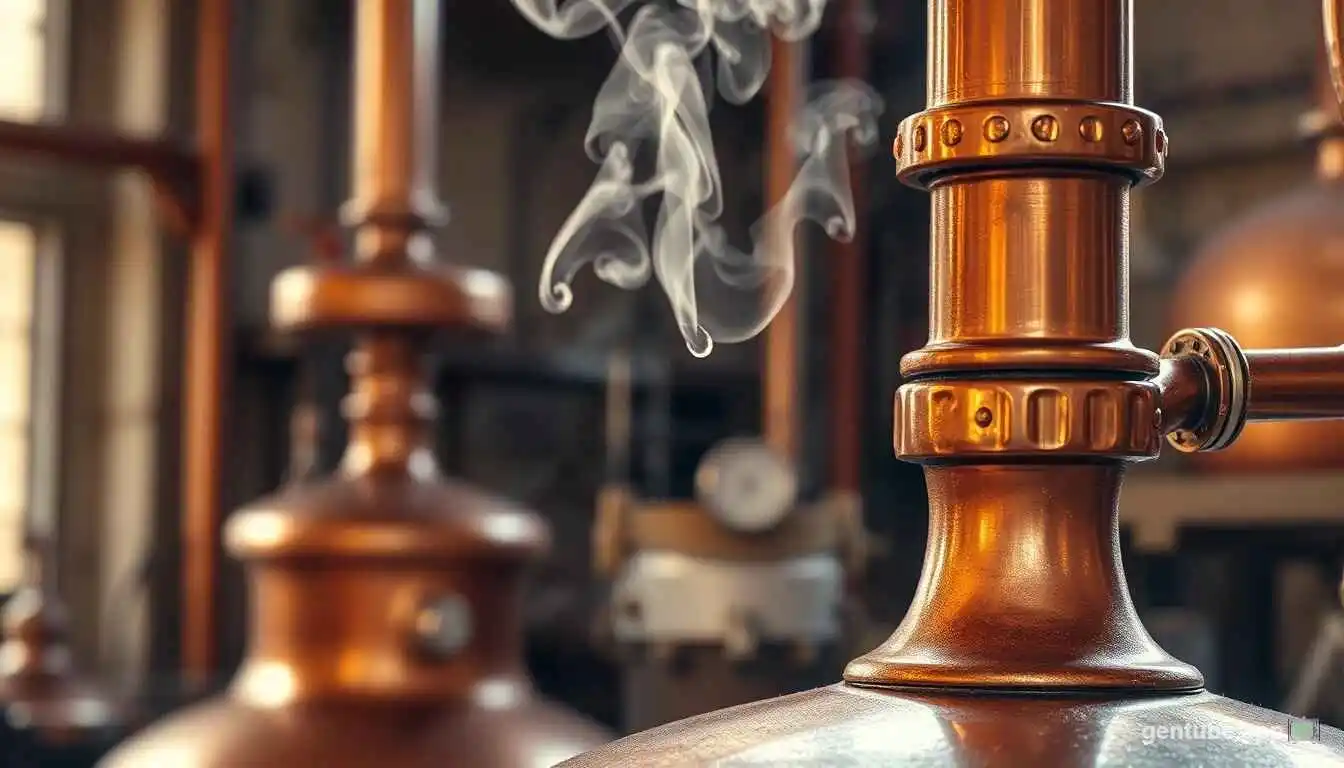
With so many variations available, selecting the right distillation approach for a given task comes down to a handful of practical questions. How different are the boiling points of the components involved? Widely separated boiling points often permit simple distillation, while closely spaced ones demand a fractionating column with many theoretical plates. Is the target compound heat sensitive? If so, vacuum or molecular distillation may be necessary to keep processing temperatures low enough to avoid degradation. Does the mixture form an azeotrope? If it does, standard distillation will hit a hard ceiling on achievable purity, and azeotropic or extractive distillation, or an entirely different separation technology, becomes necessary.
Scale also matters enormously. A research laboratory purifying a few grams of a novel compound has very different equipment and cost constraints than a refinery processing tens of thousands of barrels of crude oil daily, and the optimal column design, heat source, and level of automation shift considerably as volume increases. In practice, experienced process engineers typically weigh boiling point differences, heat sensitivity, azeotrope behaviour, desired purity, throughput requirements, and energy costs together, often supported by simulation software, before settling on a final distillation configuration for a new process.
Final Thoughts
Distillation is a rare kind of technology: simple enough in principle to be discovered by ancient alchemists working with little more than clay pots and curiosity, yet sophisticated enough in its modern industrial form to separate crude oil into the fuels that power global transportation, purify seawater into drinking water, and craft the subtle character of a fine single malt whisky. Its entire foundation rests on one elegant physical truth, that different substances turn to vapor at different temperatures, applied again and again with ever-increasing precision.
The next time you fill a car with gasoline, sip a glass of spirits, dab on a favorite perfume, or drink desalinated water in a coastal city, it is worth remembering that a controlled dance of boiling and condensing, refined over two thousand years, made that everyday moment possible.
FAQS
1.What is distillation in simple terms?
Distillation is a separation process that heats a liquid mixture until part of it vaporizes, then cools that vapor back into liquid elsewhere, separating components based on differences in how easily they evaporate.
2.How is distillation different from evaporation?
Evaporation simply removes a solvent by letting it escape as vapor without necessarily collecting it, while distillation deliberately captures, cools, and condenses that vapor to recover it as a separate, purified liquid product.
3.What is the difference between simple and fractional distillation?
Simple distillation uses a single vaporization and condensation step and works best for liquids with widely different boiling points, while fractional distillation uses a packed or trayed column to provide many repeated separation stages, allowing it to separate components with much closer boiling points.
4.What is an azeotrope?
An azeotrope is a specific mixture of two or more liquids that boils at a constant temperature and produces vapor with the same composition as the liquid, meaning it cannot be separated further through ordinary distillation.
5.Why can’t distillation produce one hundred percent pure ethanol?
Ethanol and water form an azeotrope at roughly ninety five point six percent ethanol by weight, at which point the vapor and liquid have identical composition, so simple or fractional distillation alone cannot concentrate the alcohol any further.
6.What is vapor-liquid equilibrium?
Vapor-liquid equilibrium describes the relationship between the composition of a liquid mixture and the composition of the vapor sitting above it at a given temperature and pressure, and it is the fundamental principle that makes distillation possible.
7.What is reflux in distillation?
Reflux is the practice of returning a portion of the condensed liquid at the top of a distillation column back down into the column rather than collecting it, which improves separation purity at the cost of slower production.
8.What is a theoretical plate in distillation?
A theoretical plate, or equilibrium stage, represents one complete cycle of vaporization and condensation within a distillation system; columns with more theoretical plates can achieve sharper separations between components with similar boiling points.
9.What is vacuum distillation used for?
Vacuum distillation lowers the pressure inside the system to reduce boiling points, allowing heat-sensitive materials to be separated at lower temperatures without decomposing, and it is widely used in petroleum refining and pharmaceutical manufacturing.
10.What is steam distillation and why is it used for essential oils?
Steam distillation passes steam through plant material to carry volatile aromatic compounds into the vapor phase at a lower combined temperature than those compounds would normally require, protecting delicate fragrance and flavor molecules from heat damage.
11.How does crude oil distillation work?
Crude oil is heated and fed into a tall fractionating column, where its thousands of hydrocarbon components separate into different fractions, such as gasoline, kerosene, diesel, and heavy fuel oil, based on their differing boiling ranges, with lighter fractions collected higher in the column.
12.What causes flooding in a distillation column?
Flooding occurs when vapor flow through the column becomes too aggressive for liquid to properly drain downward, causing liquid to back up on trays or within packing and sharply reducing separation efficiency.
13.What is weeping in a distillation column?
Weeping happens when vapor flow is too low to support liquid properly on a tray, causing liquid to leak downward through vapor openings instead of flowing correctly across the tray, which reduces contact between vapor and liquid.
14.What is entrainment in distillation?
Entrainment occurs when small liquid droplets are physically carried upward with the vapor stream, contaminating the vapor with material that should have remained in the liquid phase and reducing distillate purity.
15.What is azeotropic distillation?
Azeotropic distillation adds a third substance, called an entrainer, to a mixture to form a new, more easily separated azeotrope, allowing components that could not otherwise be separated by ordinary distillation to be pulled apart.
16.What is extractive distillation?
Extractive distillation adds a high-boiling solvent that selectively changes the relative volatility of the components in a mixture without forming a new azeotrope, making an otherwise difficult separation achievable.
17.What is molecular distillation?
Molecular distillation, also called short-path distillation, operates under very high vacuum with a very short distance between the heated and cooled surfaces, minimizing thermal exposure and making it suitable for extremely heat-sensitive or high molecular weight compounds.
18.What is cryogenic distillation used for?
Cryogenic distillation separates liquefied air into its component gases, primarily nitrogen, oxygen, and argon, and is fundamental to producing the industrial and medical gases used in steelmaking, healthcare, and manufacturing.
19.What is reactive distillation?
Reactive distillation combines a chemical reaction and distillation in a single vessel, continuously removing a desired product as it forms, which can improve reaction completion and reduce equipment costs compared to running the steps separately.
20.How does distillation produce drinking water from seawater?
Thermal desalination plants heat seawater until it vaporizes, leaving behind dissolved salts and minerals, then condense that vapor into fresh, salt-free water, often using highly efficient multi-stage or multi-effect distillation designs to reduce energy use.
21.What determines the flavor of a distilled spirit?
The shape and material of the still, the specific temperatures used, the timing of cut points during a distillation run, and the number of distillation passes all influence which flavor and aroma compounds carry over into the final spirit.
22.What is a reboiler in a distillation column?
A reboiler is the heat source at the base of a distillation column that vaporizes a portion of the liquid feed, driving vapor upward through the column to enable the separation process.
23.What is a condenser’s role in distillation?
A condenser cools the vapor that rises to the top of a distillation column, converting it back into liquid so it can be collected as distillate or returned to the column as reflux.
24.Why do industrial distillation columns use packing or trays?
Packing material or trays inside a column provide repeated surface area for vapor and liquid to contact, exchange heat and mass, and progressively concentrate the more volatile component as it rises toward the top of the column.
25.How does pressure affect the boiling point in distillation?
Lowering pressure reduces a liquid’s boiling point, while increasing pressure raises it, which is why vacuum distillation can process heat-sensitive materials at much lower temperatures than they would require under normal atmospheric pressure.
26.Is home distillation of alcohol legal?
In most countries, distilling alcohol at home without the proper license is illegal due to tax regulations and safety concerns, even for personal use, though legally unrestricted demonstrations such as water or herbal steam distillation are generally permitted.
27.What industries rely most heavily on distillation?
Petroleum refining, alcoholic beverage production, water desalination, perfumery and essential oils, pharmaceuticals, fine chemicals, and industrial gas production all rely heavily on distillation as a core separation technology.
28.What is fouling in a distillation column?
Fouling is the gradual buildup of solid deposits, scale, or polymerized material on internal column surfaces, which reduces heat transfer efficiency over time and eventually requires a shutdown for cleaning.
29.How is distillation becoming more energy efficient?
Heat integration, where energy released during condensation is reused elsewhere in the process, along with hybrid separation methods combining distillation with membranes or adsorption, and advanced sensor-based process control, are all helping reduce the substantial energy demand of modern distillation.
30.What is the difference between batch and continuous distillation?
Batch distillation processes a fixed quantity of liquid mixture from start to finish in a single vessel, common in spirits production, while continuous distillation allows feed to enter and products to be withdrawn constantly, which is standard in large-scale operations like petroleum refining.
Disclaimer: The content on this blog is for informational purposes only. The author’s opinions are personal and not endorsed. Efforts are made to provide accurate information, but completeness, accuracy, or reliability are not guaranteed. The author is not liable for any loss or damage resulting from the use of this blog. It is recommended to use the information on this blog at your own discretion.

